Monday, April 30, 2012

Eyes Up Here, Pal

Your dresses should be tight enough to show you're a woman and loose enough to show you're a lady. — Edith Head, American Motion-picture director costume Designer, 1907-1981
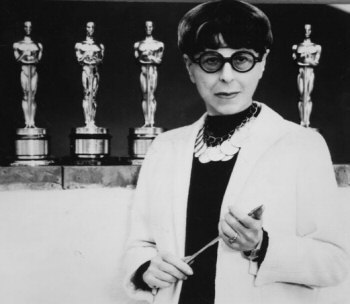
http://www.thestudiotour.com/ush/images/edithhead3.jpg
My teacher told us essays are like skirts: Long enough to cover the subject, short enough to make it interesting. — Unknown 

I never really talk about tznius as I find it incredibly exhausting. In the end, there are no set parameters for all, there is no clear consensus. 

Constantly talking about tznius, in my view, is untzniusdik in itself;  tznius means modest behavior, not attire, and it is a requirement for men as well as women. So if a guy gets hammered on Purim or Simchas Torah and goes around hollering, you are the weakest link, goodbye.

After hearing about this for twelve years of BY, I thought I was done. But from time to time it resurfaces oh-so-unpleasantly. Suddenly a congregation of 30- to 60-year-olds are being told that they are not tznius based on one person's arbitrary perception. 

Ta, having not been exposed to this for over a decade on a daily basis (such as myself), is absolutely furious. He can't let it go, fuming if the conversation brushes against clothing. 

Me: I'll be right down; I just have to get dressed.

Ta: Make sure it is "skimpy" and "provocative"! I can't believe he said that!

Tirade activated.

Now I feel a need to vent.

Here's the dealio: 

Men look. 

They are programmed to look. They will look at a woman in a sack. Where exactly is the line where a man looks because it's my fault or if he's got a roaming eye? 

I heard a shiur once (I can't remember the speaker) that one cannot, when delivering a hesped, claim that the deceased (in this case, a male) was tzniusdik. Why? Because no one saw him in the bathroom. Tznius is applicable even when not within the sight of others. 

If that is the case, tznius must be more than public attire. 

I abide by the current knee/elbow/collar view of "tznius." However, I will never, ever say that word regarding my appearance, or someone else's. I'll use words like "refined"/"classy" or "unrefined" instead. "Does this skirt make me look tawdry?"

There are some who think I am immodest, and there are some who think I am being overly discreet. One can't win. Matters of halacha should be clear. If they are not clear, then it can't be the very basis of our faith. Females are harassed with this nonstop as though it is the only requirement they have. We have quite a few other things to do, thank you very much.

My niece, an 8-year-old, is also aggravated about this. She was telling me how she was assigned in class to do a skit about tznius. Her teammates were saying, "So, we'll, like, wear long, long, sleeves and, like, a long, long, skirt."

"No!" she intervened. "That is not what tznius is about. Instead, we'll show a girl who got a present and is not showing off to anyone about it. And a girl who won't scream across the room to get someone's attention." 

That's my girl. 

Alex Israel addressed this on his blog, Thinking Israel. Dov Linzer wrote an op-ed piece in the NY Times that echoes the same exact sentiment: The onus is on a man not to look, not that a woman should spend all of her time questioning millimeters on her wardrobe. 

We are told not to judge, to never question someone's personal behavior, to be dan l'kaf zechus, yet why is it acceptable to call someone "not tzniusdik"? 

As for the women who take it upon themselves to chastise other females on their choice of dress, they also have the option of averting their eyes.

So please stop yammering about tznius, unless it is to advocate proper behavior and demeanor. Because I could be wearing a burqa and still not be behaving as I should, or a man may still find me intriguing. Let every woman decide for herself what is and isn't appropriate attire, and let's brush up on our shmiras halashon instead. 

Sunday, April 29, 2012

Dun Dun

Community is really putting out quality spoofs now that have me rolling with hysteria. As a Law & Order freak, this past week's clutched my very soul.

Friday, April 27, 2012

Two Thumbs Down: Downton Abbey

This probably comes way too late, but it is only recently that I was able to watch Season Two of Downton Abbey. I had been frustrated by the first season, but the cliffhangers compelled me to endure the second. And frankly, it was so lacking that I feel like a rant, even though I may be violating quite a few sensibilities (Warning: Does contain spoilers.)
https://blogger.googleusercontent.com/img/b/R29vZ2xl/AVvXsEi366mtW8BfOp4VaNLYiX5T6bmW2ePfAq1X2wcQgIC7dfeb4mJfR-qyYGM8ddWfJRrWVMMPbFY_oz93Lv26MrKDgjmAwkidvHaPuv73EPzLWy7FOVM3S5ttMXprdFLbfjMeKZWJQpqOjhpB/s1600/DowntonAbbey.jpg
Most mini-series adaptations from the BBC are based on classic novels. However, Downton  is a series written by the modern man.

In Season One, at least, there was character development; Mary was the spoiled favorite, mean-spirited and petty, unnecessarily waspish to her sister Edith, the middle daughter. After years of being overlooked and slighted, Edith developed a tough survival instinct and is constantly on the offensive. Sybil, the youngest and undoubtedly the most gorgeous, is miraculously untouched by these squabbles, and is as lovely in nature as she is in face and figure (not that you can tell much with the deforming Edwardian styles). 
https://blogger.googleusercontent.com/img/b/R29vZ2xl/AVvXsEiOFifbzlUlRp8ZiPyCmrV4awo24_4TsSwMw7-gS5oPuIgqoDaaCpZg_nLyos7Fd6eZhQ6sbjwpfAEUdfwBym4rv4N-lgDThorW8viBtALo6HaJut24XJU9XXWxOjANOC8mSOJugOJ6t-Y/s1600/downton+abbey+sisters.jpg
Edith, Mary, and Sybil (Lto R)
However, in Season Two, these defined personalities fade away. Suddenly Mary's only lines are "I am so sorry" with a sympathetic crease between her brows as weak proof that her unpleasantness has been mellowed due to . . . who knows? Overnight she has discovered empathy and kindness, yet she lacks remorse for previous sins (except for the ones where her reputation is at stake), which makes it all the more unrealistic. 

As for Edith, her tough exterior has dissolved, seemingly because she now accepts her position as family drudge. She cheerfully goes about her day, still overlooked and slighted, but now she no longer cares, I guess. And not even because she has a man in her life; despite the fact that she sat at the bedsides of eligible men during World War I, no bachelor is interested in her new-found vivacity and charm. 

Passes are made, but only by a middle-aged married farmer and a horribly disfigured war casualty masquerading as her long-lost cousin; the man she still wants is a widower in his 60s. What's really sad is that when he tells her that a lovely youngster like her shouldn't throw herself away on him, she responds that he is only man to call her "lovely." Have some self-respect, girl! Or at least, the writers shouldn't be constantly putting her down. 

Due to this inexplicable altering in personalities, the war between Mary and Edith is at an end, despite the fact they did each other unspeakable wrongs at the close of Season One. 

As for Sybil, she is perhaps the biggest disappointment to me. Characteristically, she insists on becoming a nurse during the war, against her parents' protestations, working hard, selflessly, and competently. But the family chauffeur, a communist, begins to make romantic overtures. I can't stand communists. There isn't even a flicker of chemistry, but her dialogue insists that she loves him. Meh. 


As for Matthew and Mary's on again/off again relationship, I never championed it. Mary will always be that spiteful brat to me, and Matthew was always adorably congenial (he seems to play those characters a lot; he was Edward in my favorite redo of Sense & Sensibility) and too good for her. I never understood why he was interested in Mary; their attraction is as head-scratching as Sybil's romance.

Then there are the other players. Thomas, the nasty footman, always manages to land on his feet no matter how many crimes he commits; why can't they kill him off already? Mr. Bates, the Earl's valet and paramour of the estimable housemaid Anna, is found guilty of murdering his wife, and while she persists in his innocence, I believe he killed her. She was a frightful woman; I probably would have.
 

In this season whatever tenuous separations there were between the lord and his servants are pretty much undone, as the underlings seem to be treated in practically equal terms as their "betters," which I find highly improbable. 

The only gleam of light is Maggy Smith as the Dowager Countess. Her one-liners are priceless.

I will see Season Three when it premieres. Not because I like it; there are still a few loose threads I would like to see resolved, but thankfully there were not as many as in the end of Season One. Considering how much this series costs, they could have made this better.

That felt good, to hammer out a critique. Back to regularly scheduled programming. 

Thursday, April 26, 2012

Weighty Issues

In the April issue of Vogue, there is an article by Dara-Lynn Weiss detailing her attempts to place her overweight 7-year-old daughter on a diet.
The health implications for overweight children are well documented. They are at greater risk of developing high blood pressure, high cholesterol, and type 2 diabetes. They are more likely to suffer from low self-esteem, negative body image, and depression. And they may be signing on to a lifetime of obesity: One study found that 80 percent of overweight adolescents are still obese at 25. If a child becomes overweight before age eight, his or her obesity in adulthood will be even more severe.
Those numbers are enough to scare the socks off me. Yet today's culture dithers over doing something about it. 
The single most uncomfortable topic to discuss with their kids is . . . weight. In a culture rife with eating disorders and ominous warnings of how tenuous kids' self-esteem is, especially among girls, telling a second grader that she has to lose weight us not only uncomfortable, it's almost unimaginable.
Bea did what I did as a kid: she ate primarily good foods, but too much of it. Her mother was told by the pediatrician that her daughter qualified as obese, and that action was necessary.

Weiss' tale mentions diet soda and non-fat whip, which was the only part that made me shiver; a balanced food plan does not mean calorie-free. It should be about eating right. The freakish ingredients in those sort of "diet" foods can make the situation worse.

Many say that the fastest way to shove a kid to an eating disorder is to make her aware of her weight and get her to eat with more discipline. But I wondered—is that really so? 

When I was six, I was the image of a slender child. When I was ten, not so much; I had a spare chin. Ma doesn't do diets, but she was definitely proactive. For example, if I came home and asked for a cookie, her response would be, "Have an apple." 

Of course I didn't want the apple. I wanted the cookie. But since I didn't want the apple, that proved I was not really hungry. I waited for supper instead. 

My brother would protest that what she was doing was child abuse. Was it? A parent is supposed to teach a child self-discipline. If a child is made to go to bed on time, does she develop insomnia? If a child is instructed to spend her money wisely, does she become a gambler? All children cautioned to avoid drugs end up snorting crack? 

What about a peanut allergy? Do parents feel guilty limiting a child's diet if their life depends on it? I find that unlikely. 

Why is it when it comes to weight, which can have definite negative health ramifications, political correctness precludes action? The comedienne/actress Mo'Nique used to insist that "Big is Beautiful," that there is nothing wrong with being overweight. One day her husband told her that she is too heavy; he wants her for a lifetime. Some have accused her of hypocrisy, but her focus now is to get healthy, and she has.

Of course, there was internet brouhaha over Weiss' article. I am not sure why. 

If it was such a simple thing that child + weight awareness = eating disorder, that would be me. So it's not that. Ma was teaching me discipline, the same way she emphasized planning ahead, getting enough sleep, sticking with pencil skirts since nothing else flatters me. 

Before Bea was put on the eating plan, she would constantly complain of being hungry; then after the diet, she continued to say she was hungry. I wonder if this kid actually knew what hunger was. Many of us mistranslates it as "bored."  
https://blogger.googleusercontent.com/img/b/R29vZ2xl/AVvXsEjevFddLNCYVuRk-PlZdX223LAQp2qM-ftpMjNJqz9V5ZeYIujZs5CkZK8i4yR4Ot2ooR2W_rRplLUzaKVlsmB_aWMqRHAULqRS9cZ1iyCpdTKJha1BoXYCoC3a8YSnS1eqtaXJoslmNXTT/s1600/vogue.jpg
Weiss and Bea, post-diet
As Jews, we know about discipline. Food will always be an issue for me, the same way I have to constantly battle with loshon hara, kibud av v'eim, and other commandments. As I flex that self-control muscle, whether it be for food or for religion, it makes discipline in other areas easier.

A client came up to the office, a man in his 60s. He recently lost 40 pounds, and he was overjoyed. He couldn't do anything before, he said; if he went out, he could only pant in the shade. He was pre-diabetic, and his sister lived her life on injections; he wanted to avoid that fate for himself. 

He worked hard, he lost the weight, and he has no worries about needles in his immediate future. He is living life. 

Dominique Browning wrote in April's Bazaar on getting older. 
As opposed to living, being alive takes discipline.
To truly "live," one sometimes has to hold back. 
The struggle is obviously not over. I don't think it will ever be, for either of us. Bea understands that, just as some kids have asthma, her weight is something she may always have to think about, unfair as it seems. She will probably always want to eat more than she is supposed to. She will be tempted to make bad choices. But now she has the foundation to make those choices in an educated and conscious way. Only time will tell whether my early intervention saved her from a life of preoccupation with her weight, or drive her to it. 
Many of us have our own demons; mine is caloric in nature. I want to be healthy. I want to wear all of my pretty clothes comfortably. When I am in control, I am content. I have always had to watch myself, and I will always have to watch myself. And that is fine with me.

Wednesday, April 25, 2012

Sheitel Hair

To navigate the shidduch world, people have to know that one is available, no? So of course I attend weddings dressed to kill, mix & mingle accordingly, attend shul regularly, and commit other crimes to ensure eligible, potential shadchanim are aware of my existence. 

But there is one issue that stands in my way: I have sheitel hair. 
https://blogger.googleusercontent.com/img/b/R29vZ2xl/AVvXsEgelMvvXbk7FVzA8NCNpFmCoR0aqsrxZ-OthMn1EwAZmTNVpypWGttwq_rhNyISrrfhDs9NoDoygPZVrCDBm1Jh2jHqsaVs-_zvRcIB5QauzzhpKSWd5XLFUSjWdkMSsBmfkgYJxtwEcogK/s1600/IMG_8352.JPG
Via Sidney Eisner Copyright Yochi Eisner The Kallah Whisperer www.thekallahwhisperer.com
yochi.eisner@gmail.com
Baruch Hashem my hair is full, thick, wavy, and otherwise great. But no one realizes that it wasn't purchased.

"You have lovely children."  

"No, no, they're not mine."


"So your folks are on Aldaran; where do you live?"

"At home." Blank stare.

"With them." Blink.

"I'm not married." Face clears in comprehension.


"And this is your hus—?"

"Brother. My brother."

It has become so bad that I no longer stand next to Luke in public, as everyone assumes we are spouses instead of siblings. Despite his bad back, my father snatches away my baby nephew from my arms at simchas to ensure that no one thinks he's mine. I blatantly flex my naked left hand fingers. I wear a high tight ponytail most of the time, attempting to prove that the hair on my head could not possibly be fake.

All for naught. 

I still end up having to tug my pony and say, "It's attached."

My niece P'chech, at the age of three, has worked it out already. 

"Bobby and Mommy's hair comes off because they are married," she chirps. "Mine doesn't, see? Because I'm not married." 

Tuesday, April 24, 2012

I Not Sorry

When one kid hits the other, I don't demand that the offender apologize. What for? He/she is not sorry. The only mistake they made, in their view, was getting caught. There are repercussions, yes, and a firm, "We do not hit!" but no insistence on a sullenly mumbled "Sorry." 


Bill Maher has a serious potty mouth, and I usually make a point to avoid him. However, his op-ed piece was really necessary

Media pounces on celebrities' ill-thought wordage, screaming of their heinousness and demanding abasement. This is America. A person has a God-given right (according to the "sacred" founding fathers) to say something disgusting and reprehensible. I may not like it, sure, but since when is my opinion a criteria for the spoken word?

That is not to say I shouldn't disagree, and give voice to my well-thought out arguments to the contrary. But to clamor for insincere contrition? 
If it weren’t for throwing conniption fits, we wouldn’t get any exercise at all.
No matter what one does, one ticks off someone, somewhere. When seeking public acceptance, winning them all is not a possibility.

Maher may not have planned it like this, but he comes off as somewhat religious (giggle). He advocates peaceful coexistence, based on "turning the other cheek" (well, he didn't say that exactly).
I have a better idea. Let’s have an amnesty — from the left and the right — on every made-up, fake, totally insincere, playacted hurt, insult, slight and affront. Let’s make this Sunday the National Day of No Outrage. One day a year when you will not find some tiny thing someone did or said and pretend you can barely continue functioning until they apologize. 
Why do we so desperately need the equivalent of that four-year-old reluctant "Sorry"? I don't get apologies; they don't help me. I like to see actions that proves a "transformation of consciousness" (you won't believe me, but I actually heard the term from Mike Myers. Seriously.) rather than blackmailed PC "remorse."

Monday, April 23, 2012

OJ To The Hilt

A client, every holiday season, sends my folks a year-long subscription to Harry and David, who mails us fruit every month. 

Once they sent us Honeybells, which is a hybrid of tangerine and grapefruit. It tastes very much like oranges, but the consistency wasn't very pleasant, maybe because they were overripe.

Faced with eleven more, I decided not to be wasteful and searched for some recipes for its use. 
I squeezed out the juice—insane amounts of juice!—and the results was a brimming pitcher of bright sunshine. 
My first attempt was this sponge cake and meringue recipe, and it was an absolute flop and had to be thrown out. I would not advise you to try it.
When making orange curd for the meringue and mousse recipe.
Then went these orange meringues, and they came out spectacular. They were delicious, and since I used regular oil instead of butter they were pareve, and a relatively easy dessert for a Friday night (the meringue doesn't keep so well overnight). I want to try to see if I can make the meringues separately so I can spoon the curd into a pretty dessert glass and place the light-as-air meringue on top. 
Before the oven . . .
And after. I would advise taking them out earlier then the recipe recommends.
I also made this orange mousse recipe. Using online converters, I made it with cups instead of grams and it came out deliciously refreshing. I kept it in the freezer and took a spoonful from time to time as a pick me up. After a heavy meal I love something sorbet-like and citrusy; this would also be a great Shabbos dessert.

These recipes can be made with lemon juice instead, and I find I like lemon better than orange. It's tarter, with a refreshing zing. Of course the dimensions are different, but I have a functioning lemon mousse recipe from Couldn't Be Pareve! (I don't have a microwave, so I made the curd on the stovetop, and I whipped the whites in the regular mixer without doing it over boiling water, since all my eggs are pasteurized anyway) that can be used as a base. 

At least I know what to do with next year's Honeybells.  

Sunday, April 22, 2012

Are You There God? It's Me, Spinster

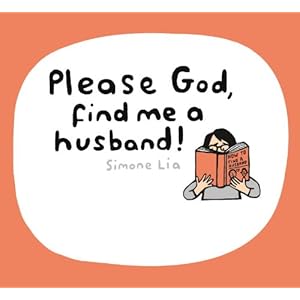
This link was on FB about a new graphic novel of a woman's quest to locate a good man with the help of God. And no, she's not a frummie. 
http://ecx.images-amazon.com/images/I/41-uEmIt1tL._SL500_AA300_.jpg
The first few panels can be viewed here. And while she has conversations with Jesus, the ending point of "Mentsch tracht, Gott lacht" still comes through. Apparently, that is a universal concept.

Friday, April 20, 2012

Chewing and Walking

Coming from a European background, some things are a given. Men have to wear a baseball cap or hat on the street, and tuck their tzitzis in. Women should be relatively dressed up when going out in public—no sweatshirts, for instance. 

As for eating? Only if starvation is imminent can one purchase an ice cream and leisurely lick it on Fifth Avenue. 

Public food consumption has become a topic of conversation as a legislator hopes to get on the books a law making subway munching illegal.  
https://blogger.googleusercontent.com/img/b/R29vZ2xl/AVvXsEgKC-QNe7cPJYi6UdzqsyWV3inW96yZHflNH5lxL6yZhUE9mtE30MQ4qgK5Bfu40k1DeYB_ff6wgScdYwX_3qCdnsE8rQ3ZEGaFv_F4LDC-gjGoK9qH94RjsvducYIeFN4D8X5BlneD2Bjp/s1600/01_full_600x400.jpg
Via truenewsfromchangenyc.blogspot.com
Eating in public was considered improper, even further back than the Victorian era the author attributes it to. 
"When the wise man eats the little which is sufficient (lit., 'fitting') for him, he should eat it only in his house at his table. He should not eat in the store or marketplace ('shuk') (except in cases of great necessity) so that he is not demeaned before others.- Rambam 
I don't particularly understand that whole "little which is sufficient" bit, but moving on to the eating in public thing . . .  

Rambam refers to it as "demeaning." Is it possible to eat with class and refinement without a proper table? Even then it's hard. Like when I finally get served by a wedding and I haven't put a thing in my mouth since lunch (I would suggest you duck . . .)

When searching for illustrative photos I came across this article by a seemingly Jewish gal from the UK. And she makes the point: is eating in the subway, or under a hair dryer, or while on the stationary bike, enjoyable? 

As Ms. Leve says, eating is also, in a way, an intimate experience, and seeing one partake in it seems like an intrusion of a private ritual.  

After writing up this post I found myself on a train platform munching on a cookie. Me, a cookie! In public, yet! It is way too easy to let one's guard down. 

Thursday, April 19, 2012

Battle of the Bulge: Those Pesky Calories

I have learned this from personal experience. It's not an easy fact to grasp, but when one makes peace with it one is able to move on. 

There are calories practically everywhere. In anything one can chew. Anything casually sipped. Anything one can mindlessly pop into one's mouth. 

And once it's in, it stays. The human body can deal with too little calories better than when inundated with surplus. Meaning it is all too easy to go overboard. 

I was unpleasantly surprised when I finally learned how to translate nutrition facts. Often what constitutes a serving is ridiculously small. 
 . . . a single cookie [can] contain 700 calories,” Dr. Nestle said. “You may want that cookie, but then you can’t eat anything else. Cookies didn’t used to be this big.” Nor were bagels, now 500 or 600 calories each . . . . Dr. Young. . . asked the students in her nutrition class how many calories were in a Double Gulp . . . She’d already told them that an eight-ounce soda has 100 calories, but the students guessed a Double Gulp contains less than 400 calories. When Dr. Young asked why their estimate was off by 100 percent, they simply said, “800 calories — that can’t be!”
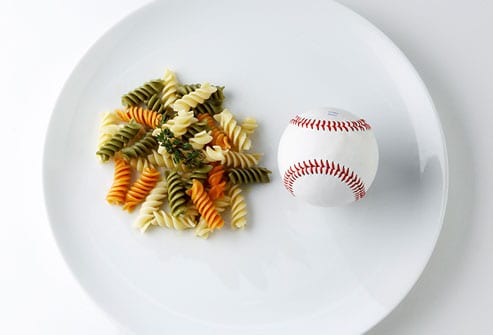
 . . . A serving of ice cream is just a half-cup, a burger is three ounces, and uncooked pasta is merely two ounces. A pound of pasta, therefore, should feed eight people, not two or four; two ounces per serving is about what Italians consume as a first course. A typical American restaurant meal is more like dinner for two . . . She recently found at one New York restaurant that a “personal-size pizza” contained 2,100 calories, the amount the average woman needs in a day.
It is downright depressing. 
http://pickyeaterblog.com/wp-content/uploads/2009/09/pasta.jpg
Thankfully, Dr. Young recommends that which I do already: 
“I don’t count calories, and I don’t recommend counting calories,” Dr. Nestle said. “I recommend eating food. You have to pay attention to eating better and in moderation: plenty of fruits and vegetables, lean meats, and whole grains in reasonable portions, and not too much junk food.”
She applauded the current campaign by the New York City Department of Health and Mental Hygiene to get people to stop “pouring on the calories” by consuming fewer sugar-sweetened soft drinks.
As I mentioned before, with healthy foods one gets more bang for their calorie. Restaurants don't care what they slap on your plate; I just can't trust anyone, including myself, when it comes to eating out. As for not drinking calories, the only way to do that safely is to only gulp water. 

Want to blame just one ingredient, like high-fructose syrup? Nope, that won't do; weight issues have many factors, not just one. And just because something claims to be healthy doesn't mean it is. Use your sechel, and really go over the nutrition facts and ingredients.