Wednesday, November 30, 2016

Yom Shabbos Menucha

"Yehoshua, get up off the floor! If you can't sit nicely at the table, go to bed. Mendy, put down that book! It's a long enough night, and you won't have anything to read later. Miri, leave your sister alone! Raizy, why did you take so much chicken if you knew you couldn't eat it all? No, Baruch, you can't have anymore grape juice. Shua, off the floor!" 

Well, I did volunteer for the task. With their parents out for Friday night, I was presiding over chaos. In under five minutes, the prettily set table had morphed into a mess of purple splatters and soggy napkins. I'm sure my hair was standing on end, with a few bits of shnitzel stuck in there.

As the youngest, my memories of Shabbos meals were tame; all of us sitting properly around the dining room table. Yet Ma tells me that before my time, she would tell Babi, "Ma, it's a three-ring circus." 

We sing bensching together (with Mendy barely mumbling along, much to my displeasure). With an hour until bedtime, I whipped out the stack of Berenstain Bears I had brought with me. 

The hysteria immediately vanished into peace. Each (even the 12-year-old) eagerly selected one. I read out loud, surrounded by cuddling children all sighing contentedly. This was the scene more apropos to the serenity of Shabbos. 

 http://www.preschools4all.com/images/reading.jpg
After tucking the smaller ones into bed, I played cards with the older ones. I lost "I Doubt You" ungracefully. I thought I had a better poker face. 

The night closed pleasantly, despite the mad opening. 

We are creatures of habit and minhag. Shabbos meals are supposed to be calm and enjoyable. Yet when kids are too young to handle the expectations of the dining room table, maybe the method needs a little tweaking. 

If a formal dinner will devolve into (1) shouting matches of "But I wanna sit next to Abba!"; (2) Grabbing for the kois until it inevitably spills; (3) food battles; (4) really, really unnecessary stress, let's take the munchkins out of it until they are of an age of self-control and interest. 

They can be fed earlier, left to play or put to sleep (depending on the season), while Mom and Pop revel in a romantic dinner for two by candlelight. 

http://crownheights.info/assets/2013/08/dt.common.streams.StreamServer-525x349.jpg

Tuesday, November 29, 2016

Ride the Pendulum

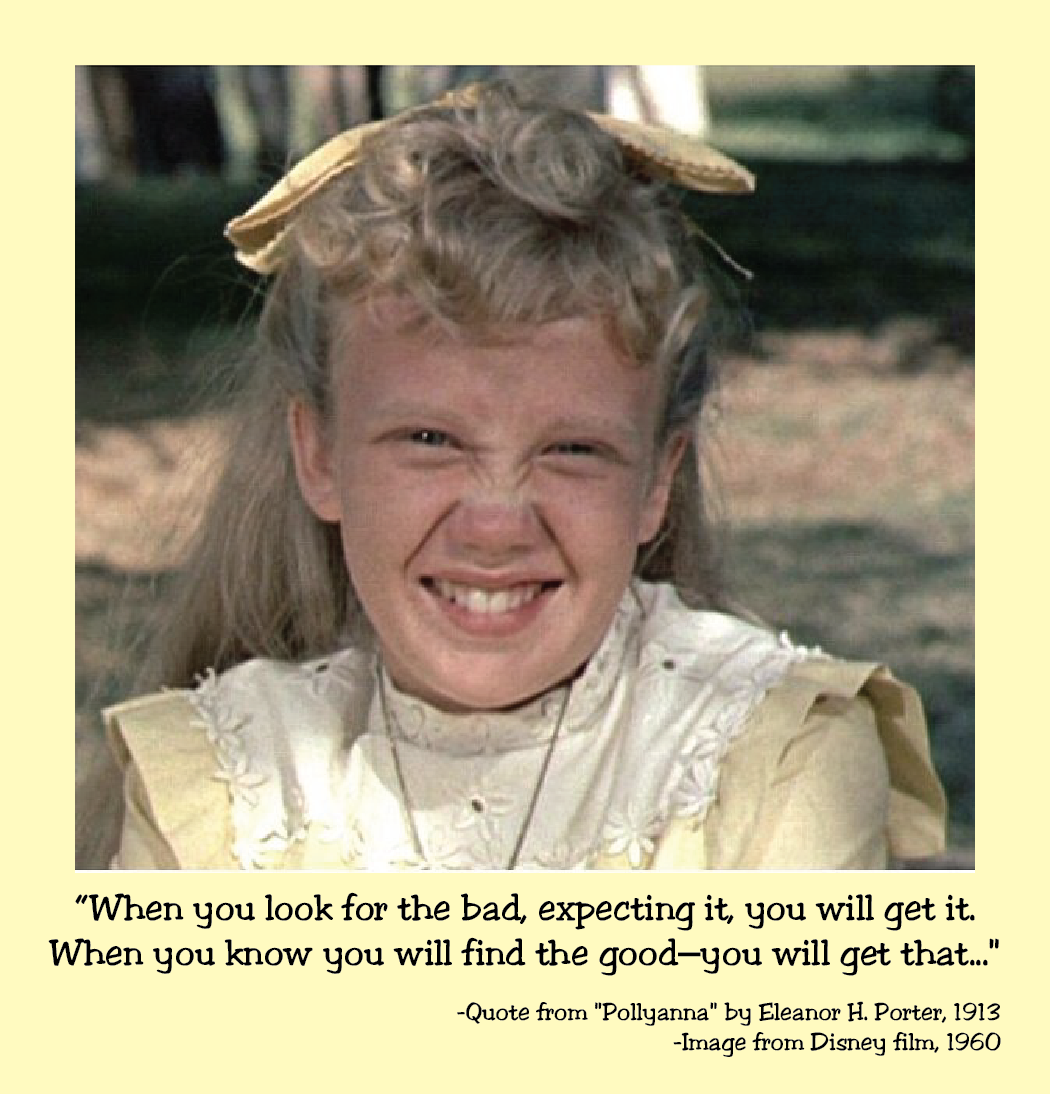
Unlike a number of my high school classmates, I never went through a "dark" phase. I've always preferred metaphorical sunshine and roses—why can't we talk about something more pleasant?
https://testguessandgo.files.wordpress.com/2015/09/pollyanna.png
Some gals noted that, depending on the English teacher, all they had to do was spin the most miserable yarn possible to score a good grade. Apparently, while lacking black lipstick, there are educators who should be classified as goth. 

In response to the question "Which subjects are underrepresented in contemporary fiction?", Ayana Mathis replies: Joy. 

Authors do err, she says, in believing that the only true and real expression of the human experience is Dickensian (I avoid his work, even film adaptations, like the plague). Life is composed not of one extreme, but of both, and everything in between. Queen Elizabeth II said, "Grief is the price we pay for love"—one cannot grieve unless one has known love.

Mathis quotes Thomas Aquinas: "Joy and sorrow proceed from love, but in contrary ways." Same premise. 
Joy, it must be remembered, is nothing like happiness, its milquetoast cousin. It is instead a vivid and extreme state of being, often arrived at in the aftermath of great pain. 
I'm gonna BrenĂ© you—again: Many attempt to numb pain (with alcohol, drugs, food), without realizing that it is impossible to selectively numb emotion. If you numb the sadness, you will also numb the joy. You can't have one without the other.

A date once asked, "Are you a Buddhist?" because of my interest in yoga and Eastern medicine. I responded: "No. Buddhists believe life is all about suffering; I don't." (Okay okay, don't get technical with me, I know Buddhism doesn't quite work like that, but "suffering" is its go-to word.) 

I don't ignore the sadness, yet I do not find anything noble in unnecessarily wallowing in it. If it comes my way, and cannot be avoided, I shall acknowledge it to the best of my ability. Because unless I learn how to sit in discomfort, only then can I savor moments of bliss.   

Monday, November 28, 2016

Paper Dolls

"Send out your information onto this shidduch e-mail list!" 

"Um, okay." 

What followed was two weeks of bizarre e-mail exchanges and phone calls. The first rang that she doesn't know me, right, so why don't I come over and scroll through her database? 

But if she doesn't know the guys either, what would be the point? 

The next called that she has just the idea for me, but I happened to know who he was and thought not. Then she carelessly suggested his friend, whom his pal spoke highly of. It's his friend. I don't think his required positive feedback means all that much. 

Then two more calls with ideas that went against exactly what I expressed in my information. We are not acquainted beyond what I stipulated in my profile. So why is your first move to recommend guys who don't even remotely fall within my criteria? 

I began to dread unknown numbers chiming on my cell. Because I hate, hate, having to explain to someone who thinks she's being nice and considerate that her idea is so catastrophic I'm considering going off the grid. 

I'm just curious how many of these women met their husbands by shidduch date. Because they have no idea how the "shidduch system" works. There are very few who can have the happy talent of matching paper with paper. I think they are the stuff of legend, as opposed to reality. 

If you want to make a shidduch, may I suggest keeping things closer to home? Singles in your extended family, in your shul, your children's friends, friends' children, etc. Why outsource complete strangers from backgrounds you don't understand, fruitlessly stapling together random ideas?

*Ping* An e-mail inviting me to come over and scroll through a database. Sigh. Please inform me if there is a single possibility, not a multitude.  

Friday, November 25, 2016

TGIF

"Ye do not seem very upset at the loss of your boat, Captain Poldark."

"I am becoming philosophical," Ross said. "As one nears thirty I think it is a state of mind to be sought after. It is a protection, because one becomes more conscious of loss—loss of time, of dignity, of one's first ideals. I'm not happy to lose a good boat, but sighing will not bring it back any more than yesterday's youth." Demelza, by Winston Graham
***
You'll notice that I haven't talked about love. Or about happiness. I've talked about becoming—or remaining—the person who can be happy, a lot of the time, without thinking that being happy is what it's all about. It's not. It's about becoming the largest, most inclusive, most responsive person you can be.—Susan Sontag, in her 2013 commencement speech at Vassar College 

Wednesday, November 23, 2016

Fave Oils

The oils are back, my peeps! Good fats are making a comeback, in the kitchen and the medicine cabinet. 

For the last few years argan oil has been my baby. I use it on my hair—I rub a few drops between the palms and run my hands through the strands. Instead of a bushy 'do, it behaves itself come Shabbos morning (my hair always looks great on Shabbos afternoon, never during Shacharis). The ends of the mane are so soft.
http://selfcarer.com/wp-content/uploads/2015/12/Uses-for-Argan-Oil.jpg
As the weather has cooled, I've been dabbing it onto my face after cleansing, before applying my other nightly creams. Nourished skin is young skin. I have to avoid the milia-prone areas, although argan oil is considered not to block pores (I had a bad experience with jojoba oil). 

When selecting oils, check the ingredients. Many can be cut with nastiness like mineral oil. Get 100% only. 

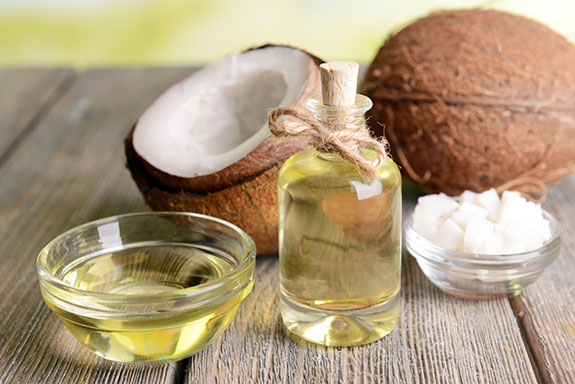
Next, coconut oil. I hate coconut, the taste of coconut. Bleh. I do not cook with it, but use it on my hair once a week for an intense mask. Previously, I used standard tubs of the stuff, which in winter would solidify and be a pain to extract and spread. 
http://paleogrubs.com/wp-content/uploads/2015/04/coconutoil.jpg
Enter Carrington Farms Liquid Coconut Oil. It remains liquid, no matter the temp, making it easy to apply. I also don't have to use as much since it doesn't have the consistency of thick goop, and in turn, less shampoo to remove the grease. 

It's also great for applying to the body. Don't neglect that as chilly days threaten. Coconut oil supposedly reduces inflammation and redness. 

Tuesday, November 22, 2016

I am Teflon

All (at least most) of us have our triggers. Some barbed remarks slide off like a bundtcake from a well-oiled pan; others stick like burnt paprikash. 

The comments that float unheedingly by, while barbed, don't excite the immune system the way others do—those flip, supposedly innocent words that awaken the self-questioning monster within. 

As the Good Book (The Hitchhiker's Guide to the Galaxy) says: 
One of the things Ford Prefect had always found hardest to understand about humans was their habit of continually stating and repeating the very obvious, as in It's a nice day, or You're very tall, or Oh dear you seem to have fallen down a thirty-foot well, are you all right?   
Ford Prefect (an alien) deduces: 
At first Ford had formed a theory to account for this strange behavior. If human beings didn't keep exercising their lips, he thought, their mouths would probably seize up. After a few months' consideration and observation he abandoned this theory in favor of a new one. If they don't keep exercising their lips, he thought, their brains start working.
Think once. Think twice. I am so very, very frightened of brainlessly opening my mouth and unintentionally awakening another's insecurities. The worrisome part is that one can't know what may be another's perceived weakness. We all have our baggage, and my baggage is not yours.
 https://s-media-cache-ak0.pinimg.com/564x/8c/db/da/8cdbdacc966c0bc9517d29364cbfc116.jpg
In Henry Alford's "The Remarkable Shelf Life of the Offhand Comment," he opens with an incident where he was thoughtlessly admonished to be "a little more effusive." As I can relate, that critique haunted him for years, haunting all social interactions. 
http://s2.quickmeme.com/img/a8/a8baa4d0b678b0914e215b72f051fa9efd98cf7a58759f6dc063a0a26cc5d0ec.jpg
As the article relates, there are a few types of shots: 1) the statements that reinforce our personal fears; 2) the remarks that make us question our beliefs/taste/self; 3) comments that are so mind-boggingly stupid that they trigger sensations of superiority and, in turn, guilt. 

To illustrate type 1: I have—bless genetics—epic dark circles. I am familiar with every means to cover them up, yet for the most part some purple leaches through the layered concealer. I receive plenty remarks casting aspersions upon my night's sleep or general health to shake my faith in ever looking good. 

To overcome these shots, one can 1) Be snarky. However, in my experience, that rarely achieves anything. Usually the other party is blankly humorless, and will not grasp the point. 2) My preference, which is to be compassionate. While it is not an excuse, when under stress, disciplining the mind-mouth connection can be difficult, and the "better left unsaid" slides out anyway. We've all had our moments. Cut 'em some slack. 

As for those transgressors who make it quite obvious that they are being bi—, um, catty, all I can think is "nebach." How sad that they are such miserable human beings that nastiness gives them an ego boost. 

A dangerous possibile outcome is grudge nursing. Grudges can become part of one to the point that shedding it is the equivalent of cutting off a toe. Let it go. Please let it go. For all our sakes.    

Monday, November 21, 2016

Bad Patient

To this day I have an odd relationship with sick days. 

When I was a child, it would happen from time to time that I would awake feeling crummy. I would crawl into the kitchen, croaking, "Ma, I think I'm sick." Ma would take one look at my woebegone form and say, "Nah, you're fine. Go get dressed." 

Not the ending you were expecting, I'm sure. 

To this day, I never know if I am sick or if I am imagining it. I take polls if my forehead is hot. I experiment if my legs can support me. I peer into the mirror to analyze my skin hue—pale green, perhaps?

Luke had it differently. There were mornings he would cheerfully boom, "Ma, I think I'm sick." 

He would be bundled back into bed with a cup of hot cocoa. 

Ergo, my firm belief that I was adopted. 

I remember once leaving my bedroom, attired in the atrocious polyester uniform skirt, walking past Luke's room. He was merrily burrowing under the covers, thermometer leisurely swirled in his hot cocoa, sending me off with a smirk and a jaunty wave. 

Now, what was Ma's thought process? 

She knew that missing a day of school is no simple matter. The concepts taught in those few hours never take root the way it does if one is there to learn it firsthand. On some level, one just cannot catch up, especially when the whole class has had a shared joke about something that happened in one's absence and, well, "You had to be there." 
http://patrickniebres.com/wp-content/uploads/2015/07/IMG_3826.png
Since I was a good enough student, Ma thought it was worth it for me to be nudged. Whereas Luke . . . she had already kinda given up on him. He spent his class time spacing out, bringing home meh grades, so if he isn't paying attention anyway, what the heck, let the kid have a sick day. (He surprised everyone later on when he shot to the head of high school classes and became a pretty smart cookie.)

It was only in college when I comprehended Ma's logic. In those years, if ill, I made the choice to heave my diseased self on the subway, clinging to the pole for dear life as fellow commuters nervously edged away. I could never find a classmate whose notes were more than four words and doodles; mine, by comparison, were four pages of closely written script. I knew then what a difference a missed day makes, and I was adamant, even if I collapsed trying, to get there.

Now, I have a job when I can take a sick day. But I still hesitate to do so, associating it still with opportunities missed.        

Friday, November 18, 2016

TGIF

  • Being an old maid is like death by drowning, a really delightful sensation after you cease to struggle. —Edna Ferber; 

Thursday, November 17, 2016

My Modesty

I am currently reading Love in a Headscarf by Shelina Janmohamed (I'm not sure where I had heard about it, but I think it was on a frum blog). The book is less about the histrionics of an "older" single, more over-explanations of Islam. 
https://img.washingtonpost.com/wp-apps/imrs.php?src=https://img.washingtonpost.com/news/acts-of-faith/wp-content/uploads/sites/45/2016/11/Nura-1024x684.jpg&w=480
Nura Afia, one of the new faces of Covergirl
The author's repeated insistence that Islam advocates love, not hate, made me think of our often frantic reactions when an outsider asks questions about Judaism. Won't they just think we doth protest too much?

We shouldn't have to be on the defensive, even if approached with a flat statement, as opposed to a curious inquiry. Janmohamed is constantly accused of being brainwashed and subjugated by the religious men in her life; frum women have experienced the same. 

If someone has an unmovable opinion, my gushing will not change anything. Better to not engage. In the future, I think I will simply shrug and say, "If you say so." 

Roger Cohen explored this gap in "Olympians in Hijab and Bikini" (this article was printed during the Olympics, but I have a backlog of pieces to link). He shares two opinions, one of a girl who voluntarily donned the hijab, another a non-Muslim who is studying in Iran, and so must abide by the culture there. The latter is not happy.

In terms of Jews, mode of dress is a constant, tedious conversation—perhaps because there is no set rules. We don't sit around pontificating about kashrus, as those laws are clear. When it comes to clothing, it's all about subjective perspective.

Janmohamed emphatically insists that the hijab is her choice. If anything, one of her frustrations in dating is that many single Muslim men want her to take it off

We've all got bechira. As to all our choices, to everyone's choices, let it be assumed that it is their choice (whatever it may be). Then leave it at that.   

Wednesday, November 16, 2016

Singin' In the Rain

Singin' in the Rain is hailed as the most favored musical of all time. (I think it's pretty darn good, but it's not my favorite.)

The songs therein were repurposed from previous musicals, so I guess they stuck with tried-and-true favorites, guaranteeing success. 
Donald O'Connor, to me, outshines everyone with his comic delivery. (Not long after I was introduced to Singin', he guest-starred on an episode of The Nanny. I was ecstatic.)
 
There's even something for the fashionista. 
 
The Oscar nomination went to Jean Hagen, who totally earned it as Lina Lamont, the shrill harpy of an actress. 
 
Singin' left me with an undying adoration of Debbie Reynolds (see The Unsinkable Molly Brown). 
 
Get a load of that footwork. Awesome, right? As a morning person, I'm up for tap dance in the a.m., but I get this clip may be offensive to night people.

I sing in the rain. Precipitation is a siman bracha.