Wednesday, April 28, 2021

Flexibility

I'm delighted to report that I'm still stubbornly slogging along with sourdough. I make it regularly, and use it in other recipes that call for "discard," even when I don't need to discard. 

I've joined a number of Facebook groups to help expand my knowledge. Many members are very militant about their bakes. They will only phrase their recipes in percentages, which is absolute gibberish to me. Or they will rattle off a stream of instructions in sourdough terminology that makes the whole process sound rigid and inaccessible. 

But the more I work with it, the more I realize how flexible sourdough baking really is. There isn't only one way of doing things. Nearly every attempt is delicious, even if it isn't pretty. 

There was a post put up on one of the groups, where another believer in flexible sourdough baking explained why you don't need to be so rigid. 

For instance, those who abide by the rigid group insist the starter has to be "fed," and then to "double" before use in baking, and maybe it should "float" as well. But he explained that it's not necessary. Sourdough starter is full of microbes, and while they will certainly ferment the dough faster if they are "active," they will do the job even if cold straight from the fridge. It'll just take a little more time. 

One day I tried it—I used cold, unfed starter from the fridge, and the resultant bake had the same taste and texture as if I had fed the starter and let it double. 

In general, I think we are less likely to try to tackle something new because we think that there is only one way to do it. It seems daunting, then, if there is only one, highly complicated method. 

I was thinking of those baby sleep training books, how they proclaim that their system is fool-proof, that it works on ALL BABIES EVERYWHERE. But how can that be true? All babies are different. All mothers are different. Different strokes for different folks. 

There is, rarely, only one way to get to a certain result. 

Wednesday, April 21, 2021

Au Contraire

After I had Ben, someone gave me their copy of Pamela Druckerman's Bringing Up Bébé, the American take on French mommying.

Of course, the French way of doing things makes any American feel inadequate. French children always eat new foods (Ben will eat four things). French children sleep through the night at two months (Ben is two years old and he usually wakes me up at some point). French children never misbehave (well, duh, a toddler doesn't always behave . . . right?) 

Today I was watching Netflix's Call My Agent! a rather funny French series about the acting biz in Paris. An actress had two babies in three years. Her agent visits her at home, trying to coax her to come back to work. She is feeding her three year old, begging her to try the baby carrots. Her daughter's mouth is firmly closed, refusing to take a bite. The mother gives in, plucking another option from the fridge.

There is no mention on the show that this is an aberration, that she is a sucky mommy. It is simply presented as . . . kids are kids. 

I found this to be profoundly comforting. 

In the end, there are few cases where generalizations apply. People are different. People parent differently. Kids are born with their own natures. It has nothing to do with nationality. People are people all over. 

People like generalizations, though. It makes life simpler. But it makes us more judgy.

Monday, April 19, 2021

The Way to the Heart is through the Stomach

I am going to say something now which will, in all probability, be considered controversial. 

Are you currently dating someone but can't get them to commit? 

Bake and/or cook for them.

I "joke" with Han that he would have married me much sooner if I had made muffins for him while we were dating. 

"No, no," he denies, his mouth full of lemon cake. But there is no denying the adoration shining in his eyes. 

I didn't really get into baking until we married. Ma used to hog the kitchen in that regard, and while I would be intrigued by different recipes, she wasn't exactly encouraging. She wasn't that jazzed about potential mess and sugary temptation.

But it turns out that I like to bake. Can baking be a hobby? I don't have many others, so it would be nice to have one. I see a recipe and I itch to try it. I frantically calculate: How much sugar can I shave off? How can I divide it into a smaller pan? What ingredients do I still need for it? I've always sucked at math but now I convert tablespoons to cups with ease.

As I type this, I have a whopper of a burn on my left wrist. Ben has a fascination with the oven so when I have to quickly get something out (it can be just a few moment between moist and dry goodies) I tend to scorch myself. It's fine. It's like a cool battle scar.

So after I started dabbling in baking, I noticed that Han was happy. Very very happy. While I grew up with at least two steady cake options in the freezer, Han did not. That makes him quite appreciative of my homey efforts.

And so we "joke." 

Brownie: "I'd marry you all over again!" 

Blueberry muffins: "I looooove yoooouuuuu!" 

Pesach sponge cake: "Damn, girl!" 

This strategy swings both ways. Han's brother likes to bake too, so he'll be a'wooing with ease. 

Suck at baking? Can't cook to save your life? No problem! Enlist the help of a friend who does like to and make sure to never expressly lie to the object of your affections. "You seem like you could use a home cooked meal." "These were no trouble to whip up."

Hey, just give it a try. Like chicken soup (Han lives for chicken soup) it can't hurt.

Wednesday, April 14, 2021

Thin Skinned

I used to like the romance genre more, but once the typical cliched plot becomes ubiquitous, I've been leaning towards murder mysteries. 

Romance plot: 

(1) Two people meet. 

(2) They get along swimmingly. 

(3) One half of this excellent couple screws up in either a major or minor fashion. 

(4) The other half is so angry that the two go their separate ways. 

(5) The one half initially accepts defeat, then decides to fight for the other, abjectly apologizing while a crowd of onlookers gawk. 

(6) Couple reunites and prance into the sunset. 

After the first 500 iterations, it gets kind of old. 

Olivia Dade's Spoiler Alert is no different. But a scenario in the story that took place made me think. I'll try not to give anything away: 

Character A makes a comment. A comment he believes to be innocuous. 

Character B, however, has experienced this comment beforehand, but not in an innocuous fashion. Therefore, she assumes A's motivations to be nefarious, and marches off. 

Character A has no flipping idea what happened. 

It made me wonder. Was I like that when I was single? Did people make comments that they really thought were innocuous but due to my previous experiences, I thought they were issued with malice? 

Well, the lady who said as soon as she met me "Don't be picky," I stand by my freak out. Otherwise, I can't remember every interaction I had (once I had Ben it was like a memory wipe took place; sleep deprivation destroys recall), but many upset me. Was I misunderstanding others' intentions? Was my skin too thin? 

But then, why was my skin too thin? Because I had been bombarded with ego-destroying comments once I was 23 (seriously, that is ridiculous), when everyone began earnestly listing to me how just being me was getting in the way of my marrying (here's my spoiler alert: if I have to pretend to be someone else in order to con some shmo into putting a ring on it, I'd rather fulfill my dream of getting a horse).

Are single people sensitive? Yes, for good reason. Same as everyone out there is sensitive regarding some unknown issue. We all have something that triggers us, makes us freak, and sadly, telepathy isn't an option. 

So here comes my suggestion again that we all just wave at people and say nothing. 

Oh, and Spoiler Alert was incredibly UA, for mature audiences only, heck, I had to skip a few explicit pages.   

Wednesday, April 7, 2021

Ambiguous Grief

I've mentioned before Lori Gottlieb, the psychotherapist and author. Yesterday someone forwarded this to me, an answer to a question from a single person who can't bear hearing her friends rant about their significant others, when she is sad about being unattached. 

Gottlieb gives this sadness legitimacy. She calls it "ambiguous grief," because the recognized instances of loss tend to be around actual loss, as opposed to mourning something that one never had. 

I've noticed that in my experience, most people did not realize that a person who is single can be sad not only for a person they have not yet met, but also for children that don't exist. 

Singles can be hurting, but others tend to pile on the hurt, proclaiming that they must be doing something wrong, it's so simple to find a life partner. And have children. And raise those children. And keep your marriage healthy. 

I denied my ambiguous grief when I was dating because—well, I didn't think that it was valid either. No one acknowledged it. How many would say, "It must be hard"? And frankly, if someone did say that to me, I'd be annoyed because I don't like to be pitied. 

I just wanted to be . . . not mistreated. Not badgered. Not blamed. That was the painful thing—being accused as the reason why I was unattached. 

Luckily, whatever friends I had vanished once they married (I didn't mind all that much) so I didn't have to hear about them complain about their spouse, or at least they were tactful enough to rant about the weather instead. 

I have a friend who married before I did. I have Ben; she does not yet have a baby. It is not by choice. Whenever we text, or speak, I do not kvetch, "I was up all night with the baby, again." I do not vent, "Can you believe the little stinker emptied out all the spices?" Or "You are so lucky you don't have to deal with nasty diapers! It was everywhere!" 

That would be rather cruel. Right? She would happily do all those things because the positives, in the end, outweigh the negatives. 

Additionally, I wouldn't complain about those typical baby tasks in the first place, because getting into the mommy game later than most, I am grateful. It's hard, but it's the happy kind of hard, not the sad kind of hard dating fruitlessly was.

Wednesday, March 24, 2021

Too Old For This

I'm too old for this, is now a constant refrain of mine. 

I feel like I'm too old for a lot of things. Too old to be up at night with a toddler, too old for drama, too old to make certain mistakes. 

It's not just sighting a few gray hairs that has sent me over the edge. OK, maybe it has. (I shouldn't even complain, because half of my gene pool goes gray at 21, so this was a long time coming.) 

Nearly every single time I finish having a conversation with a friend, I kick myself for days afterward wondering, "Why did I SAY that?" 

Aren't I too old for this? Aren't I too old to keep shoving my foot in my mouth? 

Every time I despair that maybe taking a vow of silence would be less stressful than being allowed to yammer all day. 

Luckily, my friend doesn't seem to hold it against me and I try to bribe her forgiveness with baked goods. 

But I feel so weary, making the same boo boos that I committed so long ago. Because aren't I too old to keep my tongue running amok? 

Recently, I went to a client's office and had to sift through some documents, so I sat down cross-legged on the floor. An older woman at a desk nearby gaped (at least I think she did, we're all masked). "Only someone young could sit like that," she said, patting her "bad" hip. 

I was taken aback. Me? Young? 

I feebly complained about my back, which has finally become somewhat functional two years post Ben. She wasn't buying it. 

I guess age, like everything else, is relative. I wonder if there is hope, in my current sleep-deprived state of existence, to make the most of "youth" and get my mouth to behave. 

Monday, March 22, 2021

Prince Boring is King

I wasn't so jazzed about Bridgerton. I'm rather surprised at myself, considering my teenage diet of regency romances, but I found it frustrating. Just one aspect: the women claim to want love, but simultaneously, the higher title, the better. Ladies, you have to pick a lane. 

I have no intention of spending a post picking apart Bridgerton—I'm not that much of a killjoy—but I came across this article about how the Prince would have been the better choice for Daphne, title aside.  

But despite their chemistry, I found myself secretly, silently rooting for Daphne to say yes to her other suitor: unmysterious, dully predictable Prince Friedrich of Prussia. Go with the nice guy! I pleaded. Make it work! In the language of romance—settle. Settle! Settle for happiness, and not just the idea of it.

The idea of a love match—a Darcy and Elizabeth ending rather than, say, a Charlotte and Mr. Collins compromise—is a central theme in the show, and one I very much agree with. But while most marriage plots end with a marriage, Bridgerton is interested in what happens after the knot has been tied. And that is where things can get complicated.

OK, I have to admit, I don't understand this concept of "settling" for the nice guy. I wanted a nice guy. I searched for the nice guy. Thank God, I found the nice guy. Bad boys? Cool dudes? No thank you. I've never had any interest in them. I'm guessing that they're initially exciting, but they get old reeeeeaaaaaal quick.

Rooting for the stable guy doesn’t mean marrying some dud over your true love. It’s not like I think Buttercup should’ve taken a second look at Humperdinck and said, “Wow, this guy seems to have better prospects than a pirate—better stick with him.” But while Daphne and Simon proved me wrong, for a while there he was giving off some serious Willoughby from Sense and Sensibility vibes. And fans of the novel know, it’s Col. Brandon, Marianne Dashwood’s older, kinder, overlooked suitor, who turns out to be her real soul mate after the dashing Willoughby throws her over. It’s the difference between the intensity of romantic love and the sustaining love that carries you forward when you are in the foxhole together, facing loss and sorrow and hardship and boredom and birth.

I've seen a few gals I know, capable, steady women, who married guys who have the whole brooding Marlon Brando thing going for them, and I wonder—is he going to be supportive when you have a bad day at the office? Or will he shrug and head out for a smoke?

Eons ago (well, it feels like eons) I read a book called Kristen Lavransdatter and wrote a post about it. It pretty much backs Nordberg's point. It seems to be a favorite angle with Austen too: beware of the charming, handsome smoothie. Colonel Brandon is one of my favorite characters (while I'm a fan of Alan Rickman, he was already 49 in the 1995 version, so that was not good casting. David Morrissey in the 2008 adaptation suited me perfectly); he proves himself to be the reliable, caring, considerate suitor that Marianne eventually appreciates (or marries on the rebound. I don't think he cared). 

Wednesday, February 24, 2021

Before You Bake . . .

Um, so you know how I highly recommended whole spelt flour? So, er, there's an addendum to that. 

Yesterday, I attempted to make cookies for Shaloch Manos, and I quadrupled my usual cookie cutter recipe. 

It was a nightmare. 

The dough never came together; it remained sandy and crumbly. I tried adding more oil, more liquid, and nothing doing. I attempted to cut them out, and it was horrific. They refused to stay together, falling apart, jagged edges. When I shoved them into the oven and eventually took a peek, I saw in shock that they were foaming

I googled "whole spelt cookie cutter" and the few recipes either called for copious butter (I'm currently remaining pareve) or they enthused, "These cookies are deliciously crumbly!" 

Oh. 

So I bolted to the nearest health food store and miraculously, they had the whole wheat pastry flour in stock (I've been having difficulty finding it since COVID hit). I redid the dough, and OMG, it was like silk. It rolled out into beautiful slabs. The cookies held their shape magnificently. I nearly wept.

The whole spelt flour, however, has been performing very well in cakes, and non-cookie cutter cookie recipes. I've even made stunning challah from it. 

So even though I initially recommended it for cookie cutter cookies, I take that back. My first attempts with it went ok but then I hadn't quadrupled the recipe. Those sort of details matter, apparently. Blurgle.

Monday, February 22, 2021

Plans B, C, D . . .

Han had an insight the other day. 

In the Megillah, Mordechai tells Esther that she must try to save her people. He says that if she does nothing, the salvation will come from another source, but she must still try.

If you look at the Megillah, Han said, you don't see a Plan B, but according to Mordechai, there were other ways we could have been saved. 

It was like when we were dating, he said. When you are in it, you don't see the Plans. You don't see where it will come from. But they are there. 

I concurred it was true. For all my efforts, my visiting shadchanim, I didn't expect my aunt's friend who I barely knew to be the one to set us up. I didn't expect her to be a fierce advocate on by behalf, staying on top of the shidduch until it came through.  

The Megillah took place in a time of galus, past the time of supernatural miracles. But it is no less miraculous because it took place through a string of "convenient" coincidences. This is how Hashem speaks to us now. 

Esther did not get the shidduch of her dreams. She was taken from all she knew, the home she loved. Her child was raised Persian. But she was the savior of her people, and her name is praised for eternity. 

We can spend so much time looking in one direction, expecting only one way of doing things, when Hashem may say, "No. I have other plans for you." They are there, humming away in the background, whether we see them or not. 

Wednesday, February 17, 2021

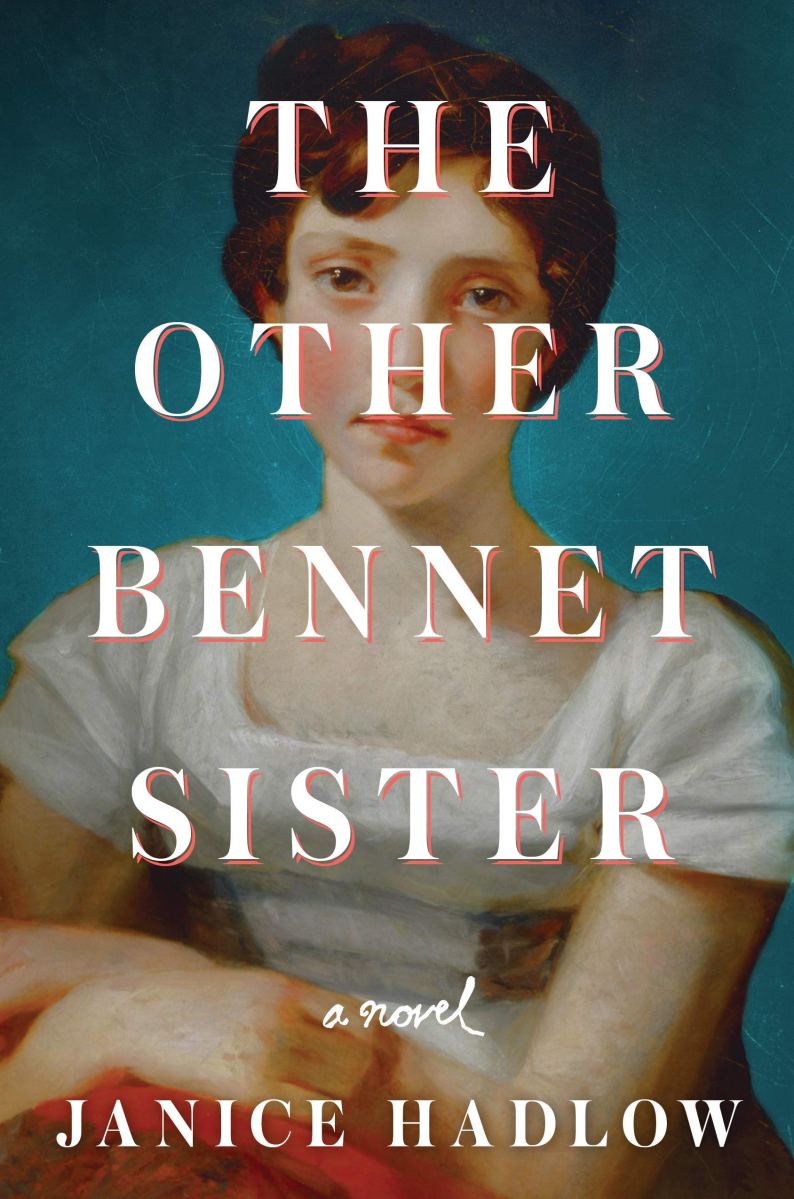
Shidduch Lit: "The Other Bennet Sister"

This past Shabbos, I began "The Other Bennet Sister" by Janice Hadlow, and while I am only fractionally in, I am already charmed. 
See the source image

I have read a number of homages to Austen, and so far, Hadlow's is the most satisfying. She captures the language and sensibilities beautifully. The story initially runs parallel to "Pride & Prejudice," through Mary's eyes, intertwining, at times, Austen's dialogue with Hadlow's, and they seamlessly flow together.

Mary is "The Other Bennet Sister," and she is captured in a heart-breaking light. Sandwiched between four beautiful sisters, Mary, the only plain one, finds herself scorned by her mother and ignored by her father, who only cares for Elizabeth. She becomes serious and pious as an attempt to overcome this "shortcoming," feeling rather lonely. 

In terms of Shidduch Lit, her interactions with Charlotte Lucas definitely qualify. "[Mrs. Bennet did not] hesitate to dwell, with all the sympathy at her command, upon the disappointment [Lady Lucas] must feel at Charlotte's still remaining unmarried at the age of twenty-six, especially as there seemed so little chance of her changing her situation."

Charlotte and Mary have a number of interactions, and it is with Mary that Charlotte reveals her impatience and frustration. While Bingley leads her out for the first dance at the Meryton Assembly, he makes his preference to Jane clear by the dances following. 

"I know very well what I must say next," continued Charlotte. "I must smile and nod and look unconcerned at my dismissal, whilst laughing and teasing Jane about her new conquest. And that is what I will do. I'm used to it. but I tell you what it is, Mary—I'm not sure if I can do it for much longer. . . I am nearly twenty-seven years old. And not once has anyone looked at me with the admiration Mr. Bingley is now directing at Jane. Not once have I been the one around whom other women gather, congratulating, and exclaiming. No—it is always my lot to cheer the triumphs of my friends. . . Lord knows, I don't expect much. But I should like to have something of my own before it is too late. Some mark of affection, some sign I have been wanted and preferred." 

"You have parents who love you," ventured Mary, "and brothers and sisters to care for." 

"Yes," replied Charlotte, "and I know that should be enough, but with every day that goes past, I find that it isn't, quite." 

Charlotte later says: "When I was about your age, I imagined marriage was a reward for good behavior and patience. I thought if I was good and obliging and did as I was told, it was inevitable that I should end up as someone's wife. If it didn't happen this year, then surely it would in the next. But I waited and waited and smiled and smiled, and yet here I am—a single woman still." 

She then describes the sorry state of old maids, who have no means of support, and who are looked down upon and condescended to by society. She has decided to threaten herself by embracing spinsterhood the following year, and is now putting all her focus in securing a marriage partner. 

" . . . I'm prepared to do anything I can—within the bounds of propriety, of course—to find a respectable man to be my husband. If such a one were to cross my path tomorrow, I should not answer for his chances of escaping me." 

Charlotte, plain like Mary, sees in her a woman of similar situation, and feels she can be honest with her in a way she cannot be with Lizzie. Lizzie is young and beautiful, and can talk of love marriages. But Charlotte will not, cannot, wait for love. She wants a home of her own. She wants status. She wants to be married. 

She tells Mary: "Don't waste time as I have done waiting for something to happen. Fortune really does favor the brave, you know. Don't believe you can find happiness celebrating the good fortune of others. An eternity spent smiling and cooing over the good luck of your friends makes the heart sick in the end. And above all, don't long for what you cannot have, but learn to recognize what is possible, and when it presents itself, seize upon it with both hands. It seems to be the only route to happiness for those of us born with neither beauty, riches, nor charm."

OK, my hands are cramping with how much I've quoted, but these passages really spoke to me. For a long long time I had to go to vort after vort of "baby" cousins, smile and be gracious and wish Mazel Tov while I wondered what the heck I was doing already that rendered these kiddies married while I remained the unmarried freak. 

Anywho, like I said, I'm not that far in. I'll let you know if I liked the ending.