Sunday, May 18, 2014


Friday, May 16, 2014
I Shall Vanquish Thee!
Mustfallasleepmustfallasleepmustfallasleeeeeeeeep . . .
Obviously, I wasn't falling asleep.
I don't operate well under pressure. My cousin's wedding, complete with Shabbos Sheva Brachos (and lechtzin was good and late, by my standards) was nigh. Additionally, Ma had succumbed to a flu-like illness that was making its merry rounds, having flattened uncles, aunts, and cousins; I could tell it had its eye on me.
Ta and I warily circled her with shirts pulled over our noses, but I feared the worst. Whenever my sleep has not been at its best, my immune system commits hari-kari, and in waltzes, unchallenged, various bacteria and viruses, delicately stepping over the inert corpses of my white blood cells. An effortless coup, if there ever was one; I should just rename my immune system the Vichy government. I have attempted to surreptitiously toot my nose during the maelstrom of sheva brachos speeches more than once.
I needed to bring in the big-gun mercenaries.
I had a method—drug-assisted nights, elderberry, neti, and my new discovery, raw garlic. After a failed attempt at valerian root, time was running short. The wedding was that night, and I had—gulp—a tickle in the back of my throat. Like Ma had had.
For the last month or so I had been religious about dosing myself with raw garlic, which meant my morning commute was rather close-mouthed. Taking it more than once a day in order to keep in tip-top shape would leave me a social pariah, although it must be better than hacking and wheezing.
There is enough internet babble about the immune benefits of garlic (anti-baterial, anti-viral, anti-fungal, etc. In a study, it was found to be 100 times more effective than antibiotics in treating food-borne illnesses) so I simply had to hit upon a better method of consumption. This option turned out to be the most painless and the least stinky of breath.
Unlike other medications, the body doesn't adapt to the benefits; the garlic defends indefinitely.
Unlike other medications, the body doesn't adapt to the benefits; the garlic defends indefinitely.
Raw Garlic Supplement for Cold, Flu, and Everything Else Prevention
1) Mince a raw garlic clove. It must be raw, not frozen or pre-diced. (The easiest way to get the skin off is to wack the clove with a wide-bladed knife, then mince.)
2) Let it "breathe" for a minimum of five minutes, no more than a half hour. This allows the immune-boosting components to manifest; but don't wait too long since eventually they diminish.
3) Mix with a spoonful of honey. (I'm not really a fan of honey, but I purchased this one and I really like the flavor. Raw honey has anti-bacterial and anti-allergy properties as well.)

4) Try to get it all on the spoon, and swallow it down in one go. The honey helps coat the potency of the garlic on the way down, so no serious tearing or gasping, and no garlic breath either!
5) Keep a banana on standby. Sometimes, when the garlic is at optimum potency (10-15 minutes of airing) even the honey isn't enough to prevent a "HOOOOO!" response. Gulp the garlic-honey and follow with the banana.
5) Keep a banana on standby. Sometimes, when the garlic is at optimum potency (10-15 minutes of airing) even the honey isn't enough to prevent a "HOOOOO!" response. Gulp the garlic-honey and follow with the banana.
I took a "dose" twice a day while my sleep was in shreds and I shared a roof with Typhoid Ma; since then, I take it once a day. While I usually spend my winters being attacked by every minor fever and cold, since I have been taking it . . . well, that little tickle at the back of the throat just stayed a little tickle at the back of the throat, until it quietly faded away.
During the wedding itself, the haggard zombies of the flu victims surrounded me, but I feared none. At the Shabbos Sheva Brachos I was actually sneezed directly upon by one, and shared a fork with a niece who began suspiciously coughing just after, but I sailed through the airborne pathogens unassailed. Perhaps because breakfast, lunch, and dinner were followed with my "medicine"?
I shared my divine discovery with as many as I could, but few heeded my call. Fine, sneeze then, see if I care.
I have garlic on my side.
I shared my divine discovery with as many as I could, but few heeded my call. Fine, sneeze then, see if I care.
I have garlic on my side.
Thursday, May 15, 2014
Hoarder
Since childhood, I've tended to anthropomorphize objects. Even though, to me, Cabbage Patch dolls are reminiscent of Chucky, I felt sorry for them while shivering in terror if their leering faces were not covered up for the night.
There was a plastic riding horse on wheels that lived forever in our garage, but I just couldn't bring myself to have it thrown out. If Ta tucked it into the garbage, I fished it out.
"To be thrown away, alone and unloved?" I would think. "I can't have it think that."
I haven't yet seen Toy Story 3, probably because that is what their fate was, and that merely reinforces in me the crippling and hoarding belief that all inanimate, factory-assembled objects have a spirit, if not a soul.

Heather O'Neill confesses that same fantasy in "The Secret Life of Our Trash Can." Even our own stories reflect a consciousness to the seemingly insentient; the moon's begrudging the sun's sky-dominance, the stones arguing beneath Yaakov's head, Har Sinai's modesty. Medrashim, you aren't helping.
The question is if such excessive "compassion" is a good or bad thing. Is it occupying valuable heart-space that should be reserved for loftier causes?
Moshe wouldn't strike the water or the dirt that had done him a good turn. Those teddy-bears comforted me many times in my carefree youth.
Even though they are terrible dust-catchers, and I have a sneaking suspicion I am allergic to such mites, they shall still occupy a place on my desk, ready and waiting for when a niece or nephew require something furry to cuddle with at night.
Wednesday, May 14, 2014
Those Crazy Religious People
"But what am I supposed to say?" my sister asked, worried.
"Just say it's not shayach. It's a wonderful vague phrase."
"How do I even spell 'shayach'?"
"S-H-A—"
"I know how to spell 'shayach'! But I can't text that."
At this point, a coworker had sidled up to my desk, considerately waiting for my sister to get off the phone. A disastrous outing with a relative of her neighbor required a delicate, diplomatic touch in the refusal.
An irreligious Jew, he seemed to find this conversation entertaining. He smiled sympathetically as I floundered for another response while he listened on.
"Then say, 'It was very nice to meet him, but she doesn't think it's going to work out.' Followed by a lot of gushing thanks for thinking of me, and so on."
"Okay . . . that'll work. I'll text her now. Thanks."
Coworker and I share grins. He didn't inquire, but I'm sure that snippet provided him with enough entertainment for one morning.
Tuesday, May 13, 2014
You Look Back, You Turn to Salt
One of Ma's favorite movies is Something To Talk About, where a really youthful Julia Roberts (has it been so long since 1995?) discovers her husband has been having an affair. It then turns out many affairs.
Let it be clear: I do not, in any way, remotely tolerate adultery. What I can see the appeal in the film is how two people, young and "in love," change, but they don't see the change. They focus instead of what had been, instead of what they are now, believing what is important is what they had, as opposed what they can give now.
At the end of the movie (obviously, spoilers ahead) they acknowledge that they are no longer the same people, and date on that premise, pursuing not only the new model of their relationship, but their career dreams as well. Marriage can outlive even the vagaries of self-improvement.
Mary Elizabeth Williams divorced from her husband, then dated him again, and committed to him again ("A Second Embrace, With Hearts and Eyes Open"). They didn't try to reclaim that ancient youthful "magic". Time has, should make you a different person. Which should mean the relationship morphs as well.
But falling in love again after a breakup is no simple matter of retreat. We are not the people we were when we met two decades before, and we had no desire to relive a marriage that had, to the best of both our recent memories, failed unequivocally.Yet if we had taken the leap of faith it takes to end a long-term relationship, surely, we figured, we could muster the even greater trust it would take to open our hearts again.
Don't look back. Go forward.
Nobody writes songs about sitting on the edge of the tub while a man applies topical antibiotics to your oozing skin graft. There are no poetic odes to women with gaping scars, no sonnets to men who may be wearing the same shirt for the third day in a row.
But maybe there should be, because everything I thought I knew about love at 24 seems pretty absurd now. I didn’t know then that a wonderful relationship would one day become unsustainable. I couldn’t have imagined that later on, strangely enough, it would become a new kind of wonderful.
Lehavdil, even when a favorite cosmetic is discontinued and I plunge into a flurry of mourning, Ma firmly tells me something better will come along. It usually does. After all, as I posted yesterday, I've reconciled with eye pencil. Who knew?
Wait, I don't think that metaphor is the best. OK, that grand time one has with a new love is the eye pencil, not the significant other. The relationship itself is the pencil. Feel free to realize that the pencil is getting a little stubby or a little runny or otherwise defunct, try going for a new tack. They have great long-wearing formulas around now.
Monday, May 12, 2014
Eyeliner Quest
Sephora stopped carrying the Illamasqua Eye Liner Cake. Not a cosmic problem, I know, but for the last few years I have known no other liner.
Bloomingdales is still currently selling it, so I swiftly purchased another from there, and I received a rather yellowed-looking box. Mislead's time in the US of A may be running out.
I don't like to have all my cosmetic eggs in one basket; I began to browse for more options.
I covered eyelining in this blog's first few months, and my opinions haven't changed much since then. I am not a liquid eyeliner fan, preferring the safe-smudginess of pressed powder, such as Ilamasqua's. All previous pencils that I tried tended to leave black rivulets coursing downward.
 |
| Like Floki's. |
But I am always willing to experiment yet again. I filtered the results on Sephora by most favorable reviews, and up comes the cult-favorite Urban Decay 24/7 Glide-On Eye Pencil, which I bought in the darkest black, Perversion.
Maybe because it has been a long time since I used an eye pencil, perhaps I didn't smudge it right, but boy, did it make a run for it. When I returned it the gal behind the counter thought I was slow in the head. "You're returning this?" she asked in shock. "Are you sure?"
I then received a VIB promotion of 15% off, which I decided to use to bankrupt myself. Amongst my haul that are loved:
Stila Stay All Day Waterproof Liquid Eye Liner in (obviously) Black: Yes, it is liquid eyeliner, albeit in the form of a marker. Why did I buy it? The reviews were so ecstatic I figured that I could manage with it somehow. Since it is a fine-tipped marker it doesn't give me that smoky-smudginess I like, but one thing is for sure: it STAYS.

As in Shabbos Face STAYS. The neat painted line stays a neat painted line until os. If you like liquid eyeliner, this one is a keeper.
Sephora Collection Retractable Waterproof Eyeliner in (indubitably) 01 Black: For weekday wear, I think I have found my new daily go-to. No sharpening (although it does come with a mini-sharpener if the tip is not to sufficient pointedness) and a built-in smudger. Application is pretty effortless, since the results are a blended smoky eye.
 My eyes have a tendency to tear up on the slightest pretense, like the springtime breeze kicking up a notch, and even after blinking away moisture, nothing strayed.
By end of day, if there the migration, it is minor.
Sephora Collection Contour Eye Pencil 12hr Wear Waterproof in (undoubtedly) 01 Black Lace: While giddy with the above option for weekday, I wondered if this would be remotely up to the challenge of the 25 hour Shabbos.
 It was! After applying and smudging with a cheap drugstore smudger, it gave me the look I've been going for, and stayed on very well.
Like Siggy's.

By end of day, if there the migration, it is minor.
Sephora Collection Contour Eye Pencil 12hr Wear Waterproof in (undoubtedly) 01 Black Lace: While giddy with the above option for weekday, I wondered if this would be remotely up to the challenge of the 25 hour Shabbos.
Like Siggy's.
Sunday, May 11, 2014
Winton's List
60 Minutes featured a story about a relatively unsung hero of the Holocaust: Nicholas Winton. Watch and weep at the power of one man.
He turns 105 later this month. Until 120, Sir Nick.
Friday, May 9, 2014
Yes, You Can Sauté Lettuce
They were lying in the fridge, neglected over the many days of Pesach, only unearthed after the top layer of edibles was removed. A three-pack of English cucumbers, superlong, ideal for faux-light saber battles.
They were getting on, soft to the touch.
Must save them!
Cucumber salad? No, two containers worth still had to be consumed. Regular salad? Blah, so much work to chew.
Then the imp of ingenuity suggested in my ear: How about you sauté them? After all, they're pretty similar to zucchini, right?
Since I don't trust my inner muse all that much, I googled this concept and was relieved to discover that it is not "wrong."
That day's lunch was sautéed onion, cucumber, and mushrooms with a dusting of garlic powder and black pepper.
Watching Jacques Pépin one evening, he casually chopped up some lettuce and tossed it into the frying pan. He didn't even look furtively over his shoulder before he did it. There's even a recipe out there for Pea & Lettuce Stew. It can be stewed!
I am not a salad person. Lettuce is usually not cut small enough that it always has to be negotiated into the mouth (goodbye, lipstick), and the chewing, ugh, so much chewing.
Well, now, after slicing the head of lettuce into neat strips, I just sauté the whole shebang; it goes appealingly limp, making it much more manageable to eat. Light cooking (not overdone cooking) actually helps release the nutrients for better absorption, according to some.
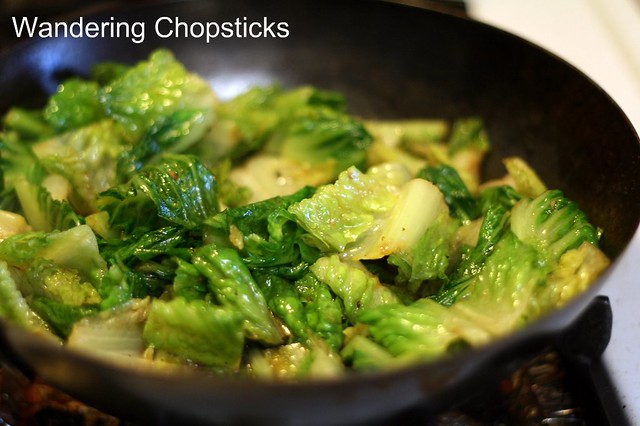 There are few rules when it comes to cooking (as opposed to baking). It's nice.
Thursday, May 8, 2014
Do the Time
As we have been hearing nowadays, marriage is in the ICU. Divorce rates are depressingly close to 50%, and our own community has also reflected a rising rate of "calling it quits." Yet marriages that are happy are happier than they have ever been before.
Eli J. Finkel's "The All-or-Nothing Marriage" explains the evolution of marriage in the last few centuries. The first model, "institutional marriage," was based more on the home being like a company. A man and woman have to eat, so they would join forces. If they got along, even better.

In the mid-1800s, with the establishment of cities and factories, farm life no longer the primary means of survival, "companionate marriages" arose. When men earned good incomes outside of the home, instead of relaying on subsistence agriculture, "love" became more of an option, a benefit of affluence. This new version of marriage lasted until the mid-1960s, according to Finkel.

Now: "Self-expressive marriage," that the right partner will inspire one to know thyself, and become better.
As a psychologist, I could not help noticing that this history of marriage echoes the classic “hierarchy of needs” outlined in the 1940s by the psychologist Abraham Maslow. According to Maslow, human needs fit into a five-level hierarchy: The lowest need is that of physiological well-being — including the need to eat and drink — followed by the need for safety, then for belonging and love, then for esteem and finally for self-actualization. The emergence of each need characteristically depends on the prior satisfaction of a more basic need. A person unable to satisfy the need for food, for example, is wholly concerned with meeting that need; only once it is met can he focus on satisfying the need above it (safety), and so on.
My colleagues and I contend that an analogous process has occurred in our expectations about marriage. Those expectations were set at the low levels of Maslow’s hierarchy during the institutional era, at medium levels during the companionate era and at high levels during the self-expressive era.
It is just as I suspected. When one is scrabbling nourishment from the dirt, there isn't much time to dwell if your wife "gets you," or if your husband shares the same "hashkafos." Excuse me, trying to survive over here. But when all your basic needs are met, then the secondary needs are met, then even the third, and the fourth—you've got a lot of thinking time on your hands.
It is no longer work to keep a house heated; no more chopping wood, no more hauling coal! Yet it cannot be expected that there should be no effort at all anymore in anything; merely, the arena that demands work has shifted.
To relationships.
Spending time interacting with significant others is vital to keep marriages healthy and happy, and it has been shown that those with small incomes have higher divorce rates because work eats up all of their time.
First and foremost, couples can choose to invest more time and energy in their marriage, perhaps by altering how they use whatever shared leisure time is available. But if couples lack the time and energy, they might consider adjusting their expectations, perhaps by focusing on cultivating an affectionate bond without trying to facilitate each other’s self-actualization.
The bad news is that insofar as socioeconomic circumstances or individual choices undermine the investment of time and energy in our relationships, our marriages are likely to fall short of our era’s expectations. The good news is that our marriages can flourish today like never before. They just can’t do it on their own.
Tuesday, May 6, 2014
Battle of the Bulge: Obesity Shouldn't Be a "Disease"
Categorization can have all sorts of ramifications. Observant Jews are aware of this, as most of us have one foot in the secular world and another in the religious.
For instance, in a minor way, modern science classifies whales as mammals, whereas any creature that dwells only in water is a fish, to a rabbi. Then there is the major halachic aspect, like the rabbis deciding to classify the new invention of harnessed electricity as "fire," making it verboten on Shabbos.
The American Medical Association decided to label "obesity" as a disease, claiming this way it will receive higher priority by the medical world for research. But as Crystal Hoyt and Jeni Burnette report, it's not a good move.
Validation can be a dangerous thing. With validation can come complacency. The mental health field contains enough patients who want a sympathetic ear, not emotional tools to move forward; they dwell in the past, instead of progressing towards the future.
There are those who blame every character "quirk" on their traumatic upbringing; I empathize, I do. But you're 60. You are choosing to focus on that which was out of your control decades ago instead of enjoying life now.
As Hoyt and Burnette concluded, once obese individuals were informed that their condition was a disease, not as a result of lifestyle choices, they ceased to consider the caloric content of their meals.
As Hoyt and Burnette concluded, once obese individuals were informed that their condition was a disease, not as a result of lifestyle choices, they ceased to consider the caloric content of their meals.
To be fair, any decision that involves an issue that cuts across physiological and psychological conditions will involve complications and trade-offs. Our research highlights one of these: Calling obesity a disease may make people feel better about their bodies, but it also may contribute to the maintenance, rather than reduction, of obesity.
Ideally, we would have a public health message that leads to a decrease in self-blame and stigma while at the same time promoting adaptive self-regulation and weight loss — both equally important components of the fight against the obesity epidemic. We’ve yet to find an answer to this dilemma.
While I read articles about weight-loss drugs currently in the works, I shake my head. In nearly every aspect of medicine, if a condition can be solved without pills, that is always the ideal. While drugs can do amazing things nowadays, they should not be taken unnecessarily—the list of potential side effects is enough to scare the willies out of me.
We all know what the best way is. Check out Rena's "8 Week Get Healthy Plan" for tips and inspiration. Remember, it's not about weight loss, it's about getting healthy.
Subscribe to:
Posts (Atom)