Friday, April 1, 2016

TGIF

  • Nice guys finish first. If you don't know that, then you don't know where the finish line is.— Garry Shandling

Thursday, March 31, 2016

Battle of the Bulge: The Meiven

Mrs. H and I were swapping our methods for weight maintenance. 

"I wake up ravenous," I was telling her. "The whole morning I can eat. But my appetite starts to taper off in the afternoon. By 7 it's non-existent. Like, 6:59 I could still munch on something, 7:01 I am no longer tempted. And if I've had a big enough lunch, I don't need supper. Maybe an apple." 
http://rlv.zcache.com/i_love_breakfast_clocks-rf17729b476964fbcab745bb380bb2068_fup13_8byvr_324.jpg
The incredibly slender Mrs. H shook her head. "No, with me, I snack at night. I can't fall asleep if I'm hungry."

"I only sleep well if my stomach's empty!" 

Hm. 

As we've discussed, everyone gains weight differently. We don't get a vote in the matter; it lodges itself on the various zones of the anatomy with seeming arbitrariness. 

I erroneously believed that in terms of weight-maintenance methodology, what works for me should also work for everyone else. Then I read Ruth Reischl's "Constant Craving," and I was perplexed. A woman who has spent her whole life battling her weight becomes a food critic, eating out night after night, and suddenly her demon is slayed? Say what? 

But she says it right there: 
The first thing I learned was to forget everything I'd ever heard about when to eat and pay attention to my body. When I did, I found that it has very definite notions about food.
Some people wake up ravenous and want an enormous breakfast; some prefer their major meals at nighttime. There's no point in fighting it. If you're the kind of person who wakes up starving, waiting until dinner is only going to make you tense, and by the time you finally get to the table, you'll eat everything in sight.
If, on the other hand, you're naturally a nighttime eater, why waste calories early in the day? I make a huge breakfast for my family every morning, but I rarely eat it myself; my body prefers its calories at night.
Listening to your body instead of your brain requires serious effort.
Sigh. It does. And my body still wins so many of the arguments, not my brain. Although it did involve homemade black bean brownie, which is not the worst sin.

My niece, a budding chef, finds food repellent in the mornings. She says breakfast is nauseating. I stared at her in horror, desperately listing off whatever was in the fridge, coaxing her to eat. But then, I find food burdensome at night. 

So here's the thing: It's the stupid mindfullness again, and listening to your body. Mine feels like sludge if I eat a heavy dinner; others can munch on a steak at 10 and sleep the sleep of the just.

Which type are you? Perhaps something else?    

Wednesday, March 30, 2016

Spice, Not Salt + Lecsó

I officially don't like spicy food. I never understood the appeal of barbecue potato chips, like my elementary school classmates did. For me, caramelized onions and minced garlic are perfection, thank you very much.

When I became conscious of salt content in food, and how I can distinctly pinpoint the water retention and desperate thirstiness as a result, I wondered what spices out there could mimic the divinity of salt without the side effects.

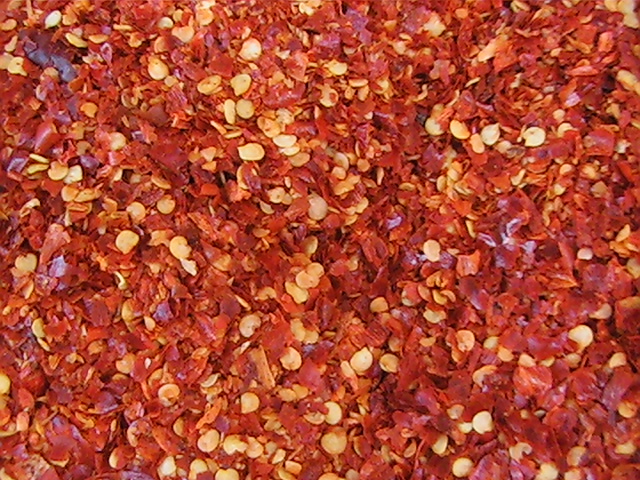
I was surprised to discover that red pepper flakes, of all things, do a great job. The secret is that a little goes a long way, especially in a big pot of soup or in a simmering stew. A few shakes, and the dish is savory, not salty. And yet, my tongue is unsinged. 
 https://upload.wikimedia.org/wikipedia/commons/4/45/Redchiliflakes.jpg
It has become a pantry staple. I chuck it fearlessly into the weekly soup I prepare for my lunches. It goes into paprikás. It goes into the newly reclaimed lecsó

The lecsó is now a fridge basic; a new one has to be churned up every few days, it disappears so quick. If I need to jazz up a side dish, I just chuck a few spoonfuls of lecsó to meld together with vegetables or grains. The other Sunday, to bulk Shabbos leftover chicken for Ta's supper, two chopped zucchini were simmered with a few dollops of lecsó for about ten minutes. Ta commented—twice—how good it tasted. "Paprika," he sighed happily. It was the pepper flakes, I'm sure. 

Babi used to make it with eggs. But it plays so well with nearly everything.  

Below is the recipe inspired by Zsuzsa and modified by Ma. Pesach-friendly! 

Lecsó

1 onion, thinly sliced into half-moons
6 bell peppers, orange and yellow, sliced
2 cloves garlic, minced

1 tablespoon paprika
not quite a teaspoon to 1 teaspoon of hot paprika (depending on preference)*
2-3 shakes red pepper flakes (optional)
1 tablespoon, heaping, brown sugar
1 14 oz. can of crushed, diced, or chopped tomatoes**
1 can mushrooms (optional)

1. Saute onion in oil for 5-7 minutes on medium flame. 
2. Add the minced garlic and paprika (to infuse in the oil) both regular and hot, and/or a sprinkle of red pepper flakes, for less than a minute. 
3. Then the peppers, for 5 minutes.
4. If so inclined, a can of mushrooms as well, and add another 5 minutes.
5. Add the tomatoes and brown sugar.
6. Simmer on low to medium flame (tomato sauce can burn very easily) for 20 minutes, covered. 


*I have not been able to find Pesachdik hot paprika. Then the red pepper flakes can be relied on for kick. 

**Alternatively: 1/2 carton of Pomi chopped tomatoes. For Pesach, the least sodium-riddled option I've found is the Lieber's San Marzano canned tomatoes. Actual tomatoes would work fine as well, if simmered long enough. 
  
—Good hot, cold, or room temp. Excellent for challah dipping.    

Tuesday, March 29, 2016

The Importance of Mitleid

"Life, Interruped: The 100 Day Project," by Suleika Jaouad: 

. . . Along the way I will visit and thank some of the strangers who unexpectedly supported and inspired me when I was sick. There was a mother hooked on the pain medications she was prescribed during her cancer treatment, a man who lost his brother in the North Tower on 9/11, a fit and healthy twenty-something living in San Francisco who was searching for — everything. I heard from doctors who assigned my columns as reading to their medical students, and from students who were inspired by my writing to become doctors. I even heard from a convict on death row in Texas who wrote to me about the unexpected parallels between our lives. “The threat of death lurks in both of our shadows,” he wrote to me in careful cursive.
http://www.phrma.org/sites/default/files/Jaouad.jpg
They don’t know it, but many of these individuals became lifelines — bright, shining lights during the darkest days. These strangers were more thoughtful, honest and vulnerable with me and each other than a lot of the people I know in the real world. Their empathy was an affirmation of humanity. Their stories of resilience gave me strength in my moments of weakness. They taught me about the kind of person I wanted to become. (First and foremost, one who reaches out in times of hardship.) Most importantly, they showed me that we all have interruptions at some point, whether it’s illness, the death of a loved one, unemployment or a bad break up.

Hardship can make us feel isolated. As much of an introvert as I am, that doesn't mean I revel in feeling like a freak. The idea that someone else weathered the storm and emerged soggy, wind-burned, and triumphant is galvanizing. 

Sharing our stories can have insane ripple effects of change. Benjamin Hertwig's "In the Waiting Room of Estranged Spouses" relates his saga of of chaos, pain, and eventual redemption after learning of his wife's infidelity. A commenter identified as "Sylvia" posted the below, which was printed with the letters:

After my recent breakup from my girlfriend of 12 years, I read your article, and a lot of the readers' comments, feeling that you and they were all quite spineless. I would have punched the guy at the market, and felt justified. I found you docile, and complacent.

I'm so angry. Anger has become my default state. And I feel justified, because it's clear my ex did a myriad of hurtful, egotistical things to me. But I'm still in pain, a numbing, defeating pain that I can't see my way out of. . . Except now.

The grace of your article was soothing like an ointment or a salve on a dry, unyielding scar. The readers' supportive, thankful comments, a chorus of love and humanity. And I woke up to the truth that my anger and self-righteousness are poison. I need and yearn to forgive; so that I can purge the mind-numbing pain, and let in joy and hope.

I thank you, all of you, most gratefully and humbly.

This letter cut me deeply. I was wowed how one man's story of overcoming pain and forging a way to peace quenched another's fury and anguish.
 https://notaurious.files.wordpress.com/2012/03/chris-gerringer-orphanedheroes-1330389867.jpg
Humans need to connect, and true connection only occurs through vulnerability. (Brené! Brené! Brené!) In that connection, we can all heal.  

Monday, March 28, 2016

Mamash!

I was once listening to a Rabbi Yisroel Reisman CD on the topic of Shimshon. Contrary to popular belief, Shimshon was not a strongman because he was a nazir; the superhuman strength stemmed rather as a gift from God. 
http://bibleencyclopedia.com/picturesjpeg/Weaving_Samsons_hair_1396-183.jpg
So how was it that when his hair was shorn, so was his power? Because he himself said: "The reason for my strength is from my hair." He went and put earthly boundaries on a divine gift, and by doing so, he caused his own failure. It was one thing when he thought it; then he gave it mamashus, substance.

"Ah," the Eibishter said. "The strength comes from your hair? So be it." 

There are many thoughts that are harmless, but they can wreak havoc when they are spoken and given weight.  

It always gets me nervous when people try to pin explanations on that which cannot be explained. It's not really a question to ask, since none of us can claim to know the divine workings of the universe. The same when someone attributes success to mortals—like when shadchanim are placed on a pedestal. 

"I can't do such-and-such because I am in shidduchim," is a comment that grates. 

If a marriage is meant to be, if it supposed to be bashert, can it be that my lipstick choice will torpedo it? My first motivation is not to be a hypocrite; if something is "okay" after a ring, it was "okay" while the finger was unoccupied.

"This shadchan," she says breathlessly. "She is the one to go to. She will get you a great guy." Without expecting anything, I went to the shadchan. Bupkis. 

I have this vision of my head of God saying, "Oh, so you can take care of it? You know the best way to get a spouse? Fine. I have plenty of other things to do." 

I also can't stand it when people minimize their own responsibility. Everything has an explanation for not owning life choices, from hormones to their mother to the bad sushi. Look through the Torah carefully; there are very few cop-outs. Because the Eibishter knows we can do better. Once "I can't" is in play, fuhgetabboutit. 

I try not to assign credit to any mortal for any good or bad in my life. I try not to pat myself on the back for deserving merit, since that blows up in my face faster than I can say "nazir."

Every time I hear Matisyahu's "Miracle," this one lyric hammers into my brain: Bound to stumble and fall but my strength comes not from man at all.

The path of self-congratulation is a short one. The more I see, the more I believe that the safest way to navigate this world . . . is to keep my mouth shut.      

Wednesday, March 23, 2016

Bitachon vs. Hishtadlus

The speaker at a shiur was telling of his frustration when his daughter was single. He had said to his wife, while proverbially ripping his hair out, "We have to do something!" She calmly answered, "No, we don't. We do what we always have done, and have bitachon."

Needless to say, this daughter is long married. 

He continued, referencing the Gra on bitachon and hishtadlus: 

One has bitachon for oneself, and does hishtadlus for others. Meaning, one cannot say to someone, "You have to do your hishtadlus." No. One can tell someone else to have bitachon, but do hishtadlus for the other. Not only should one make a token effort for another, but make oneself absolutely meshiga. For another, one should say, "We have to do something!" 

But for oneself, one should remain calm, and have bitachon.

It is not hishtadlus for me to call up complete strangers and grant them omniscient power, or to make unnecessary (and expensive) trips or hotel stays in the name of "You never know." And if I'm painfully, squirmingly uncomfortable, is that what hishtadlus involves? 

I have to have bitachon for myself, and help others for my hishtadlus. 

I tried once to set up a couple. Kinda blew up in my face, imploded, more like, when it turns out the girl was looking for someone that was not him. I was gun-shy, I must admit, for a few years. But after a hunch became reality, I became more determined. If I have an actual, viable idea, I should follow up. I've made a few more attempts, but no results, yet. But that's not the point. I feel accomplished that I tried, that I did my hishtadlus. 

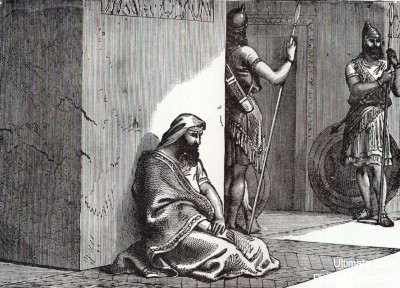
Listening to a number of shiurim prior to Purim, I enjoyed this one by Rabbi Daniel Glatstein, in which he states, quoting the Nesivos, that hishtadlus is not everything. 
http://bibleencyclopedia.com/picturesjpeg/Mordecai_in_king%27s_gate_BBL72-727.jpg
Mordechai sitting at the gate of the palace.
I am not yet brave enough to snappily retort to the one who lectures, "You have to do your hishtadlus!" that "Hishtadlus means that you set me up, lady." But I am at peace, knowing that my own actions are not the beginning and end. 

Tuesday, March 22, 2016

Multiple Self-s

To be self-aware is my goal. To know what I am doing, why I am doing it, to take responsibility, to act better. Noble indeed. But it is quite burdensome to retrospectively over-analyze every word uttered and fret if it came off the way I intended. Rarely do I return home from a date or simcha or other social gathering and not stare at the ceiling in horror, replaying my obviously catastrophic comments. 

All hail Zzzquil. 

When asked if "self-loathing is a requirement for writers," Anna Holmes responded: 
I do think that writing demands a certain amount of self-awareness, and that self-awareness and self-loathing can be two sides of the same coin.
Yup. Being self-aware means I'm all too conscious of where I could improve, meaning: I suck. And yet, I don't dislike myself.

To be a Jew, Rabbi Yisroel Reisman says, means to be a wee bit schizophrenic. We have to know how to be simultaneously happy and sad in order to function. Halacha acknowledges that. Apparently, when one lost a parent, not only would one say "Baruch haDayan haEmes," but also "Baruch . . . HaTov v'HaMeitiv," in gratitude for the yerusha. We don't say the latter anymore in our squeamishness, but once expressing happiness, even when it seemed inappropriate, did not have to be suppressed. Chevi Garfinkel says the same in this Purim shiur

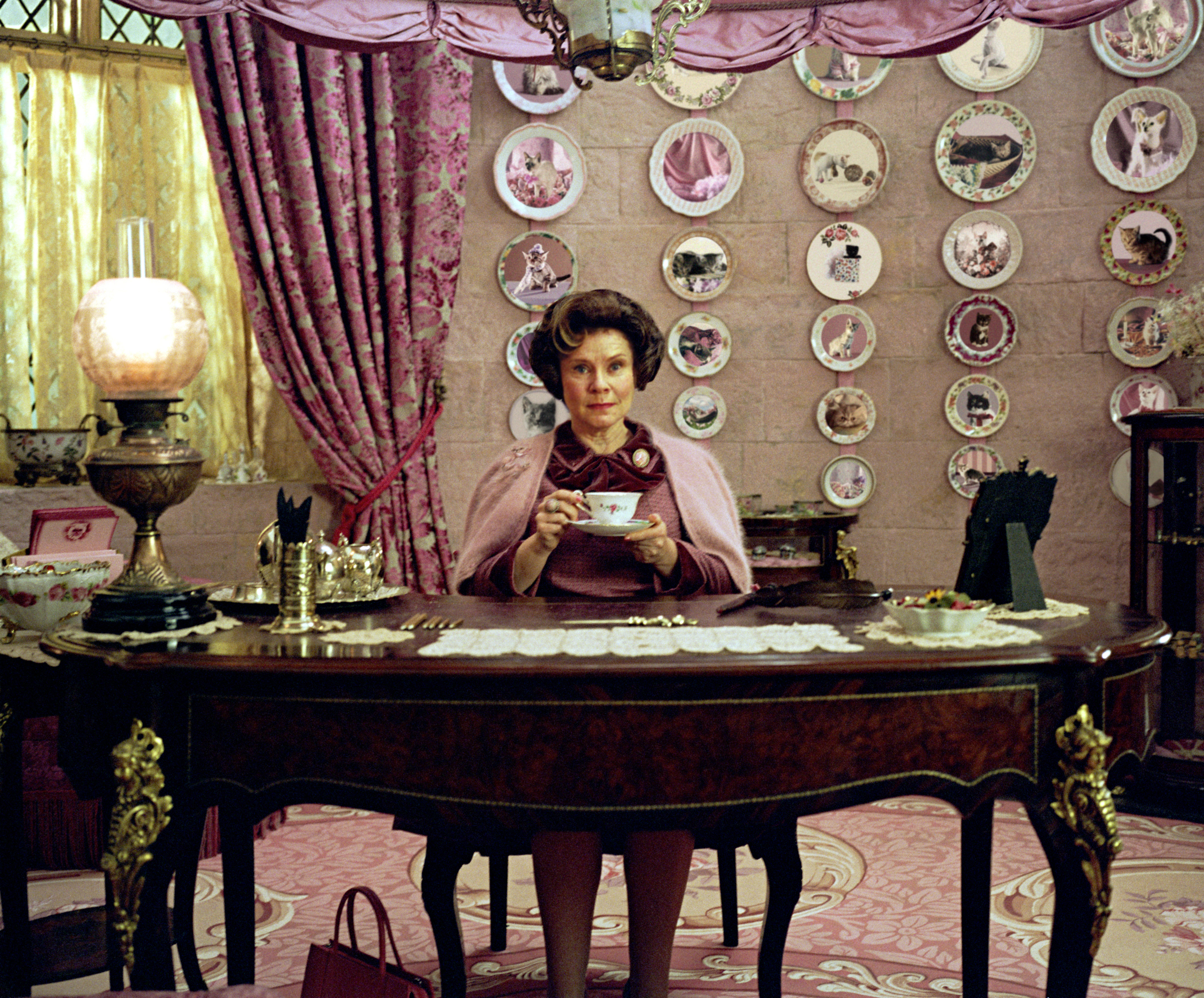
Apparently, according to Brené, this isn't a specifically Jewish thing. In Rising Strong, she refers to the false cheer and lack of any negative emotions as "The Umbridge." Not integrating light and dark can have sinister consequences, "simply because denial of emotion is what feeds the dark." 
https://images.pottermore.com/bxd3o8b291gf/1O29yImCdKS8AaqQUgkc6A/ae46ca2b58bfbef01912a60ad1fa8e8a/DoloresUmbridge_WB_F5_UmbridgeAtHerDesk_Still_080615_Land.jpg?w=1200
The most terrifying villain ever.
Star Wars! The fact that the scene is from a prequel is regrettable, but apt:

Anakin, as a child, is presented to the Jedi. 

Yoda: How feel you?
Anakin: Cold, sir.
Yoda: Afraid are you?
Anakin: No, sir.
Yoda: See through you we can.
Mace Windu: Be mindful of your feelings.
Ki-Adi-Mundi: Your thoughts dwell on your mother.
Anakin: I miss her.
Yoda: Afraid to lose her I think, hmm?
Anakin: What has that got to do with anything?
Yoda: Everything! Fear is the path to the dark side. Fear leads to anger. Anger leads to hate. Hate leads to suffering. I sense much fear in you.  

Denying emotion can lead to disaster, even if not on a Darth Vader level. So don't suppress, even if it doesn't feel "right" or "cool."
https://s-media-cache-ak0.pinimg.com/736x/63/3a/d9/633ad91c4a184cfffa362f2d1f4b9b1d.jpg
We're supposed to love ourselves (or at least find ourselves likable), and yet seek to elevate the same selves: "I love you, you're perfect, now change."

I can have fantasies about the potential me, and in the meantime the current me is okay. She said.

Where's the Zzzquil again?      

Monday, March 21, 2016

Clarisonic Review

It was during the 2014 annual Sephora sale that I finally got me a Clarisonic, hubba hubba. It remained in the box for nearly a full year following, as I waited patiently for my previous electronic face brush to die a natural death. It didn't. Well, YOLO, right? 

I've been using it for a few months now, so I'm due for a review. 

The Clarisonic is different from other face brushes in that the brush head does not rotate, it oscillates; it "wum-wum-wum"s deep into the pores while the user physically rotates the thingy across the face. 
https://i.ytimg.com/vi/iIz9D5Vzjhc/maxresdefault.jpg
I initially got into electronic face brushes after I bought one on a lark and my blemish-breakouts diminished exponentially. I got the Mia 2 model, which is smaller than the original. I noted that after I started using the Clarisonic, my facial skin improved in glowiness. I don't know if it is because of the brush massaging or because of the claim that deeper cleansing leads to better absorption of product, but cool. 
http://www.musingsofamuse.com/wp-content/uploads/2014/01/Clarisonic-Mia-2-Hollywood-Lights-Collection.jpg
The one feature I don't like is the automatic timer, which they terrorize you with: 20 seconds on forehead, 10 seconds for each cheek and nose and chin. There is a hiccup in the vibration to alert you to move to a different zone. Then it automatically shuts off. 

I don't like this, see, because my forehead doesn't need 20 seconds of scouring, and I would like to spend as much time as I like, thank you very much, cleansing the facial areas that I want to cleanse, like my nose and chin. Just a few more seconds, please, that would be great. 

Clarisonic informs me that the timer on the Mia 2 cannot be disabled, but I'll keep my toy anyway. Wum-wum-wum.   

Friday, March 18, 2016

TGIF

  • Seek freedom and become captive of your desires. Seek discipline and find your liberty. Chapterhouse: Dune, Frank Herbert