I find the whole "tznius" conversation to be quite boring and rather moot. In this day and age when bodies jiggle and quiver in revealing abandon, does it really make a cosmic religious difference if a skirt is two inches higher or shorter?

But it is never-ending, and it is not contained in specific religious groups. My shul boasts a variety of members across the spectrum, yet I was stunned to find one Shabbos a poster plastered on the women's section stairwell primly dictating how a woman should be dressed when entering the shul.
Let's be honest, here: If a woman walked the distance to shul, finally arrived, and saw that sign, would she turn around, go back home, put on a pair of stockings or a longer skirt and head back? Please. So what purpose does it serve? Guests don't exactly pack alternate attire for a weekend occasion.
Despite the fact that there are countless other matters, explicitly explained in the text, that we should expend the energy on, many gleefully pounce on this "cop-out" of a topic. We are not supposed to embarrass somebody, but apparently only in this case.
I was wondering as to the constant fascination of this subject when I came across John Tierney's article in the Science Times, "A Cold War Fought by Women."
Now, we know that men and women display aggression differently. When the Seinfeld crew chatted about boy-on-boy violence, Elaine scoffed at male barbarity, stating that girls "just tease someone until they develop an eating disorder."

Women can nourish a mean competitive streak, usually based on the primal desire to score a mate. Therefore, if another woman is dressed more attractively or more skimpily, she can be verbally ripped to shreds based on sight alone.
In the cited study, while the comparatively "modest" woman, in jeans and a t-shirt, did not stir up rival tendencies, the short skirt and low-cut top released the harpy in the female group.
The results of the experiment jibe with evidence that this “mean girl” form of indirect aggression is used more by adolescents and young women than by older women, who have less incentive to handicap rivals once they marry. Other studies have shown that the more attractive an adolescent girl or woman is, the more likely she is to become a target for indirect aggression from her female peers.
“Women are indeed very capable of aggressing against others, especially women they perceive as rivals,” said Dr. Vaillancourt, now a psychologist at the University of Ottawa. “The research also shows that suppression of female sexuality is by women, not necessarily by men.”
Older women, come to think of it, will generously flatter a younger gal if she is nicely presented, and don't mention inch-issues at all (except for schoolteachers). Also, I tend to get more compliments from women who have all their daughters married, as opposed to ones who still have yet to pair them off.
But things must get rather confusing when a fine frum girl is harassed to dress with a ruler next to her mirror, yet bachelors seeking miniature sizes are validated.
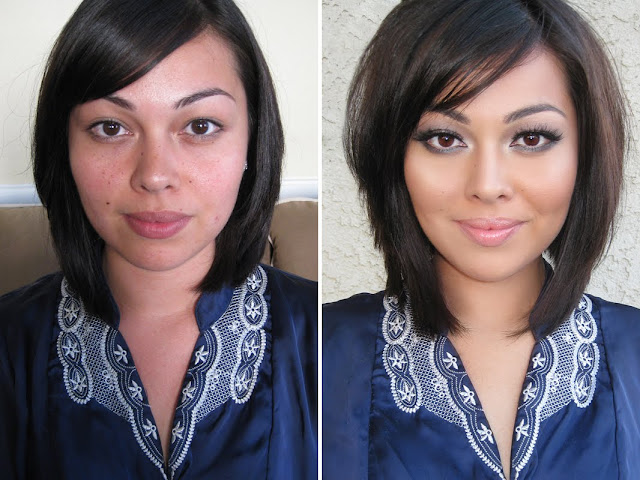
Indirect aggression can take a psychological toll on women who are ostracized or feel pressured to meet impossible standards, like the vogue of thin bodies in many modern societies. Studies have shown that women’s ideal body shape is to be thinner than average — and thinner than what men consider the ideal shape to be. This pressure is frequently blamed on the ultrathin female role models featured in magazines and on television, but Christopher J. Ferguson and other researchers say that it’s mainly the result of competition with their peers, not media images . . . He found that women’s dissatisfaction with their bodies did not correlate with what they watched on television at home . . . But he found that women were more likely to feel worse when they compared themselves with peers in their own social circles, or even if they were in a room with a thin stranger, like the assistant to Dr. Ferguson who ran an experiment with female college students. When she wore makeup and sleek business attire, the students were less satisfied with their own bodies than when she wore baggy sweats and no makeup. And they felt still worse when there was an attractive man in the room with her.
What if this constant, repetitive, pointless "tznius" hysteria—which tends to be pushed by women, not men—did not stem from frumkeit, but rather from good-old-fashioned evolutionary instinct, from envy and insecurity?
 |
| On the left, she is happily included; on the right, she must die. |
What if the more we talk about it, the less spiritually elevated we actually are?
I posit a solution: If anyone feels a deep urge to critique the "tznius" of another, spend five extra minutes on getting dressed in the morning. Put some thought and effort into it. Don a neat pencil skirt that fits. Throw on an interesting jacket. Clip in a pair of earrings. Swipe on mascara, buff on some blush, dab on a little lipstick.
I have a feeling that that confidence in appearance will neutralize any need to put down someone else.