Showing posts with label Romance. Show all posts

Monday, March 22, 2021

Prince Boring is King

I wasn't so jazzed about Bridgerton. I'm rather surprised at myself, considering my teenage diet of regency romances, but I found it frustrating. Just one aspect: the women claim to want love, but simultaneously, the higher title, the better. Ladies, you have to pick a lane. 

I have no intention of spending a post picking apart Bridgerton—I'm not that much of a killjoy—but I came across this article about how the Prince would have been the better choice for Daphne, title aside.  

But despite their chemistry, I found myself secretly, silently rooting for Daphne to say yes to her other suitor: unmysterious, dully predictable Prince Friedrich of Prussia. Go with the nice guy! I pleaded. Make it work! In the language of romance—settle. Settle! Settle for happiness, and not just the idea of it.

The idea of a love match—a Darcy and Elizabeth ending rather than, say, a Charlotte and Mr. Collins compromise—is a central theme in the show, and one I very much agree with. But while most marriage plots end with a marriage, Bridgerton is interested in what happens after the knot has been tied. And that is where things can get complicated.

OK, I have to admit, I don't understand this concept of "settling" for the nice guy. I wanted a nice guy. I searched for the nice guy. Thank God, I found the nice guy. Bad boys? Cool dudes? No thank you. I've never had any interest in them. I'm guessing that they're initially exciting, but they get old reeeeeaaaaaal quick.

Rooting for the stable guy doesn’t mean marrying some dud over your true love. It’s not like I think Buttercup should’ve taken a second look at Humperdinck and said, “Wow, this guy seems to have better prospects than a pirate—better stick with him.” But while Daphne and Simon proved me wrong, for a while there he was giving off some serious Willoughby from Sense and Sensibility vibes. And fans of the novel know, it’s Col. Brandon, Marianne Dashwood’s older, kinder, overlooked suitor, who turns out to be her real soul mate after the dashing Willoughby throws her over. It’s the difference between the intensity of romantic love and the sustaining love that carries you forward when you are in the foxhole together, facing loss and sorrow and hardship and boredom and birth.

I've seen a few gals I know, capable, steady women, who married guys who have the whole brooding Marlon Brando thing going for them, and I wonder—is he going to be supportive when you have a bad day at the office? Or will he shrug and head out for a smoke?

Eons ago (well, it feels like eons) I read a book called Kristen Lavransdatter and wrote a post about it. It pretty much backs Nordberg's point. It seems to be a favorite angle with Austen too: beware of the charming, handsome smoothie. Colonel Brandon is one of my favorite characters (while I'm a fan of Alan Rickman, he was already 49 in the 1995 version, so that was not good casting. David Morrissey in the 2008 adaptation suited me perfectly); he proves himself to be the reliable, caring, considerate suitor that Marianne eventually appreciates (or marries on the rebound. I don't think he cared). 

Monday, August 24, 2020

Shidduch Lit: It's Not You

 OK, I know I have been saying that the persecution of singles takes place all over, in all cultures, countries, and societies, but I don't think that it really hit home until I read Sara Eckel's It's Not You: 27 (Wrong) Reasons You're Single. 

I mean, I thought it took place on some level, but not to the extreme as it is in the frum world. From what I've been gleaning from this book, which was recommended by an anonymous follower, the perception of something inherently wrong with singles is a view shared by, well, the entire human race. 

As I read, I was surprised how practically every sensation I experienced as a single was accurately described. Her chapter on being picky was practically my post on the same topic, word-for-word. 

That lead me to another epiphany: I'm expecting too much from our community. 

If the entire human race finds singlehood terrifying to look at, how is it possible for the frum demographic to calm the hell down? Eckel is describing a lifestyle where people aren't particularly religious yet they expect everyone to pair up; our faith demands that men get married and make a go at populating the earth. 

I can't expect the frummies to become mellow with the whole concept of "older singles." The campaign slogan, instead, should be kindness. Or tact, at the very least. 

Tragedy exists in a multitude of forms. People are born with disabilities. People die young by illness or accident. People yearn to be parents, but remain childless. Those subject to those circumstances must struggle with hurtful comments as well. 

The problem isn't the wrong perception of singlehood. It's the typical reaction that in our discomfort and need to control, we often say things in a desperate attempt to believe that we can prevent such circumstances, that if we do the "right thing" then we shall be thusly spared. 

So, single person, you must be too picky. You must be commitment phobic. You must not be trying hard enough.

Now we can all sleep at night. 

To get back on topic, Eckel's book is an excellent read for those who have been battered by well-meaning yet ego-devastating comments. I would have highlighted and posted 85% of it and reposted it, when it's much more gratifying to simply read it. She doesn't simply make a statement like "that's ridiculous"; she backs it up with other papers, other thinkers (even Brene!), other points, logically disproving the myth at hand.

Wednesday, May 27, 2020

Who Is Worthy of Love?

In a sort of continuation from my previous post, this article analyzes the rom-com's dislike of capable, professional, "demanding" women. 

Alexis Soloski eviscerates the trope, as the hero "must" be rescued from the no-nonsense fiance that he, we presume, willingly dated until the floaty girl-woman flits by. 

Soloski references Baroness Schraeder from "The Sound of Music." As a child, I knew I was supposed to dislike her, but why, really? Her wardrobe is divine, she oozes wit, intelligence, and sophistication, and is, one would think, more appropriate for the brisk, grim Captain than an unworldly former nun who is probably 20 years, at least, his junior. 

"Behind every great man is a great woman"—I can assure you those women kick keister. 

The other side of the coin is the "boring boyfriend," that is not "exciting enough" for the heroine. He's nice, but seemingly bland. I'm still recovering from the improbable ending of "Sweet Home Alabama," when Reese Witherspoon tells Patrick Dempsey at the altar that she can't marry him because she loves someone else. His response is to smile angelically and reassures her he understands. Puh-leez.  
Undergirding these characters, almost all of them created by men, is a troubling male fantasy, that the ideal woman will depend on a man almost entirely, but ask nothing from him and that women who do ask are too much trouble. Who decided that women who know what they want and ask for it are monsters and that men who don’t know and don’t ask are simps? Clichés like these efface the complications of real relationships. Sometimes we leave nice people. Sometimes nice people leave us. And maybe assertive, uptight women don’t even need a man to live happily ever after. But if they want one, they should get him.
We all know no-nonsense women that are married, as are milquetoast men. The popular girl in school was never the wide-eyed naif; it's the commandant of the classroom. She gets her man, and not by standing idly by.

Monday, December 16, 2019

There Goes That Fantasy

When I entered my teens, Ma introduced me to the next level of "literature": Regency romances. 

The authors were typically Joan Smith, Carola Dunn, Fiona Hill. Georgette Heyer here and there, but she used a lot of annoying exclamation points and was rather antisemitic.  The books were usually about a mousey girl who for some unknown reason catches the fancy of a strapping, handsome marquis (he always had a title, rarely a mere Mr.), or about a spirited young woman of striking beauty but was too anticonvention for her own good who for some unknown reason catches the fancy of a strapping, handsome marquis. 

I gobbled them up like tater tots. They were my main form of entertainment for years, until I branched out into medieval romances as well. Cough. 

In the last decade or so, I've left them behind, preferring historical novels of other topics. But I still watch the Austen adaptations with glee. 

My sister-in-law and I swap books, and she excitedly handed me "A Murder in Time" by Julie McElwain. It's about a female FBI agent who gets sucked into a vortex and ends up in Regency England. 

However, she is not familiar with Austen's work, and finds the restrictions on women to be simply ridiculous.  Seeing the era through her eyes, you do realize that she's right. The romance is gone. So while all the language of those books I once enjoyed are there, the limitations women faced, the hardscrabble existence of the other 99% of humanity that wasn't landed gentry, the misconceptions on science and medicine, has sort of removed the glow from those tales. 

It's like when I read "Longbourn" by Jo Baker, and however considerate Lizzy is depicted in "Pride and Prejudice," maids were not granted that consideration. While most women believe they would have been Emma in another life, chances are they would have had the job of scrubbing her boots for a pittance. 

When I was a teenager, "Ever After" was one of my favorite movies. Spirited girl wins heart of prince! Yay! Then I began to read Sharon Kay Penman's novels about the British monarchy, and it became quite clear that princes did not marry for love. They married for political reasons, and had mistresses for love. I think I read somewhere once that character of Danielle was actually based on a mistress of a royal Henri. Being a royal mistress was actually  a great position so had Danielle been offered that, she would have been thrilled. All those scenes of Marguerite angling to become princess is all the more laughable because she would have known that's never. Ever. Gonna. Happen. 

I can't rewatch "Ever After" again knowing that. 

There are times in life when fantasies are fun and helpful. But then you grow out of them, finding you don't need them anymore. 

But I still anthropomorphize toys. Hmm.

Wednesday, January 9, 2019

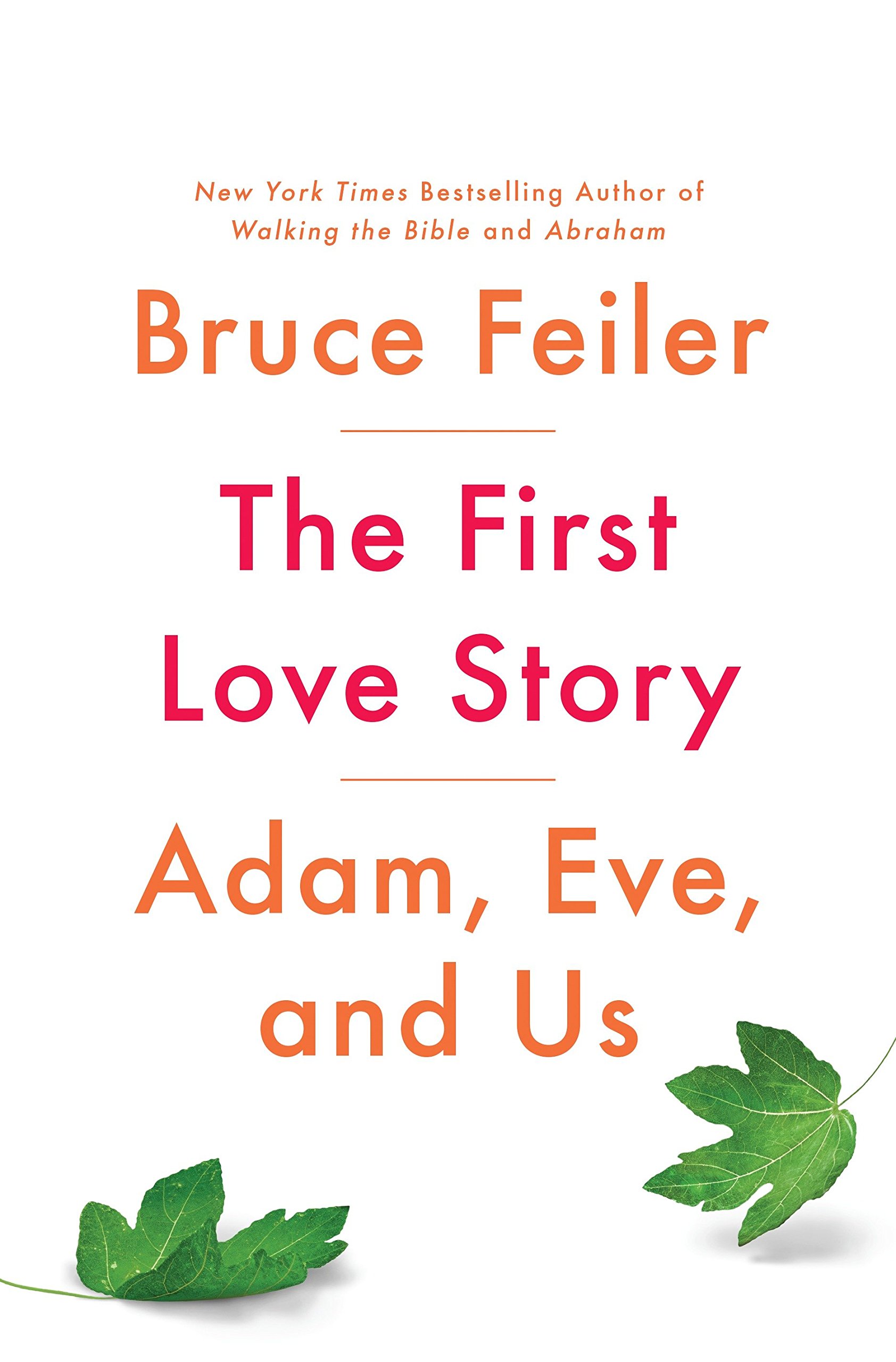
Adam and Chava

Bruce Feiler was inspired to re-examine the story of Adam and Chava, and discovered messages about love and relationships in the process. 
https://images-na.ssl-images-amazon.com/images/I/81pAI4J5a%2BL.jpg
1. Modern science will agree: It is not good for humans to be alone. 

2. A couple is one unit, not two individuals operating separately together. 

3. Love is not a passive experience; it is an active one. 
Romantic love is a myth. You don’t choose a partner because you love him. You love that partner because you chose him.  
4. Love is not a meet-cute story followed by effortless bliss. 
But love is not a moment in time; it’s the passage of time. It’s the long-term practice of reinvention, reconciliation and renewal. Love is the act of constantly revising your own love story.
5. When they lose a child at the hand of the other, they grieve together and have another son. (Contrary to popular belief, couples that break up following the loss of a child are in the minority.)

6. Adam and Chava are the first couple, and remain so.
In a world dominated by “I,” Adam and Eve are the first “we.” Just look at how we remember them.
Not Adam. Not Eve. Adam and Eve. Theirs is the first joint byline.
Ma always used to talk about being a "team player." I have a nephew, for instance, who is pretty much in his own head. He's not really that aware of the needs and wants of others. 

Han observes that the "older single" friends of his who moved out to live on their own tended to become more self-minded. When one can live without waiting for the bathroom, running out to grab a forgotten ingredient, or babysitting, that can create a mindset that is hard to adjust to once one is married. 

Adam and Chava are usually referred to as one entity, the first example of a couple. Because they were created together, there was no question about them not being ideal for each other, despite the ups and downs. As Feiler notes, Adam defers to her, rather than God, presumably because of love. They are a team. 

They were created together. They sinned together. They were exiled together. They always remained together.  

Monday, December 24, 2018

"Main Hoon Na"

(For those who haven't yet seen last season's black-ish, stop reading now.)

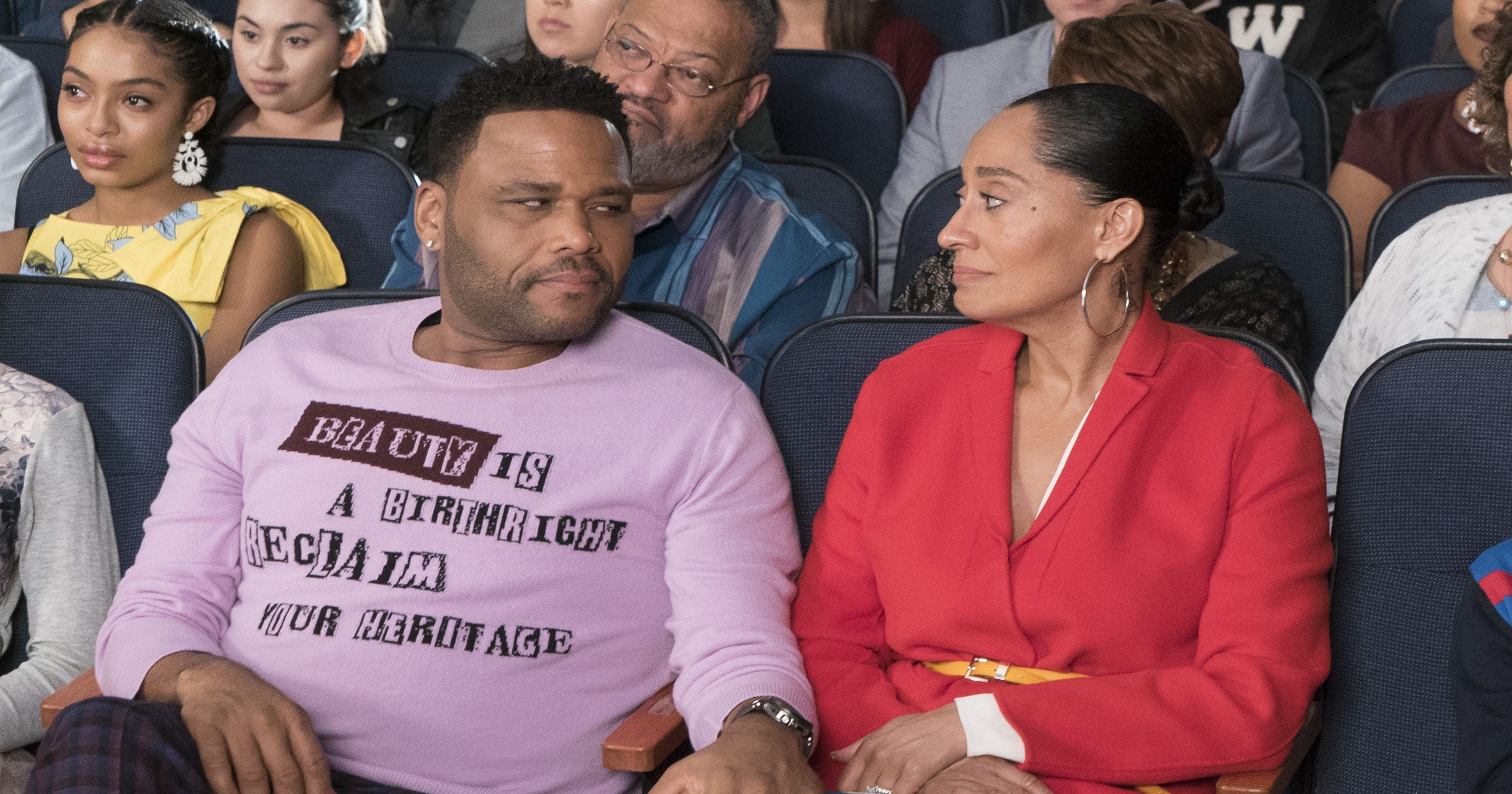
The last few episodes from black-ish season 4 got rather dark. I mean that literally. The screen became dim as we witnessed the fracturing of Dre and Bow. 

No reason is shown. Sure, he attacks her for "always doing this" and she counters with him "always doing that," but is that reason enough for him to get a new residence? 

They are on the road to divorce until he gets a call in the middle of the night. Bow is sobbing hysterically that her father died, and Dre's immediate reaction is, "I'm coming over." And he stays with her. And stays. And stays. He has no desire to leave, nor does she want him to. 
https://www.gannett-cdn.com/-mm-/8da907ebc2a652945b860ebc5eff20f2f16ca583/c=0-352-3000-2047/local/-/media/2018/05/09/USATODAY/USATODAY/636614550391814312-148827-5771.jpg?width=3200&height=1680&fit=crop
"Main hoon na," the Indian declaration of love, is not "I love you," but "I am here for you." Avraham said "Hineni" to Yitzchak, even when he believed he would be slaughtering him in a matter of hours. He would be there for his son. (As opposed to Hagar, as I heard from Rabbi Fohrman, who cast Yishmael under a bush, abandoning him because she could not bear to witness his demise.)

Love is not merely an emotion. Love is action, in presence, in commitment. When Maria Shehata and her boyfriend sought out couples' therapy, they were advised to end their relationship. But they chose not to. 
I asked my Ukrainian therapist to weigh in. She didn’t even look up from her phone when she said, “Only fools marry for love.”
She is probably right. If we do get married, it won’t be for love. It will be because we stuck it out and built ourselves up as a couple until we had huge relationship biceps and triceps from all the times we were there for each other.
Main hoon na.  

Monday, June 4, 2018

The Real Story

I have a confession (of sorts) to make. 

The fact is, the saga of Han and Lea was not a straightforward, simple one. My audience may recall a couple of years ago a number of posts regarding a breakup. 

Well, that breakup was with Han. 

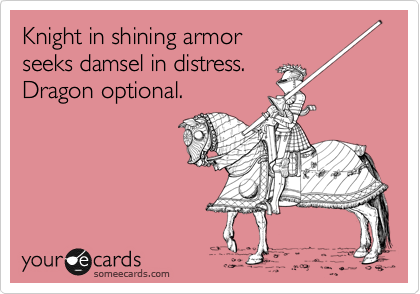
Why do I feel compelled to share this? I felt like I was propagating a false fairy tale: Damsel is in distress (her mother's dying) and white knight rescues her! 
https://cdn.someecards.com/someecards/usercards/1328651524043_1028460.png
As we know, life is more complicated than that.

I had a year of post-breakup heartache. A year of self-recrimination ("Was it something I said? Something I did?") and wondering ("Why would the Eibishter taunt me like this? What am I supposed to be learning from this?") 


Then Ma got sick. All those thoughts vanished. Terror over her illness took precedence. 

It was at that time—that time—when I was overwhelmed enough already that Han called back, not knowing of the situation. The camel's back broke. I was stressed to my limit; I didn't welcome this further "complication." 

I spent a few days internally raging and staring blankly out the kitchen window as my thoughts and emotions washing-machined. 

I had every intention of re-exploring the relationship—Brené taught me there is no winning when one erects a shield of defiance—but how to go forward?

I had no energy for games. I had no mind for payback. My world was imploding. I decided to be open, honest, and vulnerable once more. 

I can't question God—His timing, His methods, His sense of humor. I could hypothesize upon His logic, but as a lowly cretin, that would be the height of chutzpah. Yet Han's presence saved not only me, but my family too, in that dark era. 

Thanks to onlysimchas and Facebook, people's lives—in this case, their romances—can seem so easy, so ideal, so effortless. But we don't know what goes on in others' lives. We are completely ignorant of the whole picture. We only see the picture they choose to post: boy goopily smiling at radiant girl as she clutches a bouquet of red roses. But there is usually much more than that. 


There are dating disappointments. There are broken engagements. There are other situations that cast their pall. But we don't know. 

Our story is messy, as all true stories usually are. Nor is it finished. Nor is it the only messy, unfinished story.  

Friday, May 25, 2018

To the Nay-Sayer

"Why did it take you so long to get married?" she asked. 

I'm being accused of being picky after marriage.

"Because my man is only for me," I retorted. 

Friday, April 20, 2018

True Romance

I repeat, I have never been typically romantic. Even when I read trashy Regency romances (I was a teenager, they were fun, and I would read them again), the usual fantasized scenes involving a sprained ankle and a horsebacked savior (that one is courtesy of Jane Austen) were mentally absent. 
https://reginajeffers.files.wordpress.com/2012/06/s2526swilloughbymarianne.jpg
I believed, from an early age, that romance doesn't really mean much. It isn't proof of love to buy someone a bouquet from the drugstore while picking up antacids. It's not effort. It's a sweet gesture. At the end of a breakup, no man complains, "But I bought you flowers!" 
http://theromantic.com/wp-content/uploads/2015/08/giving-girls-flowers-first-family-date.jpg
I would actually prefer a bunch of parsley. More useful.
Due to divine timing, to quote my mother-in-law, Han and I had "the trial by fire." When someone is there for you when your world is falling apart? That's romance I believe in. 

As does Heather Havrilesky.    

Wednesday, February 14, 2018

Romantic Hooey

I am not a typical romantic. Gifts, eh. Chocolates, um, I would like my clothing to still fit me, thanks. After hearing a hilarious story of how a horseback ride on the beach ("where the sea kisses the sand") went wrong, I have merrily discarded that fantasy. 

Romance cannot be forced. It cannot be demanded. It has to be lovingly coaxed into being without stress or tension. 

That's why Valentine's Day is just another invented Hallmark holiday and should be shot. 
https://static.comicvine.com/uploads/original/7/70215/5057924-cupid-dead-14.jpg
Sam Sifton, a food writer, describes the anxious vibes in restaurants on February 14, and advocates a home-cooked meal with candles instead.