Wednesday, June 15, 2016

My Purpose?

I had believed that my purpose is to find my spiritual partner and have children to teach them the ways of the Force—uh, sorry, Judaism. 

So my prayers have been somewhat petulant lately. "Hey, Eibishter? What up. 'Memba me? You know how You have in Sh'ma, 'V'shinantam l'vanecha'? So, um, could You, like, send me the means to have those vanecha? Why else was I put on this earth, complete with early childhood training—didn't You see how dope I was with my nephew's tantrum, not appeasing him and all? Could You help a girl out by sending her her zivug, like, yesterday?" 

I had been getting more and more frustrated, whining self-pityingly at the Lord for His seeming lack of comprehension. "Seriously, Dude, how are You not understanding this? I'm trying to serve You and honor You by raising a next generation in Your Name, but I'm being set up with Jar-Jars!" 

In a sulk, I listened to an endless stream of Rabbi Daniel Glatstein shiurim. In one shiur, he mentioned that a Jew is not required to become a doctor because he might save a life in the future; a Jew only has to concern herself with the situation at hand, before her.

It cannot be my purpose is restricted to that which I cannot control, I comprehended. A Jew must focus on the situation at hand. Ergo, there is purpose in how I live now

As I heard from Esther Wein, a Jew's purpose is to give honor to the Eibishter. That can be done in a multitude of ways, and according to my simple understanding, that would be doing mitzvos—both bein adam l'Makom and bein adam l'chaveiro—with as much diligence as I can. 

Honoring my parents; davening with focused kavana; watching my speech; saying brachos with more care.  

In another shiur of Esther Wein's, she quotes from Sefer Yishayahu (Perek 56). Hashem is addressing the childless and geirim of millennia ago. 
Happy is the man that doeth this, and the son of man that holdeth fast by it: that keepeth the Sabbath from profaning it, and keepeth his hand from doing any evil. Neither let the alien, that hath joined himself to the LORD, speak, saying: 'The LORD will surely separate me from His people'; neither let the eunuch say: 'Behold, I am a dry tree.' For thus saith the LORD concerning the eunuchs that keep My Sabbaths, and choose the things that please Me, and hold fast by My covenant: Even unto them will I give in My house and within My walls a monument and a memorial better than sons and daughters; I will give them an everlasting memorial, that shall not be cut off. Also the aliens, that join themselves to the LORD, to minister unto Him, and to love the name of the LORD, to be His servants, every one that keepeth the Sabbath from profaning it, and holdeth fast by My covenant.
Shabbos. Do I really have the right perspective of Shabbos? We're told it's major, but it has been watered down to a "recharging from high tech life" sort of day. There are so many halachos I'm ignorant of, actions I refrain from doing that are actually permissible, as well as erroneously transgressing Shabbos from ignorance. 
https://powerofspeech.org/wp-content/uploads/2015/08/1600x475-Shabbos11.jpg
I did some browsing and came across a series on Shabbos by Rabbi Efraim Stauber. They are helping me rethink it completely. 

I have heard singles say they are frustrated because they don't seem to have a role in a couple-focused community. What if we make Shabbos our thing? Not necessarily in terms of meals—Shabbos is not about cholent—but in terms of keeping it better? Not looking at it as a day of restriction, but as a day of love between us and the great big Papa in the sky? 
 
I have been ignoring the much that is within my purview.    

Tuesday, June 14, 2016

Do No Harm

I am fascinated by history. If one analyzes a situation with the long view, one can see patterns. 
https://s-media-cache-ak0.pinimg.com/originals/e8/c3/58/e8c3584604dd1d13f6cdb736aef7574f.jpg 
Like the pendulum swing. Society accepts one extreme, and then rebound to the other; eventually, it slows and settles into the center.


The past fifty years or so, science did away with nature. Butter was shunned for margarine. Dairy was fiercely de-fatted (I want my childhood years, sentenced to skim milk, back). Every minor complaint can be "fixed" with medication or surgery. 

Butter is back. Fatty dairy is back (I'm making up for lost time). As for being "fixed"? 

A few years ago I was seized by a violent sinus infection. I inched into an ENT's office, tears in eyes. He scribbled up, along with antibiotics, a prescription for Vicodin. 

"Um, that's okay," I demurred. "I watch House." 

He looked at me in scorn. "Why should you suffer if you don't have to?" 

I gingerly picked up the prescription. I did not use it. 

Doctors happy-pen method with opiods have led to addictions and overdoses, and now they are considerably cutting back; sufferers will have to suffer.

In general, the policy for vigilant medicine and treatment is easing off. The required annual checkup is off. Screenings and tests that were once necessary are now under the "Weeeell . . ." category. Even treatments for certain conditions or illnesses are found to be not as vital as once thought.

"Are Good Doctors Bad for Your Health?" by Ezekiel Emanuel highlights the current quo: 
One of the more surprising — and genuinely scary — research papers published recently appeared in JAMA Internal Medicine. It examined 10 years of data involving tens of thousands of hospital admissions. It found that patients with acute, life-threatening cardiac conditions did better when the senior cardiologists were out of town. And this was at the best hospitals in the United States, our academic teaching hospitals. As the article concludes, high-risk patients with heart failure and cardiac arrest, hospitalized in teaching hospitals, had lower 30-day mortality when cardiologists were away from the hospital attending national cardiology meetings. And the differences were not trivial — mortality decreased by about a third for some patients when those top doctors were away.
Truly shocking and counterintuitive: Not having the country’s famous senior heart doctors caring for you might increase your chance of surviving a cardiac arrest.
He cites an Israeli study: 
This is not the only recent finding that suggests that more care can produce worse health outcomes. A study from Israel of elderly patients with multiple health problems but still living in the community tried discontinuing medicines to see if patients got better. Not unusual for these types of elderly patients, on average, they were taking more than seven medications.
In a systematic, data-driven fashion, the researchers discontinued almost five drugs per patient for more than 90 percent of the patients. In only 2 percent of cases did the drugs have to be restarted. No patients had serious side effects and no patients died from stopping the drugs. Instead, almost all of the patients reported improvements in health, not to mention the saving of drug money.
And people wonder why I'm afraid of doctors
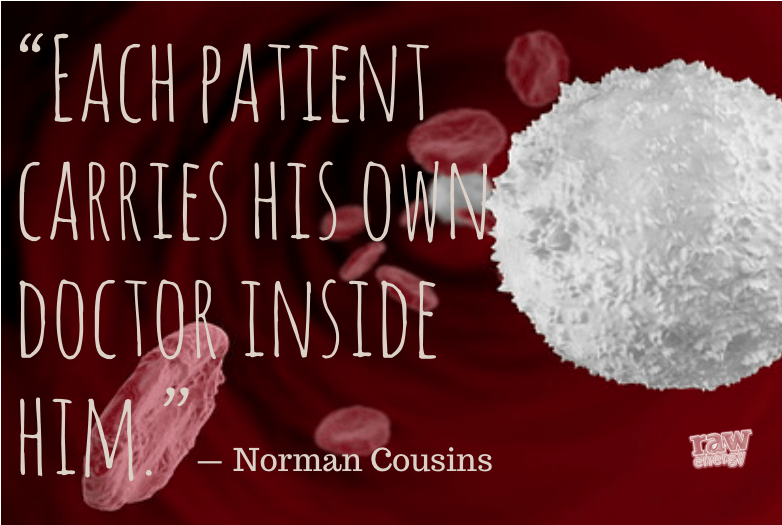
Despite often repeating the mantra “First, do no harm,” doctors have difficulty with doing less — even nothing. We find it hard to refrain from trying another drug, blood test, imaging study or surgery.
We forget the body's capacity for healing. It doesn't always always need help. But today, with so much within human control, we forget that we don't always have all the solutions. 
https://getrawenergy.co/wp-content/uploads/2014/10/Each-patient-carries-his-own-doctor-inside-him.png
People say there is a "shidduch crisis." Which means, it has to be fixed! But what if we can't? Has any sort of new initiatives actually changed the marriage rates? If anything, it seems as though divorce—"marriage mortality"—is on the rise. 

A new book (Hoping to Help) analyzes the effectiveness of volunteers nobly assisting in third-world countries. It's not always wonderful. 
Students may take advantage of the circumstances to attempt tasks well beyond their expertise. Seasoned professionals may cling to standards of practice that are irrelevant or impossible to sustain in poor countries. Unskilled volunteers who do not speak the language may monopolize local personnel with their interpreting needs without providing much of value in return.
So who did I think of? 

Shadchanim.

It really is unpleasant trying to politely fend off the misplaced fervor of a bullying matchmaker who barely knows you yet insists you "must" go out with someone. Yes, they say they are "trying to help," but how is this helpful? Congratulations: My bowels clench every time I receive an e-mail or phone call from someone chirpily claiming to be a "shadchan."
https://blogger.googleusercontent.com/img/b/R29vZ2xl/AVvXsEhg7feT8CyniOc4yUEj21uzdyDPnCZLPzJGklJ7TxqeRHHbW36VJpR5tZ0j-wUO3JZtzuw1hw9IH-0a7JzjxRkuMNP9TgyCjnhqvFNotd2ukt5r9gtrOgL8CPzK1sGCSWxK0OtGrrqgQtI/s1600/094-mulan-i.jpg
Do no harm. Like Chevi says.    

Friday, June 10, 2016

TGIF

  • Loved the title of an article about celebrity privacy: "Keeping mum in the age of blab." I should stitch that on a throw pillow; and 

Thursday, June 9, 2016

Ringless Men

It's sometimes an awkward conversation explaining to the unaffiliated or non-Jewish why most Jewish men don't wear wedding bands. 

One of Owen's friends starting wearing one to work because an amorous secretary kept hitting on him. Double aaaaaakward. 

But it seems, there are enough non-Jewish men nowadays not wearing wedding bands either ("Men Who Don't Wear Wedding Bands—And Why" by Abby Ellin)—not even Prince William, and it's not like he's trying to pretend he's not married. Martians tuned in to the royal wedding. 
https://static01.nyt.com/images/2016/05/08/fashion/weddings/08RINGS3-WEB/08RINGS3-WEB-blog427-v2.jpg
See that left hand? Notice something?
So I did some lazy googling. While the practice for women's wedding rings have been around since the Egyptians, and the concept of the left fourth finger being designated for such a purpose from the Romans (because of a mistaken belief that the "love vein" runs through that digit), male wedding bands are very recent. 
https://upload.wikimedia.org/wikipedia/en/0/01/%22La_Vena_Amoris%22_by_Mauricio_Toussaint.gif
"Vena Amoris"
The jewelry industry, as they did by popularizing diamonds for engagement rings, tried to make it a "thing," but it didn't take off until World War II when men wanted a memento of their loved one to take with them into battle. Then man bling came into style during the '60s and '70s.

As this letter attests:
I don’t think you can call men wearing wedding rings a “tradition” since it didn’t become common until fairly recently. I think it’s more of a fad that’s winding down.—Kevin Cunningham
It ain't even tradition! It's a newish stunt!
 http://www.executivestyle.com.au/content/dam/images/3/6/2/j/9/image.related.articleLeadwide.620x349.362km.png/1429579835459.jpg
So breath easy, my coreligionists: Just shrug and claim a disinterest in trends, like "the fade" haircut.      

Wednesday, June 8, 2016

Turmeric, Magical Cure-All

I'm prone to mysterious stomach maladies. They are not, thankfully, as common as they used to be, but can still stab if not given the right digestives. 

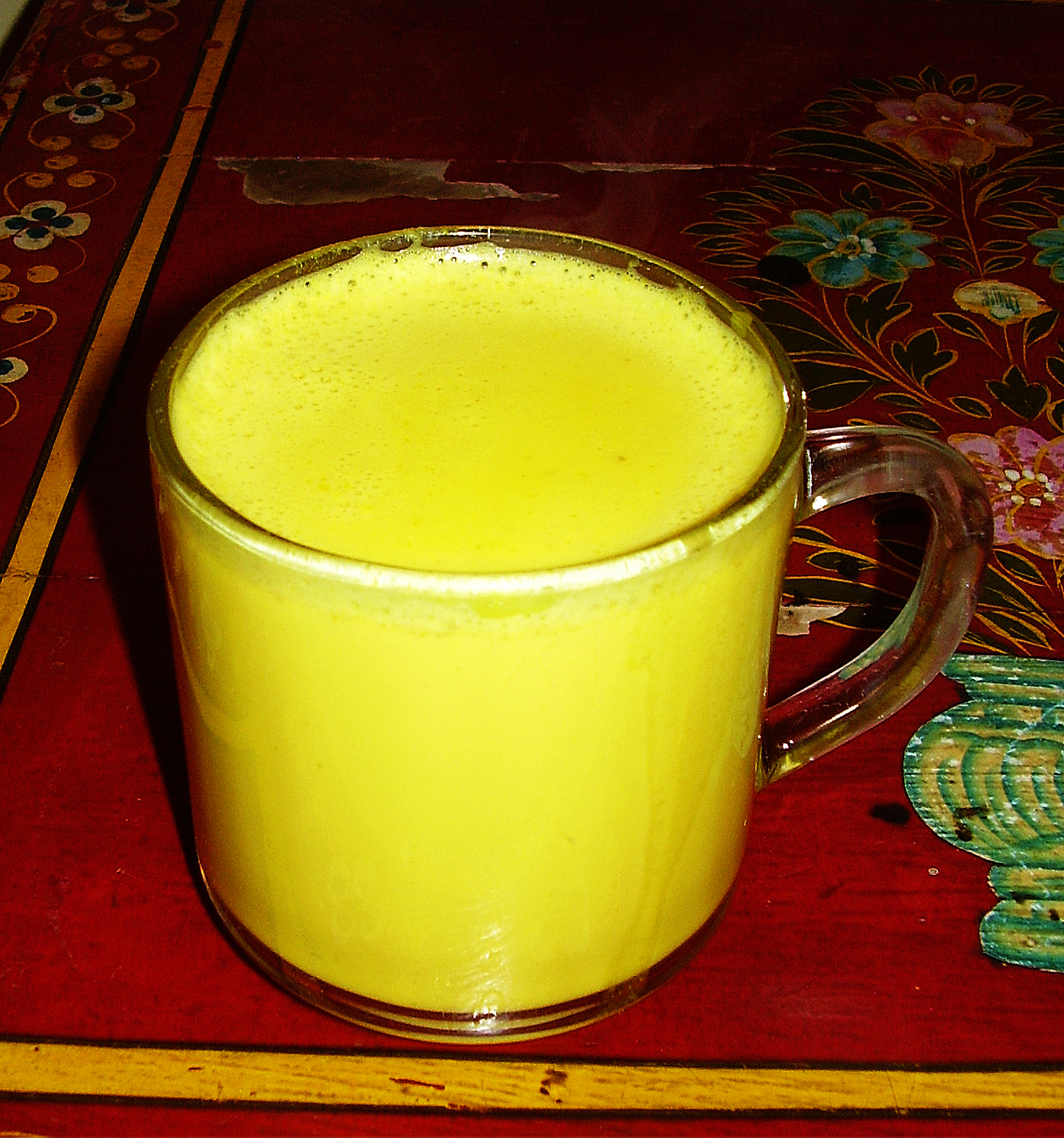
From Yogi Cameron I learned of two natural potions that proved potent. The first, as a remedy for acid reflux, is a few pinches of saffron simmered in a cup of whole milk for 8 to 10 minutes, to allow the benefits to infuse. 
https://lotuseditions.files.wordpress.com/2011/12/turmericmilk.jpg
Via recipeshub.com
For my acid reflux-prone family member, this concoction swiftly neutralized esophageal agony. 

Saffron, however, is quite expensive and not always readily available. As my internet browsing informed me, turmeric possesses all the bam-pow benefits without the price tag. I've made the acid-reflux remedy with both saffron and turmeric, and the latter performed just as well as the former. 

The second remedy is congee, white rice that is overcooked in copious water from anywhere between 30 minutes to overnight. For one suffering from an angry belly, sipping this mush (sweetener is permitted) provides nourishment without further demands of the compromised stomach. 
http://farinakingsley.com/blog/wp-content/uploads/2012/11/Congee-or-jook.png
Via farinakingsley.com
Awaking one morning with an aching tummy, I chucked together the rice and water, but then also added turmeric and a slosh of oil. Turmeric is fat-soluble (that's why for the turmeric milk, whole milk is best). Then I left it to simmer for as long as I could.
https://blogger.googleusercontent.com/img/b/R29vZ2xl/AVvXsEhNtcpuLsEk2PPOCuRt6CLj1TPWRI84ERgZmBJvQN56r-iPgdqyHZIAuUXzvjQmcM4S4f5MqC-p8uKQBdhq9H5JO7YKdoLbASR0bKByBFUKPRjKRkPjbFxKrZ2AoTdoUkvbbRfXhSDrEkc/s1600/IMG_1219.JPG
Via slowcookedrx.blogspot.com
My stomach pain vanished. Gone. And the next time, and the next.

To keep my stomach happy, I've started adding vigorous shakes of turmeric to my daily lunch soup. The taste is mild enough that it doesn't overwhelm the other flavors.

*Note: Turmeric stains something terrible. It may not even be possible to wash it out. So don't wear anything treasured while cooking/consuming it.

**Second note: Do not confuse the uses for turmeric milk and turmeric congee. If suffering from a stomach bug or upset stomach, milk will kill you. Not literally, obviously, but it won't be pleasant. Strictly for acid reflux.   

Tuesday, June 7, 2016

Children of the Book

I have not yet met a child that does not like books. 
 http://www.multilingualliving.com/wordpress/wp-content/uploads/2011/07/mom_reading_to_child_bilingual.jpg

Of course, it's easy to like books when there are pictures. That's why I try to insert photos into my posts as much as possible; no one can resist illustrations. Or even photos in the newspaper. So many conversations have been instigated because a child inquired as to a picture in the newspapers that clutter the kitchen table.

It gives me particular joy when a niece (it's usually a niece) requests a book of their own. I feel as though my purpose as an aunt has been fulfilled. 

The kinfauna only know how to ask because they have discovered them on the shelves first. I own every Calvin & Hobbes (not the collections, dog-eared copies that survived my childhood), a groaning quantity of Berenstain Bears, Harry Potter (duh), and glorious, glorious Tintin

When I whispered into Thing 1's ear that I bought for her—after she expressed interest—the original Calvin & Hobbes, Something Under the Bed is Drooling, and Scientific Progress Goes "Boink", the gaze of loving reverence was enough to buoy me for a week.
 http://img6a.flixcart.com/image/book/8/3/5/calvin-hobbes-something-under-the-bed-is-drooling-original-imadgdehcwvryzfu.jpeg
She couldn't have asked about it if it hadn't been there for her to find. 

"Our (Bare) Shelves, Our Selves" by Teddy Wayne makes a case for print media and books to adorn homes—for the sake of the children. 
Perhaps the strongest case for a household full of print books came from a 2014 study published in the sociology journal Social Forces. Researchers measured the impact of the size of home libraries on the reading level of 15-year-old students across 42 nations, controlling for wealth, parents’ education and occupations, gender and the country’s gross national product.
After G.N.P., the quantity of books in one’s home was the most important predictor of reading performance. The greatest effect was seen in libraries of about 100 books, which resulted in approximately 1.5 extra years of grade-level reading performance. (Diminishing returns kick in at about 500 books, which is the equivalent of about 2.2 extra years of education.)
Libraries matter even more than money; in the United States, with the size of libraries being equal, students coming from the top 10 percent of wealthiest families performed at just one extra grade level over students from the poorest 10 percent.
The implications are clear: Owning books in the home is one of the best things you can do for your children academically. It helps, of course, if parents are reading to their children and reading themselves, not simply buying books by the yard as décor.
E-reading (as well as music selection) is based on what the seeker is already looking for; print and records mean that one comes across something and discovers something new. 
 https://delightfulchildrensbooks.files.wordpress.com/2012/05/library.jpg
That's the fun of libraries—arbitrarily plucking a book from the shelf which may or may not end up being a winner. But more often than not, it is.    

Monday, June 6, 2016

Those Who Compromise

"Older singles get set in their ways," is a common refrain. "They aren't willing to compromise. That's why it is important to marry young." 

That generalization always niggled at me. After all, shouldn't the "older" be officially mature, which would mean they are more capable of constructing healthy relationships? Is anyone going to claim that a 20-year-old is better prepared for marriage than a 30-year-old?  Yet the belief is that the more years under one's belt, the more childish one is? 

Doesn't make much sense, does it?

The most important criteria when dating is supposedly that of hashkafa, frumkeit, religiosity. One cannot create an online dating account without ticking off that box first.

Usually, kids emerge straight out of Jewish institutions and hit the dating market. There is a parallel yeshiva for every seminary. These lads and ladies, having spent a year in a restricted environment, tend to emulate those same outlooks. In which case, finding another on one's present religious perspective is relatively simple. Shidduchim are redt accordingly.

However, if one happens to remain single, one has the time and space to develop an individual relationship with one's own faith and God. Whilst this evolution takes place, the "rules" of the previous hashkafa can fall to the wayside as personal identity comes into being.

After a decade in the dating market, it would be kind of laughable if the seminary or yeshiva attended remained a matter of concern. The neighbor's kid has gone through so many changes in head coverings in the past five years I can barely keep up.

The "youth" aren't the masters of compromise. They haven't yet necessarily developed a distinct sense of self to compromise on. If they marry while still unformed, they can, ideally, meld and grow together. These couples don't necessarily maintain the same religious viewpoint forever (as FB informs me), but the two transform as one.

The "older" date differently. They have to navigate a dating world that claims that there are categories, but there really aren't anymore. Each one of us are our own kind, no matter what those fiddly pieces of profile paper claim. 

And we are grownups, perfectly capable of compromise, thank you very much.   

Thursday, June 2, 2016

iPeople

It's been a while since I had an anti-phone rant, right? Well, let's make up for lost time: 

We have—rubbing hands together in glee—Sherry Turkle's "Talk to Each Other, Not Your Phone"; Jonathan Franzen's review of her book, Reclaiming Conversation; Tony Schwartz's "Addicted to Distraction"; Amy Cuddy's "Your iPhone Is Ruining Your Posture—and Your Mood"; and a CBS News story, "What makes us happy and healthy?" (it has to do with giving our loved ones undivided attention).
 https://cdn-webimages.wimages.net/0513cc8b78e189764489179f91611c505b0859-wm.jpg
First Turkle, who has written extensively on the subject of how technology is destroying the quality of our relationships. This article is addressing the feedback she received regarding another article of hers that I already linked. One comment she received was that if an interaction is boring, why shouldn't one seek entertainment elsewhere? 
I have heard this objection before: In order for conversation to earn its right to be attended to, it needs to be compelling and novel. This way of thinking incorporates a view of conversation as a transactional tool: It has to accomplish something or provide new information. So, if these are your values and you find yourself in a conversation, there is pressure to be interesting and to perform. With that kind of pressure, it is not surprising that so many of us find it more relaxing to interact on screens. There, where we can edit and revise, we imagine that we are less likely to be dull and more likely to seem interesting.
Middleton offers his view of human conversation as a critique of my thesis; I see it as evidence of why we find ways around conversation. It holds conversation up to a standard that inhibits us from talking with spontaneity, from letting conversation develop naturally. Yet these are the kinds of conversations in which intimacy and empathy thrive.
In order for true connection to happen, there will be some emptiness, a lull, silence. Embrace it. Be freakin' bored, it won't kill you. 
According to this view, when you are engaged in talk, you are interested in hearing how another person approaches things — her opinions and associations. In this kind of conversation — I think of it as “whole person conversation” — if things go quiet for a while you look deeper, you don’t text another friend. You take the moment to read your friend more closely or look at something you haven’t attended to before. Perhaps you look into her face or pay attention to to her body language. Or you simply allow the silence.
On to Franzen on Turkle: 
The people she interviews have adopted new technologies in pursuit of greater control, only to feel controlled by them. The likably idealized selves that they’ve created with social media leave their real selves all the more isolated. They communicate incessantly but are afraid of face-to-face conversations; they worry, often nostalgically, that they’re missing out on something fundamental.
The potential detriment to children, in particularly, is the most alarming. Without conversation, they don't develop empathy, nor do they learn the means to deal with hardship, like bullying. Eek. 
 http://pop.h-cdn.co/assets/15/40/980x490/landscape-1443799206-gettyimages-142322603.jpg
Schwartz relates his struggle to detach from technology. When he was unable to focus on a book, he realized he had to cut back on email and web surfing. With his daughter's assistance, he went cold-turkey (except for texting).
During those first few days, I did suffer withdrawal pangs, most of all the hunger to call up Google and search for an answer to some question that arose. But with each passing day offline, I felt more relaxed, less anxious, more able to focus and less hungry for the next shot of instant but short-lived stimulation. What happened to my brain is exactly what I hoped would happen: It began to quiet down. 
That was for vacation. He's back to work, which means, of course, he has to deal with emails and internet. But now he's able to control how much time he devotes to it.

Cuddy was the one who taught us that standing tall makes you feel awesome; so slouching over an iPhone can make you pretty bummed. Also premature hunches cannot be that appealing (but that's just my note).
http://i0.wp.com/www.sopitas.com/wp-content/uploads/2015/12/phone_2799032b.jpg?resize=620%2C387
iHunch.
I'm not so much of the DOOM outlook. I believe when something new comes on the scene, those who grew up without it don't know how to deal with it responsibly, as opposed to those who were born with it in hand. Print books are back to the point that bookstores are reopening, and e-book sales are decreasing. The novelty of ignoring real people will wear off soon. I hope.         

Wednesday, June 1, 2016

Cucumber Salad, Perfected

"Ma, what's the cucumber salad recipe again?" I bellowed up the stairs. 

"Cup of water, half a cup of sugar, quarter cup of vinegar. Could be a bit less sugar and a bit more vinegar," she hollered back. 

That poor intercom system that Ta insisted on never gets any love. 

I boiled up the concoction and poured it over the sliced cucumbers. 

The next day Ma was telling me of a cucumber salad recipe featured by a Hungarian guest on Loving Spoonfuls. "That's a lot more vinegar than we use," I noted, "and a lot less sugar." Although she didn't boil the liquids together, the philistine. 

Questioning my beautifully jarred results, I searched online for "cucumber salad water vinegar sugar." From the numerous options, there seems to be little in terms of official rules. Between the three ingredients, quantities vary greatly.

Costco sells New England cucumbers, which have also served as light sabers in a few mock battles. I use those for the salad, one and a half to two, which ideally fit into my 34 oz. ball jar. I'm not sure how that would translate to kerbie dimensions . . . maybe four? Four sounds good. Four-ish. Five?

Cucumber Salad

1½ New England cucumbers, or 4 to 5-ish kerbies, unpeeled
1 cup of water
½ cup sugar (or less)
¼ cup vinegar** (or more) 
kosher salt  
*onion influence of choice (sliced onion, shallots, scallions) 
*minced garlic
*dill, dried or fresh

1. I prefer to leave the skin on for color and nutrition. Wash the cucumbers well and thinly—THINLY—slice. (The food processor does not do a fine enough job, sadly, although maybe a mandolin would. Zeidy did epic cucumber slicing. My knifework will always be inferior to his. Ethereal wisps. Ethereal wisps.)

2. Place the cucumbers in a colander. Toss thoroughly with kosher salt—don't be stingy. Leave alone for about 30 minutes. An hour is also fine.

3. Rinse off salt. (If you didn't have ethereal wisps before, you should now.) Drain. 

4. In jar of choice (mine is the 34 oz./1 liter Bormioli Rocco Quattro Stagnioni jar), chuck in cucumbers and optional seasonings (for me, scallions or shallots with two or three cloves of minced garlic and plenty of dill). 

5. Combine the water, vinegar, and sugar in a pot, stir a couple of times to dissolve the sugar. Bring to a boil, then pour the potion into the jar over the cucumbers

6. Et voilà. Keeps in the fridge for a goodly amount of time. Consume with meat, chicken, fish, other vegetables, or on its lonesome. 


**I have used apple cider vinegar, red wine vinegar, and standard vinegar