Tuesday, December 27, 2011

Even They Had Skin Regimens!

The Jewish Week had a review of the book Biblical Beauty: Ancient Secrets and Modern Solutions.


C'mon, you knew my ears would perk at that. 

The reviewer, who was raised Christian but converted to Judaism, mentions how in her background painting oneself is automatically a sin of Jezebel; however, our five books rather encourage it. 

It seems Devorah HaNiviah and I have a lot in common. You know why she sat under a tree? To preserve her complexion from the sun.

I totally have to get this book!

Monday, December 26, 2011

Dressing For Men: Outerwear Counts

It is so sad to see a man in a bad coat. 

You know those bad coats. The one's with excess fabric around the waist and hips, so cinching the belt just results in flariness that make the wearer look like a distorted pear. 

Or when they show up to shul on Shabbos in a waist-length thin windbreaker, all blue in the face. 

Oy. 

During the winter months, one is mostly seen in a coat. So feel free to upgrade it.

Guidelines:

  • Shabbos coats should be between 3/4- and knee-length. When I say knee-length, I mean no longer than the knee. It should be shorter rather than longer. 
  • Opt for a beltless model. Keep an uncluttered, clean look. 
http://www.baronboutique.com/mens_suit/flannel/mens_cubana_coat.jpg
  • For Shabbos, no weatherproof parka. But no one wants to be chilly, so be sure to check the fabric. Shabbos deserves wool and/or cashmere, but fabric content isn't proof enough.Walk around a bit in the store, or take it home if one can return, and wear it around the house. Feeling overheated? It's a keeper. 

Sunday, December 25, 2011

For The Animal Lovers

I am a Rabbi Natan Slifkin fan. I think that Perek Shirah: Nature's Song is must for every bookshelf.

His next book is called The Torah Encyclopedia of the Animal Kingdom. His chapter regarding leopards is available for perusal.

Thursday, December 22, 2011

Giftless and Giddy

I really can't stand it when someone bestows on me a box topped with dangling ribbons. 

While some would happily squeal, "Yay, presents!" I force a smile and make some noises to appease the beaming gift-giver.  

I can probably account on all of one hand the best gifts I ever received, that really, truly, hit the spot. The rest . . . meh. 

Conclusions: 

Gift giving is more for the giver than the recipient. If the receiver doesn't like it, she is met with furrowed eyebrows and scandalized comments until she is guilted into pretending better. 

Presents may be a sign of consideration, but if it doesn't achieve its purpose, then what is the point? The recipient, along with getting an unwanted item that she has to make room for or go through the effort of exchanging is also required to make the giver "feel good."  

Is the gift for me or for you? Consider the worst gift of all time: the Trojan Horse. 

In this holiday of gift-giving (I mean Christmas, not Chanukah; I'm old school) presents are becoming a discussion. Especially now, when times are tighter; receivers want the money to be spent on items they actually need/want rather than another Singing Bass.

Enter the NY Times. 
. . . now this idea has been tested not only in the lab but also at Amazon.com, and it looks as if the zealous shoppers have been kidding themselves. Spending extra time and money for the perfect gift may make them feel better, but it’s not doing much for the objects of their efforts, according to one of the experimenters, Francis J. Flynn, an organizational psychologist at Stanford University. 
Gift giving, despite placing time, effort, and money, gets one nowhere.

Price matters not to receivers, but it does to givers. 
Why would price matter more to givers than receivers? Dr. Flynn and his Stanford colleague, Gabrielle Adams, attribute it to the “egocentric bias” of givers who focus on their own experience in shopping. When they economize by giving a book, they compare it with the bracelet that they passed up. 
Because the giver knows about another item to spend more on, they think price matters. But the receiver only knows of no gift versus gift - so they would be happy with the book. 
Similarly, the recipient usually doesn’t know how much time and effort you put into finding just the right thing, so it doesn’t necessarily strike them as particularly thoughtful.
You know you spent time and thought. They don't. So why kill yourself? Ask them what they like instead.
“With a gift registry,” Dr. Flynn said, “they’re telling you what they want, and you’re saying, ‘No, you want something else, because I know more about you than you know about yourself.’ ” The result is not joyous gratitude, as Dr. Flynn found in a series of studies with Francesca Gino of Harvard. 
People like MONEY. 
When married couples were asked about the wedding gifts they’d received, they reported liking the ones from the registry more than the unsolicited ones. When people were given money to buy presents for one another on Amazon, the gifts chosen from the recipient’s wish list were more appreciated than the surprises. Cash was better still — recipients liked gifts of money even more than something of equivalent value from their wish list.  
There is a reason why Purim and Chanukah is celebrated with GELT, people. It is a long standing minhag; let's not mess with it. 

Show me the MONEY. 
http://rlv.zcache.com/gelt_digger_t_shirt-p235318859398674083yvpf_400.jpg

Wednesday, December 21, 2011

I'm So Typical

My grandmother, like every other woman on Earth, has seen Gone with the Wind in theaters. Now that she is homebound, I bought her the DVD. 

She was so transported she asked for the book. The large print was insanely expensive, so I bought a regular version that turned out to have miniature print which I ended up keeping. 
http://georgiainfo.galileo.usg.edu/gastudiesimages/Gone%20with%20the%20Wind%20Book.jpg
One yontif afternoon, finding myself bereft of library books, I dubiously opened it. 

And proceeded to clutch it to myself like a hypothetical firstborn. 

Oh, what a book. What a book. 

As John Cloud wrote in Time Magazine, "The book is not really a tale of North vs. South but of old South vs. new." It is a saga of cultural demise, not epic romance. 
https://blogger.googleusercontent.com/img/b/R29vZ2xl/AVvXsEidnFw2c7vwvZJP-x-6AWUKCznNV6O-ELFCHA-2ji3K6NXJdZ9Hh4q-xTDmvEYTkdW9s9oR2o-inLELy7c-1DoolI4Jo5lQeA8oH9OjdVCfF3t9OpWP1YULj8fWVdtjETzByWxun5ARki4/s1600/Gone_with_the_Wind4.jpg
It is blatantly racist, which is definitely a shock, but it can be excused as seeing through the eyes of old time Southerners. 
https://blogger.googleusercontent.com/img/b/R29vZ2xl/AVvXsEivbsrQdvVZ80ITG-Oe1LTjX5y_Y6oj8krkPWj7jcbJSefklq-Pp3_n3ZGtVZmkDLrQn7TeZEK-3zxqKemHqUGhvn7gWKKgN-AsxatPxXskMLTmoFtKlaHG_OPcEaItOnxfU-hpKE05gQA/s1600/Gone_with_the_Wind6.jpg
Thank Heavens we don't have to go through that anymore.
When Margaret Mitchell died, the country was plunged into mourning. Think of her as the J.K. Rowling of her time. 
http://www.atlantaintownpaper.com/wp-content/uploads/2011/06/margaret_mitchell.jpg
For those unafraid of novels, this is a must. I mean it.

Tuesday, December 20, 2011

Lionized Memories

My grandfather passed away before I was born.  

My siblings would talk of him fondly with teary eyes while I could not relate. One cannot miss what one never had.  

On childhood visits to Bàbi, when the adults chattered in Yiddish over my head, my eyes would wander over to the items in the china closet. 

On the high shelf, there was a menorah, each branch a lion. As an animal lover, I was smitten.  
http://p2.la-img.com/367/1844/803321_1_l.jpg
During every visit to Bàbi, my eyes would be drawn to the menorah. I would gaze at it for an oddly long amount of time.  

When Bàbi died a few years ago, my mother asked if there was anything I wanted.  

"Zaidy's menorah!" I said quickly. 

She managed to smuggle it out of the apartment (thwarting my other cousins; in your faces!). For the first time I was able to analyze it up close. 

An industrious and idiotic cleaning lady had scoured the back with steel wool, but the front was relatively unharmed. It still carried that same allure that mesmerized a big-cat-crazy little girl.

While it is a poor replacement for actual memories, I can picture Zaidy twirling cotton balls into wicks, making the bracha in the same havara that my father learned from him, sitting beside it and looking happily at its light.  

Frelichen Chanuka, all.

Monday, December 19, 2011

Splitsville

"Did you hear?" she hisses. "The Stormtrooper boy got divorced."

"No! That would explain why his mother hasn't been in shul lately."

"I can't believe it . . . but I just heard that the Hutts got divorced," says the shocked voice over the phone.

"Seriously? They seemed so happy together. How many children do they have?"

"Who would've thunk it?" gasps the informer. "The Fetts got divorced!"

"What? At 65?"

It seemed that when I was kid, divorces were as rare as Sasquatch sitings. Now I feel as though I hear story after story of marriages going bust, whether they be young couples still within their first few minutes of wedlock, or those with young children, or baby boomers who have grandchildren.

What gives?

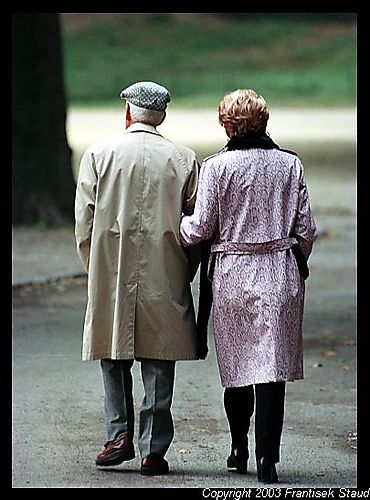
In a time when Hallmark romance has reached rhapsodic heights to the point that us Jews are tagging along for the ride, why is it that more and more of us can't make it to the end? Growing old together is one of the idealized ends for every marriage, but why is divorce on the rise, no matter sect or classification?
https://blogger.googleusercontent.com/img/b/R29vZ2xl/AVvXsEjz3IBLawOit79E-eBfFGtojRDb94wfRhhe42IBDF71qlHdJB9nw9NBDKW53uxCZHsRKCBiy6tK9CWWiVdufG65ChlDYpH_l0Fz88OsJkPirWEmsG76YwiSqxXMThO55jU5bCYIkemmGgyK/s1600/6a00fad6af22a9000501101666bd4e860d-500pi.jpg
No one goes into marriage thinking of divorce. None of us foresee a future with a yet-to-be-met significant other that hits a wall.

Is it valid in all cases? Could marriages be saved, along with all the lives linked to it? Or are more and more of us doomed to break up?

Sunday, December 18, 2011

Panic

What concerned me the most about Matisyahu's tweet was the statement, "No more chassidic reggae superstar." 


Is he leaving reggae? I made a point to develop a Jamaican accent when I sing, and if he leaves that I will be in a bit of a bind. 

If anyone knows any further details, feel free to put me out of my worry.

Friday, December 16, 2011

Calling All Makeup Geeks!

My cousin Chava recommended Makeup Geek to me, a very helpful tip. MUG has a variety of tutorials which have sent me scrambling over the internet and Sephora, with fabulous results. 

A lot of what I have passed on in my eye makeup posts I learned from her. 

I became enamored with this look that she demonstrates. 


I used Illamasqua eyeshadows in matte white, Feline for the lighter gray and instead of black, I used Incubus, the dark gray. For highlighter, MUFE eyeshadow. 

In order to play around with the look, I tried applying the ombre color change from bottom up, instead from inner-corner out; meaning, I applied the white in a thin line right above my lashes, with the light gray atop that and the dark gray in the crease. 

I find that white or highlight color right above the lash line makes the eyes look bigger and brighter. 

Check out her other tutorials! 

Thursday, December 15, 2011

Say Nothing . . .

My family has never been one to say things like "I love you." I am happy with that; my belief is that love, amongst various emotions, is best expressed with actions. There are enough men who claim to love their wives then proceed to beat them black and blue. 

And so it makes me incredibly satisfied to come across this new conclusion by researchers: marriages with active generosity are the successful ones.
Generosity was defined as “the virtue of giving good things to one’s spouse freely and abundantly” — like simply making them coffee in the morning — and researchers quizzed men and women on how often they behaved generously toward their partners. How often did they express affection? How willing were they to forgive?
We know that line that love, ahava, has at its root hav, to give. When one gives of themselves (not necessarily giving of items, but of effort), one comes to love the object of their efforts. 
Men and women with the highest scores on the generosity scale were far more likely to report that they were “very happy” in their marriages. The benefits of generosity were particularly pronounced among couples with children. Among the parents who posted above-average scores for marital generosity, about 50 percent reported being “very happy” together. Among those with lower generosity scores, only about 14 percent claimed to be “very happy,” according to the latest “State of Our Unions” report from the National Marriage Project.
What is even more satisfying that the children from generous marriages mimic their parents' generosity, which continues the cycle of giving and successful future relationships. (Of course, that study was done by Israeli researchers.)

I was reminded of an article I had read a while back in Mishpacha Magazine. A man was in the throes of an unhappy marriage; he and his wife had nothing to say to each other for more than twenty years. Asked to do bikur cholim, he is told by the recovering man that he should be more giving to his wife. Do the dishes every once in a while. Offer to drive her if she's going somewhere. Smile.  

The man did so. While his wife initially looked at him in distrust, she eventually responded to his efforts. They began to talk and communicate. Soon the two were a happy couple. They even had another marriage ceremony, since what they had before didn't really qualify as a marriage. 

Reading that story both inspired and depressed me. Could a marriage be saved by the simple act of taking out the garbage unasked?