Wednesday, October 26, 2016

The "Talk"

"Have you ever gone out with _________?" 

"No." 

If the reason why I haven't gone out with him is on his end, not mine, I accept his decision and leave it at that. I would want to have my wishes respected if the situation was reversed. 

Then it comes: The straightening of the shoulders. The raised tilt of the chin. Lids lower over the battle-ready eyes. Then, delivered with a knowing smirk: "I'll talk to him." 

With a firm nod of the chin, he or she marches away, invisible sword and shield in hand. 

That is usually the last I hear of it. 

Talking! Why didn't anyone think of that? Singles, after all, don't know their own mind. They are unaware of the important things in life. They just need a firm, guiding voice that barely knows them to order them to stop this silliness and simply go out with/marry this particular girl because I said so. 

I have been on the receiving end of the "talk," and it is most unpleasant. The Talkers rarely realize that my unwillingness has valid sources, some I do not wish to relate as there is no need to fashmear a guy just to refuse a date. Or, whatever my logic, they will discount it anyway, so why bother to explain how this fellow does not compute with the qualities I seek in a life partner if I won't be heard anyway? 

"Why won't you?" they relentlessly repeat. You can almost hear his/her thoughts: I told him I would talk to her! I'm using words and everything!  But why doesn't it seem to be working? 

'Cause we know your Jedi mind tricks, and the Force is strong with us. 

These aren't the droids you're looking for. 

Thursday, October 20, 2016

The Decorators of the Soul

To get myself in the proper yuntiff state of mind, I've been hearkening to various shiurim; one, by Rabbi Stauber, was addressing the difficulties some have with the concept of "hiddur mitzvah."
http://hipsterjew.com/files/2011/09/Checking-the-Lulav-border-300x428.jpg
I was puzzled. Why should anyone feel pompous by practicing hiddur mitzvah? Then I realized: I'm Hungarian. Our whole lives are hiddur.

As my social studies teacher in 6th grade (a frum woman of Polish heritage) taught my class, an example of a stereotype is, for instance, that Hungarians have chandeliers in their bathrooms.
https://www.riverbendhome.com/blog/wp-content/uploads/2013/01/chandelier1.jpg
Darn tootin'. We matter-of-factly beautify the mundane. How much more so the sacred? 

I was once listening to an Esther Wein shiur, and she brings an Arizal: Hashem created the whole world, and within every culture and nation there is an aspect that Jews can learn to better serve Hashem. 

As the granddaughter of Rabbi Schwab, she mentioned the German meticulousness, which can be applied in how mitzvos are kept—in careful detail. 

Well, Hungarians decorate. 

Setting the table for Shabbos, for instance. My father's cousin came for a visit, and he and Ma had a passionate discussion on the art of tablecloths. (His wife, while a fellow Magyar, was not concerned with such matters.) He eagerly soaked up Ma's prowess of ideal weight and measurements. 

While I do share a house with the best cook I have ever come across (I have had much exposure to other chefs, and she has yet to be outclassed), the success of a Shabbos meal, is, oddly, less in the food, more in the presentation.

As Ma decrees, three factors: 

1)   Beautiful dishes.
http://p2.la-img.com/179/15576/5089130_1_l.jpg
2)  Beautiful flowers. 
 http://www.englishgardenraleigh.com/bmz_cache/5/51511bfcc633698d5f8106c1a1177877.image.400x456.JPG
3)  Gracious hostess. 
https://s-media-cache-ak0.pinimg.com/originals/85/1f/ca/851fcaec96a8713eb20129c20dc6cfec.jpg
Couldn't resist.
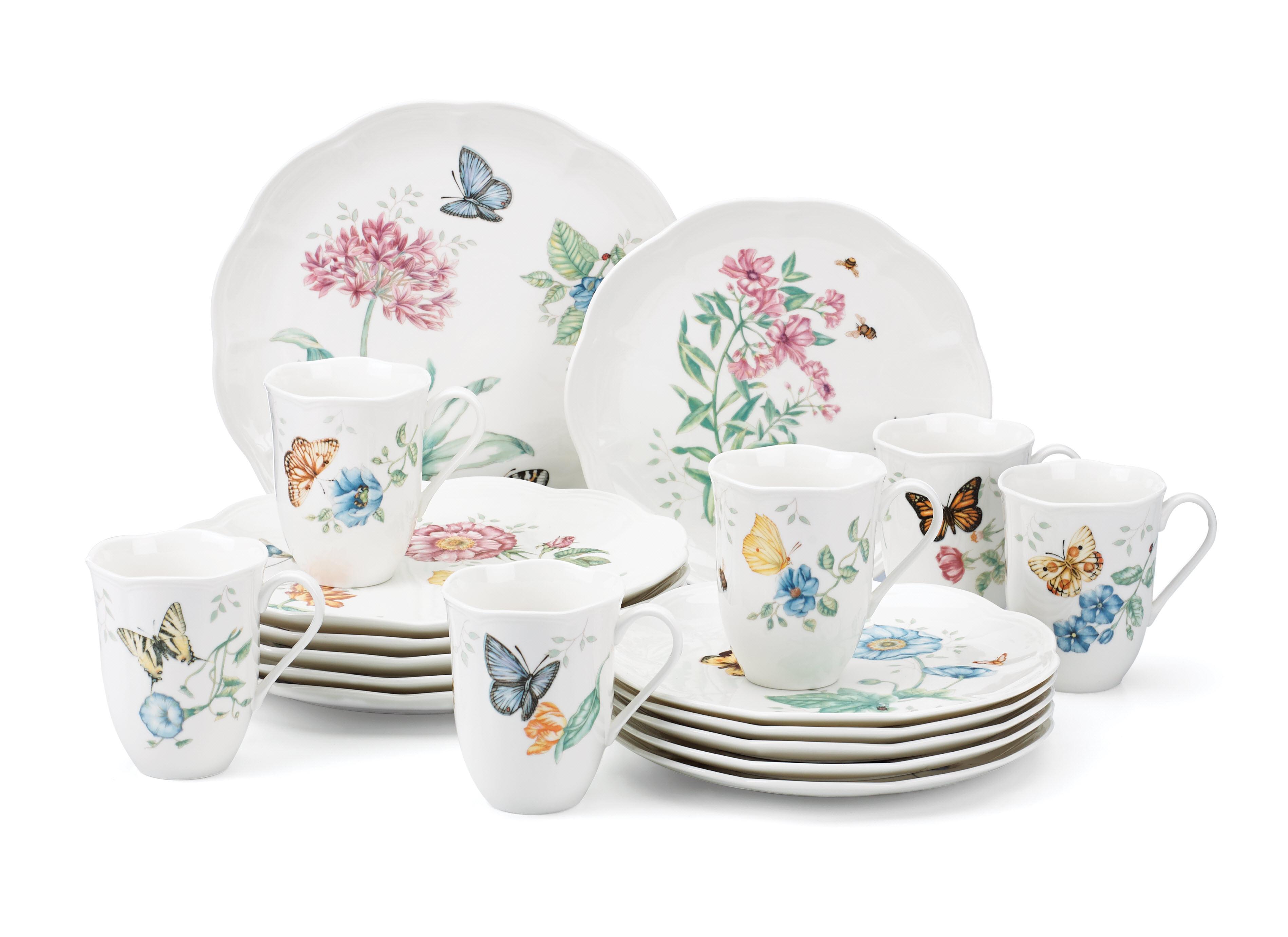
There's a reason why I'm currently sitting on a trousseaux of Lenox, snatched up piece by discounted piece in Homegoods. Dishes are a long-term investment, and if one buys a reliable brand that doesn't chip they will be around—looking pretty—for years to come. (Cutting back on a few food items from takeout or the deli section will cover the cost quite quickly.)
https://images-na.ssl-images-amazon.com/images/G/01/aplusautomation/vendorimages/de1d15e0-dce3-441c-8cb1-9758b8efb516.jpg._CB290384264_.jpg
As for flowers, they don't have to be expensive to be lovely. Carnations, for instance, aren't pricey and can last as long as two weeks. But then, it is also imperative to own a lovely glass vase to put them into.
 http://fyf.tac-cdn.net/images/products/large/BF118-11KM.jpg
Ta's esrog this year? The fairest of them all.    

Friday, October 14, 2016

Thursday, October 13, 2016

Potato Sub?

Have you met the rutabaga? We've only just been introduced. 

It appeared on my radar when researching good foods for nuking my probably imaginary bad gut bacteria. I can have my starch and eat it too, ha ha. 

I scurried into the fruit store, where I lamely asked a worker which was the rutabaga. It was labeled as something else (wax turnip?), and clutching it reverently, returned home and pan-roasted it. 

Peel, dice, and simmer with some oil, a splash of water, black pepper and garlic powder covered for 45 minutes, then took the top off until there was a pleasant browning. 
It tasted almost like—like—like a potato! 

The heavens have opened! 

For a more official recipe, thar ye go. I'm not crazy about rosemary, though. Too perfume-y. 

Rutabagas are a cross between cabbage and turnips, so it is considered part of the cruciferous family, along with all the good for ya elements therein. That's why I went looking for it. It also has half the calories and carbs of potatoes. (I'm not sure about the "half" thing. Less than half, maybe? I'm approximating. Google it yourself.)

Because of their sturdy texture, they maintain a firm image even after long cooking (no mushiness), while soft and nummy. 

Rutabaga fries, anyone? 

Tuesday, October 11, 2016

Rabbi Frand's Yom Kippur

Rabbi Yissocher Frand:
"
At Your Service"

אז תקרא וד' יענה תשוע ויאמר הנני

“Then you will call out and Hashem will answer; you will cry out and He will say ‘Here I am’” (Yeshaya 58:9, Haftorah for Shacharit)

While we may many times wonder how we can have our tefillot answered, on the day of Yom Kippur, we are revealed the secret. The Navi Yeshaya tells us in the Haftorah reading, “אז תקרא וד' יענה תשוע ויאמר הנני – Then you will call out and Hashem will answer; you will cry out and He will say ‘Here I am’” (Yeshaya 58:9).

There are fourteen places in Tanach that the expression “Hineni – Here I am” is used. Thirteen out of the fourteen places are contextually the same with the servant responding to the master, “Here I am; at your service.” Avraham responded to Hashem after he was commanded to bind Yitzchak to the Altar, “Here I am;” Moshe Rabbeinu, as well, used this expression when he encountered Hashem at the Burning Bush. The one exception to the word Hineni expressing the Jewish people’s readiness to serve G-d is in this Pasuk from Yeshaya. This time, the Jews call out to their Master, the Ribono Shel Olam, and He is the One to respond “Hineni – Here I am.”

How did we get the Ribono Shel Olam to respond? What is special about this situation that causes the roles to be reversed?

The Gemara (Yevamot 63a) tells us what this Pasuk is referring to:

והמקרב את קרוביו... עליו הכתוב אומר אז תקרא וד' יענה תשוע ויאמר הנני
One who brings his relatives near, upon him the verse says, “Then you will call out and Hashem will answer; you will cry out and He will say ‘Here I am.’”

What do we have to do to have our prayers answered? What is this Pasuk telling us to do to shake the heavens? Finish Shas in one year? Recite Sefer Tehillim every day? Give millions of dollars to tzedakah? No.

Bring your relatives close. Just be nice to your sister-in-law.

Why is this the secret formula?

The Maharal clues us into the underlying reason: “The Ribono Shel Olam’s relationship with Klal Yisrael is that of a relative.” We are Hashem’s family. And when we act kindly to our family, Hashem says, “I will deal with you measure for measure. If you treat your family nicely, I will treat you nicely.”

Our own family oftentimes presents the greatest of challenges. This is especially true of siblings. Yet, consider for a moment which people we are most closely related to. With whom do we share the most similar and identical DNA? It is not our children or our parents, but our siblings. If you have ever thought of it, the longest-lasting relationship is that of siblings. Our siblings can live with us for sixty, seventy or even eighty years. It is the longest relationship, yet sometimes the most difficult.

Treating our family as they deserve to be treated is the key to having Hashem, our dearest Father in Heaven, say to us, “When you call out, I am at Your service.”

As we enter the holiest day of Yom Kippur and look to make amends and ask forgiveness from our family and friends, we ought to take a moment and ponder how we treat them. Do we show them our appreciation, give them our undivided attention, treat them respectfully and considerately, and love them unconditionally? That is the question we must ask ourselves. If we wish to have our tefillot answered, this is where we need to begin.

Monday, October 10, 2016

Books on Change, II

https://www.getflashnotes.com/wp-content/uploads/2015/05/willpower-book-cover.jpg
These two delve into the science of self-control: Why it is important, how much we have of it, how it is fueled. 
They posit a theory that humans are social for survival purposes, and in order to get along, one needs TONS of self-control. We can't all do whatever we want and expect to have pleasant familial/neighborly interactions.

They say, up front, that it is impossible to alter more than one behavior at a time, so don't go there (as our mussar seforim insist). This New Year should not begin with more than one item that requires fixing. Whether it is an unhealthy behavior like smoking or a toxic behavior like impatience/screaming, only one can apply at a time. 

The brain does not have separate categories for willpower; there is only one well to draw from, no matter the application. If one exhausts the supply by not killing a co-worker, for instance, h/she may come home that evening and fight with the spouse over a mildly annoying quirk. 

Additionally, one must we well-nourished and well-rested in order to have self-control since—get this—it feeds on glucose. Many who commit criminal acts have been found to be hypoglycemic (ergo the "Twinkie Defense"). That's why implementing self-control can often be exhausting; it sucks the life out of you by plowing through your physical energy supply. (Before you get excited, the best sources of glucose are from sensible proteins and vegetables, not Oreos.)

Deliciously, a lot of their scientific conclusions are echoed by our rabbanim, as heard in this shiur (cheat sheet: instead of telling oneself, "I will not eat that kakosh," say instead, "I'll have kakosh later." That fools the brain into a form of satiety, and, when the opportunity to kakosh arises, one won't necessarily even want it anymore. For reals). 

Cool, huh?

The book is jammed with more awesome revelations, like self-control leads to good self-esteem, not participation trophies.  

Friday, October 7, 2016

TGI Chicken

I have not yet necessarily tried any of these recipes, but I would love to share them, just for the sake of inspiration: 
  • Alton Brown's Chicken Piccata, obviously omitting the butter. I'm actually not crazy about lemon in my chicken or capers in general, but this recipe is a great base for fiddling with;
June_Hersh_Tsimmes
Via June Feiss Hersh

Thursday, October 6, 2016

Sorta Spanish Eggplant

"This eggplant is about to get funky," I said as I rummaged through her vegetable drawer. "This red pepper too." 

This. Means. SPANISH EGGPLANT! To the spice cabinet! 

"Where's your paprika?" 

"I ran out." 

"You ran out?" 

"Yes." Her head hangs sorrowfully. "Shabbos wasn't the same." 

"OK . . . you have"—making a mess of her herbs—"red pepper flakes and black pepper. I can work with this." 

In a basket were onions and garlic. "Can I use these grape tomatoes?" 

"No tomatoes." 

"Right, you don't like tomatoes . . . have anything against ketchup?" 

"Ketchup is permitted." 

Onions were happily sauteed. Minced garlic and red pepper flakes were added. Then the salted and rinsed chopped eggplant and chopped red pepper. Simmer simmer simmer. Healthy squirts of ketchup. Finish off with hearty cranks of black pepper. 

YUM. This'll do.  

(Should have taken a picture, but ate it all before I could.) 

Wednesday, October 5, 2016

Books on Change, I

To get you in the fasting spirit, here's Rabbi Daniel Glatstein

Ah, New Years Resolutions. How they suck. 

Most of us would like to change for the better. But it's so darn hard. So I shall share books I have read recently that I found rather illuminating on the subject. I believe that if we know how our brains and bodies work, we can work with them. 

The Power of Habit: Why We Do What We Do in Life and Business by Charles Duhigg examines the science of habits, how they operate, and how they can be changed. 

He brings a number of examples from businesses to personal addictions (he was not very sympathetic to gamblers and the like), and how bad habits were overcome by altering one minor detail which resulted in a chain reaction. 

Habits work like so: 

1) Cue. 
2) Routine. 
3) Reward. 

To change a habit, one has to pinpoint what the cue is; then the mindless routine can be replaced. REPLACED. Not ignored, not overcome, but REPLACED. (Sur mei'ra v'asei tov. It's not enough to stop a behavior; one must be active in doing better as well.)
http://examinedexistence.com/wp-content/uploads/2015/03/habit-replacement.jpg
I was hoping he would provide a simple cause and effect when it came to, say, overeating (cough cough), but no such luck. I had to figure it out myself. And I did. 

Since most days of the week I arrive home at dinnertime, my routine is usually

1) Walk through door. 
2) Eat. 
3) Be nourished and satisfied. 

However, that cue is the same on Friday afternoons when I come home early, or following Sunday outings, or even applied to siblings' front doors. 

So I consciously attempted to replace the routine: Drink a glass of water. Most of the time I'm thirsty anyway, and I feel that same pleasant nourishment and satisfaction when I get hydrated. 

The whole book is quite fascinating, even though I provided the cheat sheet. 

http://topfamousquotes.com/images/author/201507/charles-duhigg-quotes-3.jpg