Wednesday, May 6, 2015

Sinful Colors Thimbleberry

'Twas the day before Purim, and my nobly fasting niece required some entertainment. While she is hard to impress, her ears perked up at the suggestion that I do her nails. Now to waste some time in the drugstore.  

While her eye lingered hopefully over the greens, blues, and purples, I was firm: Only pink. Nails, like lips, in my view, must remain within the red/pink range. Additionally, she was to be a princess for the holiday, and I wanted an appropriate hue. Our options thus limited, as was the drugstore supply, we both quickly zoned in on Sinful Colors Thimbleberry. 
In some lights, the color looks pink; in others, orange. Whatever color it actually is, it suited her pale skin, as well as her age, to perfection.
https://blogger.googleusercontent.com/img/b/R29vZ2xl/AVvXsEhmRWKM1ysD6B0C4Y-bJuSHXetf6Q0DpUcD_Lsy4Nl_mf2p7-qshcnETY_Ri-eGZ0tDB0vwBcZcX_0rCxIDHBKZJlaUZ1XwNyxDSPGYXPvzUlgbrXEFp-ULiSHOV62gklXhYfBsLT2zCmI/s1600/P1030696.JPG
Via opinionatedlf.blogspot.com
When summer actually comes, Thimbleberry will get some use.   

Tuesday, May 5, 2015

50% Divorce is, Like, Over

You know that line, "the divorce rate is at 50%"? Well, ahem, apparently, not anymore ("The Divorce Surge Is Over, but the Myth Lives On" by Claire Cain Miller).
It is no longer true that the divorce rate is rising, or that half of all marriages end in divorce. It has not been for some time. Even though social scientists have tried to debunk those myths, somehow the conventional wisdom has held.
Despite hand-wringing about the institution of marriage, marriages in this country are stronger today than they have been in a long time. The divorce rate peaked in the 1970s and early 1980s and has been declining for the three decades since.
From 1990 on, divorce rates have been dropping. 
There are many reasons for the drop in divorce, including later marriages, birth control and the rise of so-called love marriages. These same forces have helped reduce the divorce rate in parts of Europe, too. Much of the trend has to do with changing gender roles — whom the feminist revolution helped and whom it left behind. . . 

Some of the decline in divorce clearly stems from the fact that fewer people are getting married — and some of the biggest declines in marriage have come among groups at risk of divorce. But it also seems to be the case that marriages have gotten more stable, as people are marrying later.
There is a discernible correlation between marital stability and marrying later—all hail older singles!  
http://www.richardsilverstein.com/wp-content/uploads/2006/02/anti-semiticsettlergothic.jpg
Well, maybe not this old.
Apparently, when divorce started becoming a thing in the '70s and '80s, it was an anomaly, as opposed to the rule. This was in a time as women's roles began to shift; wives realized the spouse they had was not the one who would be cool with those changes. 

As women's roles began to stabilize again, they were able to make smarter, long-term choices in a spouse. 

Well, what does this mean for the frummies? I don't know about our own divorce numbers, but they appear to be alarmingly high to me. We do take on trends, just with a bit (20+ years?) of delay. 

Although I don't think our current issue is that frum women are branching out of the "barefoot and pregnant" cliche . . . we've been doing that for a while now. 

Hmm. 

Monday, May 4, 2015

"Shidduch Lit," II

Continuing in the Bad4 tradition, I present further options for Shidduch Lit

The Pursuit of Love by Nancy Mitford (1945):
http://d.gr-assets.com/books/1178768641l/835458.jpg
The protagonist is a hopeless romantic, and so chooses the "love of her life" quite badly. I found this to be more of a cautionary tale. I think I like cautionary tales.

Linda constructs fantasies of romance which prove to be her undoing, time and time again. Her jealousy at her older sister's marriage galvanizes her into insisting she is "in love," even though everyone in her family, friendship, and acquaintance say that he is not for her.

Nancy Mitford's books tend to mull over the question of what makes a happy marriage. Is it the wrong motivation that undoes things? What is the right motivation? Hmm. 

Longbourn by Jo Baker: 
http://d.gr-assets.com/books/1364853806l/17380041.jpg
I have read a number of novels piggy-backing off of beloved classics, and this is the only one that is excellent literature in its own right.

Longbourn presents the view of that household from Pride and Prejudice through the eyes of the servants. Elizabeth, who was always our heroine, was quite inconsiderate slopping through all that mud; poor Sarah was the one who had to spend ours scraping it off, losing quite a lot of skin in the process.

Within, there is one passage describing what I feel to be the true translation of love, that I felt moved to share: 
Oh. 
It could have no effect on anything at all.
What he felt did not matter; it changed nothing.
But it interested him.
If he loved Sarah, then it meant that he was, despite all he had done, and all that he had failed to do, capable of feeling, and capable of good. Because he wanted nothing from her: this was a generous, expansive feeling, unattached to the possibility of gratification; it was a simple happiness that came from knowing that one particular person was alive in the world. He felt grateful for it; grateful that she had, however unwittingly, enabled him to feel like this. 
And though love might not matter, gratitude did. It brought with it a sense of obligation.
Sigh. 

Delving more into practicalities: Why Marriages Succeed or Fail: And How You Can Make Yours Last by John Gottman.    
http://self-help-ebook.net/uploads/images/why-marriages-succeed-or-fail-and-how-you-can-make_1.jpg
Dr. Gottman is referenced constantly by professionals, and has a number of books; this is the first I have read. While my library copy was all scribbled up by an apparently unhappy wife, and the quizzes don't exactly apply to me, his categorizations of how people tend to deal with conflict (beyond marriage) was fascinating. I'll be taking out more of his books, definitely.       

Friday, May 1, 2015

The Sweatpants of Relationships

I have had enough—not many, but enough—good dates to know the sought-after sensation of potential: being comfortable. 

That whispering editor in my head who usually tags along, tugs my ear, and admonishes: "Don't say that!" has flitted off to Aruba. Somehow, I know, from what he's saying and how he's responding, that he understands me, and I him, to a small, hopeful degree. 

I had thought this feeling to be unique to my own experience, until Ma's friend said it first, as I struggled to express myself: "You want to be comfortable." 

"Yes! Exactly!" 

According to Ellen McCarthy, whose new book, The Real Thing: Lessons on Love and Life From a Wedding Reporter’s Notebook, that's what people are looking for in a relationship. Check out her interview on CBS This Morning

Thursday, April 30, 2015

The "Sensitive" Get Their Day

In my years of observation, it became quite clear that all children are not created alike. Some simply bounce, physically and emotionally, off of hardship; others possess such fine skin that the merest tap, physically and emotionally, leaves a bruise. 
http://a.dilcdn.com/bl/wp-content/uploads/sites/8/2012/03/2d291acbb9a9603db71f571038019f47.jpg
Via babble.com
Scientists have pinpointed that tendency to genes ("The Downside of Resilience" by Jay Belsky). The latter group of children, while naturally predisposed to getting crushed, can be saved through support and nurturing; all is well! However, the former group keeps on keepin' on with or without any outside help. No matter what care is provided, the end result will be the same. 

When my neighbor's son went off the derech, Ma asked the family guru how it happens. He replied that some children are very sensitive; in this case, perhaps he could not tolerate perceived hypocrisy in his upbringing.

Belsky's long-view hope, in light of this study, is to channel funds to target the most vulnerable and in need of help, while providing less expensive measures to the ones who will be fine in any case. 

In our world, such genetic sequencing anytime soon is not likely to happen. Perhaps, we can realize that there are those who can't simply "laugh it off." The more resilient can often be quite blasé about the sensitive's thin skin; they cannot be tougher, any more than the tough will suddenly become susceptible. 

There are children who crave structure and consistency, and suffer for lack of it; there are others who are mellow any which way. Being able to differentiate between the two types is the challenge, I suppose, of l'chanoch yeled k'darko.

Wednesday, April 29, 2015

The Underlying Causes

Jane the Virgin, "Chapter 16"

Jane, our heroine, an aspiring romance writer, is currently blocked. She believes this caused by her worrying about her boyfriend, Rafael, who has been distant as of late. In an attempt to unblock, she attends a writer's workshop under the auspices of one of her favorite authoresses. However, she failed to read the back of the flyer, which stipulates that when feedback is asked for, it should be in the form of "compliment cards," not critiques. 
http://img1.nymag.com/imgs/daily/vulture/2015/03/17/17-jane-the-virgin.w529.h352.2x.jpg
She (like me) is a product of college writing courses, and scribbled down her feelings for Wendy's work accordingly. She realizes her mistake only as Wendy haltingly informs the group that her nervousness held her back from sharing her work for over a year. 

Amanda: Before we dive into our gentle discussion, why don't we shore you up with some more compliments?

Jane is shvitzing, and makes a grab at the pile of cards, desperate to get her own back. But (as is to be expected on television), hers is extracted and read aloud by Wendy. 

Wendy: "Good dialogue, but I wasn't rooting for for the couple. It's clear there's no real love there. They seem like they would be better off without each other." 

Wendy bursts into tears. 

Jane is desperately explaining her college training as Amanda shoos her out from the group. 
http://images.cwtv.com/images/c/photo-gallery/jane-the-virgin/01938890497_14de_1280.jpg
Amanda: Perhaps you'd be more comfortable in that kind of a cutthroat environment. We are builder-uppers, not tearer-downers.

Jane manages to salvage her place in the group by complimenting Amanda's books, then spends her evening writing up positive feedback for Wendy's work. She offers it to her the next day, but Wendy says that it's not necessary, because she wasn't crying about what Jane said about her writing; she wept because of what Jane said about her marriage. The couple in her story was Wendy and her husband, and Jane had said there is no real love, they would be better of without each other. And maybe they are.

The group, being of the romantic kind, vote for "grand gesture" to bring the love back (she succeeds). But anyway:

Amanda asks Jane if she would share her work next time, and Jane sheepishly admits her writer's block.

Amanda: The problem isn't always where you think it is. It's often further back.

Jane and Rafael are scheduled to meet for lunch, and he shows up late, claiming he sent a text which Jane didn't receive, then says that he can't stay, that he has a work issue. 

Jane: Aw, come on, that's not all it is. You've been . . . distracted and distant.

Rafael: I'm busy, Jane. This is life. It's not all flowers and fantasy. 

Jane: I know that. 

Rafael: Do you? 

Jane: That's not fair.

Rafael: I don't know what you want from me. 

Jane: I want for you to be present

Rafael: I asked you to marry me. How much more present could I have been? 

I should interject here that after they had been dating for about two minutes, Rafael proposed grandly and romantically, with Jane saying not a definite no, but a not right now, that it was too soon. Ever since then he had been nursing his hurt and anger at rejection by pulling away. Jane knew the problem went further back.

Jane: I understand that you're hurt and you're mad—

Rafael: I'm allowed to be! 

Jane: And so am I! Because you asked too early. Things were great! We were moving forward! Then you got this idea into your head to propose! This is not my fault. You were impulsive. If you has stopped to ask someone, anyone who knows me, you wouldn't have asked. And I wouldn't have had to say no, and we wouldn't be here. So stop, please, stop putting this all on me.

Rafael, chastened, remains silent as Jane gets up to leave. 

Narrator: And in that moment, Jane felt unblocked, as it were.

She trots off to fetch her laptop. 

Rafael then encounters his business partner/ex-wife (it's a telenovela, after all) and he asks her if he proposed too soon with her, after five months. She admits it was quite quick, but she understood his need for a family. 

Rafael seeks out the frantically typing Jane, and says that going back, his proposals have been rooted in that. 
http://media.cwtv.com/cwtv/digital-smiths/thumbs/2014/10/24/JaneTheVirgin-103-ChapterThree-CW-Stereo_b7be1371a_CWtv_720x400.jpg
Rafael: I did propose too soon. And it's like what you said, about going back? For me, it was all about family, and how badly I wanted a family. And so I tried to rush it, and I tried to lock it down so you wouldn't leave. 

Jane: I'm not gonna leave. That's the point. I'm here. We don't have to rush. 

The reasons why this episode resonated with me: 

1) Writing is art. If anyone has ever been to MOMA (voluntarily) there is no "right" way to do art. I believe the same way with writing. I can have my opinion, I can not like certain authors the same way I don't get certain "artwork," but there is no right or wrong. Ergo, why do colleges insist on critique? What would that achieve? Just because some arbitrary person doesn't like what I write means I have to overhaul everything I am? "Gentle discussion," all the way! 

2) Writers should write what they know. That's what makes stories compelling, in my view. Sure, Harry Potter is an insanely absorbing fantasy series, but it's more about the relationships that us Muggles also experience. And by doing so that we can mend any rifts in our own lives, by distancing ourselves and viewing it from another perspective.   

3) Often, in my interactions with people, I try not to focus only on the surface. If someone is upset about something, I try to think beyond my own feelings at this moment. Not "How could she say that to me? Is it really true?" but rather "What's going on in her own life that she would behave like this?" Jane thought she was losing her connection to Rafael, when pinkt fakert, he was trying too hard to seal their bond. 

4) Romance sucks. 

Tuesday, April 28, 2015

Don't Keep It All In

We had a grand time, us two. When we first met, as single "older" gals, our conversations were loud, laughing, and enjoyable. The subject matter was pretty basic: Crummy dates and nasty shadchanim. It was the rich, succulent meat we bonded over, bellowing and shrieking and guffawing. It was great.
https://info.kaiserpermanente.org/info_assets/oncology_mid/images/mainimage03.jpg
"Companions in Misery" by Mariana Alessandri made me realize why. She begins that based on a study ranking satisfaction, it was concluded that New Yorkers are quite unhappy. She argues that "satisfaction" and "happiness" are two separate entities, and furthermore, negativity can have a bright side. 
In his 1861 essay “Utilitarianism,” John Stuart Mill carefully distinguished between the two, saying that a person can be satisfied by giving the body what it craves, but that human happiness also involves motivating the intellect. This means that happiness and satisfaction will sometimes conflict, and that those of us who seek happiness, and even attain it, may still be dissatisfied.
Perhaps that is why I am in the throes of emotional crisis. I do want to marry, but I don't consider myself unhappy. Do I have to be unhappy in order to pursue something I really want, such as a family of my own?  

Alessandri writes that as a born and bred New Yorker, complaining is a cultural constant that has nothing to do with happiness. She was disconcerted during her years OOT when whining was whacked into Pollyanna cheer. 
In a less insufferable way, the ancient Stoics also proposed that we stop complaining, that we minimize negative emotions like sadness and anger in order to maximize joy, tranquillity and peace of mind. The former set will lead to a miserable life while the latter will lead to a good life “in accordance with nature.” They believed that misery is rooted in trying to control things that are out of our hands (wealth, honors and reputation) instead of working on those things that we do have control over (desires, aversions and opinions).
I'm apparently a Stoic. What does complaining get me? And yet, why were my sessions with my fellow single associate so enjoyable? All we did was kvetch. "Could you believe it that's what he actually says on a date? Like, what planet is he from?" "I know! Would you believe what this one said? I was, like, 'Waiter!'"
But what if my worrying and complaining aren’t an attempt to change the laws of nature? Can it be that my negativity is still useful, that it can get me somewhere?
Alessandri continues that complaining isn't about wanting to change unchangeable circumstances. 
The 20th-century Spanish philosopher Miguel de Unamuno didn’t recommend banishing the negative emotions or “keeping on the sunny side of life.”
http://www.sigueme.es/docs/autores/foto-452-a-1325752765.jpg
Unamuno believed that a life worth living consists in communing with others, and that this happens most genuinely through negativity. In “My Religion,” Unamuno wrote: “Whenever I have felt a pain I have shouted and I have done it publicly” in order to “start the grieving chords of others’ hearts playing.” For Unamuno, authentic love is found in suffering with others, and negativity is necessary for compassion and understanding. If we try to deny, hide or eradicate the negative from our lives, we will be ill-equipped to deal with people who are suffering.
Where did I hear this before? Ah, yes, mitleid-freude

Alessandri's husband tells their crying toddler in the back seat that crying won't get them there any sooner, but she says:
My son is not crying in the car to get home faster; he is crying because he is trapped. When I get trapped in crummy situations I too cry, whine, complain. I get it out. I vent. I do these things because they are useful, but not the kind of useful that people usually have in mind. Usefulness doesn’t exclusively mean undoing what we don’t like about our situation; it can also mean dealing with our situation creatively. I use negativity both to change myself — to release disappointment, anger and frustration — and more important, to connect with others.
That's how New Yorkers bond, she continues, by kvetching.
Two strangers complaining on a subway platform can end up cracking a smile or laughing, and though it would hardly be considered the beginning of a lifelong friendship, it is still neighborly. Just because the topic of conversation is negative rather than positive doesn’t mean we are unhappy, and oftentimes the opposite is the case. A funny complaint from the person next to me can quickly lighten my mood, and hers. But the possibility of someone’s being a happy complainer gets lost when we equate dissatisfaction with unhappiness. . . 
http://ep01.epimg.net/diario/imagenes/2006/04/15/babelia/1145056635_850215_0000000000_sumario_normal.jpg
From the outside, the image of dissatisfied and complaining New Yorkers might seem to exemplify Schopenhauer’s portrait of humans as prisoners “paying the penalty of existence” . . . But Schopenhauer’s portrait of us as broken beings sentenced to life together leads him to ethics instead of individualism. Instead of twisting free from our fellow inmates, Schopenhauer suggests that we stay put and serve our sentence collectively. . . That we are all condemned to the same Sisyphean fate ought to make us compassionate instead of competitive, work together instead of in isolation, and rely on one another instead of just ourselves.
We spent hours together complaining, she and I. Instead of my having to downplay the frustration and exhaustion of dating, like I have to do with everyone else, we were able to give shrill voice to the annoyances, commiserate, and comfort each other. Then we were both quite happy. 

Monday, April 27, 2015

Morning Cuppa

I had been hearing about lemon water for some years now, and after a FB cousin posted this article, I was game.

My immune system hasn't been operating so well. Miss a couple of nights' sleep, and I get a cold. Contracting a lingering fever in winter is now so common, everyone thinks I am a hypochondriac (I can't walk. I'm not overreacting). Once I'm over a fever, then another bout of the cold. 

Last winter I took up with raw garlic, and it kept me hale and hearty, even when I was surrounded by disease carriers. But it's a complicated enterprise, especially with the eyes streaming and the breath stinking. I managed to work around those two issues until this most recent winter, when I started getting sick, even with garlic cloves in me. 

I was now open to lemon water. I wondered, for a time, if I was just a gullible weenie, but thankfully the news has backed its potency, albeit in terms of digestion and skin health. I'll take that. 

I don't add in the raw honey; it's a pain to get it out of the glass. I occasionally lick it off a spoon.   

Daily, I squeeze out the juice from a half a lemon, then warm up the room temperature water with some boiling water, and sip it through a straw to spare my teeth. I love the taste of lemon in general, so it's refreshing as well as collagen- and immune-building . . . I hope.  

Time will tell. 

Thursday, April 23, 2015

Until 100, At Least

Dan Buettner researches longevity. He has discovered certain "Blue Zones," in which the populace enjoy 100-plus years of life. He recently came up with a follow-up, Blue Zones Solutions, to his earlier Blue Zones
http://www.thetimes.co.uk/tto/multimedia/archive/00309/108849517__309991c.jpg
One could think, "Sure, but Sardinia, Icaria, Okinawa? Isolated places, maybe it's something in the water." But there is a Blue Zone in the U.S., in California, an enclave of Seventh Day Adventists.
 
By emulating these Zonies, we can prevent illness, as opposed to treating them (and destroying the body in the process while going broke) after they come into being. 

There are a number of factors that Buettner has pinpointed amongst these Zonies, and as Jews, we meet most of them. Religion, red wine, prioritizing family, lock down a life purpose. 

But we suck in one area: Food. Seventh Day Adventists, following Beraishis, consume a plant-based diet. Humanity was only allowed to eat red meat following the Mabul; it didn't become mandatory. How many of us restrict our red meat consumption only to Shabbos and yontif? (The other regions probably have very little access to red meat in general, and ergo can't binge on it.) 

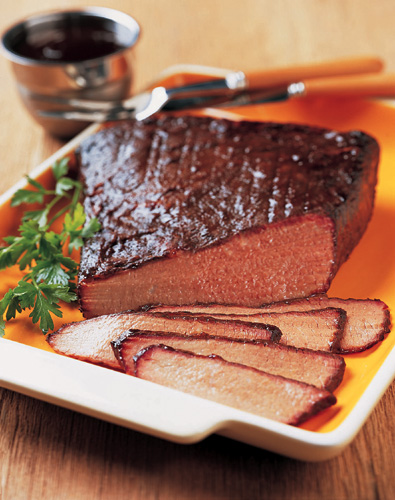
https://stuffjewishyoungadultslike.files.wordpress.com/2010/03/brisket.jpg
And on Shabbos, only ONE piece should be enough.
We eat TOO MUCH and BADLY. That, I think, is one of our major struggles in how to adapt to too much blessing as opposed to the previous too much suffering.

Each Blue Zone has different superfoods to their region; the U.S. version is salmon and oatmeal (I'll be selling oat bran in another post). Change is frightening, and hard, but if done slowly and gradually, you too could subsist on vegetables . . .  the way I do, wink wink.
http://www.thewannabechef.net/wp-content/uploads/2011/05/May-13th-009.jpg
Via thewannabechef.net

Buettner's plan is to subtly alter our environment to casually encourage healthier behaviors; non-exercise exercise and better choices in restaurants. A mayor of a meat-crazed town in Texas is attempting to apply those measures. A doctor in Finland rescued a region from themselves, but they didn't even notice the methods he used to do so. 

There is in our world a steady, yet slow rise in awareness that we have to alter our diet. It is a commandment to take care of these bodies we were given, and it is a violation to harm them in any way. But as we see from ineffectual takkanos, it cannot come from a distant authority, unless he has a magical way of enforcing it. 

On FYI's Arranged, the Roma parents that are marrying off their 18-year-old son cheerfully say that the age of 70 is considered ancient in their world, because their food is so unhealthy. Yikes.

Start with small, incremental movements. Pick one, stick to it for a while, then try another: Drink only water, as opposed to investing in soda and juices. Have red meat only on Shabbos. Cook a hearty and tasty bean soup once a week. If dining out is a regular habit, be smarter with the menu, or cut back a few times a month. Experiment with spices and herbs, abandoning salt and soup mixes as primary seasonings.
http://media3.s-nbcnews.com/j/newscms/2015_15/480631/sardinia-minestrone-soup-today-150406-01_3a6731f0cf7c36c22dea3e15a41d4cbb.today-inline-large.jpg
The Sardinians live on this soup.
It doesn't have to be all or nothing. In a short while, you'll see food differently, and feel better.

Wednesday, April 22, 2015

Hey, That's My Testament!

"Like my pastor says, 'You just gotta wait for your Bo-az.'" She pronounces the last syllable as though she was saying "ax," so it took me a second to place him. "Do you know Bo-az? Is he from the New or the Old?" 

"He's from the Old," I hurriedly confirmed. It was around Shavuos-time; all the shiurim I had been listening to about Rus was coming to good use. 
http://upload.wikimedia.org/wikipedia/commons/3/35/Julius_Schnorr_von_Carolsfeld-_Ruth_im_Feld_des_Boaz.jpg
My co-worker is divorced, and in the dating field, oh, that dreaded place. "Ruth waited, and waited, and then she found her Bo-az," she said. 

"Well, um, according to the commentaries, Boaz was a lot older than her, although he was rich, if that helps. Er, some of the commentaries say, he, cough, he died on the wedding night." 

Her eyes widened in shock. "What?"

Yeah, that is kind of a bummer. 

Also, Rus didn't exactly trip over him either. Naami sent her to that field quite craftily, and then cooked up the means for yibum to take place by providing Rus for her nighttime attack. There's a great shiur by Esther Wein in which she shows that in the Yehuda-Melech dynasty, there are a lot of women seeking out their mates as opposed to the typically ancient method: women = binah, men = chochmah, binah + chochmah = daas. In the Davidic line, binah tends to hunt down the chochmah. 

But, I digress. My initial point is that who knows what messages others will find in the same sagas that we hold dear.