Wednesday, January 27, 2021

Challah

Challah is a big deal. Jewish women get really excited about challah. 

Except what we know as "challah" isn't really "challah." 

The actual, correct, appropriate translation of "challah" is the portion that was taken off dough to be given to the Kohanim. The remaining majority of that dough was made into lechem for everyone else. 

For thousands of years, Jewish women made simple loaves of bread. Then, in the 1500s, braided bread became trendy in Europe, and Jewish women jumped on the bandwagon. The trend never left, to the point that we sometimes think that the only bread that can be made for Shabbos must be braided. Only Sephardim who have not been exposed to Ashekenazi mishaggassen have loaves on their Shabbos tables.

The mitzvah is to take the challah off dough, and as long as that dough will become bread and has the minimum amount of flour, the mitzvah can be done. 

But since challah is now braided challah bread, many women can find the skill daunting. Ma actually did not make challah bread until a neighbor found out, ordered her to come over to her house, and taught her. 

Yet the mitzvah is not so inaccessible. If yeast and water and flour are chucked into a bowl, you've got dough to take challah from. So give it a try. And maybe, one day, if you feel like it, you can try braiding it too.

Monday, January 25, 2021

Ribbis

A few weeks ago I read an article about ribbis. The article had a few examples as to what constitutes ribbis, which I found fascinating. 

If you borrow an item, with the understanding that you are borrowing the item, you do not go beyond the borrowing. Meaning, if you borrowed a used item from someone and repaid them with a new item, that is ribbis. Further gestures of gratitude are, in many cases, ribbis. 

I rarely borrow items because I find it too stressful. I feel incredibly beholden to the lender that they entrusted me with an item of theirs, and because of that, it's a millstone around my neck. 

But according to the premise of ribbis, there is no need to be beholden. It's very matter-of-fact about it. You needed something. Another lent it to you. It's ok. It's fine. Calm down. 

I find the underlying message is that nothing really belongs to us anyway; if you are willing to lend it to another, you shouldn't make them feel forever in your debt. Nor should they feel like they were done this massive favor that they must keep repaying forever and beyond. 

I'm liking this. 

Wednesday, January 20, 2021

Corona Conundrums

It takes a moment to process that it has been nearly a year since the <bleep> hit the fan, and we were all herded indoors. 

Beforehand, I would have thought that if I had an infinite amount of time at my disposal, I would become more productive. Photos would be organized. Bathrooms would be sparkling. Sleep would be paramount. Blogs would be updated regularly.

However, none of those things have happened. In an existence without structure, photos are ignored, bathrooms are oft neglected, sleep is meh, and blogs get overlooked. 

Or maybe, in this lockdown, I have little to report and comment on? Socializing has been outlawed (although I do admit I didn't do much of it in the first place). Newspapers merely shriek that the end is nigh (not much in the way of observations of the human condition).

Baruch Hashem, with the arrival of the vaccine, this upside-down time will, mit Gutt's helf, be ending, eventually. 

And perhaps, then I will be able to blog again, properly. 

Monday, January 18, 2021

We All Carry Pain

***This post has been redacted. I was informed that the content was judgy and condescending, making me lose all credibility on this topic. Thank you.***

Wednesday, December 23, 2020

Being Married Isn't Everything

I had an epiphany yesterday. 

I had been thinking of couples I had been hearing of, the young marrieds who have not been having a seamless transition into wedded-hood. Perhaps one has a temper, or their personalities clash. Then throw in a colicky baby into the mix, bringing the stress index ever higher. 

It was then I realized something. Fast forward ten, or twenty, or thirty years. If these couples stay together, and have not managed to make their experience a better one, then they will see their marriages as having one perk: Status. 

The status to tell other singles, "That's what you are expecting in a marriage? Dream on." 

Perhaps they will get annoyed. "What, exactly, are you holding out for?" 

Then: "If you are expecting fireworks, puh-leez." 

And, underneath their scorn, lies a fear that the optimistic singles might get what they hope for: a spouse that they mesh with.

Let's be honest, not all marriages are happy or healthy, and not all of these unions are dissolved. And yet, singles are expected to accept any marrieds advice because Hey! We're married! Unlike you, losers! 

Yes, they are married. But if I just wanted to be married, I could have done that years ago. But I wanted to be married to someone I didn't fantasize about suffocating with a pillow while he slept. 

There is so much conflicting advice floating around, but that's because, and I will repeat this yet again, people are different. If a certain piece of advice speaks to you, then it's right for you. But it won't necessarily wow your single friend. 

It is a blessing to be married. It is a greater blessing to be married to the person that works for you.

Tuesday, December 8, 2020

Free To Be Me

I've already plowed through "My Crazy Ex-Girlfriend," although due to baby-induced sleep deprivation, I've forgotten pretty much most of it. I vaguely recall that it was highly enjoyable. 

Rebecca Bloom, the star and co-creator, came out with a memoir, and she was duly interviewed. This paragraph spoke to me. 

“I’ve never been able to be anyone but myself,” Bloom said in a video chat. “And when I’ve very vociferously attempted to not be myself — when I would come to school and be like, ‘I’ve had a makeover!’ — I’ve never been able to hide well. The conclusion I’ve come to in the past 10 years is, well, I might as well just lean hard into who I am.”

Yuuuuuuuuuup. 

In real (as opposed to the blogosphere) life, few people get me. Less than few comprehended me in school. The harder I would try to be likable, I was avoided even more. So, if the results are going to be the same, I might as well be me. 

The heilaga BrenĂ© speaks of the difference between "fitting in" and "belonging." In my view, it's still "belonging" even if you are on your own, in your own space. The price of fighting my own nature and personality was too high, and I was unwilling to pay it. 

Perhaps some thought (no, some definitely thought) that if I had been more willing to be "typical" (whatever that means) I would have married earlier, but . . . that's a negatory. Han and I aren't "atypical," we just like to abide to our own truths, like moisturizers, funky clothing, and lemon desserts (that's just a few of the things we have in common). 

As long as you are nice to others, there is nothing wrong with embracing yourself. I've become quite fond of goofy energy. 

Monday, November 30, 2020

The Chanukah Story

Do you really know the story of Chanukah? 

I certainly don't. It was told in school in a few sentences, not much in depth. I carried away so much misinformation that I made a fool of myself on a college paper by referring to "the Greek Empire." My professor left a notation in red ink that there was no Greek empire. 

Huh? 

Then I learned that the Jews were not dominated by Greek-Greeks, but by the Hellenized Seleucid Empire. Ooooooh. 

That's why, if you don't want to look stupid, like I did, I recommend listening to Dean Henry Abramson on the Chanukah story. Very educational.


Monday, November 16, 2020

Will You Still Need Me, Will You Still Feed Me

I was reading this interview with Chris Rock, and paused towards the end in thought: 

Who do you hang with these days? Who’s your peer group?

I hang with Dave [Chappelle]. I hang with my kids. I hang with Nelson George. There’s not a lot of hanging in the Covid world. The better question is, who do you FaceTime with?

So who do you FaceTime with?

The other day I realized I’ve never met an elderly person that was cared for by their friends. Every elderly person I know that’s got any trouble is cared for by a spouse or a child. Sometimes they have like five kids but only one helps. Where are your friends? Your friends are probably not going to be there when it really counts. [Laughs.] When my dad was dying in the hospital, where were his friends? My grandmother, where were her friends? Don’t get me wrong, you get sick in your 20s, your friends will come to the hospital. It’s an adventure. [Laughs.] You get sick in your 60s, they farm it out. “You go Wednesday and I’ll go Sunday.”

Enjoy them while you have them. But if you think your friends are your long-term solution to loneliness, you’re an idiot.

On one side of my family, there are a group of cousins who are fiercely devoted to each other. No one else in the world matters except for their siblings and their families. They doted on their mother in her final days, never leaving her alone, even when she was in the nursing home for a year. 

These cousins are no longer youngsters. During this horrific year, a number of them have passed. One has sat shiva three times this year. 

They are of the age when friends (if they had them) would no longer be showing up to assist. For them, from the beginning, it was only family; at the end, there is only family. 

"Your flesh and blood," Ma would chastise when us kids would fight. "How can you hurt your own flesh and blood?" 

Friendships are nice, as Rock says. They have their place. But when I see others cast off their family because of "friends," that these friends are now their everything, I wonder how tight that bond is, how long it can last. 

Rock is 55, old enough to contemplate his mortality and wonder what is truly important in life. Obviously if a family member is toxic it is best to keep one's distance, but one cannot deny the connection family has, whereas friendships rarely last into the caregiving stage. 

Han and I joke to Ben that he should please not shove us into a cut-rate nursing home when the time comes. Because it'll be his problem when we are old and creaky (but with excellent skin, because of the creams we use now), and no one else, no matter how "close," will want to take it on. 

Wednesday, November 4, 2020

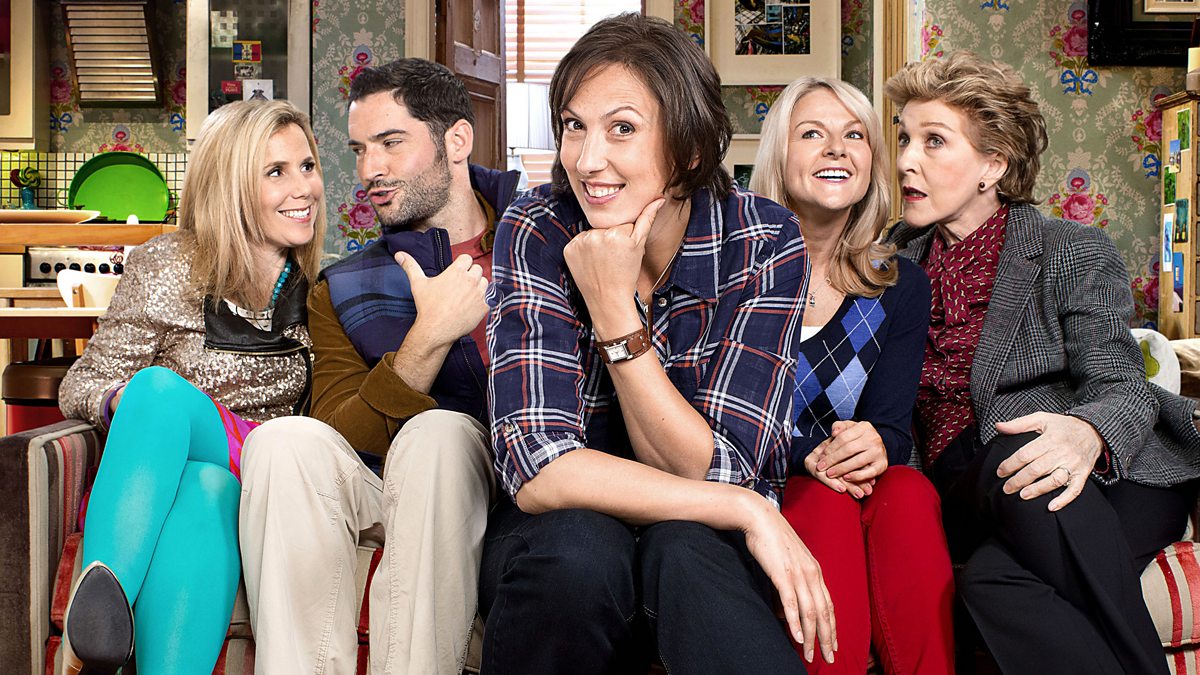
My Dear Miranda

https://ichef.bbci.co.uk/images/ic/1200x675/p07s9d0m.jpg

Is anyone here familiar with Miranda? Oh, you must watch it. It's on Hulu, and I'm finally giving it the time it so richly deserves. 

Miranda Hart, for those who need assistance, also played Chummy on Call the Midwife (she was excellent!) 

Miranda's character on her comedy is a goofy 35-year-old who tends to walk into things, the despair of her poshy-washy mother who just wants her married. In one episode, she gets a voicemail about a funeral but the message doesn't say who died. She shows up, and is relieved to see her mother is there.

Miranda: Mum? Thank goodness, I've been trying to get hold of you. Why didn't you call? 

Mum: I didn't want you here. I was going to tell everyone you're in prison—less embarrassing than having to admit you're still single. 

This is a common enough scene in Miranda, so, yes, goyim also get single-shamed. 

The joy of Miranda is that she is always completely and unapologetically herself, and even though she may drool at a passing gorgeous man, she can't even pretend to be something she isn't. If she does, her goofiness simply intensifies. 

Her private school friends cruelly call her "Queen Kong," but recent friends get her zaniness and roll with it. 

Maybe because I'm a fellow Amazon, but I find her relatable, even though her antics are definitely out of my comfort zone. 

As more time passes, I wonder why worth is so often applied to marital status. Han was telling me of a shidduch he had made when he was single, and how shadchanus was grudgingly provided quite a long time past the wedding. He felt as though if he had been married, he would have been taken more seriously. 

Maybe that's why my shidduch idea had been blown off (even though they did marry later, with a different official shadchan). 

Miranda's mother finds her ridiculous, but it seems her major concern is her singlehood. 

Sounds familiar. 

Monday, November 2, 2020

Culturally Yours, Mine, & Ours

As we know, we are not the only peoples on earth who utilize shadchanim. South Asians—Indians and Pakistanis, for instance—also dig them. 

Considering how my experiences with shadchanim were less than ideal (they tended to set me up with people who were not remotely on point, then demanded to know why I was saying no), I wondered if their matchmakers are better. Then I thought of the reality show "Indian Matchmaking," where it looked like the same six people were on rotation, so I guess not. 

From reading this article, there is little differentiation in the Indian world to being set up by a matchmaker or a family friend—a blind date is a blind date, like by us. The lovely woman who set me up with Han is a friend of my relative and a machanteneste somewhere on his side.

The interviewees in the article make a point to clarify that while the term "love marriage" is applied to couples who met on their own, it's still the same love story for those who were introduced through a matchmaker. It's not necessarily any less romantic as it would be if they met cute. Like by us, too.

In the same issue of Sunday Styles, there is a Modern Love story by Pakistani woman who grew up in the US. After seeing Bend It Like Beckham, she believed it would be possible for her to end up with a white man, and preferred not to date men of the same ethnicity. 

She moved to Pakistan for work, where it wasn't exactly easy to meet white men; when she became friendly with a fellow Pakistani, she didn't initially see him at all in a romantic light. 

I couldn’t put my finger on what finally attracted me to him. For starters, the brown culture signaling of my imagined biracial relationship wasn’t necessary because we were both brown. Gradually I realized that meant I didn’t have to do my exhausting, race-conscious performance either, the self-deprecating jokes I would mutter about terrorism (or whatever stereotype came to me in the moment), the reflexive ironic shield I felt I needed as the one Pakistani in the crowd. He understood without me having to say anything.

When I was dating, I was hoping for someone who came from a somewhat similar background. When I would go out with guys who were more American in upbringing, I would carefully edit my language lest a Yiddish word or phrase would slip out. If one did, they would look at me in annoyance. 

With Han, I don't have to do that. Especially since he understands Yiddish better than I do, and appreciates my fondness for quoting grandparents (he does the same).

After months of dating, I saw how much space that performance had taken up in my previous relationships: Without it, I was vulnerable and prone. With the weight of constant posturing suddenly lifted, I felt an intimacy I could never achieve with the not-brown guys. Ali and I are married now, and it’s the most comfortable I have ever felt with another human being.

What’s funny is that, in writing this story, I realize I have penned the exact type of propaganda immigrant mothers peddle to keep their daughters in the culture. Before Ali, my mother was fond of telling me stories of some distant friend or relative who married a white man and then divorced, only to find happiness once they remarried a Desi.

This isn’t that, but it’s not not that either. I’m not attracted to my husband because he’s brown, but I also know we wouldn’t have the relationship we have if he weren’t. That’s not to say we’re so similar; if anything, the fact that he grew up in Pakistan while I spent my youth in the Midwest separates us more than most of my past relationships. But what we share in common — an unspoken understanding of a culture that shapes the way we are, whether we like it or not — constitutes a bond much stronger than the rest of it.

You can't hide where you come from, no matter how much you may try. There's a difference being who you are and going into a relationship where your differences are accepted and even celebrated; it's another to subsume oneself in the futile attempt to "fit in." 

I've been teased and even mocked for my stubborn adherence to my heritage, especially since I don't even speak Yiddish or Hungarian fluently. But I'm proud of it, and identify with it, and I hoped to be with someone who wouldn't expect me to suppress it. I did end up with someone who is equally proud of his own background—and we enjoy the fact that our grandparents even knew each other.