Showing posts with label Family. Show all posts

Monday, January 17, 2022

Fathers Are Also Parents

I was scheduling a doctor's appointment, and the only time that was available was after Ben's school hours. "I'll have to see if my husband can babysit," I said automatically. 

I paused. "No," I corrected myself,"if he can parent." 

As Ali Wong observed in her Netflix special Baby Cobra: 

It takes so little to be considered a great dad, and it also takes so little to be considered a ****ty mom. . . People praise my husband for coming to all of my doctor’s appointments with me.

Guess who else has to go to those doctor’s appointments? Me! I’m the star of the show. There’s nothing for the camera to see if I’m not there, but he’s the hero for playing Candy Crush while I get my blood drawn!

On one of the online groups I belong to, a new mother posted, saying that she wants to do something nice for her husband as he's been "so helpful" since the baby was born, so understanding that she can't give him as much attention as before. 

Whaaaaat? The baby is not some random interloper in his life, it's got 50% of his DNA! IT'S HIS CHILD! Of course he should be freakin' helpful, he's the baby's PARENT! 

A local paper used to feature a sort of "Ask Abby" column. This was years ago, but one question and answer has stuck with me. A woman was writing that her husband works very hard, he has two jobs, while she is at home with the kids. But she still needs help at times. 

The columnist responded that there is a difference between housework and parenting. Anything that is parenting he should help with. So cleaning the kitchen shouldn't be his problem, but bathing the kids and putting them to sleep is.

Because news flash: fathers are PARENTS too. 

Mishpacha had a short story a few weeks ago, and while this wasn't the point of the story, a couple of sentences really irritated me. 

The protagonist was 7 months pregnant, and was technically on light bed rest. But she has three other little kids, so that's not exactly realistic. Her husband comes home, and she "guiltily" confesses to cramping, at which point he tells her to lie down and puts the kids to bed:

He's an angel, my husband. And concerned about my health, and our unborn baby's. 

Putting the kids to sleep does not make a father "angelic." He's being a PARENT. If he came home and let her huff and puff with the kids when she should be lying down, that would make him a jerk. It's not "angelic" to care about your wife and children! It would mean he would be a sociopath if he didn't! (BTW, his "angelic" help wasn't enough, as she goes into premature labor that night.)

The bar shouldn't be so low.

I started watching Bosch, a detective series on Prime. There is the side plot of Bosch's personal life: he shares a daughter with his ex-wife, who is remarried. She was living overseas for the past few years, but now is back in the States. Their daughter is now 14. 

The daughter is a passenger when her friend, a minor, gets in a car accident. She's fine, but Bosch tells off his ex-wife as though their child is her responsibility only, which she rightfully shuts down. 

When their daughter hops a bus to visit him (the distance is not close) without telling her mother, Bosch is waiting for her by the station. Her mother flies in that night to retrieve her. 

"Thanks, Harry," she tells him when she arrives. 

"What for?" he replies. "She's our daughter." 

YES. 

Monday, November 2, 2020

Culturally Yours, Mine, & Ours

As we know, we are not the only peoples on earth who utilize shadchanim. South Asians—Indians and Pakistanis, for instance—also dig them. 

Considering how my experiences with shadchanim were less than ideal (they tended to set me up with people who were not remotely on point, then demanded to know why I was saying no), I wondered if their matchmakers are better. Then I thought of the reality show "Indian Matchmaking," where it looked like the same six people were on rotation, so I guess not. 

From reading this article, there is little differentiation in the Indian world to being set up by a matchmaker or a family friend—a blind date is a blind date, like by us. The lovely woman who set me up with Han is a friend of my relative and a machanteneste somewhere on his side.

The interviewees in the article make a point to clarify that while the term "love marriage" is applied to couples who met on their own, it's still the same love story for those who were introduced through a matchmaker. It's not necessarily any less romantic as it would be if they met cute. Like by us, too.

In the same issue of Sunday Styles, there is a Modern Love story by Pakistani woman who grew up in the US. After seeing Bend It Like Beckham, she believed it would be possible for her to end up with a white man, and preferred not to date men of the same ethnicity. 

She moved to Pakistan for work, where it wasn't exactly easy to meet white men; when she became friendly with a fellow Pakistani, she didn't initially see him at all in a romantic light. 

I couldn’t put my finger on what finally attracted me to him. For starters, the brown culture signaling of my imagined biracial relationship wasn’t necessary because we were both brown. Gradually I realized that meant I didn’t have to do my exhausting, race-conscious performance either, the self-deprecating jokes I would mutter about terrorism (or whatever stereotype came to me in the moment), the reflexive ironic shield I felt I needed as the one Pakistani in the crowd. He understood without me having to say anything.

When I was dating, I was hoping for someone who came from a somewhat similar background. When I would go out with guys who were more American in upbringing, I would carefully edit my language lest a Yiddish word or phrase would slip out. If one did, they would look at me in annoyance. 

With Han, I don't have to do that. Especially since he understands Yiddish better than I do, and appreciates my fondness for quoting grandparents (he does the same).

After months of dating, I saw how much space that performance had taken up in my previous relationships: Without it, I was vulnerable and prone. With the weight of constant posturing suddenly lifted, I felt an intimacy I could never achieve with the not-brown guys. Ali and I are married now, and it’s the most comfortable I have ever felt with another human being.

What’s funny is that, in writing this story, I realize I have penned the exact type of propaganda immigrant mothers peddle to keep their daughters in the culture. Before Ali, my mother was fond of telling me stories of some distant friend or relative who married a white man and then divorced, only to find happiness once they remarried a Desi.

This isn’t that, but it’s not not that either. I’m not attracted to my husband because he’s brown, but I also know we wouldn’t have the relationship we have if he weren’t. That’s not to say we’re so similar; if anything, the fact that he grew up in Pakistan while I spent my youth in the Midwest separates us more than most of my past relationships. But what we share in common — an unspoken understanding of a culture that shapes the way we are, whether we like it or not — constitutes a bond much stronger than the rest of it.

You can't hide where you come from, no matter how much you may try. There's a difference being who you are and going into a relationship where your differences are accepted and even celebrated; it's another to subsume oneself in the futile attempt to "fit in." 

I've been teased and even mocked for my stubborn adherence to my heritage, especially since I don't even speak Yiddish or Hungarian fluently. But I'm proud of it, and identify with it, and I hoped to be with someone who wouldn't expect me to suppress it. I did end up with someone who is equally proud of his own background—and we enjoy the fact that our grandparents even knew each other.

Monday, June 15, 2020

To Have and To Hold

It's been three years, and the grieving continues. 

I wish Ma was here, I think at times. She would make me a magnificent paprikash. We would go clothing shopping together. She would be there for me when I'm wigging out because Ben has  a bad stomach. 

But then I was struck with guilt. Is that why you want Ma? I scolded myself. For what she could do for you? Shouldn't you want her here because you want to give to her?  

I then regret the gestures I had yet to make. For one example, her favorite food was sea bass, and thanks to my many dating years I knew the best place to have it was Colbeh. But Ma ate out rarely, and that was one experience I wanted to have given her. 

I was watching the pilot for Zoey's Extraordinary Playlist (SPOILER AHEAD). Zoey's father has been diagnosed with a degenerative motor neuron disease, and he can no longer communicate. Zoey sits by his side and cries that she wishes he were able to speak to tell her what to do, as her work life isn't too good and the guy she has a crush on is unavailable. 

I was irritated at Zoey. That's why she wants her father to speak? To help her with her crises? He's dying! Leave him alone! At least the next scene shows her bullying her family to take him on an outing he'd enjoy. 

Rabbi Aaron Lopiansky wrote recently how we have the completely wrong perspective about Moshiach. When everything is ok, we don't exactly yearn for him. But when things go to hell in a handbasket, suddenly then we cry for him. 

But if Moshiach is supposed to come simply when things are bad, then he would have come a really long time ago. Check your history, kids, much, much, MUCH worse things have happened. You want Moshiach to come because life got difficult? 

We're supposed to want him when everything is honky-dory. 

We're always told as kids that if we want Moshiach to come, we have to be really really nice. We have to stop saying loshon hara. We have to include everyone. How does that fit into the narrative that he should come when we are in a crisis? 

If we truly cherish people, we don't ask them Do something for me. We say, Let me do this for you. 

For those of you who have their mothers and fathers and spouses and children, use your opportunities to show how much they mean to you. 

Monday, August 12, 2019

For Cuteness!

A number of months ago, there was an article in the NY Times that niggled at me. And niggled at me. And niggled at me. 

I have found the only way to deal with the niggles is to write about it. 

The article, by Pagan Kennedy, was called "Why You Want to Eat This Baby Up: It’s Science." She begins by describing how since childhood, she never wanted to have children, to the horror of everyone. 

She just doesn't find babies cute, she claims. According to her, that's the only reason a woman would want to have a child. 

Like, for reals?

The only reason why people have children is because they're cute?

What I never quite understood about those who profess no desire to besmirch their comfortable existences with demanding little humans is this: we were ALL children once. Our parents besmirched their comfortable existences to create and raise you. 

Additionally, how long are we cute? Not very long, in the grand scheme of things. Many babies enter the world colicky and crabby. Babies leak from every orifice. As Han's friend joked, "Babies begin smiling when we're about to chuck 'em out a window." Cuteness is for survival. 

But why do we have kids? As Jews, we know why. Heritage, mesorah, passing on the flame, etc. etc. The cuteness is just a perk. 

Wednesday, January 30, 2019

Fearfully Blessed

I have always feared the worst. Even before Ma died, I was constantly aware that all that I cherish could be lost. 

"What are you worried about?" Han asks me from time to time. 

"I'm always worried," I reply. 

Logically, this is no way to live. Will "foreboding joy" (Brené reference) mean that tragedy will be kept at bay? No, obviously. 

Religiously, this is no way to live. Worry means a lack of bitachon. My worrying is not effective action. My job is to do the mitzvos, and place my energies into that, not fretting. 

Additionally, why do I have anything I cherish in the first place? He gave it to me; it is up to Him whether it remains or not. 

Physically, this is no way to live. Jacking up cortisol levels isn't good for health. 

Joseph Lovett, 72, a filmmaker whose 2010 documentary, “Going Blind,” chronicles the slow worsening of his vision from glaucoma, told me that his best counsel was that “you cannot spend your life preparing for future losses.” It disrespects the blessings of the here and now. Besides, everyone lives in a state of uncertainty. Mine just has funky initials and fancy medical jargon attached to it.
The irony is that there is a million ways to die. Ma's death was caused by a freakishly rare illness that no one saw coming (my go-to fantasy was always a car crash. No particular reason. She was a good driver). 

After her passing, I did experience gratitude that I had the best mother for a pretty good run. I think I was appreciative while she lived, too. I hope I was. 

But I haven't stopped fretting. Now I have Han-related anxiety. "If you die, I'll kill you," I say, much to his amusement. Yet of course I know it's not in his control, nor mine. 

I must breathe, learn to rewire my faulty programming, and simply . . . cherish. Without fear of loss. 

Wednesday, December 26, 2018

Mamma Lushon

Every family has their own language, and that unique vocabulary can live on. 

In my family's case, cutely mispronounced baby words can cling for decades. For instance, as a toddler, Luke said "dahngess" (which is actually Yiddish for "worries") instead of "downstairs," and to this day, we say "dahngess." Then the next generation of kinfauna left their mark, and in short order. Luke's now 6-year-old son used to say "chapach" instead of "garbage," and I seem to be stuck saying the same. 

Then there are the European pronunciations from my parents' backgrounds. "Interasant" for "interesting"; "stoordy" for "sturdy"; "banant" for "banana." 

Then, when one marries, the spouse introduces their own family language. One of the reasons why I feel like I can be completely myself with Han is his ready acceptance of my verbal quirks, as this vocabulary is so much a part of me that it's unthinkable that I can let it go. 

"Shoin nisht the vaaser," Babi would say when washing hands. "Frozen meat doesn't rot," Zeidy would say regarding the health benefits of frigid weather. Quoting my grandparents, my parents, my siblings, the kinfauna—it's comfort, it's continuity. 

I thought of this while reading Deborah Tannen's "My Mother Speaks Through Me." Her mother died nearly 15 years ago.
I was grateful to be reminded that whenever I open my mouth to speak and my ears to hear, my mother is still with me.
Luke is a scientist; he told his kids that Babi will always be with them because they carry her DNA, she is literally in them. DNA can be seen in action, I have noted. I look like my father's side of the family, but Luke constantly says my mannerisms are like Ma's. When I echo her words, when she quoted her parents' Yiddish and Hungarian, I feel as though she is not gone, but with me. 

Tuesday, December 12, 2017

My Sister, in Pride

It was way before she diagnose me as a fellow introvert when I delightfully concluded we had something in common: Pride in our background. 

She is not Hungarian, like I am. She is Georgian. Not exactly similar to my region of Hungary. But that didn't matter. As she brought out platter after bowl of Georgian dishes, as she told anecdotes from her immediate family, as she reverted to her native tongue to clarify a point, I was drawn to her in kinship. 
http://thymefoodblog.com/wp-content/uploads/2012/04/2012-04-27_037.jpg
Khinkali , Georgian dumplings
"But you weren't born in Hungary," is a snarky comment I often receive. So what? I was raised by those who were, who bear their backgrounds with pride, who abide by its values, who revert to their mother tongues to evoke perspectives that cannot be described in English. And use a lot of paprika in the kitchen. 
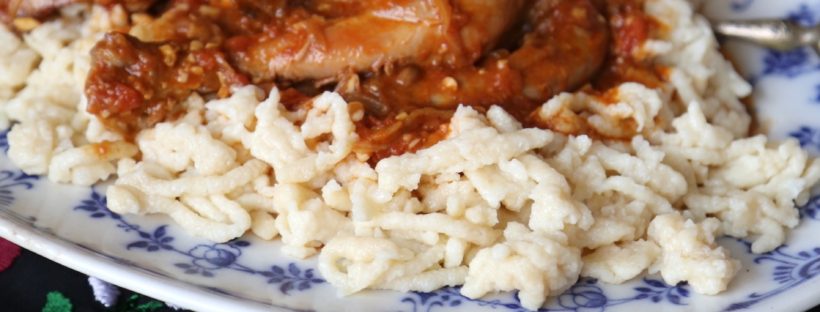
http://www.taradeshpande.in/wp-content/uploads/chicken-paprikaash-with-spaetzle-820x312.jpg
Nokedli paprikas
I have met others, Hungarians and non-Hungarians alike, who wish to flee from their heritages. I have a happy connection to mine, true, and cannot speak for those who do not. But "If you don't know where you come from, you don't know where you're going." The past and its mark cannot be denied. We are all products not only of our DNA, but our ancestors' experiences.
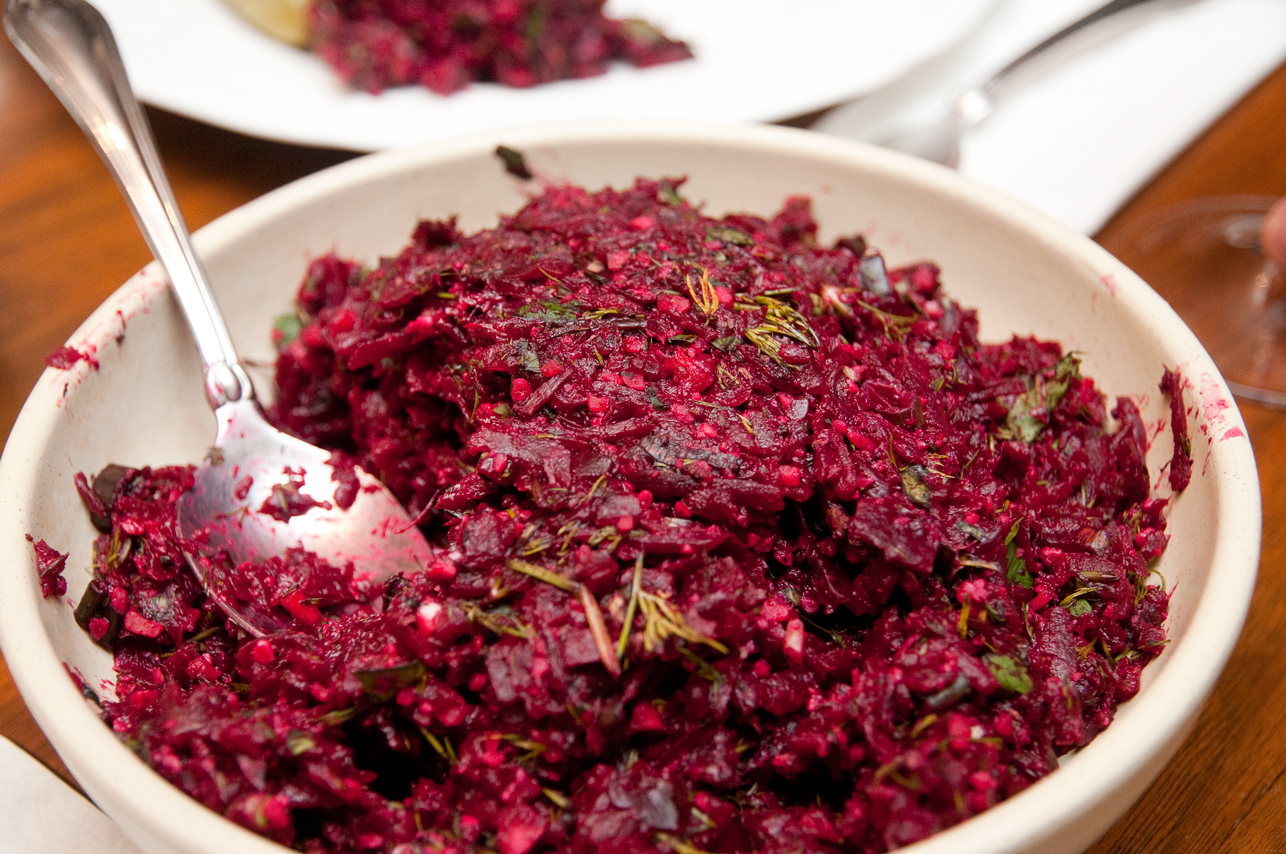
https://baronsfood.files.wordpress.com/2013/01/beets.jpg
Charkhlis Pkhali, Georgian beet salad
After all, we were Jews first. We have stuck to that identity fiercely in the Diaspora. Why not give recognition to the stops along the way?  

Thursday, November 30, 2017

There is Hope for Happiness

David Finch's marriage was on the rocks. His wife, Kirsten, was bewildered; she thought her husband had changed, when in reality he had reverted to his original form. Because of her specialty, she figured it out: Asperger's. 
https://yt3.ggpht.com/-8Y_Zt8IA2Xk/AAAAAAAAAAI/AAAAAAAAAAA/dw-91xVclIk/s900-c-k-no-mo-rj-c0xffffff/photo.jpg
Oddly enough, that diagnosis helped immensely. Kristen was the perfect candidate to help. 
Autism spectrum disorders are not cured with medication, but their associated behaviors can be worked with. What I needed initially were communication skills and a sense of empathy, neither of which, in my case, had been factory-installed. Fortunately, I was living with a highly qualified therapist with a strong motivation to help. Her objective: re-invent our marriage. Her first mission: figure out how to get me to communicate.
They tackled that. And empathy, too. 
Acquiring empathy seemed a taller order, given that my Aspergerish point of reference is myself in every circumstance. (Someone just slipped and killed himself in the men’s room? I see. How long until they get him out of there so I can go?) But I’ve learned that people can develop empathy, even if by rote. With diligent practice, it can evolve from a contrived acknowledgment of other people’s feelings to the real thing. . . Soon these started to feel like real rather than manufactured emotional responses.
If someone who is born incapable of communication and empathy can learn these skills, I'm sure those who are "normal" can perfect them as well.

Modern Love celebrated an anniversary by reprinting this article, along with a follow-up with Kristen. A woman writes to her in frustration and sadness, that she believes her husband has Asperger's and she's depending on his changing for her happiness. 

Kristen, however, drops some unpleasant truth on her: He is not responsible for her happiness. She is. 

During one particularly frustrating encounter with David's "quirks," Kristen was able to pull back. 
I zoomed out to see that Dave was a human being, someone’s child, someone’s brother, someone’s father. When I took that bigger view, I found compassion. That may sound like a simple revelation, but it’s anything but. . . until [then], I hadn’t once told myself the story of how I had been so judgmental. I had to zoom out to see that story line unfolding, and once I did, I wanted to revise it.
I knew for sure I didn’t want to feel mad all the time. I didn’t want to be so resentful. And I really, really wanted to figure out how to like my husband again.
I discovered this myself a few years ago, with family members. People are different, and they aren't cognitively trying to torment others, they see and react in other ways than I see and react. 

I learned that I can't relate to people on my terms. I have to relate to them on theirs. That means not saying what I want when I want in the name of "honesty." It means holding back and revisiting issues from a place of calm and thought (Rabbi Tatz says this too). 

Personal happiness cannot depend on others. It comes from within. It means flipping the perspective, valuing others strengths instead of harping on their weaknesses. We are all human. We all have both.  

Tuesday, February 21, 2017

Family is Family

There is a branch of the family tree that is firm and adamant: FAMILY is FAMILY. 

It's not that these indomitable siblings happen to get along; they make a vehement point to get along. This fierce connection extends to those who marry in; they may not like you, but they will accept you, fight for you, and actively cherish you. 

When I was little, we were not allowed to fight. There was no "kids will be kids" or "work it out amongst yourselves." (I'm not saying we didn't fight, but it was done quietly and out of parental earshot.) In fourth grade I came home with the idea of "donkey ears"—I actually had no idea what it meant—and how Ta screamed at me after I performed it on an unwitting Luke . . . hoo. 

"Your own flesh and blood," Ma would emphasize. "Your own flesh and blood." 
I'm not saying that there isn't tension and disagreement from time to time. But family is family. 

I'm saddened when I hear tales of rifts between adult siblings. I understand how hurts from childhood can have such long holds (I'm a recovering grudge-aholic, after all), but childhood hurts require adult reactions, not childhood regression.

Ellen Umansky ("The Secret of Sibling Success") initially believed it was her parents' divorce that cemented the bond with her brothers.  Then she wasn't so sure. 
A few months ago, I was at a child’s party, and a mother there was lamenting how her young daughters didn’t get along. “It’s a parenting fail,” she said.
I thought of telling the same divorce joke my brother had made, but I didn’t. I wish I had said what I truly believed, that these things can’t be forced. The best you can do is step back and let alchemy take over.
No, parents cannot force children to get along, as "liking" someone cannot be dictated. But certain behaviors can be verboten—like painful teasing—which could make it more likely that less grudges will poisonously linger into the future.   

There is a difference between close siblings and civil siblings, but civility is a lot better than active warfare. Shooting for that should be enough. 
No automatic alt text available. 

Thursday, November 3, 2016

Faces of Bravery

"You'll feel better if you talk about it." Then they lean in eagerly, proffering an inquisitive ear. 

But we are not all the same. Not everyone desires to upchuck their emotional guts. Some find such withholding to be unnatural, unhealthy. If only they knew what the other side thought of them . . .  

In Betsy Lerner's memoir, she recalls her misunderstanding of her mother's staid, dignified bridge group, chafing and clashing against their expectations while yearning for their approval.
But in 2013, as her mother, Roz, was recovering from an operation, the author resolved to make peace. She began her campaign by infiltrating the bridge circle, intending to break through the ladies’ polished surfaces and gain a deeper understanding of their inner lives, and, she hoped, her mother’s.
Sitting with Roz, Bette, Bea, Jackie and Rhoda (the club had five members, in case one had a conflict), she eavesdropped as they bid, passed and took tricks. For years, she had imagined that during card play, the women let down their guards, spilled secrets, groused about their spouses and worried about their children.
Instead, she found, to her disappointment, they did not ever “trash anyone” or “share a deep feeling.” Their commandments were: “Thou shalt not pry. Thou shalt not reveal. Thou shalt not share.”
To her surprise, this was no wine-fueled contemporary "book club." 
https://blogger.googleusercontent.com/img/b/R29vZ2xl/AVvXsEjd2NIU9vMTUX8_nPd_glpNkBRU0dhJLfO2-eyK6-QCSi-5WGrtqDh5cTVfGQfWFMkJEfD1aRH1CGw_hMZEht77nFMBbC4pT2C1IM87Jt0uZToHD05pGjXSaqK8fBP1opgQkBCvTNB_ThmV/s640/Women+with+Pipes+in+the+Past+%25281%2529.jpg
Week after week, these women met, played bridge, and kept conversation way above the depths.
With Bette, she brought up a tragedy that her mother had always refused to discuss: the death of Ms. Lerner’s baby sister, Barbara, in 1964, from pneumonia.
Had the ladies known about it? the author asked. “Everyone knew,” Bette replies. Had her mother spoken of it, during all those bridge Mondays? “Not once,” Bette says.
Ms. Lerner found such reticence callous. Yet, gradually, grudgingly, she came to accept that TLC did in fact exist in the pre-TMI world. Just because a bridge luncheon didn’t operate like a therapy session didn’t mean it wasn’t therapeutic, she saw. For the ladies, it was a safe, neutral zone where they went to recharge as they weathered life’s blows, keeping up appearances and their spirits as they trumped, finessed and ate kugel from china plates.
She writes, “I never thought I would say this, but I think the Bridge Ladies are brave.”
"Talking it out," I have found, is not always magically cathartic. For a number of issues, hashing them to death will not help. These women craved stability and structure; when life threatened their balance, they were able to re-attain their equilibrium with a weekly ritual amongst their comrades.

Yes, in an ideal world, we could be vulnerable with one another without fear. Brené Brown has started the revolution; perhaps a wholehearted future awaits us. But we should respect the previous generations' means of perseverance, when presence was needed more than words.    

Tuesday, October 11, 2016

Rabbi Frand's Yom Kippur

Rabbi Yissocher Frand:
"
At Your Service"

אז תקרא וד' יענה תשוע ויאמר הנני

“Then you will call out and Hashem will answer; you will cry out and He will say ‘Here I am’” (Yeshaya 58:9, Haftorah for Shacharit)

While we may many times wonder how we can have our tefillot answered, on the day of Yom Kippur, we are revealed the secret. The Navi Yeshaya tells us in the Haftorah reading, “אז תקרא וד' יענה תשוע ויאמר הנני – Then you will call out and Hashem will answer; you will cry out and He will say ‘Here I am’” (Yeshaya 58:9).

There are fourteen places in Tanach that the expression “Hineni – Here I am” is used. Thirteen out of the fourteen places are contextually the same with the servant responding to the master, “Here I am; at your service.” Avraham responded to Hashem after he was commanded to bind Yitzchak to the Altar, “Here I am;” Moshe Rabbeinu, as well, used this expression when he encountered Hashem at the Burning Bush. The one exception to the word Hineni expressing the Jewish people’s readiness to serve G-d is in this Pasuk from Yeshaya. This time, the Jews call out to their Master, the Ribono Shel Olam, and He is the One to respond “Hineni – Here I am.”

How did we get the Ribono Shel Olam to respond? What is special about this situation that causes the roles to be reversed?

The Gemara (Yevamot 63a) tells us what this Pasuk is referring to:

והמקרב את קרוביו... עליו הכתוב אומר אז תקרא וד' יענה תשוע ויאמר הנני
One who brings his relatives near, upon him the verse says, “Then you will call out and Hashem will answer; you will cry out and He will say ‘Here I am.’”

What do we have to do to have our prayers answered? What is this Pasuk telling us to do to shake the heavens? Finish Shas in one year? Recite Sefer Tehillim every day? Give millions of dollars to tzedakah? No.

Bring your relatives close. Just be nice to your sister-in-law.

Why is this the secret formula?

The Maharal clues us into the underlying reason: “The Ribono Shel Olam’s relationship with Klal Yisrael is that of a relative.” We are Hashem’s family. And when we act kindly to our family, Hashem says, “I will deal with you measure for measure. If you treat your family nicely, I will treat you nicely.”

Our own family oftentimes presents the greatest of challenges. This is especially true of siblings. Yet, consider for a moment which people we are most closely related to. With whom do we share the most similar and identical DNA? It is not our children or our parents, but our siblings. If you have ever thought of it, the longest-lasting relationship is that of siblings. Our siblings can live with us for sixty, seventy or even eighty years. It is the longest relationship, yet sometimes the most difficult.

Treating our family as they deserve to be treated is the key to having Hashem, our dearest Father in Heaven, say to us, “When you call out, I am at Your service.”

As we enter the holiest day of Yom Kippur and look to make amends and ask forgiveness from our family and friends, we ought to take a moment and ponder how we treat them. Do we show them our appreciation, give them our undivided attention, treat them respectfully and considerately, and love them unconditionally? That is the question we must ask ourselves. If we wish to have our tefillot answered, this is where we need to begin.

Monday, October 10, 2016

Books on Change, II

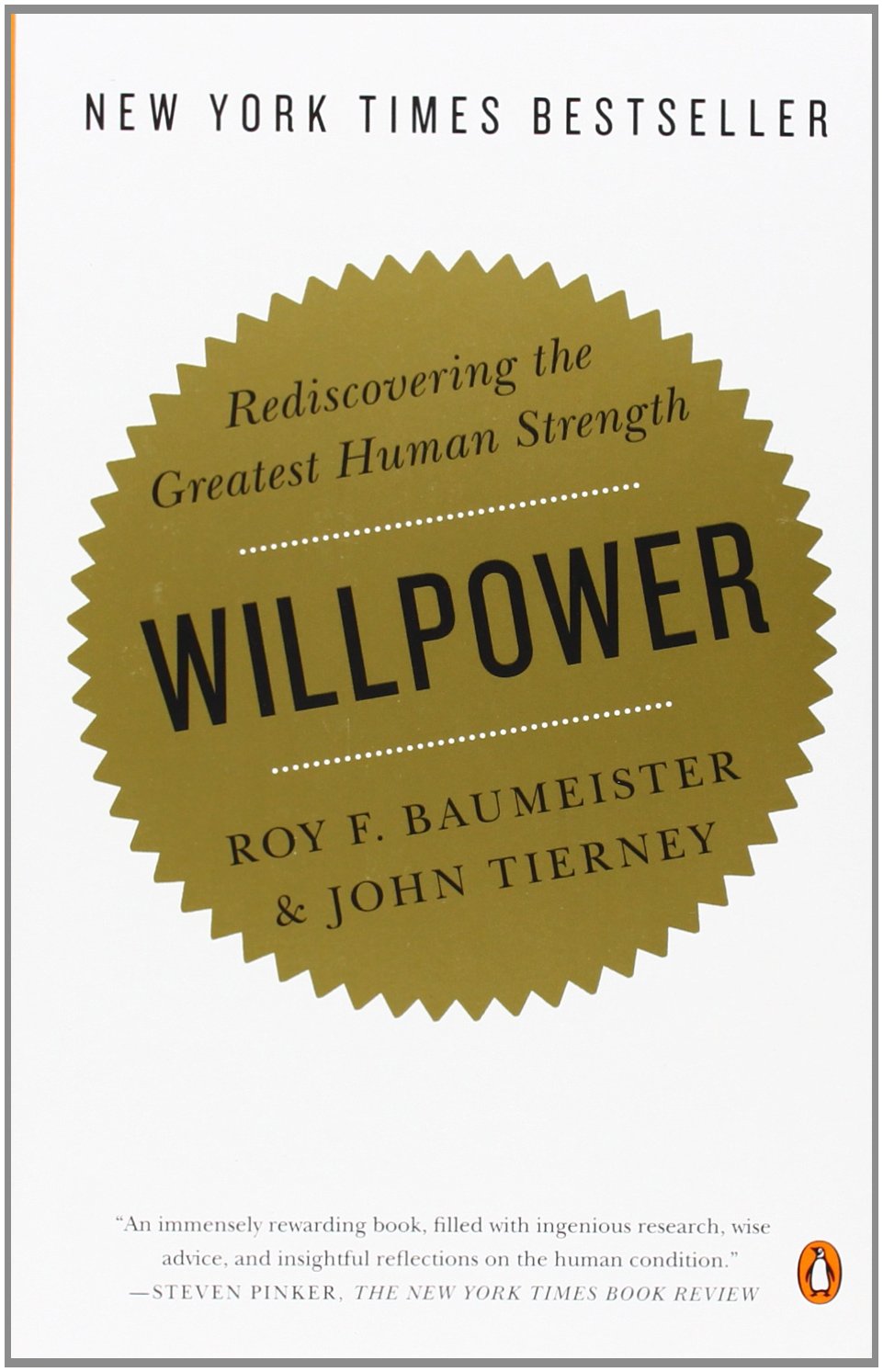
https://www.getflashnotes.com/wp-content/uploads/2015/05/willpower-book-cover.jpg
These two delve into the science of self-control: Why it is important, how much we have of it, how it is fueled. 
They posit a theory that humans are social for survival purposes, and in order to get along, one needs TONS of self-control. We can't all do whatever we want and expect to have pleasant familial/neighborly interactions.

They say, up front, that it is impossible to alter more than one behavior at a time, so don't go there (as our mussar seforim insist). This New Year should not begin with more than one item that requires fixing. Whether it is an unhealthy behavior like smoking or a toxic behavior like impatience/screaming, only one can apply at a time. 

The brain does not have separate categories for willpower; there is only one well to draw from, no matter the application. If one exhausts the supply by not killing a co-worker, for instance, h/she may come home that evening and fight with the spouse over a mildly annoying quirk. 

Additionally, one must we well-nourished and well-rested in order to have self-control since—get this—it feeds on glucose. Many who commit criminal acts have been found to be hypoglycemic (ergo the "Twinkie Defense"). That's why implementing self-control can often be exhausting; it sucks the life out of you by plowing through your physical energy supply. (Before you get excited, the best sources of glucose are from sensible proteins and vegetables, not Oreos.)

Deliciously, a lot of their scientific conclusions are echoed by our rabbanim, as heard in this shiur (cheat sheet: instead of telling oneself, "I will not eat that kakosh," say instead, "I'll have kakosh later." That fools the brain into a form of satiety, and, when the opportunity to kakosh arises, one won't necessarily even want it anymore. For reals). 

Cool, huh?

The book is jammed with more awesome revelations, like self-control leads to good self-esteem, not participation trophies.  

Tuesday, May 10, 2016

Male Myth

"Why aren't you wearing what you wore on Shabbos?" Ta asks, aghast. 

"What? I'm not wearing that fancy-shmancy suit on a date!" 

"Why not?" 

"'Why not?' He'll head for the hills! I'm pushing it as it is!" (In my sweater and skirt ensemble.) 

"Men aren't like that," Ta shakes his head. "They want you do be dressed up." 

"Ta, my Hungarian father . . . you're like that. That doesn't mean all men are."

"They aren't?" 

As a female, I'm judged all the time because I'm a girl. I'm "supposed to" have certain likes and dislikes. Adoring sci-fi and Batman is not a common feminine cliché. OK, I like makeup. And shopping. But many (many, many, many) other females don't. People are people, different people, man or woman.

Over the last few decades, it has become clear that the interests of women can vary. They build houses with pink hammers. They are soldiers. They skateboard. 
 https://d.ibtimes.co.uk/en/full/1397962/israel-female-soldiers-9.jpg
But men . . . men have had a harder time wiggling out of gender stereotypes. Enter "It's All Right to Cry, Dude" by Jim Windolf. Biblically, our men boo-hooed often. It was okay. Expressing emotion is as normal as a "typical" girl getting weepy. With all this female-emancipation stuff, one would think something as innocuous as men emitting liquid from their tear ducts would have been socially acceptable already. Guess not. 
 https://img.buzzfeed.com/buzzfeed-static/static/enhanced/webdr01/2013/3/4/1/anigif_enhanced-buzz-14631-1362379470-3.gif
Same here with "Single Men Face 'the Panic'." Unattached women of, er, a certain age have been known to complain of men—in general—that they don't want to commit, they're out having a good time, they all suck, while females fret over their expiration dates.

But this article shows that men, too, yearn for a hearth and home of their own. The clubbing and casual scene gets tiresome. Dudes can seek continuity and security as much as women do. Even they get asked the question, "Do you think all the good girls that you would want to marry are taken?" 
“Tonight I’m doing nothing,” [Jean-Marc Choffel] said. “I could go out, grab a girl, have fun. But the sense of life is to have kids and try to give them as much as you know. I believe in the power of the universe. I believe the day you go somewhere where you aren’t supposed to be, you end up falling in love and having babies. Definitely, I’m not giving up.”  
Girlies, the fellas are there too.      

Monday, April 4, 2016

Relationships 'R' Us

Years ago, a commentor shared an entertaining and educational link of Keynes and Hayek, the economists, rapping it out. 
Keynes compares the economy to a machine: 

Money sloshes through the pipes and the sluices
Revitalizing the economy's juices

It's just like an engine that's stalled and gone dark
To bring it to life we need a quick spark
Spending's the life blood that gets the flow going
Where it goes doesn't matter - just get spending flowing! 

Hayek counters: 

The economy's not a car, there's no engine to stall
No expert can fix it, there's no "it" at all
The economy's us, we don't need a mechanic
Put away the wrenches, the economy's organic

These lyrics came to mind when I considered how relationships are also, sometimes, erroneously categorized as machines, referred to as "it working" or "it not working." 

A relationship isn't an "it." Relationships are "us." Relationships are between people, and the effort they put into it. They aren't external or separate from ourselves. 

While there must be likability, compatibility, and attraction to spark the initial stages, relationships won't indefinitely run on that fuel alone.

Luke (the quibbler) has always quibbled with the concept of "bashert." He believes that free will applies there as well, that when we daven for our bashert (a divine, destined other half), it's that we daven for guidance in making the correct choice of our mate. (He did marry the first girl, though, so easy for him to talk . . .)  

After Rebecca Traister's close friend Sara moved away, and returned six months later, both were thrilled to be reunited. Yet it wasn't an easy matter to become simpatico again.
. . . divides can creep in between friends just as easily as they do in marriages. Maybe because she was nursing painful wounds as she rebuilt her New York life, and was resistant to simply falling back into her old patterns; maybe because, after the pain of having to say goodbye, I was gun-shy about giving myself over so completely, our friendship was never again quite as effortless as it had once been. “It was a rough re-entry,” she said recently of that time. “I knew of course that your life had continued while I was gone and that your circles of friends had expanded, but I was sad that we couldn’t slip right back into the space where we had left off.”
Absence can corrode the most divine of friendships. That dead space that has to be filled once again, with proximity and effort. Even between the closest of besties.

Justin Tyler Clark had been dithering about proposing to his girlfriend, and had actually been relieved when his bag was going to be searched in front of her, spoiling the surprise but affirming his action: 
We live much of our lives in a state of paralysis, letting fate make decisions for us. But at the most important moments — when we’re facing an emergency or falling in love — we think we will know the right things to do and say. . .
“You’ll know when it’s time,” my mother told a much younger me when I asked her when I would marry.
Yet at 30, I had never experienced “just knowing” in that context. I had had many girlfriends, lived with several, even felt as if I loved one or two, but the much-anticipated epiphany — “I just know she’s the one” — failed to present itself. Disappointed, I had broken off every relationship.
When I met my grad school girlfriend, I had good reason to think she might be it. . . From the moment our mutual friend introduced us, I kept waiting for that feeling of certainty to overtake me.
Nine months later, I was as happy as I had ever been while still paralyzed by doubt.
Maybe because we live in an age of so many choices, most of them meaningless, we romanticize the notion that falling in love isn’t a choice but something that happens to us. That love tells us what to do, not the other way around. Love is the authority figure, and if love tells us wrongly, then we can’t be held fully responsible. . .
Now, a real-life authority figure had arrived in the form of this Singaporean customs officer who would yank the ring out of my bag at any minute, forcing me to explain myself to my girlfriend and confess my plans. My years of indecision would end, I thought gleefully. What a funny story to tell our children, once we got out of prison.
But the ring remained undiscovered. Yet the fact that he was bummed not having the choice forced upon him galvanized Clark to propose—of his own free will—and he has "never once regretted it." 

I love "signs" as much as the next person. No matter how many times I tell myself otherwise, I still fall for those divine stories or mystical signals or meaningful coincidences every single freakin' time. But that would be me seeking to wiggle out of my own responsibility. For in the end, it's choice.

The few times I have used the inaccurate phrase was following a questionable first date and I had to give my refusal directly. "I don't think it's going to work out" is certainly is more diplomatic than "I did not enjoy our time together." It's not because the "it" won't work; it's because I chose otherwise. 

Like Amy did following a bad date. She said, "I don't think it's going to work out" even though Dave spent the whole evening demanding to know all about her ex, Sheldon, whom he idolizes. But that was just to be polite. Dave was being a jerk. It was him, not "it."  
 
http://www.serienjunkies.de/news/review/71956-tbbt2.png

Friday, March 18, 2016

TGIF

  • Seek freedom and become captive of your desires. Seek discipline and find your liberty. — Chapterhouse: Dune, Frank Herbert

Thursday, February 25, 2016

Quantity Time

From how I don't shut up about them, my audience can gather that I'm often around the kinfauna. An afternoon here and there, usually Sundays, when they pop in; after a few hours, we part, and I exhaustedly collapse into bed. 

There is a distinct difference, however, when the span of time in each other's company stretches. Whether it be a two-day yuntif, a week's babysitting, a helping out when a nephew has a grisly case of appendicitis and his siblings are parked on the doorstep—quantity is distinctly superior to quality.

The kinfauna, no longer rattled by the unfamiliar beds and whole-grain cereal, and me, no longer tediously taking care of the basics that the interlopers require, mesh together comfortably. We sit companionably at the kitchen table, sometimes in silence, and when they have a question or a comment or complaint I can answer them, honestly, with the focus of my whole attention. 
http://www.onbeing.org/sites/default/files/styles/width668/public/6494485045_6e8e3361d1_o.jpg?itok=8TK9XoFO
Via onbeing.org
Frank Bruni's "The Myth of Quality Time" debunks the idea that QT can be roped into a selected half-hour. It's when we settle into the stability of another's presence, which can take different amounts of time, that an unscheduled, unpremeditated magical moment of connection occurs. 
With a more expansive stretch, there’s a better chance that I’ll be around at the precise, random moment when one of my nephews drops his guard and solicits my advice about something private. Or when one of my nieces will need someone other than her parents to tell her that she’s smart and beautiful. Or when one of my siblings will flash back on an incident from our childhood that makes us laugh uncontrollably, and suddenly the cozy, happy chain of our love is cinched that much tighter.
There’s simply no real substitute for physical presence.
The physical presence itself does not just happen, nor is it always enough. The other day I witnessed a little girl and her mother waiting for the bus. The mother was on her phone; her little girl sang to herself and twirled about the mother's legs, giving her random hugs. The mother didn't even realize the bus had pulled up, even though her daughter told her so about ten times. Sure, she was physically present, but not mindfully present.  
Couples move in together not just because it’s economically prudent. They understand, consciously or instinctively, that sustained proximity is the best route to the soul of someone; that unscripted gestures at unexpected junctures yield sweeter rewards than scripted ones on date night; that the “I love you” that counts most isn’t whispered with great ceremony on a hilltop in Tuscany. No, it slips out casually, spontaneously, in the produce section or over the dishes, amid the drudgery and detritus of their routines. That’s also when the truest confessions are made, when hurt is at its rawest and tenderness at its purest.
That's romance to me, adoration amongst the dirty dishes.
It was on a run the next morning that my oldest niece described, as she’d never done for me before, the joys, frustrations and contours of her relationships with her parents, her two sisters and her brother. Why this information tumbled out of her then, with pelicans overhead and sweat slicking our foreheads, I can’t tell you. But I can tell you that I’m even more tightly bonded with her now, and that’s not because of some orchestrated, contrived effort to plumb her emotions. It’s because I was present. It’s because I was there.  

Tuesday, January 19, 2016

The Real Alphas

What exactly is a macho man? Probably the biggest tip-off to me that a man isn't is when he bellows and struts. To me, true machismo is internal, reserved dignity, contained strength. 

Even macho as we think of it in the wild isn't. Carl Safina enlightens the animal lovers in "Tapping Your Inner Wolf," which explains that contrary to popular and mistaken belief, alpha dogs aren't full of posturing bluster. Instead: 
“The main characteristic of an alpha male wolf,” the veteran wolf researcher Rick McIntyre told me as we were watching gray wolves, “is a quiet confidence, quiet self-assurance. You know what you need to do; you know what’s best for your pack. You lead by example. You’re very comfortable with that. You have a calming effect.”
The point is, alpha males are not aggressive. They don’t need to be. “Think of an emotionally secure man, or a great champion. Whatever he needed to prove is already proven,” he said.
For survival purposes, it just makes sense. The tribe that makes it is the one with effective leadership and team skills. The alpha male is top dog because he gets the job done. 
 http://proprofs-cdn.s3.amazonaws.com/images/QM/user_images/1452023/1951931854.jpg
McIntyre spent years observing wolves. The one labeled "super wolf" fought his enemies like heck to protect his kin, yet was the most affectionate to the little ones. He even pretended to lose in their wrestling games. 
Strength impresses us. But kindness is what we remember best.
Human males and wolves are oddly similar in their roles, although wolves are more reliable as fathers. Wolf packs, also, are not patriarchal; there are also alpha females in the group who call equal shots.

So alpha males and alpha females work together, as partners. Cool. 

Thursday, July 16, 2015

No Money Tree, Kids

Once upon a time, money was not spoken about. It was considered crass, impolite, indiscreet. But then again, many topics were considered verboten, which have all since been busted wide in this secret-free and loud era. 

As for myself, in my childhood, money was really not spoken about. I was thrifty by nature; Babi would send me a check on my birthday, which was immediately deposited into the bank account Ta created at my birth, where it earned interest at a rate that no longer exists. If I wanted anything, I would bring my petition to the high potentate (Ma), where my request would be accepted or denied. Life was pleasantly simple. 

Today, with so many once-untouchable matters being openly discussed, that would make the kinfauna's approach to cash quite different from my kiddie view. Shopping with my 13-year-old niece, I bought her a pair of shoes for her birthday. She fretted that they cost too much (they didn't), not realizing that she doesn't give a second thought to other, more costly expenses. 

When times are good, then the after-effects of money is not a conversation. When times are bad, such as a Recession, then there comes a need to address the sensitive subject of spoiled children.

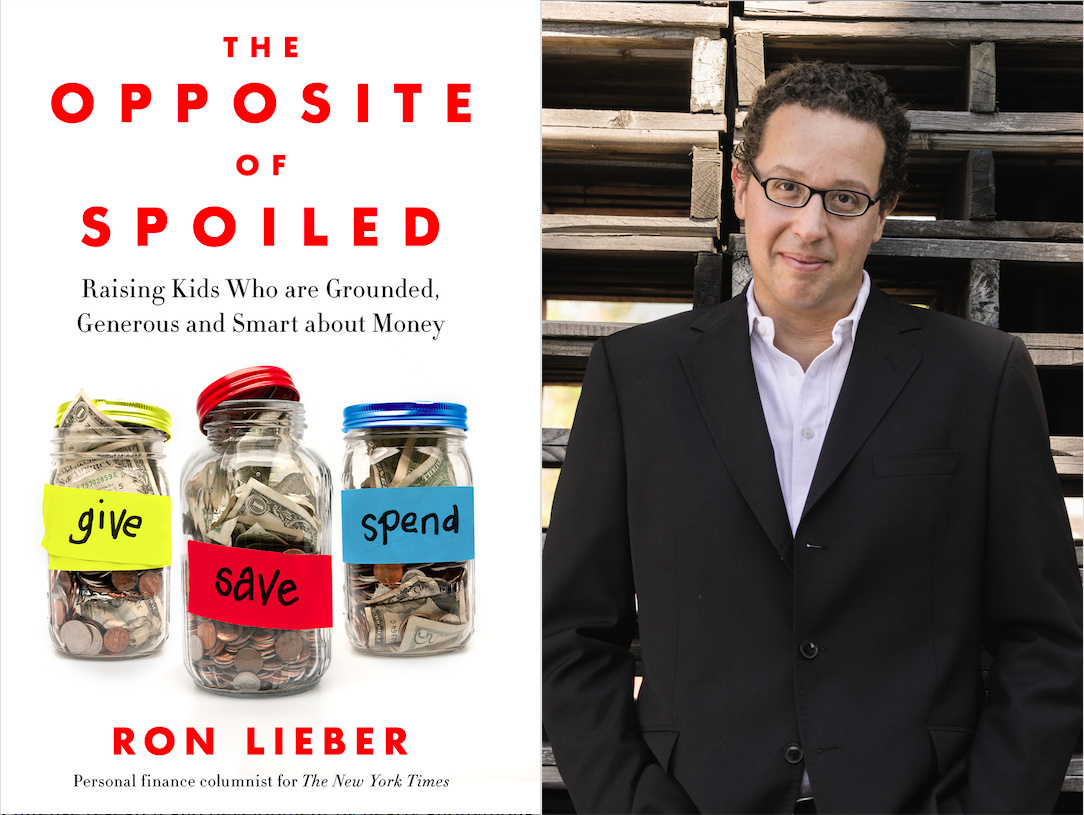
Ron Lieber wrote The Opposite of Spoiled: Raising Kids Who Are Grounded, Generous, and Smart About Money. He also has article with some of the book's information, "Why You Should Tell Your Children How Much You Make." There is an interview with the author here.
https://nottinghillmummydotcom.files.wordpress.com/2015/02/lieber-book-and-headshot-2.jpg
That idea made my breath catch. Tell younglings about their parents' salaries? Unheard of! Absurd! As I continued reading, I managed to grudgingly put aside my biases, finding myself swayed by Lieber's anecdotal arguments. 

While I do think that there are people out there who are stupid about money no matter how much education they receive in that area, most of us are simply tossed into the world of bills and budget without any prep work. Our schools should certainly have required courses in the realities of money before these teenagers make any life-altering decisions.

In my observations, I see that many make the fatal error of thinking that being a "loving parent" means showering offspring with expensive toys, snacks, and clothing. Yet as those children age, they will have been carefully taught that only things have value, as opposed to actual values. 
 
What rugrats actually crave is quality time with their parents. Give a kid an iPad, and he'll be initially thrilled, but not when his father retreats into his own tablet and shuts him out.

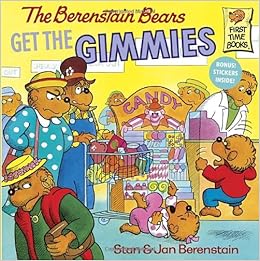
I grew up with toys (I adored Barbies) and I was in no way deprived. Yet each were purchased with tactical care, not mindlessly. There were many "no"s before we got to the "yes"s, and still Babi thought Ma was wasting money. If I make the stupendous mistake of shopping with the youngest of kinfauna, I get many admiring smiles from bystanders as I repeat, "No, no, no, no, no, no, no, no, no, no." But the kiddies aren't resentful. They pout for a few minutes, and most of the time they forget what took their fancy. They do a bigger dance at the idea of me going hoarse reading them books. Like The Berenstain Bears Get the Gimmies.

http://ecx.images-amazon.com/images/I/61S-L6pZxoL._SX258_BO1,204,203,200_.jpg     

Monday, June 29, 2015

I'd Do Anything For Love

"She didn't!" 

We sat, immobilized, stammering in hushed tones. You know that girl, So-and-So? Well, we all know that she and Such-and-Such were dating, but they were young, no one thought it would last, and then they want to get married, but her parents said no, while his were okay with it . . . 

The next step being, that the couple married, while her parents and siblings did not attend. 

I come from a long line of the non-confrontational and family-oriented, so when I hear such tales I can't get my head around it. The pain! The heartbreak! What do you think the problem was? For weeks we try to formulate hypotheticals, why, for all intents and purposes, a child would hurt her parents in such a way. 

I am all too aware that halachically, one does not need parental approval to marry. One can very well marry against their parents' wishes. But looking down the road, how many times was that defiance worth it? 

I read the Kristin Lavransdatter trilogy by Sigrid Undset, the first book published in 1920, the last in 1922. Kristin, the main character, is a Norwegian girl of a good and noble family born in the 14th century.
https://blogger.googleusercontent.com/img/b/R29vZ2xl/AVvXsEjSos-cx-qhkCKB84etPyWkF2ji5FUBXkX8M1x0PGuSMgaP7rzh95ldo2VfocEEc8hHO2UyL4DwuU4yOozA8b1JsaGTtOMVLeRc0V3u3PWU0iUJe-KK59NxqhEHgIZqmDT_RsodCjPOiao5/s1600/Kristin.jpg
If you plan on reading the books, there be spoilers ahead, since it is necessary to make my point. 

When Kristin is of age (meaning just entering her teens) her loving and caring father betroths her to steady, reliable Simon Darre, who is neither handsome nor dashing, but a good man. Kristin is not excited by him, and finds herself resigned, as opposed to happy, to marry him. 

Sent to a nunnery for a visit, she meets in town Erlend Nikulaussøn, who is both handsome and dashing. Love at first sight, yadda yadda. They manage to meet on the sly more than once, and eventually Kristin's honor is out the window. 
http://ecx.images-amazon.com/images/I/71CfTum8EwL.jpg
Simon finds out, but makes her promise not to tell her father, since it will kill him (that just shows what a decent guy he is). But Kristen still stubbornly stays by Erlend's side, even when she discovers all sorts of unsavory things about him. Simon, not wanting an unwilling wife, breaks the betrothal, but Kristin's father needs a lot of coaxing before he is willing to ally his daughter to someone of Erlend's bad reputation. 

Eventually they wed, at the point where Kristin's nerves are frayed as she attempts to hide the signs of pregnancy. Her father knows that Erlend is a good-for-nothing, at it pains and saddens him to marry his daughter to such a one. 

Happily ever after? Well, no. Erlend is the thoughtless antithesis of Simon. Kristin struggles to establish her position amongst Erlend's sullen household, while he cheerfully rides off when he needs some entertainment. When her child is born, she swiftly passes on her adoration to him, leaving Erlend resentful. He always manages to pick the wrong side in a political skirmish. He grows no wiser with age. 

Kristin is forever haunted by the shame she brought on her parents, and always regrets that love affair with Erlend. When Kristin suspects that Erlend's illegitimate daughter (born before they met) by a married woman is sneaking around with a married man of the household, she tries to warn her: 
"My Margret, bitterly have I repented—never could I joy fully in any gladness, though my father forgave me with all his heart for all that I had sinned against him—you know that I sinned against my parents for your father's sake. But the longer I live and the more I come to understand, the heavier it grows for me to remember that I repaid their goodness towards me by bringing them sorrow. My Margret, your father has been good to you all the days of your life—" 
Margret does not heed her, and makes the same mistakes as her father and Kristen.

Kristin and Erlend's courtship may have been the stuff of romance, but their marriage is no better than anyone else's. It could be said that it is even more bitter, since it all went downhill from the original ecstasy. Whereas, if she had been content with Simon, she could have discovered affection in time as well as enjoying a more honorable position and comfortable household.
She had chosen him herself. She had chosen him in a frenzy of love, and she had chosen anew each day of those hard years at home at Jorundgård—chosen his wild reckless passion before her father's love that would not suffer the wind to blow ungently upon her. She had thrown away the lot her father had shaped for her, when he would have given her to the arms of a man who would surely have led her by the safest ways, and would have stooped down, to boot, to take away each little stone that she might have dashed her foot against. She had chosen to follow the other, who she knew was straying in perilous paths. . . 
So there was but one way for her—not to murmur or cry out, whatever should befall her at this man's side . . . Unworthy is it to murmur at the lot one has chosen for oneself. 
While the two never doubt their love, their marriage is another story. From the beginning, it was never happy, and Kristin takes a "I have made my bed, now I must lie in it" dutiful view as opposed to that of pleasant cohabitation. Kristin, in the end, was raised to be considerate and generous; Erlend has no such sensibilities, as opposed to Simon Darre, her ex-fiance. Kristin is all too aware of Simon's goodness; her younger sister recognized his sterling qualities and married him, so she and he are then in-laws.

Kristin and Erlend separate from time to time, usually when she gets the best of him in any argument and his ego can't handle it. They were at odds for months, until his premature death, which was, of course, brought murderously about by his own unending mindlessness. 

I observe couples who look the same as any other, harried, absorbed in day-to-day duties, ever-after a distant memory. I know of a few who married against their parents' wishes, or caused such war before one side finally succumbed, and they are not happier than anyone else. Do they always look at their spouse and think, "S/He was worth it"? They actually seem pretty annoyed right now. 

There's a reason why Romeo and Juliet die at the end of the play. If they lived, they would have concluded that this undying love is all too mortal. 

"Yeesh, for this I scaled your balcony?" 

"I didn't ask you to!" 

"Whatever, I'm going for a drink with Benvolio." 

"I should have married Paris!"
http://fe867b.medialib.glogster.com/media/b0/b034bf600630c2faa8a30731b9dabf534d5e3d0ee12eb8981073c3129a97bd1d/romeo.jpg
There is no ever-after. If there is a marriage out there that thrives without effort . . . I believe that is the stuff of unicorns.

But marriage is a tough enough adjustment that casting off near and dear ones (at least wait a bit!) is not a good idea.

As the Meatloaf song goes, "I would do anything for love/But I won't do that."