Showing posts with label Musicals. Show all posts
Showing posts with label Musicals. Show all posts
Friday, March 1, 2019


Monday, August 21, 2017
The Pleasures of the Surreal
Movies and I have an odd relationship. I devour the reviews, can tell you if the critics like it or not, but never end up seeing them until years later. So although "La La Land" should be totally up my alley (MUSICAL!!!) I haven't seen it yet.
Last year (by backlog really goes back), I was reading one of the many pieces about it, and this paragraph by Manohla Dargis jumped out at me:
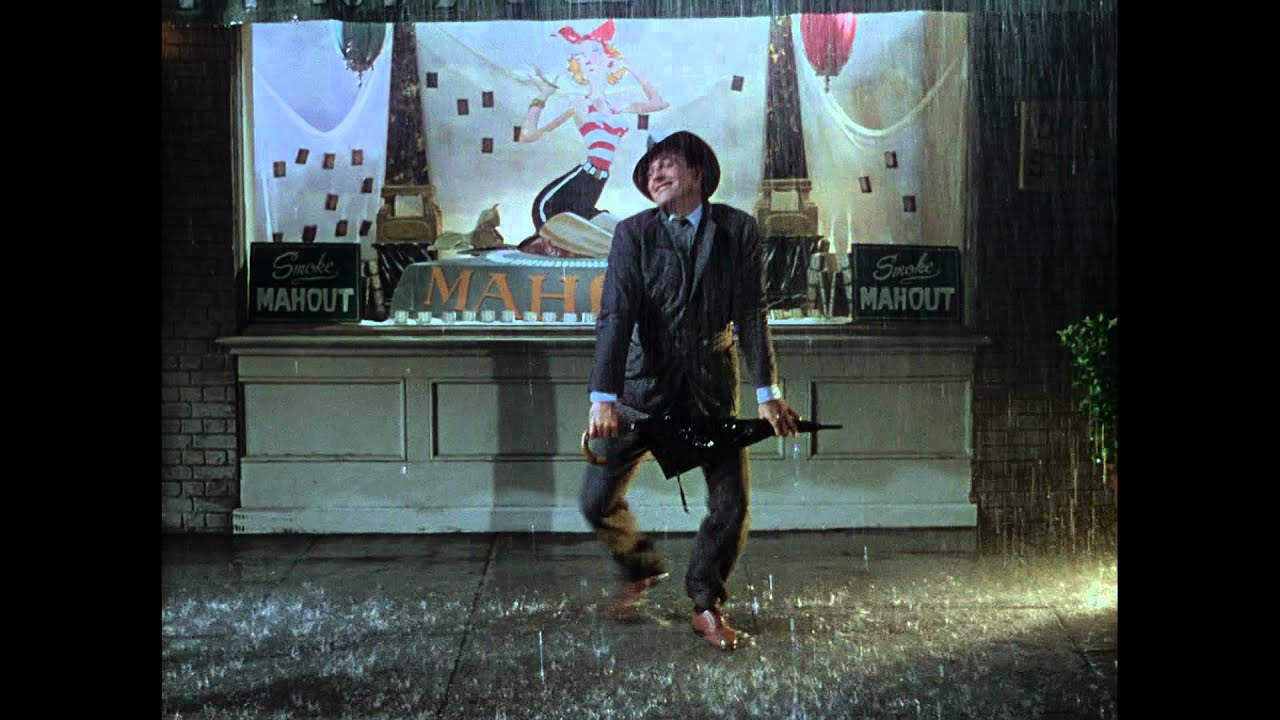
Contemporary American movies could use more s’wonderful, more music and dance, and way, way more surrealism. They’re too dull, too ordinary and too straight, whether they’re mired in superhero clichés or remodeled kitchen-sink realism. One of the transformative pleasures of musicals is that even at their most choreographed, they break from conformity, the dos and don’ts of a regimented life, suggesting the possibility that everyone can move to her own beat. It’s enormously pleasurable when an evening stroll turns into a rhythmic saunter and then bursts into dance — think of Gene Kelly walking, tapping, stomping and exulting in the rain. . .
Musicals are for idealists. One of the pleasures of classic film musicals is the chance to watch bodies become extraordinary — strolling and then singing and soaring — often in stories that suggest that with some choir practice and maybe an Arthur Murray dance lesson or two, you could soar, too. Musicals are liberation with a beat. When Judy Garland sang “Over the Rainbow,” she was telling her audience that it would transcend its terrible times.
For me, movies and books are about pleasant escapism. If life is B'H going well, I don't want to dwell in misery; if life has gotten ensnarled in a rough patch, I want to be distracted by sunshine and ponies.
Although, I do have to remind myself that in the real world, breaking into song and dance in the rain is not a wise idea, especially if there are witnesses.
Wednesday, November 16, 2016
Singin' In the Rain
Singin' in the Rain is hailed as the most favored musical of all time. (I think it's pretty darn good, but it's not my favorite.)
The songs therein were repurposed from previous musicals, so I guess they stuck with tried-and-true favorites, guaranteeing success.
Donald O'Connor, to me, outshines everyone with his comic delivery. (Not long after I was introduced to Singin', he guest-starred on an episode of The Nanny. I was ecstatic.)
There's even something for the fashionista.
The Oscar nomination went to Jean Hagen, who totally earned it as Lina Lamont, the shrill harpy of an actress.
Singin' left me with an undying adoration of Debbie Reynolds (see The Unsinkable Molly Brown).
Get a load of that footwork. Awesome, right? As a morning person, I'm up for tap dance in the a.m., but I get this clip may be offensive to night people.
I sing in the rain. Precipitation is a siman bracha.
Wednesday, July 13, 2016
Shidduch Lit V
1) While my childhood was filled with musicals, the works of Fred Astaire escaped my education. (For all his fanciful footwork, he does not pass the Hungarian looks test, you see. Plus by the 1950s, he no longer qualified as age-appropriate for his usual leading ladies. He's 56 in the below video, when the character should have been in his early 30s.)
It was only recently I saw the delightful Daddy Long-Legs (with my beloved, Leslie Caron), and always eager to read the source material, took out the book it was based on, by Jean Webster.
The book itself is quite pleasant, but it was the attached spin-off, Dear Enemy, that qualifies as Shidduch Lit. While I was reading it, my nighttime slumber was severely compromised. Odd, since no book had ever discomfited me in such a fashion.
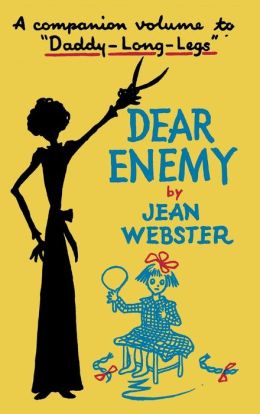
The book itself has but a few passages regarding courtship and marriage, yet all truisms in this day and age, even though it was written a century ago. They are mentioned almost casually, and in passing.
It is quite necessary to read D.L.L. first, or else one will not understand the whole basis of the sequel. They are not difficult reads; I would recommend them both.
2) I bring before you another TooYoungToTeach recommendation, What Alice Forgot by Liane Moriarty. I took it out once, and in typical fashion had taken out too many reads at one time. I was surprised, however, that I was unable to renew. The book came out in 2009—why should it still be in such popular demand?
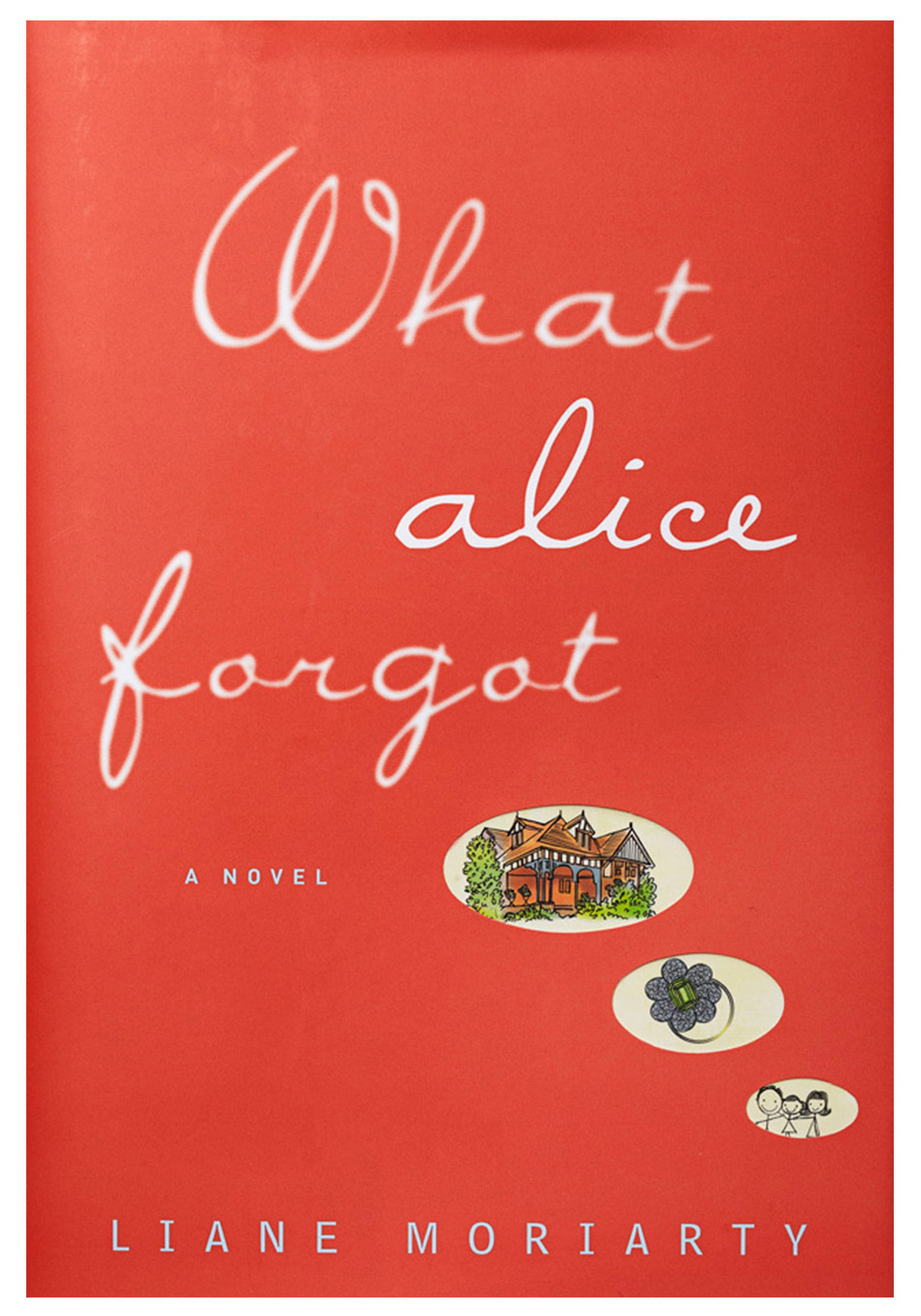 Well, that became clear quite quickly.
I do not know the official Bad4 parameters for "Shidduch Lit," as this may be merely "Marriage Lit"; not the tale of the courtship itself, but the state of relationship following the wedding.
It reminds the reader of the importance of being able to see people not as "good" or "bad." It reminds us that being wholehearted will sometimes knock us down, but it is worth it. It reminds us of . . . well, that's a spoiler, and I don't want to spoil anything. TYTT was very considerate of that.
2) I bring before you another TooYoungToTeach recommendation, What Alice Forgot by Liane Moriarty. I took it out once, and in typical fashion had taken out too many reads at one time. I was surprised, however, that I was unable to renew. The book came out in 2009—why should it still be in such popular demand?
I do not know the official Bad4 parameters for "Shidduch Lit," as this may be merely "Marriage Lit"; not the tale of the courtship itself, but the state of relationship following the wedding.
It reminds the reader of the importance of being able to see people not as "good" or "bad." It reminds us that being wholehearted will sometimes knock us down, but it is worth it. It reminds us of . . . well, that's a spoiler, and I don't want to spoil anything. TYTT was very considerate of that.
Wednesday, January 20, 2016
Unsinkable Molly Brown
The Unsinkable Molly Brown is loosely based on the life of Margaret Brown, who was actually known as Maggie to her friends.

Since the movie rides roughshod over Maggie's true life experiences, I'll just stick to the premise of the movie.
It opens on a scene of a small baby babbling away happily in a cradle being washed downstream, giving Molly the title of "unsinkable" even in infancy (that did not happen in real life).
It opens on a scene of a small baby babbling away happily in a cradle being washed downstream, giving Molly the title of "unsinkable" even in infancy (that did not happen in real life).
Even when bullied by her brothers, with her face in the dirt, Molly screeches that she will never, ever give up, never. As the song below attests.
She strikes out on her own, and there are quite a few disturbing scenes of sexist behavior, which Molly casually sloughs off. Eh, it was the '60s (and it takes place at the turn of the century).
Eventually, she ends up in a magnificent house in Denver, shunned by her equally nouveau riche neighbors for her lack of delicacy. But her coarseness charms, oddly enough, the nobility of Europe.
Which leads to the number below.
Her husband, Johnnie, is played by Harve Presnell, but I seem to mix him up with Howard Keel. They both look and sound alike— fabulous booming, manly voices.

Since the plot is in no way accurate, don't use it as an historical reference. Debbie Reynolds exudes insane amounts of energy as she flails across the screen, probably to prove her worth as she was the third choice for the film.
I adore Debbie Reynolds, until today, and not only because she's Princess Leia's mother.
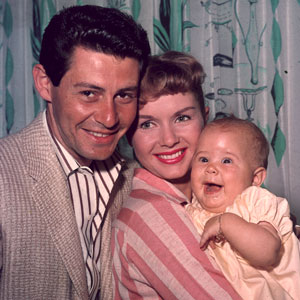 |
| There's Carrie! |
It is not the best musical, in terms of plot or character development or feminism, but it is vibrant, with breath-taking views of Colorado, and enough feverish dancing to keep me watching.
Wednesday, December 9, 2015
Tradition!
That song was so off. Tevye lumps together mitzvos with minhagim into one category, whereas only the latter applies. I suppose "Commandments!" is less catchy.
To our benefit or detriment, Fiddler on the Roof is for the rest of the world an image of orthodox Jewish life.
To our benefit or detriment, Fiddler on the Roof is for the rest of the world an image of orthodox Jewish life.
I know a non-Jewish woman who expects all aspects of Judaism to perfectly mimic Fiddler, to the point that a man's Shabbos bekechel should be patched and worn. She calls shadchanim or any female over 50 (because they must also be matchmakers) "Yentas." Such as, "She will be your Yenta."
R2 adores "If I Were a Rich Man" strictly because of the mooing cow at the end. "Moo the cow!"
R2 adores "If I Were a Rich Man" strictly because of the mooing cow at the end. "Moo the cow!"
As a kid I was terrified of the Dream scene, and even now, after seeing it, I can't bear the dark. The kinfauna handle it better than me, actually.
I once saw a clip of Zero Mostel as Tevye, and he was terrible. Not heimish at all. His "bida bida bida bum"s were more like "hipa hipa hipa pum"s.
I saw Alfred Molina on Broadway, and he was nearly as good as Topol (nearly as good, but Alfred Molina can play anything). Time magazine had a review, and I always remember this bit:
But when his third daughter chooses a husband outside her religion, he can debate no more. "There is no other hand!" he cries. From Mostel's mouth, it was a howl to the heavens; Molina spits it out abruptly, angrily. He's not suffering for all Jews; he's one man drawing an ethical line in the sand.
Topol's Tevye had a similar reaction. He roars "No! No! No!" and angrily stomps away, closing his ears to his daughter's weeping. I always found it interesting how Tevye, an unlearned man, was able to accommodate his other daughter's unorthodox (not unobservant, but non-PC) marriages, knowing of no halachic reason to say no, whereas here he is firm.
Here is my favorite, "Sabbath Prayer." My family doesn't bensch the children every Friday night, but many families do. It never fails to make me sniffle.
Here is my favorite, "Sabbath Prayer." My family doesn't bensch the children every Friday night, but many families do. It never fails to make me sniffle.
Wednesday, November 11, 2015
Kiss Me Kate
Ah, the squabbling lovers. I never understood the appeal. But the musical redeems itself otherwise.
Kiss Me Kate is about a staging of "Taming of the Shrew" and the actors that play them. Fred and Lilli, who embody the roles of Petruchio and Katherine, also happen to be ex-spouses. They yell, they scream, they holler, they kiss. Typical.
My basis for a good musical is if the songs are sing-able. Since Cole Porter was the composer, most of the tunes are. One of my favorite scenes is where two leg-breakers for the mob serenade Fred on how to woo a woman.
Poor Kate. Shakespeare wasn't being that loose with the realities of life back then when a loud, stubborn woman was married off to the next indiscriminate fortune hunter.
I was so curious as to what causes Katherine's capitulation that I actually checked out Cliff's Notes. Its theory is that Kate begins as a spoiled bully, who would rather die than give in. But her initially miserable marriage makes her realize that that childish tactic won't work anymore; she has to take craftier action.
She finds out how Petruchio thinks and instead of fighting him, she plays along. It is Cliff's opinion that her final speech was actually just for public's sake; she knows now that Petruchio's success is her success, that they are stuck together so might as well make the best of it. While she may proclaim servitude, that is not her intention. She has grown up, and she has to make peace instead of railing against the cards she is dealt.
This is a major segue, but I couldn't resist.
I was so curious as to what causes Katherine's capitulation that I actually checked out Cliff's Notes. Its theory is that Kate begins as a spoiled bully, who would rather die than give in. But her initially miserable marriage makes her realize that that childish tactic won't work anymore; she has to take craftier action.
Friday, November 28, 2014
I Whistle a Happy Tune
It began with the diary of Anna Leonowens, who was governess of Siam's royal children for six years. Her experiences were fictionalized by Margaret Landon in a 1944 novel called Anna and the King of Siam, and The King and I is based on that.
I watched that movie countless times as a child, but it is only now I find, with the maturity of adulthood, that the role of the king (executed by Yul Brenner) was extremely insulting. Playing upon racist perceptions, the King of Siam was made to appear an overgrown child, clueless of basic diplomacy, who strives to be "scientific," whatever that means (he was also less than handsome in real life). And no, Mongkut did not die of a broken heart from his inability to bridge the old world and the new; he died from malaria.
I watched that movie countless times as a child, but it is only now I find, with the maturity of adulthood, that the role of the king (executed by Yul Brenner) was extremely insulting. Playing upon racist perceptions, the King of Siam was made to appear an overgrown child, clueless of basic diplomacy, who strives to be "scientific," whatever that means (he was also less than handsome in real life). And no, Mongkut did not die of a broken heart from his inability to bridge the old world and the new; he died from malaria.

vs.

In actuality, Mongkut is known as "The Father of Science and Technology" in what was formerly Siam, for he brought about many modernizations. He was very educated; he was even an adept astronomer, successfully predicting a solar eclipse.
The tale of Tuptim is up for some debate; some claim she was burnt, others that she lived to be a content granny in the harem. But she didn't view herself as a slave in Uncle Tom's Cabin. While the film compares the state of slavery in Siam with that in the States, the systems were vastly different; slavery was usually undertaken voluntarily out of economic necessity, and masters were forbidden from mistreating them. Even some scholars note that British servants were not treated as well as Siamese slaves.
The original Anna was actually born in India, and was one-quarter Indian. She zealously hid that fact and claimed her dark complexion was due to Welsh origins. She was also kind of scary.
The tale of Tuptim is up for some debate; some claim she was burnt, others that she lived to be a content granny in the harem. But she didn't view herself as a slave in Uncle Tom's Cabin. While the film compares the state of slavery in Siam with that in the States, the systems were vastly different; slavery was usually undertaken voluntarily out of economic necessity, and masters were forbidden from mistreating them. Even some scholars note that British servants were not treated as well as Siamese slaves.
The original Anna was actually born in India, and was one-quarter Indian. She zealously hid that fact and claimed her dark complexion was due to Welsh origins. She was also kind of scary.
Now I have seriously digressed, but my point is that the songs in the film are enchanting, a Rogers and Hammerstein guarantee. The costume design and set is lavish and pleasing to the eye—it always passed the Babi test.
There isn't much available on Youtube . . .
There isn't much available on Youtube . . .
"Getting to Know You":
Although I did find "Shall We Dance" in Hebrew from the 1999 animated version; that's Ofra Haza:
Tuesday, May 20, 2014
HaRoeh Es HaNolad
This song had to be inevitably paired with Frank Bruni's "Maturity's Victories." Gigi is my favorite movie (and Barbara Walter's, as she told Hugh Jackman this past week), and "I'm Glad I'm Not Young Anymore" has only begun to appeal to me recently. When I was ten I fast-forwarded through this "boring" tune, but if you listen to the lyrics, it possesses truths that should be heard.
The article is from February, and references that whole Peyton-Manning Superbowl frenzy which touched me not; Bruni was then unaware then that the gifts of maturity didn't help Manning's team win. But:
Once, if I was pressed for time, I would rush and make stupid mistakes that would prolong the necessary tasks. Now I know it is better to opt for careful action as opposed to devolving into hysteria.
The article is from February, and references that whole Peyton-Manning Superbowl frenzy which touched me not; Bruni was then unaware then that the gifts of maturity didn't help Manning's team win. But:
He has the kind of poise that maturity typically midwifes. He’s unflappable. When something goes wrong, be it his fault or a teammate’s, he’ll grimace only fleetingly, shrug just slightly and press on. Panic, he understands, is a waste of precious energy, a pivot into rushed, stupid mistakes. With a bit of age has come a better grip on the fact that a game, like a life, is long. Stay calm. Hang in. Wait for the inevitable break. Trust your training.I don't want to be that person who goes to pieces when something untoward pops up. I did it once in high school, freaking out about what I considered to be an avalanche of homework, but after I made a scene on the bus and flopped into the kitchen, I realized it wasn't so bad. Blush.
Once, if I was pressed for time, I would rush and make stupid mistakes that would prolong the necessary tasks. Now I know it is better to opt for careful action as opposed to devolving into hysteria.
And it’s no accident that many of us, while remembering and sometimes yearning for the electricity of first loves and the metabolism of our salad days, don’t really want to turn back the clock. We know that for everything that’s been taken from us, something else has been given. We don’t move as nimbly as we did. But we manage our emotions with greater dexterity. Our energy may be diminished. Our use of it is more prudent. We’re short on flat-out exuberance. We’re long on perspective.Oh dear Lord. I'm a creaky grownup.
Friday, March 7, 2014
Who Will Buy?
Even though she watched it long ago, my grandmother still remembers the scene when Oliver arrives in London, having stowed away in a produce cart; his first sight of the city is a careful peek from behind a cabbage leaf.
I really can't stand Dickens. Besides for the misery aspect (which, for me, is sufficient reason to eschew his works), Charles has a penchant for impossibly convenient outcomes. Take Bleak House: A young woman bumps into a man on the street, and he is overdoes his apology. Unbeknownst to either of them, he is her long-lost father. Eh.
While Oliver! possesses similar soap-opera conveniences, the music certainly makes up for it.

To this day, I am not sure a villain could be played the way Oliver Reed can. That's because he was pretty terrifying in real life, which certainly granted his roles authenticity. He died during the filming of Gladiator after an all night drinking binge, complete with sailor wrestling.You think he would have learned after a bar fight in the '60s had left his face scarred. Woo.
The most beautiful scene/song undoubtedly is "Who Will Buy?," but it is unavailable in the film form on YouTube, and I'd prefer not to muddy the waters with stage versions.
Fagin (Ron Moody) and Dodger (Jack Wild), while thieves, are so charming that one practically forgives them anything.
I have a sneaking suspicion that Fagin is the source for my fingerless-glove obsession. Watching his performance one can detect the distinct stereotypical Jewish flourishes—the trill of the clarinet, the flamboyant hand gestures, the last "Hey!" sounds very Tevye-ish. In the book he was oft called, simply, "the Jew." Despite his protestations to the contrary, Dickens was, like the rest of London, an anti-Semite.
Then there is the quintessential love song, "I'd Do Anything."
Monday, September 23, 2013
Hi Lili
I adore Leslie Caron. (Like I said, Gigi is my favorite musical.)
Technically, it has all the things I hate; a man who mistreats the very object of his love, a young girl infatuated with a no-goodnik. Maybe it is because Mel Ferrer is so very dashing (just because I don't need looks doesn't mean I'm not aware of them), and Leslie Caron is Leslie Caron, so I find Lili enchanting.

A teenage orphan finds herself a member of a carnival puppet troupe, her job to converse with the puppets. Despite the fact that she knows they are not real, she chats innocently and honestly with them, forgetting they are all actually her grim employer.
The original name for Paul Gallico's short story, from which the film is based, was The Man Who Hated People, which was later extended to a novella called The Love of the Seven Dolls. While Gallico is a great author, able to infuse humor even in the most miserable of situations, I found the tale disturbing as the Lili character is abused most heinously by the puppeteer. Brrrr.
In the movie version, a war wound robbed the puppeteer of his dancing career, leaving him bitter and reticent. The only way he can express himself is through his puppets; the only kindness he shows Lili is when he shields himself with the different voices and personalities of his alter-egos. In truth, he has actually been there for her, but she doesn't realize it, gazing after a womanizing magician instead.
In the movie version, a war wound robbed the puppeteer of his dancing career, leaving him bitter and reticent. The only way he can express himself is through his puppets; the only kindness he shows Lili is when he shields himself with the different voices and personalities of his alter-egos. In truth, he has actually been there for her, but she doesn't realize it, gazing after a womanizing magician instead.

After seeing Lili I wondered about the whole idea of "love at first sight." Not being romantic I don't believe in it, but perhaps it was more common once, when men and women lived such separate and uncomplicated lives (I need to work these things out if a movie will get my endorsement).
"I loved you the moment I saw you." Possible? Eh.
"I loved you the moment I saw you." Possible? Eh.
Wednesday, August 7, 2013
What a Beautiful Morning!
PBS featured once the Broadway revival of Oklahoma!, starring Hugh Jackman (a.k.a. Wolverine). While the performances are very good (Wolverine can really sing), what I was immediately turned off by was the blandness of the set, the depressing "dust bowl"-ness of the hues.
Everything was brown. Not a hint or touch of thriving greenery anywhere. Laury was stuck in mud-colored overalls, and Aunt Eller was rather grim.
Maybe this was more accurate to the tough farming life of the past, but I infinitely preferred the 1955 movie version.
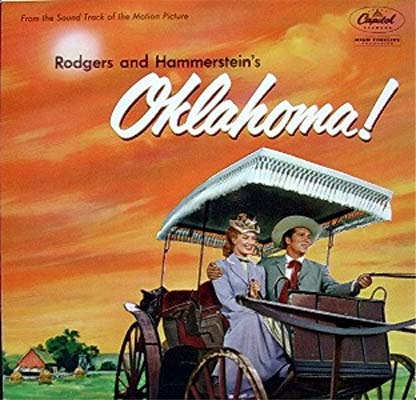
The screen is vibrant with color—the cerulean blue of the skies, the lush greenery of the crop, the neon hues of Laury's skirts, the gleaming white of Curley's teeth, and the twinkle in Aunt Eller's eye.
The Broadway show depicts the villain, Jud, as a slow and painfully lonely individual, while Rod Steiger's version was easier to dislike as a sexist who couldn't take no for an answer.
Below is "Surrey with a Fringe on Top."
While this may not be on topic, I couldn't resist adding Billy Crystal's belting it out in When Harry Met Sally.
At the 40 second mark.
To understand how a couple is supposed to compromise, Ado Annie and Will explain it rather well:
Wednesday, May 22, 2013
Cheap Words
Show Me (written by Alan Jay Lerner)
Freddy:
Speak and the world is full of singing,
And I'm winging Higher than the birds.
Touch and my heart begins to crumble,
The heaven's tumble, Darling, and I'm...
And I'm winging Higher than the birds.
Touch and my heart begins to crumble,
The heaven's tumble, Darling, and I'm...
Eliza:
Words! Words! Words! I'm so sick of words!
I get words all day through;
First from him, now from you! Is that all you blighters can do?
Don't talk of stars Burning above; If you're in love,
Show me! Tell me no dreams
Filled with desire. If you're on fire,
Show me! Here we are together in the middle of the night!
Don't talk of spring! Just hold me tight!
Anyone who's ever been in love'll tell you that
This is no time for a chat! Haven't your lips
Longed for my touch? Don't say how much,
Show me! Show me! Don't talk of love lasting through time.
Make me no undying vow. Show me now!
Sing me no song! Read me no rhyme!
Don't waste my time, Show me!
Don't talk of June, Don't talk of fall!
Don't talk at all! Show me!
Never do I ever want to hear another word.
There isn't one I haven't heard.
Here we are together in what ought to be a dream;
Say one more word and I'll scream!
Haven't your arms Hungered for mine?
Please don't "expl'ine," Show me! Show me!
Don't wait until wrinkles and lines
Pop out all over my brow,
Show me now!
I get words all day through;
First from him, now from you! Is that all you blighters can do?
Don't talk of stars Burning above; If you're in love,
Show me! Tell me no dreams
Filled with desire. If you're on fire,
Show me! Here we are together in the middle of the night!
Don't talk of spring! Just hold me tight!
Anyone who's ever been in love'll tell you that
This is no time for a chat! Haven't your lips
Longed for my touch? Don't say how much,
Show me! Show me! Don't talk of love lasting through time.
Make me no undying vow. Show me now!
Sing me no song! Read me no rhyme!
Don't waste my time, Show me!
Don't talk of June, Don't talk of fall!
Don't talk at all! Show me!
Never do I ever want to hear another word.
There isn't one I haven't heard.
Here we are together in what ought to be a dream;
Say one more word and I'll scream!
Haven't your arms Hungered for mine?
Please don't "expl'ine," Show me! Show me!
Don't wait until wrinkles and lines
Pop out all over my brow,
Show me now!
I have always found words to be unnecessary. Words are easy, whereas actions are harder, and are more truer proof of feelings than any poetry or gifts or untried promises.

I can't fight with genetics. My family splits right down the middle; those who place more emphasis on Hallmark mush and the other that prefer less talk, more action.
Ta is of the Hallmark camp. While he has purchased many cards, flowers, and financed a bling or two in his time, Ma (the romance hater) has a different idea of what was the most touching gesture he ever made. It happened probably 35 years ago; they were in the mountains, at some sort of run-down hotel, and my maternal grandparents were on their way, except their bathroom was overflowing with sewage. Ta tackled the mess.
She still gets teary-eyed over that. Because he did something unappealing, difficult, and downright gross for her. A bouquet of roses? That's easy. To show true devotion, that's in the hard stuff. It's no different in religion. Oh, sure, you love Me when I do miracles for you. Can you love Me when nature kicks in?
Ugh, romance. It has no appeal for me. Sweet nothings, pooh. Candle-lit dinners, meh. Flowers, no thank you. I pray no man buys me jewelry without my input first. Never mind input; it'll be a solo endeavor.
She still gets teary-eyed over that. Because he did something unappealing, difficult, and downright gross for her. A bouquet of roses? That's easy. To show true devotion, that's in the hard stuff. It's no different in religion. Oh, sure, you love Me when I do miracles for you. Can you love Me when nature kicks in?
Ugh, romance. It has no appeal for me. Sweet nothings, pooh. Candle-lit dinners, meh. Flowers, no thank you. I pray no man buys me jewelry without my input first. Never mind input; it'll be a solo endeavor.
A man who takes out the garbage occasionally without grumbling? Who will forgo his Shabbos nap to help with the kids? Will valiantly defend me if his mother sniffs at my cholent?
I would be able to gaze at him with stars in my eyes while Disney-princess songs squeal in the background.
Friday, March 15, 2013
Sounds Familiar
Has any other gals noticed that when a guy is suggested, he sounds exactly like "Normal American Boy" from Bye Bye Birdie?
"He's a fine, upstanding, patriotic, healthy, normal, American Boy!"
 And he's good-looking too!
"He's a fine, upstanding, patriotic, healthy, normal, American Boy!"
Riiiiiiiight . . . .
 If only I had a PR team like Albert and Rosie.
Wednesday, January 2, 2013
Who Could Ask for Anything More?
An American in Paris is not my favorite musical—it's just that it has Leslie Caron and Gene Kelly, my favorite performers in the musical industry. The music is beautiful (George Gershwin, consistently singable), the dancing divine (there is a lot of ballet in there), but I don't like the "love at first sight" premise. I just consider that lazy writing.

Anywho, the colors jump from the screen in a fantasy-like kaleidoscope, the dancers leap and twirl, and the tunes just hypnotize.
Gene is a starving American artist in Paris, Leslie is affianced to the biggest singing sensation in the country who happened to risk his life to keep her safe during the war. Georges Guétary is so dashing and considerate I actually root for him the whole time. I really don't see what Gene has to offer, and I spend my movie time cursing Leslie's character for being so easily distracted.
Gene is a starving American artist in Paris, Leslie is affianced to the biggest singing sensation in the country who happened to risk his life to keep her safe during the war. Georges Guétary is so dashing and considerate I actually root for him the whole time. I really don't see what Gene has to offer, and I spend my movie time cursing Leslie's character for being so easily distracted.
Sparkle on, Leslie. Eyes a'twinkle, Gene. As for you, George, you were the best of them all. Oscar is the funniest.
There are all sorts of embedding restrictions against inserting some of my favorites scenes, like "I Got Rhythm," and the opening scene when Gene transforms the boring morning routine into poetry in motion.
Wednesday, October 24, 2012
Your Special Island
South Pacific is not just a musical, it is an epic movie. It tackled a host of deep issues; racism, people rediscovering themselves while far from home, the pain and loss of war.
The 1958 version was perfection in the casting— Mitzi Gaynor as the still-learning Nellie; Rossano Brazie as Emile, as the exotic older man; Ray Walston as Billis, Juanita Hall as Bloody Mary.
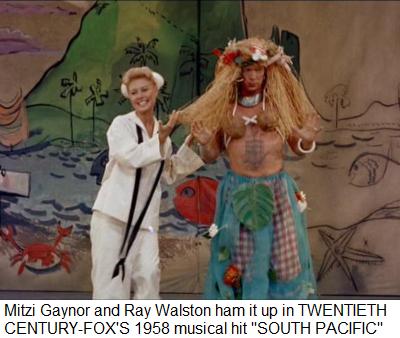
The 2001 television version could have been good, except for one big casting glitch: Glenn Close. She completely torpedoed it. While she is a great actress, she just isn't young or cute enough to believably belt out "A Wonderful Guy" or "I'm Gonna Wash That Man Right Outta My Hair." Reba McEntire would have been a much better pick.
The plot follows a few characters and their internal struggles, and all of them gripping. Like Bloody Mary, who used to work as a plantation hand, and has dreams for a better future for her daughter, but doesn't realize what stands in her way.
The songs are beautiful, haunting, and frighteningly true, like "You've Got to be Carefully Taught."
You've got to be taught
To hate and fear
You've got to be taught
From year to year
It's got to be drummed
in your dear little ear
You've got to be carefully taught
You've got to be taught
To be afraid
Of people whose eyes
are oddly made
And people whose skin
Is a different shade
You've got to be carefully taught
You've got to be taught
Before it's too late
Before you are 6 or 7 or 8
To hate all the people
your relatives hate
You've got to be carefully taught
The songs are beautiful, haunting, and frighteningly true, like "You've Got to be Carefully Taught."
You've got to be taught
To hate and fear
You've got to be taught
From year to year
It's got to be drummed
in your dear little ear
You've got to be carefully taught
You've got to be taught
To be afraid
Of people whose eyes
are oddly made
And people whose skin
Is a different shade
You've got to be carefully taught
You've got to be taught
Before it's too late
Before you are 6 or 7 or 8
To hate all the people
your relatives hate
You've got to be carefully taught
For the female who feels the lack of male attention, here is our love song: "There Is Nothin' Like a Dame."
Friday, September 14, 2012
Postive Energy
30 Rock, "Lee Marvin vs. Derek Jeter": Liz is complaining to Jack about attending a singles event at the Y.

Liz: This whole thing is unfair. You're juggling two beautiful women while I have to pay to have kickballs whipped at me. This is gender inequity out the yang.
Jack: This has nothing to do with the slight difference in our genders.
Liz: Yes, it does. The older you get the more distinguished you are. Meanwhile, I'm reading a book called, Hiding Your Arms, Hiding Your Anger: Dating Over 35.
Jack: Lemon, I am successful romantically because because I am confident, open, and positive. You are negative, pessimistic, and in danger of becoming permanently sour.
*
I have mentioned beforehand that I am anti-positive. But that is for my own internal machinery. For outward purposes, I have developed an Oscar-worthy cheerful demeanor.
It all comes back to "Put On A Happy Face," aka Suck It Up.
It all comes back to "Put On A Happy Face," aka Suck It Up.
Thursday, May 10, 2012
Educational AND Entertaining
One of the ways I got sucked into musicals in the first place when Ma got snookered into one of those MGM deals where one gets seven musicals for a penny each, then has to buy one every three months at regular price. Out of desperation, she purchased 1776, which I must say that at age 11, put me straight to sleep.
There was just so much talking.
I warily popped it back into the VCR when I was 18, and found myself raucously hooting with laughter.
While I can't get some adults to watch it (they also can't stand all the jabbering) others are entertained by the excellent writing and the hilarious lyrics. Such as this snippet from "But Mr. Adams":
Franklin:
Mr. Adams, I say you should write it
To your legal mind and brilliance we defer
Adams:
Is that so? Well, if I'm the one to do it
They'll run their quill pens through it
I'm obnoxious and disliked, you know that, sir
Franklin:
Yes, I know
John Adams, in the 1972 film, was played by William Daniels, who also played Feeny in the '90s show Boy Meets World. I happened to have known him from the latter before seeing the former, so that piqued my interest.

Broadway staged a revival in 1997, and John Adams was played by—wait for it, sci-fi lovers—Brent Spiner, also known as Data from Star Trek: The Next Generation. "Blue Skies" in Nemesis wasn't the first time he sang, it seems.

His rendition of Sit Down, John! is on my iPod, and he definitely holds his own.
But here is the magnificent original.
But here is the magnificent original.
Friday, January 27, 2012
She is Hungarian! (Not)
When I first read the play Pygmalion I was in high school, and had already memorized My Fair Lady. It was then that I first came across the endnote that Eliza marries Freddy and the two live a happy life of shabby gentility.
At first I was horrified - married to that idiot?
It was years later that I finally realized: Professor Higgins is a meanie.
At first I was horrified - married to that idiot?
It was years later that I finally realized: Professor Higgins is a meanie.
I am never able to tolerate fictional or real relationships where one side is constantly mocked and mistreated. If two men court a woman, one all respectful adoration, the other snarky and making jabs at her expense, seriously, who truly cares for her?
Pygmalion was based on a Ovid's artist of the same name who carves a statue of a beautiful woman. He "falls in love" with his own lifeless creation, finding real women unpalatable. After bringing a sacrifice to Venus (the goddess of love), she fulfills his wish to animate his beloved.
And the two live happily ever after.
Shaw's Pygmalion is built on that premise, but with a twist; Higgins takes this "squashed cabbage leaf" and by reforming her dialect, grants her a new identity in class-conscious England. He also treats her unkindly as his property, being his "creation."
In that last, stupendous showdown, Eliza proves her independence from him (even though he takes credit for that as well) and marches off, seemingly, to realize her own destiny separate from her Pygmalion.
Shaw's Pygmalion is built on that premise, but with a twist; Higgins takes this "squashed cabbage leaf" and by reforming her dialect, grants her a new identity in class-conscious England. He also treats her unkindly as his property, being his "creation."
In that last, stupendous showdown, Eliza proves her independence from him (even though he takes credit for that as well) and marches off, seemingly, to realize her own destiny separate from her Pygmalion.
Shaw had it that she marries Freddy, who, while not the brightest bulb, worships her outspokenness and vitality.
In the fabulous 1938 movie adaptation of Pygmalion, the ending is changed; the producers insisted upon a "happy" ending, where Eliza returns to Higgins, who realizes that he mourns her departure. Here's the full film; I highly recommend it. Thankfully it is closed-captioned. The great tell-off scene begins at 1:25:20 or so.
This new ending takes the reworking to another hurtful level by having Higgins covering up his joy by callously demanding his slippers.
In the fabulous 1938 movie adaptation of Pygmalion, the ending is changed; the producers insisted upon a "happy" ending, where Eliza returns to Higgins, who realizes that he mourns her departure. Here's the full film; I highly recommend it. Thankfully it is closed-captioned. The great tell-off scene begins at 1:25:20 or so.
Despite my disillusionment, My Fair Lady is a gorgeous film, of bright colors and vibrant songs and fabulous dialogue that does not get smothered in the music.
Shaw's other themes, like the evolution of middle-class morality, are still explored (Morality did not exist, either amongst the wealthy, who did what they liked, and the poor, who couldn't afford it. With the rise of industry and the middle-class, they brought with them morality and religion, which was rather tiresome for the poor as well as the rich. Moving on.)
Despite the fact that Eliza returns to be Higgins' whipping dog, I shall dwell on the film's merits as a musical. While Julie Andrews portrayed her on Broadway, she was not considered to be a big enough name for the film.
This video dubs Andrews' voice over Marni Nixon's (Hepburn's dubbed singing voice). Oh, Julie. WHAT a voice.
Wednesday, December 28, 2011
Purrrr
In the spirit of all the lovely ladies, who, in a moment of panic, believe their future to be feline rather than fella filled, I present the musical recommendation, Cats. The lyrics are derived from T.S. Elliot's Old Possum's Book of Practical Cats.
It was one of the longest running musicals on Broadway; I was taken to see it at age 12, which for me was quite an experience.
It was one of the longest running musicals on Broadway; I was taken to see it at age 12, which for me was quite an experience.
Andrew Lloyd Webber is an amazing composer, churning out reliably singable music. A made-for-TV version was released in 1998, which I had taped on PBS and watched on a loop. It was on Ovation the other day, and I hummed The Peeks and the Pollicles on the way to the train this morning.
If I'm to provide a snippet, Memory is the usual choice, but I don't like many slow songs. Here's The Awful Battle of the Peeks and the Pollicles, where the human performers who are pretending to be cats are now dressed up as dogs.
Thankfully, it doesn't take itself seriously.
Subscribe to:
Posts (Atom)