Showing posts with label Shidduchim. Show all posts

Wednesday, March 18, 2026

No Regrets

 "Looking back," she asked, "did you make any decisions that you think now you would've done differently?" 

She means, of course, in terms of dating. 

I wasn't even insulted; I get versions of this question from time to time, specifically from people who married at the "appropriate" age (of 21 or so). There's still that undercurrent of: It was your fault, in some way. It just doesn't make sense otherwise. 

I recently listened to a Meaningful Minute: Stories of Hope with Jackie Glaser as the guest with her husband. Jackie has quite the tale; a baalas teshuva, she only started dating in her late 30s, married at 44, and had a baby at 50. She had some insights which I had also realized in my own experiences. 

One of which being: Han is my person. Even when I'm annoyed at him, he's my person. Even when we fight, he's my person. It never, ever crosses my mind that I made a mistake or married the wrong dude or think wistfully of some other guy I went out with once. He's my person.

The only reason I know this is because I dated all the other candidates for over ten years, and no one, no one was remotely him. 

Whereas, for those who married to the first or second or third chap that they went out with, when the bumps in the road come (and believe me, they'll come) they might wonder, in a moment of weakness . . . Did I choose right? 

It's human nature. I doubt I would be different. It's only because I took the long and winding road that I know. 

This is what I tell those who are freaking because their child (typically daughter) is still unmarried in their mid-20s (gasp!): There's pros too, not just cons.  

So, no: Looking back, I know 100% I had made the right decisions. It wasn't that I was a silly, flighty 21-year-old and I said no to someone who was probably my soul mate but I had been ridiculous about something minor. 

Another thing: Ma would say, "They find you, even if you're hiding under the bed." Meaning, just because someone once said no to their potential soulmate doesn't mean Hashem decrees, "No soup for you!" Tziporah Grodko discusses this: Is Hashem that cruel? One mistake on our part and we are denied fulfillment in marriage? Shidduchim have happened all the time despite rejections along the way (including my own). If it's meant to be, it'll be.  

Monday, May 22, 2023

Younger is Not Better

"We will do our part for the shidduch crisis!" Han announces dramatically. "We spoke to our son! He is ready to start dating!" Han then plucks a babbling Anakin up from the floor, holding him aloft as Rafiki brandished Simba in the opening scene of The Lion King. 

Yeah, we're both kinda snarky about this so-called solution to the so-called "shidduch crisis" (snort). Sure, let's have a bunch of immature boys date for the express purpose of putting some rando girl "out of her misery." That'll end well. 

Hello? We aren't living in the shtetl anymore, when parents would arrange shidduchim with complete strangers and that would be that. No one is marrying blind, unless it involves a mail-order bride. 

L'havdil, take Indian Matchmaking! Sima Aunty (matchmaker extraordinaire) just cannot get with the times. Granted, this season made a point to make her appear more human, even helpful, at times, but her disapproval at her clients' expectations can get tiresome. "Kids today! They don't listen to their elders!" Well . . . um . . . I'm not going to marry someone based on a random shadchan's "perfect on paper" suggestion . . . 

If something isn't working, the go-to solution is usually "Well, back in my day . . ." Yes. That's how it worked then. Maybe. Generations aren't static.

OK, I married when I was a doddering decrepit, which I am not advocating. But looking back I see that I was not ready for marriage at 19. Definitely not. 

Divorce is no longer the taboo it used to be. An older woman, who divorced after her children married, said she knew it was a mistake during the week of sheva brachos. "But I couldn't hurt my parents," she explained, and stayed miserably wed for decades. 

There are too many stories I'm hearing of young couples who are either divorcing or choosing to stay married despite the difficulties. That's too much on young people. 

I'm not saying that if they waited until they were older they wouldn't necessarily have ended up divorcing. Yet youngsters shouldn't be making one of their biggest life decisions based on "I just don't want to be the last person in my class to get married." Let them see more, experience more, and perhaps develop a little radar for red flags.   

Again, a person can marry at 25+ and get divorced. But at least they weren't unexposed children when they made their choice.

Like Aleeza says (and I'm paraphrasing) "My job is not just to get you married. It's to get you stay married." 

Wednesday, December 7, 2022

Indian Matchmaking" Reactions IIII

 While doing some googling to see if any of the couples featured in the past season are still together, I came across this TIME article which had some grumblings about the show. 

Let's see . . . does Sima accommodate the men more than women? Oh, yeah, sure, like every other shadchan, nothing new there. She's also more old-world, and she seems to have trouble navigating the new one. She's constantly displayed here as the savior of all, but there's only one couple this season who's met a potential someone because of her. Either it didn't work for everyone else or they met their someone through family, friends, or on their own. 

But the article grumbled how the people coming to her are asking for someone from a similar background, and how bad that is. They make it seem like it's a form of racism. 

Now this is amusing. I'm all for diversity, people, but marriage is a whole other ball game. 

Take me. I had told people that it would be nice if the guy would be heimish (that's HI-mish, not HAY-mish. The latter is a Scottish name). Unless the other person was heimish, they had no idea what I meant. Some thought I meant chassidish, but no, it is not chassidish, and chassidus definitely does not work for me. 

On the show, Viral asked for a man with the same background as her, Gujarati, including fluency in the language. There is something to speaking the same lingo as your life partner. I, for example, am fluent in Yinglish (cough). Along with that are also certain cultural values. 

There are many happy couples in our world who are "intercultural"; Sephardi and Ashkenazi is just one example. I found a divide with boys from American backgrounds. Yes, I am an American born, but I was European raised, and that makes a difference. It just does. 

I was told not to be hung up on it, and I never used it as a reason to decline the date. But when we would meet, conversation would flounder. We weren't able to understand each other's perspective. 

I was one of those people that shared background was important. It's not important to everyone. Some people enjoy such differences, the exoticness of an unfamiliar culture. Cool cool. 

But let's not call such a preference "ethnocentrism."

Tuesday, November 29, 2022

"Indian Matchmaking" Reactions III

Rejection. It sucks. 

It's also a large part of dating, whether one is the rejector or the rejectee. Either way, it's not pleasant. 

In my dating years, I was beyond stressed about rejecting someone. For the most part, I could tell off the bat that it wasn't shayach and felt no need to go on a second date. It wasn't until I found out from my dating kinfauna that there is an "obligatory" two-date minimum, to which I respond, "Whah?" 

I had thought, that if I knew this wasn't going anywhere, why raise someone else's hopes up needlessly with another date? Because here's the thing: there is no way to make rejection better. A "no" after two dates isn't more palatable than a "no" after one. I'm saying this from the other side, that rejection sucks, plain and simple. 

On the show, there were two examples of people who were both in the position of rejector and rejectee: Nadia and Vinesh. 

Nadia had been seeing Shekar, who is considered to be a nice, steady guy. But then Vishal walks into a mixer, and well . . . let's just say Vishal is striking. He's tall, gorgeous, and has the same cheerful energy Nadia is known for. But he's seven years younger than her.

So Nadia starts claiming that Shekar didn't seem to be that interested, and calls him to break up with him. She even tells him that she felt like he was "rejecting" her. Shekar seems blindsided, and denies it, but ultimately accepts her decision with grace. He then hangs up the phone and cries. 

Nadia is then bouncing along with Vishal, happy as a clam, until he flies out to see her. She is looking at him with excitement and expectation. He does not look at her the same way. He then proceeds to break up with her. 

Nadia, stunned, does not accept his decision gracefully. She snaps and snarls. Initially, I was taken with her sassiness. But then recalled: she rejected Shekar, and hoped he would take it ok. Yet when she is rejected, the claws come out. 

Well well. 

Then there is Vinesh. Vinesh is cheerful, loud, and jokes a lot (his jokes are not always funny). He is first matched with Mosum, who matches his energy, but she's not so focused on appearances. Vinesh asks her for her number after they meet, but then tells the screen that he asked for it to be polite, that he does not intend to date her (he does know that Mosum will hear this, right? This is international programming). 

Later, he's set up Meena, who, dare I say it, is smokin'. From her perfectly blown hair, fake lashes, and low cut cleavage, she is striking. But it's obvious that she does not appreciate Vinesh's humor. Vinesh, smitten with her looks, proclaims that the date went well, while Meena thinks otherwise. 

When told that Meena felt "friendship rather than romance" (this is the show code for "no way Jose"), Vinesh looks stricken. It takes him a few minutes to recover. 

It seems, for both these people, it's perfectly reasonable to be the rejector. After all, if it's not meant to be, if they're not feeling it, they just gotta be honest, y'know? They don't give the other people much thought. But when they're being rejected . . . it's a whole other ball game. REJECTION SUCKS. 

Rejection, in all forms, sucks. It sucks when you try to talk to someone new and they scurry away from you. It sucks when you apply to a school and they don't accept you. It sucks when your credit card gets rejected. It just sucks, overall. 

There are some people who so don't want to reject someone else that they just marry them. That really could have been me, if there wasn't a shadchan to do my dirty work. I would not have survived to have a happy union if I had to tell someone directly "I like you like a friend." 

So while there are times when rejection is necessary, please remember: try to be as kind as possible.

Wednesday, November 23, 2022

"Indian Matchmaking" Reactions II

Pradhyuman was a problem in Season 1. He was, by all accounts, too picky. Siiiigh. 

He was unrealistic. He was too demanding. He did not understand that he cannot get everything. He rejected 150 suggestions (I think that's less than Han dated).

At the end of the season, he FINALLY goes out with someone who looks compatible, and the music swells hopefully. But as the credits roll, we're informed that it didn't take.

Ay, Pradhyuman. What are we to do with you? Tsk tsk. 

Then, much to my surprise, Season 2 opens with Pradhyuman beaming, gushing about his girlfriend that he met at a party. He's floating on air. 

A few episodes in, he eagerly prepares the engagement setup—with no one shoving him—and of his own free will, proposes to his beloved. 

Huh.

Now, I gotta admit, I had been a nay-sayer. I had also thought that Pradhyuman was one of those really impossible ones that will end up alone with his cats because he's just not being amenable. 

But here we are, with him blissfully committed. 

There are numerous stories like this, about seemingly "impossible" singles, who everyone sighs and moans and predicts doom and gloom and then—the moon hits their eye like a big pizza pie and it's AMORE. 

Maybe they weren't being impossible. Maybe they were just . . . waiting for the right one.    

Wednesday, November 16, 2022

"Indian Matchmaking" Reactions, I

A new season of "Indian Matchmaking" has arrived, and I plowed through it. Luckily Anakin finds it entertaining. 

The new season opens with Akshay, who lives in the Indian equivalent of Yehupitz. The family business is based there, so he cannot relocate. Both he and Sima the Matchmaker agree it's difficult for him "because the girls don't want to be in" Yehupitz, "they all want to live in the big cities." Dramatic sigh. 

Generalizations. They rankle me. 

Perhaps because I had been constantly lumped into generalizations, that because I was single and a certain age I was automatically picky, that I was unrealistically demanding this or that, that I must have, I must have, I must have—no, I wasn't. I wasn't. 

Additionally, I was constantly told that the man I was on the search for, with 2.5 criteria, did not exist. There are no boys like that, I was repeatedly told. 

So even when a semi-scripted reality show starts spouting generalizations, I get annoyed. It still—still!—gets under my skin. 

Because, seriously, in ALL OF INDIA there isn't ONE or TWO or maybe ONE HUNDRED women who would be willing to live in a small, cozy, warm community? Heck, enough of our own people want to live out-of-town, and we're a pretty small minority, as opposed to a country with one BILLION people. 

I was trying to set up an acquaintance, and on the phone with her I was stunned that she had pretty much the same criteria as me, maybe 1.5. (I refuse to count "normal" as criteria.) I felt compelled to reassure her that I got what I was looking for, it's not unheard of or impossible. Because yes, men like my husband exist, the same way I exist. 

Monday, October 31, 2022

Shidduch Lit: Italian for Beginners

I've become impossible to please when it comes to romantic fluff. 

The basic structure of such a novel is to involve a very easily avoidable misunderstanding. Like, seriously, a five-year-old could have navigated this successfully. And Italian for Beginners is no different. 

Additionally, it has that annoying trope of "busy American who doesn't know how to live visits an exotic locale, imbibes the wisdom of the natives (who are all waiters, and yet live in lovely apartments), and discovers the meaning of life." 

However, the book had enough relatability that I will plug it here. 

Not to give a spoiler here, so if you don't want one then do not read on, but our heroine is a single woman in her mid-30s who has become the despair of her religious family (Catholic, not Jewish, but the emphasis on marriage and kids is near identical). She is humiliated at her younger sister's wedding despite her attempts to retain her dignity. 

She also has a lot of childhood issues with abandonment that should really have been addressed earlier with a therapist, and a lot of information was unnecessarily withheld from her on that subject, but at some point she realizes that she cannot be in a relationship if she doesn't know herself. 

Now, this point is a pet peeve of mine. How can people select life partners if they don't really know themselves? A lot of what we do involves following a societal script, without much questioning. Bad4 was the first to dryly proclaim that she would get a man without blow-drying her hair every morning, and many of us choose to slightly rock the boat in multitude of harmless ways. 

For instance, there had been some mumblings during my single time for my love of colorful makeup (which, I attest, was still classy and tasteful). Han loves the painted version of me (which I rarely apply nowadays, being a dishrag of a mommy) and even recently commented that so many girls aren't into strong makeup—why is that?

Because Han and I chose to express ourselves as we did (he's a rather snazzy dresser), that was one aspect that showed how our personalities could align. We didn't suppress our identities for the sake of appearances; our appearances reflected who we were.

I see other frum girls harmlessly stepping out of line and I love it. I love how they follow their passions, and also marry happily (I'm assuming happily) as they are.  

Monday, October 24, 2022

This, Too, Shall Be Forgotten

My memory is, pardon my French, in the toilet. 

My brain is keeping only primary processing needs online. I am not, as Data would say, operating at optimal parameters. 

Han tells me that I said something and I have no memory of the conversation. He could so easily gaslight me. Maybe he has? It's possible.

I was recently scrolling through old dating posts and found it amusing that I didn't remember some of the incidents. Sure, there were some guys I remembered, but some happenings were completely erased from my memory banks. 

At the time, these occurrences were so frustrating, so all consuming, and now—they've vanished.

Oh, don't get me wrong. I haven't forgotten everything. I still have that ability to hold a grudge for nearly forever. Yes, yes, I'm working on it.

But I'm glad to see that some occurrences that had upset me so much once upon a time have faded into the ether, of no significance.

Monday, June 13, 2022

What is the End Game?

Everything is relative, is it not? 

After marrying at our decrepit ages, Han and I are surprised to hear parents panic over their single 19-year-olds. That's still a thing? 

Han is actually, well, insulted when he hears the terror in the voices of relatives, fretting over their unwed not-yet-of-legal-drinking-age offspring. 

"Don't they see how well it worked for us?" he asked me, flabbergasted. "Don't they realize that while the wait couldn't be helped, it was worth it?" 

"Oh, my sweet idiot," I said condescendingly, patting his arm, "no." 

No one is asking our advice about launching their children into the dating realm. Because we messed up, you see. 

There could have been a confluence of factors. Perhaps our profiles didn't show us to our best advantage. Maybe we didn't consult the "right" shadchanim. Obviously, we were too picky, until we saw some sense and made the choice to "settle." 

We are the cautionary tale, not the inspiration. Sorry, Han.

I bumped into my niece's friend, who laughed how her 21-year-old sister is freaking over her singlehood. Especially considering how their parents wedded at a later age than Han and I. 

"She should be enjoying herself!" I said. "She should be doing things! Because soon," I gestured towards my burbling Anakin (yes, I'm going with Anakin, it's canon), "she won't be able to do ANYTHING. And she'll miss that time." 

I know of a gal who was shocked to find herself "still" single at 22. She married, happily, at 23. At 24, holding her bouncing baby, she finds herself hit by that proverbial Mack Truck. "I'm supposed to be up every two hours all night?!" Then: "I'm glad I didn't get married when I was 19!" 

The whole screaming infant part isn't exactly advertised in the brochure. A baby in theory is very different than a baby in practice. Even the really good ones don't let you go to the bathroom as often as their mothers would like. 

I have my moments when I sing to myself one of Ma's favorite sayings: "I'm gonna run away from home." The second time around, I'm used to the sleep deprivation, but Ben's adjustment to a new interloper was a real doozy. Then there are all those cheerful people who tell me having three is even harder, because then Han and I will be outnumbered. 

My point is this: motherhood is hard. It shouldn't be taken on lightly. 

Next: I've been hearing too many stories about young couples on the rocks. A few have lead to divorce. Which makes me sad. I know "they" say that marriage is work, but that doesn't mean it's never fun. Why else would anyone marry? There are "projects" out there that urge earlier marriages to circumvent singles, but what about the divorces? 

In today's times, younger marriages can be catastrophic. And yet these . . . children are being harried into early couplehood. That's meant for life.  

I recently came across this blog post, and when I mentioned it to Han he said that while men are allowed to nix a shidduch due to "attraction," it is considered an unimportant expectation from women. Here's the tip: if engagement is in the conversation, you both should be excited to spend time with each other.

Han and I were not willing to settle. Baruch Hashem, our parents understood and supported us, even though they found it difficult to watch us stay single. Because they also wanted us to be happy. 

Do we want our children to be happily married? Or just married? 

Wednesday, October 20, 2021

You Get What You Want

When Han was in yeshiva (many, many, eons ago) there were guys who would talk about what they want in a wife. Some would talk grandly of the size 2 bombshell with the oil well daddy that would apparently be swooning to wed them. 

Maybe a few of those guys married wealthy. Was she a supermodel? Well, no. 

Maybe a few of those guys married va-va-voom hubba hubba. Was she loaded? Well, no. 

I have been having conversations with my sister about the whole dating hellscape, and she has been saying: "You get what you want."  

Keeping in mind that what we say we want isn't necessarily what we want. 

My examples are rather simplistic, I know. But I'm trying to illustrate a bigger concept. 

Take the gal who earnestly describes the boy of her dreams, who is the best boy in Lakewood and is shtark and all that. But then she gets engaged to a tall dark drink of water who is maybe not known for his learning prowess. 

There is a quality that is at the tippity top of the list of desired parameters that, in the end, is what is the most important to every dater that outshines any other wants or needs. 

A woman really wants a refined boy from a refined family, and that's her most important desire. Will she end up with an uncouth clown? Not likely. 

Our deepest needs in a marriage partner will make themselves known while we date. I said that I wanted a nice guy, right, but even when I went out with nice guys, that wasn't always enough. There was another deep seated need that wasn't being met. 

People will try to poo-poo your wants. "Oh, that's not important in a marriage!" That wasn't important in their marriage. A woman I know, who had tried to set me up, was obsessed with eye color. After 40 years of marriage, she's still gushing about her husband's eyes, and she thought that would be a selling point for me, too. 

Eye color was never on my list. It's probably not on many people's list. But it was so important to her that it still makes her happy after decades of marriage. So who am I to mock that?  

The dating climate doesn't allow for singles to be honest about their wants. Eligibility is in the eye of the beholder, and shadchanim tend to sell those that they found appealing, not always hearing their clients' requests. 

Luckily, the Lord takes care of it. Have you ever gone to a vort and scratched your head at the beaming couple, wondering how exactly these two paired off? Despite your confusion, chances are, they got what they wanted.

Monday, August 30, 2021

Shidduch Myth: All Girls Are Amaaaaazing

In a prior post, I addressed the concept of "good ones being taken," and I would like to expound further. 

This statement is usually uttered by women. Accomplished, capable, bedazzled women sparkling with carefully applied highlighter. Many women, you see, push themselves to be the best, while men . . . well, plenty aren't up to their full potential. 

I've even heard something along the lines of "all girls are good, while men—eh." 

As someone who barely survived high school, I can say that not all girls are "good," whatever "good" means. Does "good" mean presentable and career-oriented? Or does "good" mean getting voted "Never made another girl cry in the bathroom"? 

I've heard tales. One example: One of Han's dates ordered the most expensive steak on the menu, specifying "well done" (I don't even eat red meat, and I know that's a no-no). She barely ate half, and when the waiter asked if she wanted to take home the leftovers, she declined (Han wanted to take it home, considering it was his $85 going into the garbage). 

What about "good" meaning considerate? 

I've met a number of women who are really, on paper, fabulous. But in person, um, er, *cough.* 

I'm not saying that if a guy isn't yet all who he can be he shouldn't pull himself up by his bootstraps. I just tend to socialize more with women than men, so I cannot give many observations about them. 

Here's my take: We're all supposed to be striving to do better, no matter where we are in life. So even if one has the "good job" and "good wardrobe" boxes ticked off, that doesn't mean that he/she is good to go. 

I recall in my single days, when I would be mesmerized at the description of some snazzy lawyer, excitedly wait for a date, only to be sneered and snarled at by some obnoxious specimen. 

So if you've got the work/appearance thing down pat, maybe you could sit down with yourself to see how you could improve further, between yourself and humankind and God. 

One of the positive aspects of being single is that there usually is the time available to self-improve. Believe me, that time vanishes once offspring roll around. Sleep deprivation doesn't leave much time for deep thoughts (think too deeply, you pass out).

So while a shadchan may hawk someone as being amazing because they are professionally accomplished and gorgeous, those criteria do not necessarily mean they are a "good one." 

To be "good"—you gotta do good. Like not talk to your date as though she is an idiot, or max out his credit card.

Monday, August 9, 2021

"I'm Still Single Because . . ."

Han has a friend from his yeshiva days that he keeps up with. Let's call him . . . Lando. Lando didn't have such a fun time dating either, but he married before Han did and is now proud papa to a small fleet of children. 

He and Han were chatting, and their previous dating lives came up. Lando was opining that as he had moved more to the right than his family, he did not have parents who could advocate for him whilst seeking a bride. 

Han was a bit puzzled by his friend's observation. For one, while he and I are heimishe FFBs, our parents' involvements didn't guarantee earlier marriages. There's only so much advocation parents can do. Even if my father went around shaking his friends by their suit lapels, screaming "FIND HER A MAN, DAMMIT!" it wouldn't have meant that Han would have appeared anytime sooner. 

Additionally, Lando's wife (great gal, I like her a lot) had just started dating when she was introduced to her husband. Meaning they couldn't even have met any earlier. 

Unless Lando was saying that he could have married someone else if his parents were involved? 

In the end, everyone who dates can have a reason why they are still single. They can blame their family, they can blame their religiosity level, they can blame physical attributes, they can blame a lot of things. But there are plenty of people who have "the deck stacked against them" and they still marry when young, even happily. 

So Han and I have the same position: It's when God decides it's time. You can blame whoever you like. But as with everything in life, it's not in our control.

Wednesday, February 10, 2021

The Goofy. The Quirky. The You.

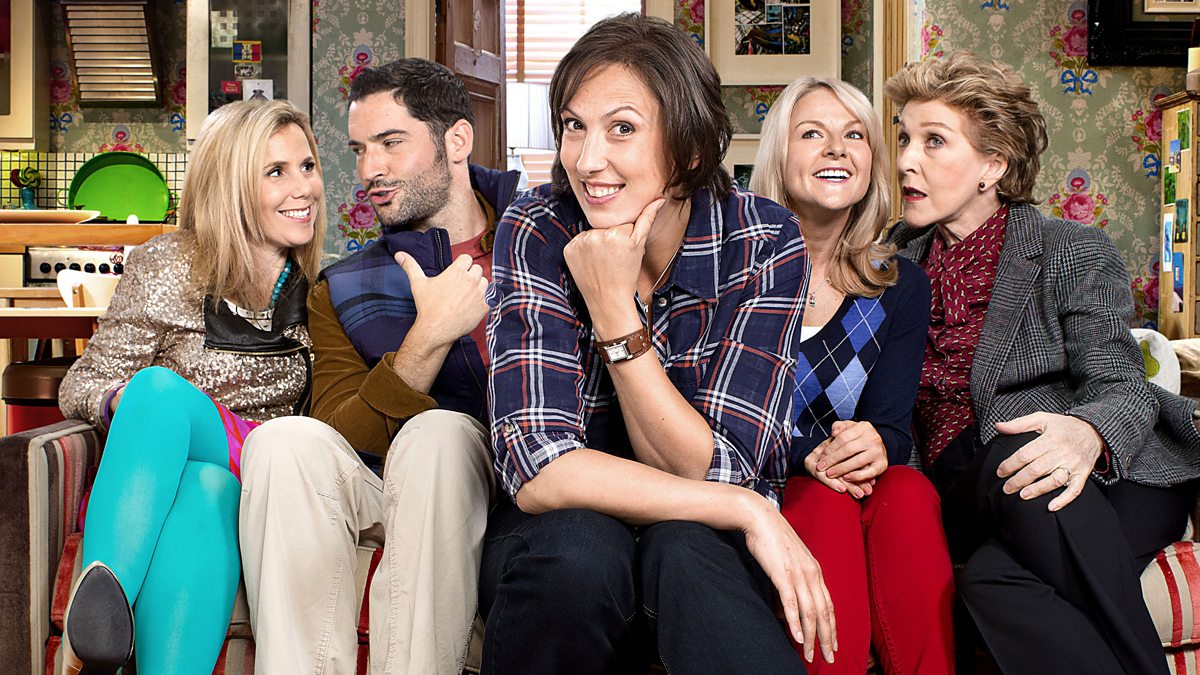
I am still working my way through Miranda, and there was a few episode arc that I loved. 

Miranda has caught the eye of a reporter, Mike. He asks her out, and on it she invariably does a Miranda—something goofy that makes her get odd looks from people. Like if someone says something that happens to be a song lyric, she has to belt out the whole song. 

Once she's finished her ballad, she waves goodbye to Mike and leaves. Because of course he won't be interested in her now. 

But he is. He comes back to her store, starry-eyed, breathing, "So quirky." 

In the next episode, Miranda still attempts to tone down her Miranda-ness because of course he won't stay interested in her. She manages until she doesn't (in front of his father), at which point he sighs in relief. He was wondering where his quirky girl had gone. 

Yes, this is television, and a sitcom at that, but I assure you, dear audience, that life is very much like this. 

For those who have been in the dating trenches, how often were you told not to be "yourself"? (Raising both my hands.) Frankly, it's too much work to suppress the real me. Yes, a good number of guys bolted in horror, but Han says I have "simchas hachayim." 

Han can be his real self with me, and I can be my real me with him. And it's fun. Because it turns out, we can both be goofy. 

Monday, February 1, 2021

Shidduch Myths: "All the Good Ones are Taken"

Sarah Eckel's book devotes each chapter to a "reason" why someone is single (too available, etc.) and destroys the faulty logic behind it. While some I have addressed in the past, others occurred to me while reading it that I thought would be fun to tackle. 

"All the good ones are taken." 

Whilst in my single days, I attended an afruf one Shabbos (the outing was memorable as we had to trek to another shul while dragging along a toddler nephew since we were babysitting) and I saw there a recently married neighbor along with her husband. 

His appearance was not only rather handsome, he exuded an aura of what I interpreted to be a pleasant personality. While wishing this acquaintance Gut Shabbos, I whispered to Ma (sotto voce, in retrospect), "She got such a cute one!" 

At the time, while happy for my contemporary's "success" in "snagging" a "cute guy," there was also the accompanying understanding that my options had dwindled further. There is a limit, after all, to good-looking, personable gentlemen. So, despite my Hungarian heritage (being appreciative of a chiseled jaw), I did not demand that feature in a future spouse. I "had to" focus strictly on qualities like kindness, intelligence, and tolerance for my sneaker collection. 

After meeting Han, however, I was surprised that he was "still available"; how could it be that some savvy huntress hadn't downed him with a tranquilizer dart and dragged him back to her lair? How was it possible that this package of fabulosity hadn't been "snatched up"?

Because, if people were like limited edition Adidas with gold laces, then yes, we could apply the premise of supply and demand. But people aren't commodities. They are complex individuals with inner worlds who interact with others in different ways. 

Additionally, there is the incorrect belief that if someone is married, then they must be "good." Well, no. A lot of jerks and mean girls are married. It's not like every young couple you meet has a shared glowing halo of goodness. 

What does "good" mean, anyway? For some, it's simply impeccable appearance; an appealing combination of facial features paired with a low enough MBI swathed in a rockin' wardrobe (that goes for men and women). For some, it's someone who visits his grandmother every Sunday then volunteers at the soup kitchen. For some, it's an admirable career choice (hello, Jewish doctor!) 

For others, "good" simply means "good for them." 

So while a number of men (ok, many, many men) ran screaming for the hills after they met me (why? Gosh, the list goes on: too tall, knows too much, too fond of lipstick, etc.), Han and I are good for each other.

To quote Amy March, "You don't need scores of suitors. You need only one, if he's the right one."

Monday, January 18, 2021

We All Carry Pain

***This post has been redacted. I was informed that the content was judgy and condescending, making me lose all credibility on this topic. Thank you.***

Wednesday, December 23, 2020

Being Married Isn't Everything

I had an epiphany yesterday. 

I had been thinking of couples I had been hearing of, the young marrieds who have not been having a seamless transition into wedded-hood. Perhaps one has a temper, or their personalities clash. Then throw in a colicky baby into the mix, bringing the stress index ever higher. 

It was then I realized something. Fast forward ten, or twenty, or thirty years. If these couples stay together, and have not managed to make their experience a better one, then they will see their marriages as having one perk: Status. 

The status to tell other singles, "That's what you are expecting in a marriage? Dream on." 

Perhaps they will get annoyed. "What, exactly, are you holding out for?" 

Then: "If you are expecting fireworks, puh-leez." 

And, underneath their scorn, lies a fear that the optimistic singles might get what they hope for: a spouse that they mesh with.

Let's be honest, not all marriages are happy or healthy, and not all of these unions are dissolved. And yet, singles are expected to accept any marrieds advice because Hey! We're married! Unlike you, losers! 

Yes, they are married. But if I just wanted to be married, I could have done that years ago. But I wanted to be married to someone I didn't fantasize about suffocating with a pillow while he slept. 

There is so much conflicting advice floating around, but that's because, and I will repeat this yet again, people are different. If a certain piece of advice speaks to you, then it's right for you. But it won't necessarily wow your single friend. 

It is a blessing to be married. It is a greater blessing to be married to the person that works for you.

Wednesday, November 4, 2020

My Dear Miranda

https://ichef.bbci.co.uk/images/ic/1200x675/p07s9d0m.jpg

Is anyone here familiar with Miranda? Oh, you must watch it. It's on Hulu, and I'm finally giving it the time it so richly deserves. 

Miranda Hart, for those who need assistance, also played Chummy on Call the Midwife (she was excellent!) 

Miranda's character on her comedy is a goofy 35-year-old who tends to walk into things, the despair of her poshy-washy mother who just wants her married. In one episode, she gets a voicemail about a funeral but the message doesn't say who died. She shows up, and is relieved to see her mother is there.

Miranda: Mum? Thank goodness, I've been trying to get hold of you. Why didn't you call? 

Mum: I didn't want you here. I was going to tell everyone you're in prison—less embarrassing than having to admit you're still single. 

This is a common enough scene in Miranda, so, yes, goyim also get single-shamed. 

The joy of Miranda is that she is always completely and unapologetically herself, and even though she may drool at a passing gorgeous man, she can't even pretend to be something she isn't. If she does, her goofiness simply intensifies. 

Her private school friends cruelly call her "Queen Kong," but recent friends get her zaniness and roll with it. 

Maybe because I'm a fellow Amazon, but I find her relatable, even though her antics are definitely out of my comfort zone. 

As more time passes, I wonder why worth is so often applied to marital status. Han was telling me of a shidduch he had made when he was single, and how shadchanus was grudgingly provided quite a long time past the wedding. He felt as though if he had been married, he would have been taken more seriously. 

Maybe that's why my shidduch idea had been blown off (even though they did marry later, with a different official shadchan). 

Miranda's mother finds her ridiculous, but it seems her major concern is her singlehood. 

Sounds familiar. 

Monday, November 2, 2020

Culturally Yours, Mine, & Ours

As we know, we are not the only peoples on earth who utilize shadchanim. South Asians—Indians and Pakistanis, for instance—also dig them. 

Considering how my experiences with shadchanim were less than ideal (they tended to set me up with people who were not remotely on point, then demanded to know why I was saying no), I wondered if their matchmakers are better. Then I thought of the reality show "Indian Matchmaking," where it looked like the same six people were on rotation, so I guess not. 

From reading this article, there is little differentiation in the Indian world to being set up by a matchmaker or a family friend—a blind date is a blind date, like by us. The lovely woman who set me up with Han is a friend of my relative and a machanteneste somewhere on his side.

The interviewees in the article make a point to clarify that while the term "love marriage" is applied to couples who met on their own, it's still the same love story for those who were introduced through a matchmaker. It's not necessarily any less romantic as it would be if they met cute. Like by us, too.

In the same issue of Sunday Styles, there is a Modern Love story by Pakistani woman who grew up in the US. After seeing Bend It Like Beckham, she believed it would be possible for her to end up with a white man, and preferred not to date men of the same ethnicity. 

She moved to Pakistan for work, where it wasn't exactly easy to meet white men; when she became friendly with a fellow Pakistani, she didn't initially see him at all in a romantic light. 

I couldn’t put my finger on what finally attracted me to him. For starters, the brown culture signaling of my imagined biracial relationship wasn’t necessary because we were both brown. Gradually I realized that meant I didn’t have to do my exhausting, race-conscious performance either, the self-deprecating jokes I would mutter about terrorism (or whatever stereotype came to me in the moment), the reflexive ironic shield I felt I needed as the one Pakistani in the crowd. He understood without me having to say anything.

When I was dating, I was hoping for someone who came from a somewhat similar background. When I would go out with guys who were more American in upbringing, I would carefully edit my language lest a Yiddish word or phrase would slip out. If one did, they would look at me in annoyance. 

With Han, I don't have to do that. Especially since he understands Yiddish better than I do, and appreciates my fondness for quoting grandparents (he does the same).

After months of dating, I saw how much space that performance had taken up in my previous relationships: Without it, I was vulnerable and prone. With the weight of constant posturing suddenly lifted, I felt an intimacy I could never achieve with the not-brown guys. Ali and I are married now, and it’s the most comfortable I have ever felt with another human being.

What’s funny is that, in writing this story, I realize I have penned the exact type of propaganda immigrant mothers peddle to keep their daughters in the culture. Before Ali, my mother was fond of telling me stories of some distant friend or relative who married a white man and then divorced, only to find happiness once they remarried a Desi.

This isn’t that, but it’s not not that either. I’m not attracted to my husband because he’s brown, but I also know we wouldn’t have the relationship we have if he weren’t. That’s not to say we’re so similar; if anything, the fact that he grew up in Pakistan while I spent my youth in the Midwest separates us more than most of my past relationships. But what we share in common — an unspoken understanding of a culture that shapes the way we are, whether we like it or not — constitutes a bond much stronger than the rest of it.

You can't hide where you come from, no matter how much you may try. There's a difference being who you are and going into a relationship where your differences are accepted and even celebrated; it's another to subsume oneself in the futile attempt to "fit in." 

I've been teased and even mocked for my stubborn adherence to my heritage, especially since I don't even speak Yiddish or Hungarian fluently. But I'm proud of it, and identify with it, and I hoped to be with someone who wouldn't expect me to suppress it. I did end up with someone who is equally proud of his own background—and we enjoy the fact that our grandparents even knew each other.

Wednesday, August 26, 2020

Once is Enough

When I was dating, I never had what could be considered a previous "relationship" before Han. Most of my dates were one-and-dones; on rare occasion, a second date. Only once did I go as far as a third. 

It was on the aforementioned third date (there was a post I already dedicated to that event) that I was informed that this dating pattern wasn't acceptable. As I recall, he said, "What's wrong with you?" 

I felt as though he had socked me in the stomach. I staggered about for the next hour, wondering if there was something wrong with me, only to delightfully realize my date was a jerk. 

Han says the same thing; the majority of his dates were one, maybe two, meetings. 

This issue is addressed in Eckel's chapter entitled, "You Need Practice"; the theory is that one cannot be ready for the REAL relationship if they haven't had a serious one beforehand. 

So, you know how not everyone is the same? So some people can go out with someone, think they are nice enough, start a relationship with them, dangle along for an indeterminate amount of time, conclude they aren't really "feeling it," part ways, and start again.

For me, that would not do. On a first date, I would usually be able to zero in that our values didn't mesh, and then say, "He's not for me." (Or, if I did say, "I'd go out again," then he'd say no.) Here is where the gut plays a role; I would know, I would just know, that this guy isn't meant to be my husband. There is something in his behavior that shows that he's not very considerate, or that he's sweet but his conversation is not on your wavelength.

Frankly, I found dating emotionally draining enough that "practicing" with countless guys would have left me a babbling wreck. I only wanted to start with the REAL relationship. When it's the right person for you, then you don't need the "practice." You just . . . work, and not in the "marriage is work" sort of work. You mesh, relatively painlessly, although he can't stand it when you wear your old socks with holes in the heels (I like my holey socks!)

Monday, August 24, 2020

Shidduch Lit: It's Not You

 OK, I know I have been saying that the persecution of singles takes place all over, in all cultures, countries, and societies, but I don't think that it really hit home until I read Sara Eckel's It's Not You: 27 (Wrong) Reasons You're Single. 

I mean, I thought it took place on some level, but not to the extreme as it is in the frum world. From what I've been gleaning from this book, which was recommended by an anonymous follower, the perception of something inherently wrong with singles is a view shared by, well, the entire human race. 

As I read, I was surprised how practically every sensation I experienced as a single was accurately described. Her chapter on being picky was practically my post on the same topic, word-for-word. 

That lead me to another epiphany: I'm expecting too much from our community. 

If the entire human race finds singlehood terrifying to look at, how is it possible for the frum demographic to calm the hell down? Eckel is describing a lifestyle where people aren't particularly religious yet they expect everyone to pair up; our faith demands that men get married and make a go at populating the earth. 

I can't expect the frummies to become mellow with the whole concept of "older singles." The campaign slogan, instead, should be kindness. Or tact, at the very least. 

Tragedy exists in a multitude of forms. People are born with disabilities. People die young by illness or accident. People yearn to be parents, but remain childless. Those subject to those circumstances must struggle with hurtful comments as well. 

The problem isn't the wrong perception of singlehood. It's the typical reaction that in our discomfort and need to control, we often say things in a desperate attempt to believe that we can prevent such circumstances, that if we do the "right thing" then we shall be thusly spared. 

So, single person, you must be too picky. You must be commitment phobic. You must not be trying hard enough.

Now we can all sleep at night. 

To get back on topic, Eckel's book is an excellent read for those who have been battered by well-meaning yet ego-devastating comments. I would have highlighted and posted 85% of it and reposted it, when it's much more gratifying to simply read it. She doesn't simply make a statement like "that's ridiculous"; she backs it up with other papers, other thinkers (even Brene!), other points, logically disproving the myth at hand.