Showing posts with label Happy. Show all posts

Monday, November 22, 2021

More Than Happiness

Happiness. The founding fathers made a point to mention it, although I think their version of "happiness" doesn't align with the modern translation. 

Parents say, "I just want my child to be happy." Do they, though? If their child was happy to live in a yurt and off the grid, would that be what they wanted? 

Sally Hepworth's The Mother-In-Law was an interesting read, flipping between the mother-in-law's and daughter-in-law's viewpoints. I like books that tell two sides of a story. It's not about wrong vs. right; different people see things differently, operate differently, have different needs, and this can cause clashes in perspective. 

The mother-in-law, Diane, is a woman of principle. She runs a charity for pregnant refugee women. She believes that the good things in life are earned, not given. 

If you ask me, everyone is a little too interested in their children's happiness. Ask anyone what they wish for their kids and they'll all say they want them to be happy. Happy! Not empathetic contributing members of society. Not humble, wise and tolerant. Not strong in the face of adversity or grateful in the face of misfortune. I, on the other hand, have always wanted hardship for my kids. Real, honest hardship. Challenge big enough to make them empathetic and wise. Take the pregnant refugee girls I deal with every day. They've been through unimaginable hardships, and here they are, working hard, contributing and grateful. 

What more could you want for your kids?

I agree with Diane that happiness isn't the goal, especially, in my opinion, that empathetic, humble, wise, tolerant, strong, and grateful people are happy because they have cultivated these traits. 

What I don't necessarily agree with is that hardship will guarantee those results. 

Yes, there are some people who emerge bigger and better from hardship. But others are crushed beneath challenge. They become bitter, or timid, or focus on victimhood. 

Happiness comes in many forms. But it often begins in gratitude. If someone finds their life partner, and they are happy, it is because of gratitude. If someone can support their family comfortably, and they are happy, it is because of gratitude. If we are joyful on our yomim tovim, it is because of gratitude that we are Jews.

Then, I wonder. Is someone who found their bashert later in life happier than the one who married at 21? Meaning, did hardship (dating for eons) create a greater level of happiness from gratitude? 

I think it depends on the person. We all respond differently to hardship. Not all materials can withstand stress. 

Diane wants her children to have hardship. But did she prepare them for it?  Do they have the qualities that will guarantee survival?

Wednesday, December 23, 2020

Being Married Isn't Everything

I had an epiphany yesterday. 

I had been thinking of couples I had been hearing of, the young marrieds who have not been having a seamless transition into wedded-hood. Perhaps one has a temper, or their personalities clash. Then throw in a colicky baby into the mix, bringing the stress index ever higher. 

It was then I realized something. Fast forward ten, or twenty, or thirty years. If these couples stay together, and have not managed to make their experience a better one, then they will see their marriages as having one perk: Status. 

The status to tell other singles, "That's what you are expecting in a marriage? Dream on." 

Perhaps they will get annoyed. "What, exactly, are you holding out for?" 

Then: "If you are expecting fireworks, puh-leez." 

And, underneath their scorn, lies a fear that the optimistic singles might get what they hope for: a spouse that they mesh with.

Let's be honest, not all marriages are happy or healthy, and not all of these unions are dissolved. And yet, singles are expected to accept any marrieds advice because Hey! We're married! Unlike you, losers! 

Yes, they are married. But if I just wanted to be married, I could have done that years ago. But I wanted to be married to someone I didn't fantasize about suffocating with a pillow while he slept. 

There is so much conflicting advice floating around, but that's because, and I will repeat this yet again, people are different. If a certain piece of advice speaks to you, then it's right for you. But it won't necessarily wow your single friend. 

It is a blessing to be married. It is a greater blessing to be married to the person that works for you.

Monday, August 17, 2020

So You Thought It Was Just Us

I think that the major frustration of being single is not that one is single, but that other people treat you like you are the most pitiable creature to grace the Earth. 

It's a form of gaslighting, really. Because when one is single, one is technically able to do all sorts of things, things that are not exactly feasible when one is wed and babied. So instead of spending one's single years doing those things, one spends one's single years calling up shadchanim, attending singles events, and feeling like crud. 

Plus, if I might be honest . . . it's not like marriage results in mindless bliss for everyone. I've been hearing a story or two that wedding does not equal happily ever after. Don't get me wrong, I'm very happy to be married—to Han. No one else would do.

Katerina Tsasis' Modern Love essay begins with awful familiarity: 

People treat you differently when you are steadily single. Not everyone, not all the time, not always overtly, not necessarily unkindly. They ask why no one has snatched you up, offer to set you up on blind dates, seat you at the singles table at formal events. . . As a child, I belonged to an immigrant community that viewed marriage and motherhood as a woman’s primary goal in life. . . Here’s another thing that happens when you’re single: Your time and plans are perceived as less fixed and less valid than for people who are married.

She did things. 

Over that next year I learned new subjects, traveled to a dozen countries, practiced speaking other languages, watched an opera staged on the steps of a castle, hiked Mount Kilimanjaro, drove the terrifying roundabout at the Arc de Triomphe.

Singles aren't permitted to enjoy themselves. If they do, then they aren't "serious" about marriage. They have to curl up in a corner and cry non-stop for divine intervention.  They have to view themselves as pathetic and in need of major overhaul. 

She got the same load of crap from people that we do/did. 

At this point, I had stopped believing one needed a partner to be fulfilled in life, but I still thought I must be lacking in some fundamental way — not good enough, attractive enough, nice enough, or something enough — in comparison.

Friends, relatives, acquaintances and even strangers will obligingly point out what you, as a single person, seem to lack. A friend of mine went to see a doctor regarding a mental health question and his prescription was that she needed a boyfriend. Well-meaning relatives urged her to go to church to find a man, even though she’s agnostic.

I have been told I’m too picky, not getting any younger, should put myself out there more, have to fight for love, and should look for a guy who’s more attractive and less attractive, more nerdy and less nerdy, more assertive and less assertive.

Men I have barely known or haven’t known at all have told me I should wear more makeup, change my attitude, do more situps, dress differently, smile more. I’ve heard it on a first date, walking down the street minding my business, and in the middle of a conversation about a totally different subject.

Deja vu all over again. 

And then, a relationship that worked.

There wasn’t any magic about it, no soul awakening, no personal reckoning, no neat and tidy reason as to why it worked where the others hadn’t. I met a man who is a lovely human being. We found shared interests and chemistry. We treated each other with kindness and respect. I’m pretty sure if I had met him years before, or years later, the outcome would have been the same: We got married.

I’m the same person, living in the same place, doing the same job, with the same friends and the same hobbies. There was nothing worse about me before. There is nothing better about me now. And yet, people who treated my singlehood with curiosity, pity or disregard are now warmer and more welcoming. It’s as if I have joined the club.

That's what annoys me. I'm now "acceptable," no longer "three- headed bearded lady." But after so many years as "circus freak," it's kind of hard to readjust to acceptance. I feel like an imposter—"Oh, you are making polite chit-chat, new acquaintance? Don't you know you're supposed to look at me with condescending derision?"

When I lived in Los Angeles, I used to go out with friends and queue for hours to get into some new, exclusive club, only to finally get in and discover there wasn’t much going on inside. The social pressure regarding marriage feels like that, an emphasis on getting through the doorway without enough care for what lies beyond.

Marriage isn't magically, effortlessly wonderful. But little conversation takes place regarding self-improvement to be in the best place for lifetime partnership. It's all about a wedding. Zeh hu. 

On the other side, decimated with exhaustion from a very demanding (yet no less squishy) baby, I'm amazed how they sell this to young young kids who haven't had a chance to do much. I'm enjoying him very much cause I waited so long to have him, but for youngsters, get a chance to do some things, cause one day all you'll want to do is sleep. Plus I've cleaned epic amounts of vomit twice in three days (he's fine! he's fine!).  

Our experiences vary. I can only describe mine. We punish and reward people for how well they conform to our ideals without even realizing it. We punish ourselves when the things we’re told to want keep us from appreciating and enjoying the things we have.

Someone may read this and find my thoughts obvious, trite, outdated. Someone may read this and think I have missed out in life. I’m writing it anyway, for the times I thought: “Maybe I’m imagining things” and “Maybe they’re right” and “Maybe there is something wrong with my life.”

Did this woman read my diary? 

It's very hard to ignore everyone's comments. It's very hard to have self-faith when everyone is telling you that you are a hideous aberration. Now on the other side, I wonder if it's a conspiracy: I'm married, you're not, so let's have a little fun. Because I don't think these comments come from a place of "I'm so delirious with joy in my marriage that I'll make this person feel terrible about being single." 

Marriage doesn't confer any special status. What is it about singles that make marrieds so nervous that they have to inform them that they're a problem? 

Hmmmmm.  

Wednesday, August 5, 2020

Marry Him?

After finishing her book, I googled "Lori Gottlieb" to find more material on her, and I discovered that she wrote a book ten years ago called Marry Him: The Case for Settling for Mr. Good Enough.

Uh-oh. 

My advice is this: Settle! That’s right. Don’t worry about passion or intense connection. Don’t nix a guy based on his annoying habit of yelling “Bravo!” in movie theaters. Overlook his halitosis or abysmal sense of aesthetics. Because if you want to have the infrastructure in place to have a family, settling is the way to go. Based on my observations, in fact, settling will probably make you happier in the long run, since many of those who marry with great expectations become more disillusioned with each passing year. (It’s hard to maintain that level of zing when the conversation morphs into discussions about who’s changing the diapers or balancing the checkbook.)
Et tu, Lori? 

Reading on, I realized the issue is based on what "settling" actually means. I can't quite relate to this, because I'm actually a very boring person who just wanted to set up house and I was on the search for someone to set up the house with. Note, it was easier said than done. 

She's making the claim that a steady, reliable guy who will be a hands-on father and care about your feelings are a dime a dozen, and women primarily search for the sweep-me-off-my-feet dashing cool dudes who will only divorce them for younger models. Generalization much?

I came across this article in Jezebel magazine from earlier this year rehashing Gottlieb's book. The author, Tracy Clark-Flory, is annoyed how women are broadly painted with the "unrealistic expectations" brush, "Meanwhile, men come under no meaningful critique for superficiality or entitlement in the realm of sex and romance. They are largely the sane observers of women’s irrational whims." 

Gottlieb considers herself guilty of "unrealistic expectations." She ended up becoming a mother via sperm donor as she had no man on the horizon. Spoiler, her most recent book, published nearly a decade later, opens with her boyfriend breaking up with her when she thought he was "The One." It makes me wonder if she believed that if she was willing to try hard enough then a relationship would work. But it takes two to tango, and don't we know that. 

However, Clark-Flory does note that the publishers insisted on this eye-catching title, while Gottlieb's point was more about prioritizing character in a life partner as opposed to his looks. 

Clark-Flory had broken up with her lovely boyfriend when she was 26 because she wasn't ready for a forever commitment. She had fretted if she had made the right decision, and did end up marrying later on. But she concludes: 
Now that we’re here, many of us have realized, if we hadn’t long ago, that marriage isn’t a guarantee of happiness, it doesn’t automatically secure an equal partnership in parenting, and it’s often only a temporary state.
More to the point: no predictive storyline emerged around pickiness or settling, because there are no rules to this game. An individual woman’s marital status at any point in time is often chiefly representative of the unpredictable lives many of us are now allowed to live.
THERE ARE NO RULES! I really thought I was not being picky about dating (even though people said I was). I went out with guys who did not fit my criteria. And it didn't go anywhere until Han came along, who, I might add, had also been accused of being "picky."

I was not looking for Brad Pitt. Other single women I know of were/are not looking for Brad Pitt. But they still had a tough time. Because finding the right partner is not always easy, nothing to do with "settling." 

A woman may find her Brad Pitt immediately, and happily spend the rest of her life gazing at his pretty face. A man may be "searching for a heart of gold," but he's "growing old." Finding the right person, for anyone, no matter what the criteria might be, is not always a simple matter "reasonable criteria." Sometimes it doesn't work, no matter how much compromise is on the table.

Wednesday, January 30, 2019

Fearfully Blessed

I have always feared the worst. Even before Ma died, I was constantly aware that all that I cherish could be lost. 

"What are you worried about?" Han asks me from time to time. 

"I'm always worried," I reply. 

Logically, this is no way to live. Will "foreboding joy" (Brené reference) mean that tragedy will be kept at bay? No, obviously. 

Religiously, this is no way to live. Worry means a lack of bitachon. My worrying is not effective action. My job is to do the mitzvos, and place my energies into that, not fretting. 

Additionally, why do I have anything I cherish in the first place? He gave it to me; it is up to Him whether it remains or not. 

Physically, this is no way to live. Jacking up cortisol levels isn't good for health. 

Joseph Lovett, 72, a filmmaker whose 2010 documentary, “Going Blind,” chronicles the slow worsening of his vision from glaucoma, told me that his best counsel was that “you cannot spend your life preparing for future losses.” It disrespects the blessings of the here and now. Besides, everyone lives in a state of uncertainty. Mine just has funky initials and fancy medical jargon attached to it.
The irony is that there is a million ways to die. Ma's death was caused by a freakishly rare illness that no one saw coming (my go-to fantasy was always a car crash. No particular reason. She was a good driver). 

After her passing, I did experience gratitude that I had the best mother for a pretty good run. I think I was appreciative while she lived, too. I hope I was. 

But I haven't stopped fretting. Now I have Han-related anxiety. "If you die, I'll kill you," I say, much to his amusement. Yet of course I know it's not in his control, nor mine. 

I must breathe, learn to rewire my faulty programming, and simply . . . cherish. Without fear of loss. 

Monday, January 21, 2019

We Don't Know

There is a beautiful photo from my wedding. 

It was taken right before Han was to veil me. My head is turned away from the camera as I am speaking to my youngest niece, who looks like an angel with her flowered updo, her button nose, her pink gown. 

One could assume that I was tenderly interacting with the child. 

I was actually telling her off. 

This "angel" decided, at a very inconvenient time, to come to me wailing, "Everybody is saying I look like Mommy but I don't want to look like Mommy I want to look like myseeeeeeeelf!" 

She really does look like her Mommy. She's a very lucky girl, the ungrateful brat. 

There's another shot floating in the ether of me talking to her with narrowed eyes and gritted teeth. She's old enough to know not to have a tantrum about something so silly, especially in public. She sheepishly subsided once she saw the photographer's lens focused on her adorable face. 

I laugh whenever I see that beautiful photo. I also ruefully realize how often me make that mistake—we see a picture, usually on social media, and make all sorts of assumptions about the people therein. Usually how our lives sucks and theirs must be so so great. 

But we don't know. We don't know.  

I'm not wishing unhappiness on the people in those pictures. Rather, those who become unhappy looking at those people should remember that none of us go through life unscathed. 

A family friend, Mrs. A, was ranting about another woman, Mrs. Z. 

"Her child died," I told her. 

She was taken aback, and quickly amended that now she understands, and won't think badly of her again. 

But do we really need to hear that someone else has suffered before we are willing to cut them some slack? I'm guilty (so so guilty) of this as well. 

We can use our imagination to see outside the picture—and remember that none of live lives of roses. 

Monday, June 11, 2018

Advantages vs. Challenges

The human mind is an ungrateful one. It tends to focus on when things go wrong, as opposed to when they go right. 

How often do we thank the Eibishter? We tend to ask for assistance or complain more often. 

Today's society likes to say that everything is terrible. But the experts point out, in exasperation, that compared to, say, all of history, we are doing quite, quite well. 

Sendhil Mullainathan notes this quirk of psychology in terms of economic advantages. When successful businesspeople are asked how they made their achievements, chances are they will elaborate on the many challenges they had to overcome, as opposed to all the resources they were gifted, whether by birth or other circumstances. 
We tend to remember the obstacles we have overcome more vividly than the advantages we have been given. . . both Democrats and Republicans believe that electoral maps are not apportioned to their advantage. The scholars also find that, within families, people tend to think their parents were tougher on them than their siblings recognize.
Those sneaky, crafty voices can create a completely different narrative in one's mind. But it really all depends how we choose to see our world. Happy people aren't happy because they have better lives than others. They are happy because they want to be. 

Wednesday, May 30, 2018

The Invisibility Cloak

"Is your engagement on OnlySimchas?" she had asked at my l'chaim. 

"No," I responded, "and I don't want it on there." 

She raised a disbelieving eyebrow. "You don't want your engagement on the jumbotron in Times Square?" 

"Nope." 

I've never been comfortable in the spotlight. Not even amongst my family. It may go back to a childhood Pesach seder, when I butchered the Yiddish Ma Nishtana and had the whole table, including my Babi, rolling. 

Han, bless his heart, actually listened to me when I said, "I don't do scenes," and gave me the simple, perfect, understated proposal I could have wanted (much to others' disappointment). 

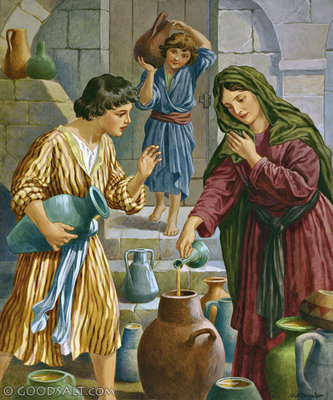
While this may be chalked up to unavoidable genetics, I actually have biblical proof. In Melachim 2 Perek 4, we learn of the story of Elisha and who the meforshim say is the widow of Ovadiah. Her husband had died with debts, and creditors were threatening to take her sons in lieu of payment. 

Elisha asks her what she has in the house, and she says only a small jar of oil. He instructs her to borrow as many empty containers as she can. When she has done so, he says: "Close the door." Then, the miracle occurs, with no witnesses but herself, as the small jar filled the multitude of vessels, enough to sell, repay the debts, and keep her children. 
http://bibleencyclopedia.com/gs400px/stdas0460.jpg
I was once at a shiur when the speaker repeated, "Close the door." Bracha doesn't feel a need for a large studio audience. It has nothing to prove. It's nurtured in quiet, hidden places. 

This is what I thought of when I read, "Are You Really in Love if It's Not on Instagram?" by Krista Burton. 
If you have to keep reminding everyone of how happy you are, something’s not right. Happy people don’t need to announce over and over how happy they are. Happy people just … are. Your friends? They know when you’re in a healthy and loving relationship just by seeing you and knowing you. You don’t need to declare it every time you go online. These constant #relationshipgoals posts doth protest too much.
I have to second that opinion. Why must you announce how happy you are? Who are you trying to convince? Yourself? 

And if you are genuinely happy, then is it the most tactful thing to telegraph your joy to those who aren't? Who may, in turn, become envious? Who will wonder why you are in a blissful relationship while they aren't? 

Because I was on the other side for a long, long time. Every engagement I heard of had two reactions: a small amount of happiness for the couple, and a larger wallop of "Why not me? What am I doing wrong? Am I picky like the harpies say?" 

Everyone gets hysterical about ayin hara. What is it, exactly? The idea is that when one is too much in other people's mouths, it may draw a critical eye upon one. I even heard from Rabbi Glatstein (quoting a source that I cannot recall) that that is why a chosson and kallah go to the cemetery prior to their wedding. 

Solution? Don't put yourself in the mouths in the first place.  

Wednesday, April 11, 2018

"Krazy" Kallahs

It is a complaint of feminists that females are often straddled with different labels for similar qualities than males are. Like how little girls are "bossy," while boys are "assertive." I will concede my niece is bossy. But her brother is a dictator. I don't think the latter term has a more flattering vibe than the former. 

Kelsey McKinney takes umbrage at the moniker of "bridezilla." She claims that "everyone" has expectations that a wedding should be slam-bang amazing, but that the bride shouldn't be assertive in insisting on what she wants lest she be maligned by the above. 
http://www.chicagonow.com/little-merry-sunshine/files/2014/11/bridezilla.png
As someone who just experienced her own wedding, I beg to differ. 

I will concede that in the frum New York world, wedding planning is not as exhausting (even though it is pretty darn exhausting). Our society is set up for weddings, and many matters do not have to be micromanaged. And yet. And yet: 

I never dreamed about my wedding. I fantasized about married life, but not the wedding itself. I had visions of my gown, but otherwise, frankly? Eh. 
https://i.pinimg.com/474x/8b/8a/b7/8b8ab7e5f3d11c3fad0fb8127f66f512.jpg
Additionally, following Ma's passing, I simply wanted this to be a joyous celebration with my family, especially the kinfauna who have been badgering me for a wedding for a decade. In very few areas did I have a strong opinion to voice, and if I did, who says one has to be fire-breathing? What came pretty close to breaking me was seating arrangements, but that left me limp and GERD-ridden (maybe I was fire-breathing), not FURIOUS. 
My sister-in-law noted the difference between two simchos she attended. By Party A, everything was choreographed to perfection. But the hostess was so nervous that the negative vibes affected the guests' enjoyment. However, Party B had a major goof: the power went out. And the hosts laughed. (The electricity came back.)

Party B was a lot more fun than Party A, my sister-in-law said, because it really depends on the energy the hosts exude. 
https://i.pinimg.com/564x/94/42/9b/94429b944fdeb172b1f23a2298451edc--gatsby-wedding-wedding-bells.jpg
Of course there were a few wedding day hiccups. But I refused to let them overpower me or my family. We were going to be happy and mindful, dammit. 

Afterwards, I was surprised how many people told me the wedding was so much fun. Luke observed, "That's what happens when you don't give a—," well, I'll omit the impolite emoji he used. 

A party has to be planned, of course. But it should be enjoyed. By everyone. Including the bride.  

Tuesday, March 6, 2018

How to Stay Sane While Dating: IV

Embrace happiness. Does anyone remember it is a mitzvah to be happy? We sang the songs as kids and everything. Yet many of us falsely associate importance with crabbiness, or allow whatever difficulties we have to suck away all vestiges of joy.

I watched the Israeli mini-series "Mekimi," which is about an anti-religious secular Israeli who becomes religious. SPOILER: She was unhappy and unfulfilled in her life and career, and despite her initial resistance to frumkeit, she eventually succumbs because it is a mitzvah to be happy. The end of the series shows a blissfully glowing woman who chose to embrace joy.  

HOWEVER: 

I made a mistake. Previously, whilst still single, I refused to acknowledge the feelings singles can experience—that I experienced—finding them frivolous and ungrateful in a world that gave us central air conditioning. 

There a gamut of emotions when dating. Shadchanim elicit plenty (annoyance, frustration, anger, in most of my cases). Dates themselves do too (anxiety, worry, nervousness). Sometimes both can summon intense homicidal tendencies. Then there is another emotion. 

We aren't "supposed to be" single, right? We are waiting for another puzzle piece to render us complete, we are told. We feel a yearning, a desire for our other half. It's not about societal expectations. We want, for ourselves, someone special of our own. 

I am not saying that singles should put on a happy face over their angst. Negative emotions should be recognized and named. But they should not be allowed to consume us
What separates us from the animals is that we can choose not to succumb to emotion and behave badly, or lose our faith. We have values, Jewish and moral. 

I was once, um, "complimented" that I am delightfully upbeat and cheerful despite my, you know, being unmarried. I wasn't masking my pain. I had decided some time previously that yes, on the one hand, I am dealing with all the fraught emotions that come with dating, but that is not all what I feel. I also feel gratitude in my family, my comforts, my shoes, and I have my God.  

*Bless TYTT for sending me the above. 

Wednesday, February 28, 2018

Make 'Em Laugh

"Just laugh," my mother insisted, when I would come home with some tale of classmate unkindness. "Whatever they say, just laugh." 

She didn't explain why laughing worked, so I was never really able to force myself to "ha ha" during verbal torment.

Moises Velasquez-Manoff explains why laughter is the best medicine. It's called "humorous subversion"; a German town struggled for years to dissuade neo-Nazis from their annual parade, until they started a tactic of mockery. Instead of legitimizing fascists by reacting with violence, they laugh at them, removing any mamashus they could have achieved. 
Humor is a particularly powerful tool — to avoid escalation, to highlight the absurdity of absurd positions and to deflate the puffery that, to the weak-minded at any rate, might resemble heroic purpose. . . 
By undercutting the gravitas white supremacists are trying to accrue, humorous counterprotests may blunt the events’ usefulness for recruitment. Brawling with bandanna-clad antifas may seem romantic to some disaffected young men, but being mocked by clowns? Probably not so much.
The first Nazi, Haman, lost whatever honor he had managed to accrue when he was forced into playing groom for Mordechai's horse. Then there's the meforash regarding being showered in excrement. 
https://scpeanutgallery.files.wordpress.com/2017/12/haman-honors-mordecai.jpg
Many of our holidays revolve around our salvation from harm, yet only Purim is about hedonistic laughter and bliss. Children are encouraged to laugh at the initially terrifying villain who died a buffoon—perhaps because we should not give mamashus to flesh and blood enemies, only to God.  

Thursday, November 30, 2017

There is Hope for Happiness

David Finch's marriage was on the rocks. His wife, Kirsten, was bewildered; she thought her husband had changed, when in reality he had reverted to his original form. Because of her specialty, she figured it out: Asperger's. 
https://yt3.ggpht.com/-8Y_Zt8IA2Xk/AAAAAAAAAAI/AAAAAAAAAAA/dw-91xVclIk/s900-c-k-no-mo-rj-c0xffffff/photo.jpg
Oddly enough, that diagnosis helped immensely. Kristen was the perfect candidate to help. 
Autism spectrum disorders are not cured with medication, but their associated behaviors can be worked with. What I needed initially were communication skills and a sense of empathy, neither of which, in my case, had been factory-installed. Fortunately, I was living with a highly qualified therapist with a strong motivation to help. Her objective: re-invent our marriage. Her first mission: figure out how to get me to communicate.
They tackled that. And empathy, too. 
Acquiring empathy seemed a taller order, given that my Aspergerish point of reference is myself in every circumstance. (Someone just slipped and killed himself in the men’s room? I see. How long until they get him out of there so I can go?) But I’ve learned that people can develop empathy, even if by rote. With diligent practice, it can evolve from a contrived acknowledgment of other people’s feelings to the real thing. . . Soon these started to feel like real rather than manufactured emotional responses.
If someone who is born incapable of communication and empathy can learn these skills, I'm sure those who are "normal" can perfect them as well.

Modern Love celebrated an anniversary by reprinting this article, along with a follow-up with Kristen. A woman writes to her in frustration and sadness, that she believes her husband has Asperger's and she's depending on his changing for her happiness. 

Kristen, however, drops some unpleasant truth on her: He is not responsible for her happiness. She is. 

During one particularly frustrating encounter with David's "quirks," Kristen was able to pull back. 
I zoomed out to see that Dave was a human being, someone’s child, someone’s brother, someone’s father. When I took that bigger view, I found compassion. That may sound like a simple revelation, but it’s anything but. . . until [then], I hadn’t once told myself the story of how I had been so judgmental. I had to zoom out to see that story line unfolding, and once I did, I wanted to revise it.
I knew for sure I didn’t want to feel mad all the time. I didn’t want to be so resentful. And I really, really wanted to figure out how to like my husband again.
I discovered this myself a few years ago, with family members. People are different, and they aren't cognitively trying to torment others, they see and react in other ways than I see and react. 

I learned that I can't relate to people on my terms. I have to relate to them on theirs. That means not saying what I want when I want in the name of "honesty." It means holding back and revisiting issues from a place of calm and thought (Rabbi Tatz says this too). 

Personal happiness cannot depend on others. It comes from within. It means flipping the perspective, valuing others strengths instead of harping on their weaknesses. We are all human. We all have both.  

Wednesday, October 18, 2017

Ugh, That Word

Americans are obsessed with happiness. It's in the Constitution, for crying out loud. Yet it is this very frantic pursuit that is making us anxious, according to Ruth Whippman. British by birth, she never gave happiness a thought until she moved to the U.S., and it became a never-ending conversation.

There are two anecdotes of Americans clashing with the French over happiness—the book reviewer, Hannah Rosin, being called a "stupid American" for smiling, and another from Pamela Druckerman, an American living in France. When her daughter's teacher asked her to give a presentation on being American, she concluded her talk by teaching the children "If You're Happy and You Know It." The teacher, puzzled, asked "What does it mean, 'appy?" 

Is happiness like kavod, that the more one runs after it, the more elusive it is? How does one achieve kavod? By sitting quietly, a letting it approach one gingerly, on little cat feet. 

Judith Newman analyzes a pile of books on the subject. She's happy, she says, because she is "The Queen of Low Expectations." Now that she mentions it, that has been working for me, too. 
 
The various titles she slogged through recommend different methods for happiness achievements: linking happy pastime with to-dos; witnessing moral good; gazing into a doggie's eyes; love yourself and everyone; live within your means; stop comparing yourself to others and just don't give a hoot. 
https://cdn.simplifiedbuilding.com/images/projects/build-your-own-sukkah_610.JPG
Via simplifiedbuilding
As Jews, we just emerged from Sukkos, when we are commanded to be happy. A lover of yuntif, I'm glad to report I perhaps not the divine simcha that our greats are able to achieve, but certainly happiness of sorts. To be commanded to emote is interesting. But isn't it a joy to celebrate Him? 

Wednesday, September 20, 2017

A Thankful Year

Rabbi Glatstein said in a Rosh Hashana shiur that we cannot ask for a good year until we have thanked Hashem for the past one. 
 https://goodmotherdiet.files.wordpress.com/2014/09/apple-honey-challah20.jpg?w=625
In that theme of gratitude, I can link a Thanksgiving article, I think: Frank Bruni's "One Holiday, and Countless Ways to Say Thanks." 
Someone, usually my Uncle Jim, says a grace of greater length and intensity than the ones at other holidays. He speaks of God and gratitude, demonstrating that if we look at our lives through the right lens, we see blessings everywhere, and they outnumber obstacles.
Gratitude is a feat of perspective. When I talked with other people recently about their ways and whys of giving thanks, I was most struck by how often their rituals arose from travails, not triumphs. Hardship was handmaiden to an examination of all that remained good, all that they should cling tight to.
I'm speaking from experience here: One can find hakoras hatov even when everything goes to hell in a handbasket. It can be done when one sees the Hand of Hashem in all things. Hashgocha pratis, not hashgocha klalis. The Eibishter is in your life as much as you allow Him in.   

Thursday, January 26, 2017

Pick Your Hard

"Being healthy is hard. Being unhealthy is hard. Pick your hard." —Marilu Henner

Marilu is just jollying you along, folks. You wouldn't believe it, but being healthy isn't so hard. What is hard, I'll admit, is the initial step. That step . . . that's hard. But after? It snowballs into ease. 
https://www.healthydietadvisor.com/wp-content/uploads/2014/08/eatright.png
Here's what you can look forward to:
A study of more than 12,000 Australians revealed that the benefits of a produce-rich diet extend beyond physical health. With every added daily portion of fruits or vegetables (up to eight), the subjects' happiness levels rose slightly. The researchers calculated that if someone were to switch from a diet free of fruits and vegetables to eight servings per day, he or she would theoretically gain as much life satisfaction as someone who transitioned from unemployment to a job. The exact reason is unclear, but it may be related to the effect of carotenoid levels in the blood.—Samantha Rideout, Reader's Digest 
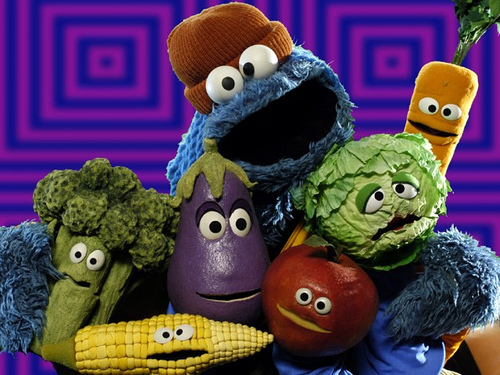
I was going about it wrong. I thought I had become a happy(er) person because I was making a point to be cheerful. I'm sure that helped, but burrowing daily through the vegetable crisper could have pushed it over the top. 
https://kristalpeierlsofwisdom.files.wordpress.com/2013/05/vegetablemuppets.jpg
Doctors, who were usually brought in to treat the aftermath, are now getting educated in healthy meals so they can, in turn, educate their patients.

Eight months ago, Mr. Adams learned during a health checkup for abdominal pain that he had Type 2 diabetes. He said his average blood sugar level was so high that the doctor was surprised he had not already lapsed into a coma. His hemoglobin A1C level — a lab test that shows the average level of blood glucose over the previous three months — was 17 percent, about three times normal. He wasted no time in tackling his disease with fervor. Spurning the American tendency to treat every ailment with medication, he instead explored the body’s ability to heal itself.
Mr. Adams, a 56-year-old former police captain, now needs a new publicity photo. He no longer resembles the roly-poly image on official posters. By adopting a vegan diet, preparing his own meals and working exercise into his everyday routines, he’s shed 30 pounds and completely reversed his diabetes, a pancreatic disorder that can lead to heart attacks, stroke, nerve damage, kidney disease, visual loss and cognitive impairment. Within three months, his A1C level was down to a normal 5.7.
(Exercise is 20% of a healthy lifestyle. Become friends with your local fruit store first before investing in a walking desk. Going vegan isn't required, either.) 
“I loved salt and sugar and often used candy to revive me when I felt lethargic,” Mr. Adams confessed. “But I discovered the human palate is amazingly adaptable, and after two weeks without salt or sugar, I no longer craved them.” With his new lifestyle, he said he has so much energy he no longer needs an edible midday pick-me-up.
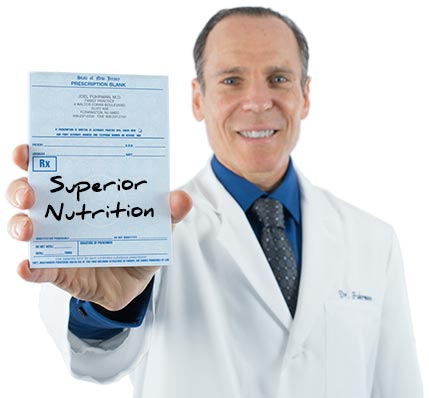
It's schnorring time on PBS, so I was blasted with Dr. Joel Fuhrman reruns this past weekend. But hey, you already know about this annoying side of me by now. 
https://www.drfuhrman.com/images/photo-DF-with-prescription-pad.jpg
And it really isn't hard for so long. Really

Wednesday, January 25, 2017

Happy Choices

Sometimes a random scene from a random show sticks with me. Like the episode "Blood is Thicker Than Liquor," of the defunct Girlfriends

Toni, the unlikable, self-centered real estate agent who fought her way up from her working-class upbringing, has it out with her sister Sherri. While Toni lives a glamorous life in L.A., Sherri lives at home, cares for their alcoholic mother, and works at the local Walmart knock-off. 

Toni, in typical Toni fashion, disrespects Sherri for staying. She thinks Sherri is angry at her for "having the strength to leave." Sherri retorts that Toni didn't have the strength to stay. 

But she admits that she resents Toni for leaving, but not how she thinks. Sherri reminds Toni that she was the one who raised her (as their mother was usually out of commission), and now Toni belittles her. Chastened, Toni thanks her, then offers her help to "get out." 

Sherri looks at her in surprise. "Toni, I chose this life. I'm happy. I just want you to respect that."

People assume the oddest things about me. They don't realize that I live my life the way I want to. 

While waiting for the Novocaine to kick in, my dentist and I chatted about traveling. She can't stay home, even on a day off—she has to get out of the house. Me? Pajamas are my default state. 

She's miserable where I am happy, and vice versa. My idea of an accomplishing Sunday is concocting a fresh batch of sauerkraut and watching 60 Minutes. (Now you know why I blog anonymously. If I admitted such a thing in public, I'd be pilloried.) 

Certain lifestyles come into fashion, and certain activities are considered a "must." Some people don't know themselves, so they are puzzled why they aren't happy on a spontaneous getaway with a bunch of friends. News flash: Maybe you are happy in your own bed, in your own home. It's not a crime

For those "stuff-doers," I wish you well. I can even summon some tolerance for you folk. 

As long as you leave me alone.

Tuesday, January 24, 2017

Come to the Bright Side

I'm no optimist. If everything is going well, I fret over what could go wrong (I'm working on that). If everything is going badly, well, that makes sense. Yet with a global view in mind, I can assuredly attest that all is pretty much good.
http://data.whicdn.com/images/96185018/original.jpg
Politicians (of both ends) have been predicting Ragnarok for a while now—needlessly—as Gregg Easterbrook reported in May ("When Did Optimism Become Uncool"). 
But the core reason for the disconnect between the nation’s pretty-good condition and the gloomy conventional wisdom is that optimism itself has stopped being respectable. Pessimism is now the mainstream, with optimists viewed as Pollyannas. If you don’t think everything is awful, you don’t understand the situation!
The frum world is awash with "crises," right? (Eye roll.)
Pessimists think in terms of rear-guard actions to turn back the clock. Optimists understand that where the nation has faults, it’s time to roll up our sleeves and get to work. . . 
What's all the kvetching about? Do something, or shut up. Arthur C. Brooks "We Need Optimists") writes fondly of Reagan: 
Reagan’s “Morning in America” campaign theme is an obvious example, but his optimism went much deeper, to his faith in Americans’ desire to fight for people. “Together, let us make this a new beginning. Let us make a commitment to care for the needy,” said Reagan at the 1980 Republican National Convention in Detroit as he accepted the nomination of his party. “We have to move ahead, but we’re not going to leave anyone behind.”
Reagan was not a cheerful milquetoast. He was perfectly capable of a vigorous fight — just ask the Soviets. But he studiously avoided being grim about it. He was Wordsworth’s happy warrior, “Whose high endeavours are an inward light / That makes the path before him always bright.”
Reagan’s optimism should not be understood ideologically; it was simply about people and our potential. He possessed an unflinching belief that all people — the poor, children, the elderly — were human assets, waiting to be developed so they could earn their success.
In contrast, pessimists see people as liabilities to manage, as burdens or threats that we must minimize.
"Those people." Ah, "those people." Whoever "they" may be. Easterbrook continues: 
Recently Warren Buffett said that because of the “negative drumbeat” of politics, “many Americans now believe their children will not live as well as they themselves do. That view is dead wrong: The babies being born in America today are the luckiest crop in history.” This was not Nebraska folk wisdom; rather, it’s sophisticated analysis. 
Nicholas Kristof informed me that in terms of world poverty, it's dropping every day. I think people who worry about their children not dying from perfectly preventable diseases get to complain first, don't you?  

Thursday, January 5, 2017

My Bad

  • Hold yourself accountable—you'll be happier
People tend to externalize when they encounter problems—to look beyond themselves and find fault with other when things go wrong. Society's mantra is "There's plenty of blame to go around!" You can hear it echo in the reactions to the election. But when we choose to hold ourselves accountable, we're more likely to be happier and successful in work and in our relationships. 
 
Life is filled with traps that let people avoid personal accountability. It's easy to make excuses, play the victim, feel a sense of entitlement or procrastinate. Taking ownership for your actions and reactions lets you avoid anger, cynicism, envy and frustration and instead focus on positive emotions and healthy living. Our daily energy is finite, so why waste one iota on negative thinking that leads to unproductive behaviors? 
 
Research has shown that when employees feel accountable for their work, they are more likely to contribute to solving problems and achieving organizational goals. Believing that if others would change, everything would be better—and then trying to force them to do so—drives people apart. The fastest way to enhance relationships is to remove the blame that breaks them down. Whether it's selling more products, building stronger connections or making political change, owning up and taking responsibility can help us move forward. 
—John G. Miller in Time Magazine
 
I had learned that Yehuda got the melucha because he took responsibility twice: in the incident with Tamar, and by bearing the burden for the selling of Yosef. (Perhaps it was even three times, when he insisted on being used as a hostage instead of Binyomin.) 
https://upload.wikimedia.org/wikipedia/commons/8/88/'Judah_and_Tamar'_by_Ferdinand_Bol,_1653,_Pushkin_Museum.JPG
I have also been learning that by fessing up after messing up, whether accidentally or intentionally, is oddly freeing. There is no protracted argument with the transgressed party; what is there to say after accepting fault? Getting defensive or offsetting blame extends the hurt and damage, with no upside. 
 
Today's role model is: Yehuda. Let's embrace "It's on me." 

Tuesday, January 3, 2017

Artsy Insights

Marina Abramovic, the . . . er, unconventional "artist," was interviewed in Time magazine. When Belinda Luscombe asked about her pain-inducing means to express herself, she replied: 
I always believed that people don't do anything really important from the state of happiness. Because happiness is to say that you don't want to change. 
Hm. Well, consider the initial stages of an ideal relationship. If both are happy, chances are they have been accepted as they are. Ergo the eye-gazing, ubiquitous grins, etc. Yet after marriage, there are adjustments. Some change, by he and she, will be needed to keep the boat steady. They aren't changing from a place of happiness; they are changing from a place of meaning.

Happiness = contentment = complacency. As we learn through Yaakov, however, we are not here to be content. 

Another point that piqued: 

BL: Why in history are there so few prominent female artists?

MA: Because, unfortunately, women are not ready to sacrifice as much as men. Because women want to be loved and to have a relationship, and to have children. You have only one energy in your body. And that energy will go where you focus it. 

Those great male artists were, for the most part, jackasses. In my belief, if "great art" emerged at the hands of a sadistic egotist, it's not great to me. The ends don't justify the means. 

As for her "unfortunately," I beg to quibble. Is wanting to be loved and to have children something to be dismissed as unimportant? Is that energy focus invalid? Not only in terms of art, but of career, too. We recall the "great artists," their work is prominently displayed. But does it matter

Human relationships matter.

Tuesday, December 6, 2016

It's Okay to be Happy

"I'm just so tired from the l'chayim," she sighed. "and this hall for the vort is so expensive. Finding dresses for it was such a hassle. The place we wanted for the wedding is all booked up; we have to use another one, which I don't like. . ." 

I felt like reminding her: Your daughter is engaged. Doesn't that qualify as a happy occasion? Does this come off as "happy" to you?

Humblebrag may apply here, but then I had second thoughts coming across an article in Glamour (don't judge me, the subscription was free with a Sephora purchase): "My Dirty Little Secret: For Once, Actually I'm Happy" by Abigail Libers. Her opening: 
"So how are you?!” a friend asked me at brunch recently. I hadn’t seen her in a while and thought for a moment. “Great!” I replied. “Things have been going really well for me.”
Even I was surprised by my response; it’s rare that I don’t have a complaint at the ready. Apparently my friend was taken aback too. “Really?” she asked. “That’s awesome. I’m happy for you.” And there was an awkward pause. In the silence I realized I had violated an un­­spoken code. The answer to “How are you?” is supposed to be “I’m so busy and stressed!” And indeed, when I asked what was new with her, she stuck to the script, rattling off complaints: annoyed with her mom, drowning at work.
Contemporary culture perversely equates "importance" with being stressed and busy. Takka, humblebrag is the usual response to "How are you?" (another reason why I don't ask). Yet the state of happiness can also tag along ubiquitous guilt for the ride, as Libers experienced. 

Not only is there guilt that I have joy while she does not, there is also fear: Happiness is usually so elusive that when it comes, there is anxiety that it was a mirage, it will be taken away, it is too good to be true. You know what? This is what I have decided: So what? 

Happiness doesn't last, this we know. Then just enjoy it while you got it. I heard this idea from Charlie Harary—and he was quoting someone else—that we should live life like kids at suppertime. They negotiate with Ma for how much chicken and vegetables they have to consume before they get dessert. When they get the dessert, they revel in it. Tomorrow will be another tedious healthy meal, but tonight, let's live it up. 
https://woolworthsbabyandtoddlerclub.com.au/images/imageLibrary/is-your-child-eating-too-much-sugar-454.jpg
Got happy? Don't overthink it. Wallow in it, inhale it, savor it. It doesn't have to be rubbed in anyone else's face, mind, but park the guilt and worry at the door.