Showing posts with label Shidduch Flick. Show all posts

Monday, May 15, 2023

Jewish Matchmaking: A Review

Jewish Matchmaking! Hella yeah, did I binge it. Then as the credits rolled, I exhaled: Thank. God

Why? Because we look good for flipping once! 

There has been some snark online, quibbling about details, but I don't care! 'Cause we look good!

Aleeza Ben Shalom was an excellent choice as a shadchan. She's not remotely like the stereotypes that I usually dealt with, who were more like Sima Aunty from Indian Matchmaking

What was refreshing about Aleeza was that she did not shame her clients for having criteria—even if that criteria was seemingly ridiculous. While I did once believe that standards have to "make sense," I've realized that the world is a big place, and shallow morons (both male and female) also manage to get married.  

The clientele are primarily reform, traditional, or "flexidox" (as Aleeza calls it) which I thought was refreshing. Being Jewish and marrying Jewish is important to people even if they aren't 100% practicing. And even those singles mentioned God, unlike the other examples I cited in my previous post. 

It's reality television, so of course that means there is definitely a scripted element. Let's be honest here: finding someone to go on the show, then finding someone who's willing to date the first someone on that show, is a big ask. As I watched these dates happen, all I kept thinking about was that these people are being followed by cameras along with a boom floating above. It's not remotely real life.

The one frum candidate, Fay, says on her IG account that she went on the show for the purposes of showing the Netflix world how we operate, not to actually meet someone.

People were whining online, "Oh, why didn't Fay keep dating Shaya? They were so great together!" Like, please.  It was all manufactured. You saw like 10 minutes, tops, of their interactions. Shaya is engaged now in real life, so there you go.

No one still seems to be together from the show, but I didn't expect them to be (although I was rooting for Stuart and Pamela). A matchmaker is not an all-knowing, all-powerful deity who can deliver your someone on a silver platter. She's an avenue of possibility, no more, no less, than others.    

Wednesday, May 26, 2021

Shidduch TV: "A Match Made in Heaven"

 I don't even recall how I stumbled upon this series, "A Match Made In Heaven": 


It was an interesting watch, if an often frustrating one. There was one interaction that jumped out at me, between . . . was it Meirav? I don't remember all the names, you'll get there, and her friend Faigy. 

Meirav (?) was saying that is so bummed after a bad date, while Faigy was claiming she is relieved, that she is one step closer to her bashert. Each were surprised at the other's perspective. 

I fell completely into the "bummed" camp. Why would I be optimistic after a string of bad dates? All it did was ignite the nasty little voice inside that said to marry the next thing that was just slightly better than them, 'cause honey, you ain't gonna do any better.

Luckily, the nasty little voice was very wrong.  

Monday, March 22, 2021

Prince Boring is King

I wasn't so jazzed about Bridgerton. I'm rather surprised at myself, considering my teenage diet of regency romances, but I found it frustrating. Just one aspect: the women claim to want love, but simultaneously, the higher title, the better. Ladies, you have to pick a lane. 

I have no intention of spending a post picking apart Bridgerton—I'm not that much of a killjoy—but I came across this article about how the Prince would have been the better choice for Daphne, title aside.  

But despite their chemistry, I found myself secretly, silently rooting for Daphne to say yes to her other suitor: unmysterious, dully predictable Prince Friedrich of Prussia. Go with the nice guy! I pleaded. Make it work! In the language of romance—settle. Settle! Settle for happiness, and not just the idea of it.

The idea of a love match—a Darcy and Elizabeth ending rather than, say, a Charlotte and Mr. Collins compromise—is a central theme in the show, and one I very much agree with. But while most marriage plots end with a marriage, Bridgerton is interested in what happens after the knot has been tied. And that is where things can get complicated.

OK, I have to admit, I don't understand this concept of "settling" for the nice guy. I wanted a nice guy. I searched for the nice guy. Thank God, I found the nice guy. Bad boys? Cool dudes? No thank you. I've never had any interest in them. I'm guessing that they're initially exciting, but they get old reeeeeaaaaaal quick.

Rooting for the stable guy doesn’t mean marrying some dud over your true love. It’s not like I think Buttercup should’ve taken a second look at Humperdinck and said, “Wow, this guy seems to have better prospects than a pirate—better stick with him.” But while Daphne and Simon proved me wrong, for a while there he was giving off some serious Willoughby from Sense and Sensibility vibes. And fans of the novel know, it’s Col. Brandon, Marianne Dashwood’s older, kinder, overlooked suitor, who turns out to be her real soul mate after the dashing Willoughby throws her over. It’s the difference between the intensity of romantic love and the sustaining love that carries you forward when you are in the foxhole together, facing loss and sorrow and hardship and boredom and birth.

I've seen a few gals I know, capable, steady women, who married guys who have the whole brooding Marlon Brando thing going for them, and I wonder—is he going to be supportive when you have a bad day at the office? Or will he shrug and head out for a smoke?

Eons ago (well, it feels like eons) I read a book called Kristen Lavransdatter and wrote a post about it. It pretty much backs Nordberg's point. It seems to be a favorite angle with Austen too: beware of the charming, handsome smoothie. Colonel Brandon is one of my favorite characters (while I'm a fan of Alan Rickman, he was already 49 in the 1995 version, so that was not good casting. David Morrissey in the 2008 adaptation suited me perfectly); he proves himself to be the reliable, caring, considerate suitor that Marianne eventually appreciates (or marries on the rebound. I don't think he cared). 

Monday, November 2, 2020

Culturally Yours, Mine, & Ours

As we know, we are not the only peoples on earth who utilize shadchanim. South Asians—Indians and Pakistanis, for instance—also dig them. 

Considering how my experiences with shadchanim were less than ideal (they tended to set me up with people who were not remotely on point, then demanded to know why I was saying no), I wondered if their matchmakers are better. Then I thought of the reality show "Indian Matchmaking," where it looked like the same six people were on rotation, so I guess not. 

From reading this article, there is little differentiation in the Indian world to being set up by a matchmaker or a family friend—a blind date is a blind date, like by us. The lovely woman who set me up with Han is a friend of my relative and a machanteneste somewhere on his side.

The interviewees in the article make a point to clarify that while the term "love marriage" is applied to couples who met on their own, it's still the same love story for those who were introduced through a matchmaker. It's not necessarily any less romantic as it would be if they met cute. Like by us, too.

In the same issue of Sunday Styles, there is a Modern Love story by Pakistani woman who grew up in the US. After seeing Bend It Like Beckham, she believed it would be possible for her to end up with a white man, and preferred not to date men of the same ethnicity. 

She moved to Pakistan for work, where it wasn't exactly easy to meet white men; when she became friendly with a fellow Pakistani, she didn't initially see him at all in a romantic light. 

I couldn’t put my finger on what finally attracted me to him. For starters, the brown culture signaling of my imagined biracial relationship wasn’t necessary because we were both brown. Gradually I realized that meant I didn’t have to do my exhausting, race-conscious performance either, the self-deprecating jokes I would mutter about terrorism (or whatever stereotype came to me in the moment), the reflexive ironic shield I felt I needed as the one Pakistani in the crowd. He understood without me having to say anything.

When I was dating, I was hoping for someone who came from a somewhat similar background. When I would go out with guys who were more American in upbringing, I would carefully edit my language lest a Yiddish word or phrase would slip out. If one did, they would look at me in annoyance. 

With Han, I don't have to do that. Especially since he understands Yiddish better than I do, and appreciates my fondness for quoting grandparents (he does the same).

After months of dating, I saw how much space that performance had taken up in my previous relationships: Without it, I was vulnerable and prone. With the weight of constant posturing suddenly lifted, I felt an intimacy I could never achieve with the not-brown guys. Ali and I are married now, and it’s the most comfortable I have ever felt with another human being.

What’s funny is that, in writing this story, I realize I have penned the exact type of propaganda immigrant mothers peddle to keep their daughters in the culture. Before Ali, my mother was fond of telling me stories of some distant friend or relative who married a white man and then divorced, only to find happiness once they remarried a Desi.

This isn’t that, but it’s not not that either. I’m not attracted to my husband because he’s brown, but I also know we wouldn’t have the relationship we have if he weren’t. That’s not to say we’re so similar; if anything, the fact that he grew up in Pakistan while I spent my youth in the Midwest separates us more than most of my past relationships. But what we share in common — an unspoken understanding of a culture that shapes the way we are, whether we like it or not — constitutes a bond much stronger than the rest of it.

You can't hide where you come from, no matter how much you may try. There's a difference being who you are and going into a relationship where your differences are accepted and even celebrated; it's another to subsume oneself in the futile attempt to "fit in." 

I've been teased and even mocked for my stubborn adherence to my heritage, especially since I don't even speak Yiddish or Hungarian fluently. But I'm proud of it, and identify with it, and I hoped to be with someone who wouldn't expect me to suppress it. I did end up with someone who is equally proud of his own background—and we enjoy the fact that our grandparents even knew each other.

Wednesday, July 29, 2020

Indian Shidduchim

I don't usually binge tv. I pride myself that I don't binge tv. 

Then I binged (to the best of my mothering ability) the end of Season 3 of "Offspring" (so much suspense!). Last week I clicked on "Indian Matchmaking" (pretty lame title, I know) and plowed through 8 episodes in 2 days. 

It's supposedly a reality show, but we all know reality shows aren't really "reality." Content is carefully edited for maximum impact. Drama is often cultivated to keep things interesting. 

There also begs the question as to what sort of person wants their lives broadcasted on international screens. 

The show centers around Sima, who claims to be "the top matchmaker in Mumbai" (can that be verified?) and her travels around the world to meet various clients. 

A common complaint by Sima is how her clients expect too much, they want the perfect person that doesn't exist, that they must be more flexible and willing to compromise. Take Aparna, who is located in the US. 

Aparna, initially, doesn't come off as very likable. She's not a cheerful sort of person. Sima notes her "negative vibes." Aparna tells Sima what she's looking for, and frankly, I didn't think she was being unreasonable. She even says what she doesn't need—funny. 

Sima then sets her up with someone who barely meets her criteria—probably another way to generate some drama. No surprise, Aparna is not interested in him. 

As the show goes on, Aparna becomes less grim, more smiley, but no less specific about what she needs. Why should she be? She actually knows herself.

Then there's the India-based Akshay. He makes it quite clear that he's not interested in marriage yet, but his mother wants him wed. Akshay is obviously dragging his feet while his mother is pulling the ol' Jewish guilt about her blood pressure. 

It's kind of painful to watch Akshay in action, as he is not a natural in front of the camera. Listening to him attempt to make conversation with a girl is torturous ("So, do you like dogs?").

Then Nadia. Nadia's "issue" is that while she's ethnically Indian, her family has been living in Guyana for generations (they are now in the US). Some Indian men find that off-putting. But she's definitely who everyone (the audience) has a crush on—she's  gorgeous (those highlights!), bright, and bubbly (but definitely not flaky as she is an event planner). She's totally the opposite of Aparna. Yet Sima sets them both up with the same guy, Shekar. In fact, the same three American based candidates keep popping up. It makes you wonder how many singles Sima actually knows in the US. 

So here's the kicker: none of the people featured on the show actually ends up with a relationship. The one engagement, which is loftily proclaimed, was called off yet that detail was not included in the show (thank you Internet, for the rebuttal). 

Han was wondering why they call it "arranged marriages" when it's really not anymore. It's like us, shidduch dating, which connotes a matchmaker. Akshay had a hundred girls suggested to him, but he rejected them for nebulous reasons (because he doesn't want to get married yet! He said so!) 

It was an easy, relatable watch, but the end point is the same for us: a matchmaker is not a miracle worker. She is not an all-knowing being who can magically select one's soulmate from the mass of humanity. She flings spaghetti against the wall to see what sticks. 

So so familiar . . . 

Monday, January 14, 2019

Shadchan Documentary

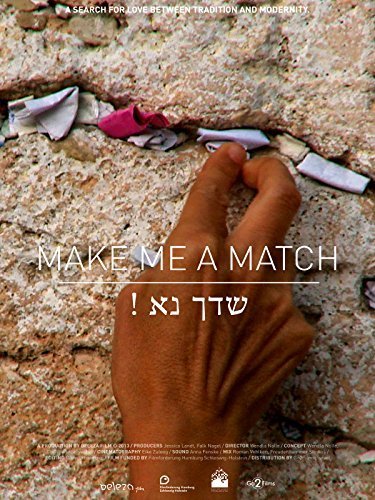
I initially planned to rewatch "The Wedding Plan," but opted for the suggestion Amazon offered, "Make Me a Match," a documentary about three singles and two shadchanim in Israel.
https://66.media.tumblr.com/77acab8fc87164321a5c604e61973831/tumblr_nuc1zcYvrJ1rootoqo1_400.jpg
Technically, it's about an engaged "older" woman (34! Heavens!), an American aliyah-nik, and a divorcée

I was really turned off by the scene when the divorcée meets with her shadchan (she possesses a well-known reputation, and also set her up with her ex), who crudely describes her best option: Pounce on a widower! 

When shidduchim are rendered as such, as survival of the fittest, I want to puke. Is that how it works? Play the game, roll the dice, be there at the right time, and then you'll get a spouse. 

Gross. I wouldn't want to marry like that.

Ortal, the spunky gal whose wedding is the opening scene, was told by a rabbi to daven for 40 days by the Kosel. She wasn't eager to do it—it was winter, parking sucks, but she davened wholeheartedly, asking Hashem for His salvation. Before the time was up a rabbi called with her shidduch.  

I like that story a lot better than "stalk widowers." Shiver. 

Monday, December 3, 2018

Shidduch TV

Yes, I know, I'm about ten years behind the times, but I'm now watching Srugim
http://www.theculturemom.com/wp-content/uploads/2014/08/srugim2.jpg
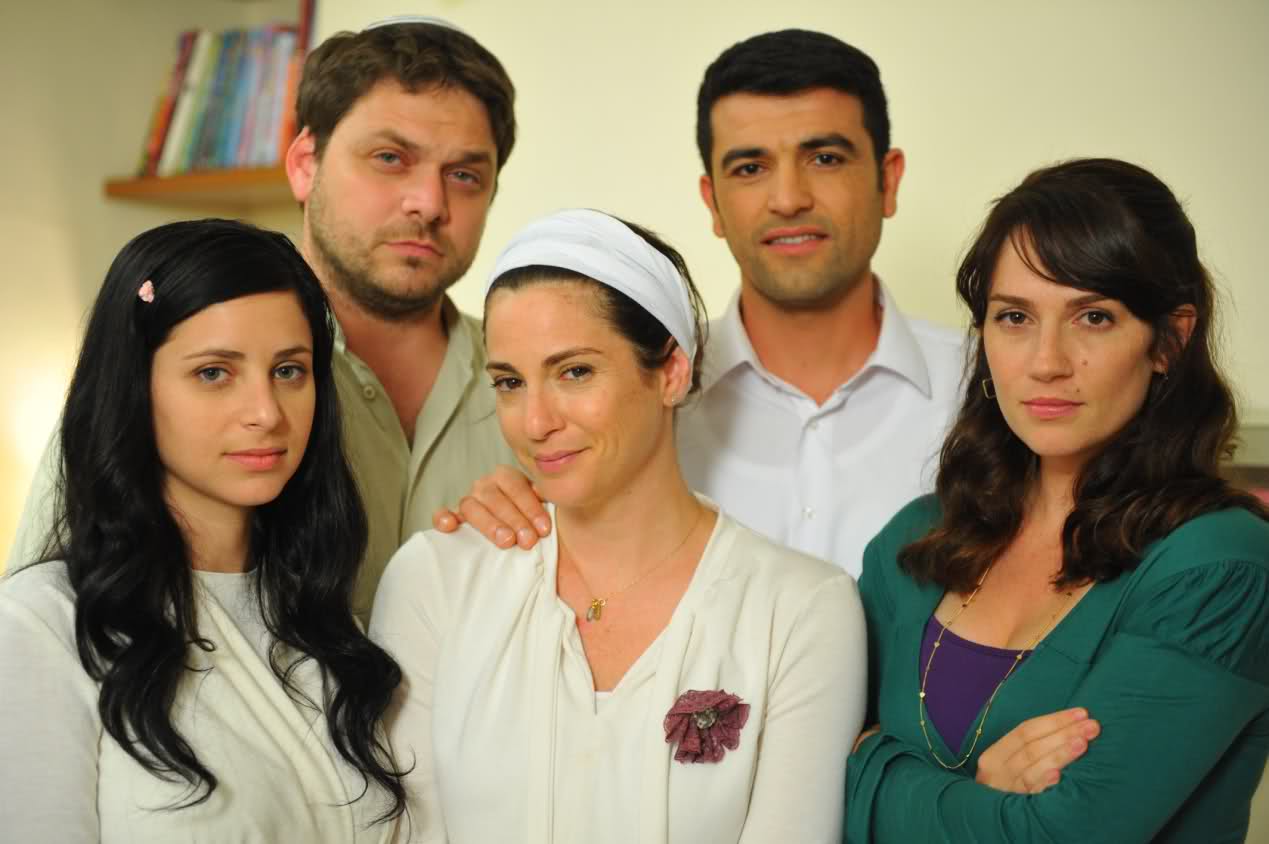
I asked Han if he had ever watched it, and he said he had started to when he was single, but found it too depressing. 

I totally get that. 

The show does bum me out. It cuts a little too close to home. It also doesn't help that I don't really find the characters . . . likable.  

Reut is humorless and sharp-tongued. Nati is self-absorbed, casually churning through dates without care, frightened of any "real" connection. Yifat is hard yet brittle, mooning over the nonreciprocating Nati.

Even the ones who are nice(ish) make pretty bad mistakes. Hodaya, who comes from a home more to the right (rabbi's daughter) than the life she's currently living, is constantly operating under a cloud of embarrassment. She dodges family members on the street, afraid of their reaction to her jeans. She's equally ashamed to tell her chiloni boyfriend that she's religious, even when she breaks up with him over it. 

Amir is a recent divorcee who tries to do the right thing, but is finding it frustrating as women are turned off by his previous marriage. That also leads him to goof up. 

I realized while I was talking with Han about it why it's a bummer: it encourages the notion that singles are screw-ups (they do say "dofek" a lot). They're single because they can't get their acts together. Which isn't fair to the rest of us screw-ups. Sorry, singles.

And yet, I'm addicted. It does remind me, all too keenly, of those years of unknowing, when you're not sure what you are "supposed" to be doing, flailing and praying. 

Maybe because us frummies have few entertainment outlets that display our lives that I'll take it and run. 

Monday, October 15, 2018

Shidduch Flicks

1. Remember when I was gushing about TooYoungToTeach's book recommendation, The Guernsey Literary and Potato Peel Pie Society? So Netflix has a movie adaptation of it. 
https://i1.wp.com/www.thelastking.net/presshere/wp-content/uploads/2018/04/LKP-GLAPPPS-CAST.jpg?fit=960%2C540&ssl=1
My initial reaction was EEEEEEEE!, and I may have talked myself into staying home sick (I kid, I was actually sick as a dog) in order to watch it. 

You will enjoy it if you haven't read the book first. Books tend to ruin movie adaptations (any exceptions, please let me know). 

There was so much more delicious backstory and character development in the book that I was left wanting after the credits rolled. Yet I must honestly mark it as a "Shidduch Flick," right? 

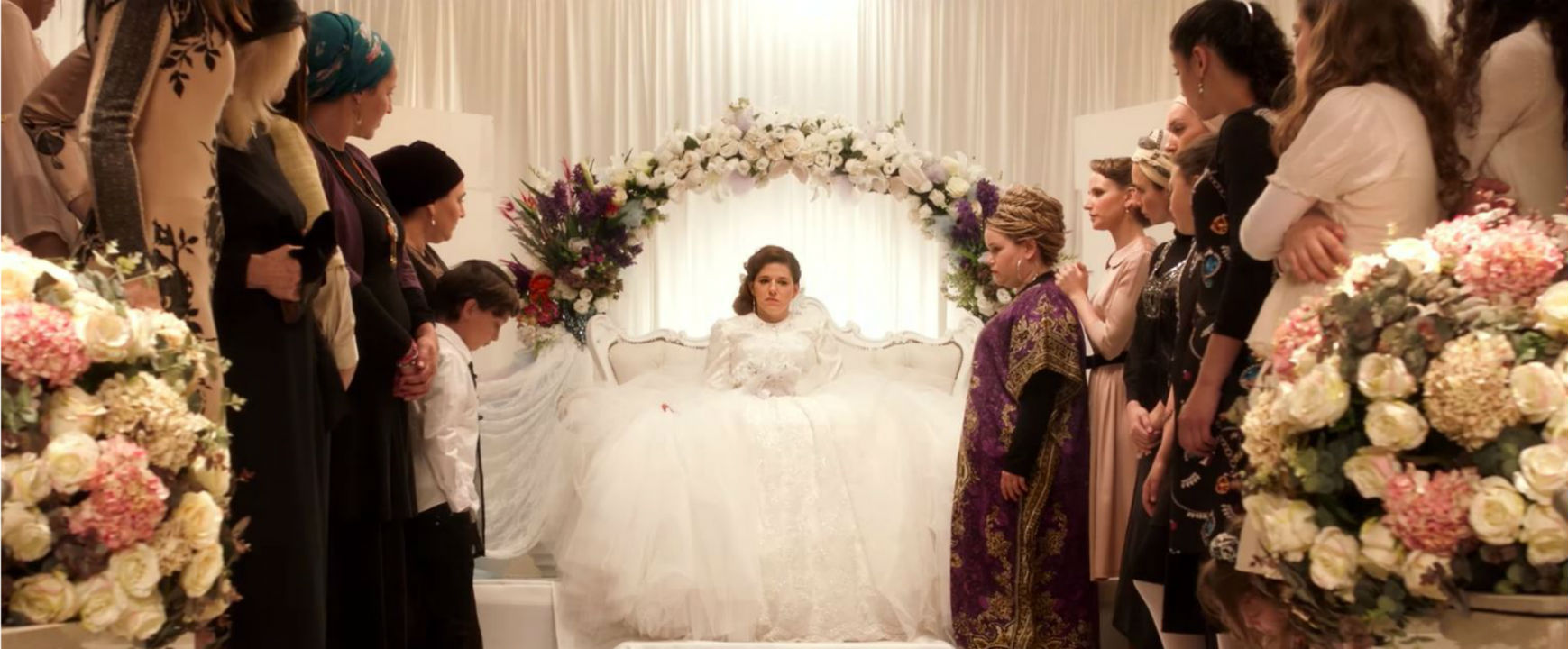
2. I have wanted to see Rama Burshtein's second film, The Wedding Plan, for a long time now. It helped that there was a glowing NY Times review. Now available on Amazon Prime!
https://dallasfilmnow.files.wordpress.com/2017/05/dfn-theweddingplan-720.jpg?w=1739&h=720&crop=1
I was ensnared by the opening scene, when the 32-year-old Michal meets with a—well, I'm not sure. Ayin hara lady? Kabbalist? Mystic?

The woman asks her bluntly, while performing a kinda gross ritual that I hope is not remotely based in Judaism: What do you want? 

Michal answers standard responses: I want to get married. I don't want to be alone. Love. To please God. To each, the kabbalist scoffs and says, "Stop lying." 

Eventually pushed, Michal bursts out: "I want to be normal. I want to be respected. I want people to respect me because I have a spouse. I'm sick of feeling humiliated."

She becomes so overwrought in this freeing honesty she can't stop: "I want to invite people over for Shabbat. I'm sick of being invited. I want to make Shabbat with a man. I don't want to be alone anymore. I want someone to sing to me. I'm sick of being handicapped. I want stability. I want to live. I want to give and I want to receive. I want to love and be loved back."

This scene spoke to me as, for many of us, it's true. It's not only about being lonely or love or fulfilling a mitzvah. It's also about belonging, not standing out in a "nebachdik" way. Our world doesn't permit singleness past a ridiculously young age—and singles are just so flipping tired of being viewed as abnormal freaks. 

Perhaps that is why Michal becomes slightly unhinged when her engagement is called off. She has had enough; she's going forward with her wedding anyway, firm in her belief that if she books the hall, sends out the invites, and dons the gown, her chassan will show up, too. 

Han's nerves were shot. "This is a real nail-biter," he said worriedly, more than once. Michal is told that this is not how Judaism operates, but she still stubbornly plows forward. She is fierce yet vulnerable, and she doesn't apologize for who she is. I alternated between wanting to hug her and throttle her.

She doesn't just want a proposal. She wants, as she says, "the real deal." Not a marriage for the sake of marriage. She wants the whole loving package, by the 8th night of Chanukah.   

Will she get it?   

Wednesday, December 7, 2016

"Crossing Delancey"

I was very young when I first saw Crossing Delancey*. All I remembered as a kid was the closing scene, and that I was in love with Peter Riegert (I was heartbroken when he played a mistress-murdering attorney on Law & Order).
https://s3.drafthouse.com/images/made/Still_Crossing-Delancey_758_426_81_s_c1.jpg
It was on recently, and figured I should throw it out there as a Shidduch Flick recommendation (Like Fill the Void, Arranged, and I guess Fiddler). 

I shopped around for others' takes; different reviewers walked away with different thoughts. What I concluded was "He's right. She's also right." 

Anywho, it's just a movie. One can see it as an admonishment to settle; others will see that it doesn't work to fight against your past; others will simply wait for Bubbie to talk. Her Yinglish is delicious. Those priceless Yiddish actors of once-upon-a-time are now extinct. 


The character of Izzy, the "older" single Jewish woman with Lower East Side roots who revels in her "classy" work involving pretentious literature (which the movie regularly lampoons), is infuriating in her wishy-washyness. Her one major plus is her devotion to her grandmother; she spends a lot of time with her. A lot of time. Like, the best granddaughter ever. They shop together, walk together, cook together. She even lovingly massages out the ravages of her Bubbie's arthritis. 

Since CD doesn't rush, one can see how Izzy's prejudices slowly unravel. For all her aspirations, she's not very secure, unlike Sam, her shidduch date. While she unfairly labels him as low-brow, he exudes cool confidence, knowledge, and kindness. He's even vulnerable with her, not fearing potential rejection (a Brené role model!) He knows who he is; she thinks she knows who she is (but doesn't). 

So I can't understand what it is about Izzy that draws Sam to her despite her repeated rebuffs. A man in possession of such self-worth wouldn't (at least shouldn't) take this.

The problem for me is, the moral of the story is to expand one's vision beyond the narrow (the title is from Sam's mashal of an anecdote). In other words, giving something a chance against one's personal judgement—which is what every single shadchan says to sell their idea. Yet I can't go out with all off-base suggestions, or else I'd go mad

Although, if someone insisted that they knew, for sure, that he was a mensch . . .

*While rated a decorous PG, there are scenes which are not for children or the prudish. It could very well receive the UA (un-aidel) rating established by Bad4.