Showing posts with label Friend. Show all posts

Tuesday, July 5, 2022

The Friend Quest

While once upon a time I used to rail against the evils of smartphones (not in a frum capacity, but rather as constant distractions and time wasters), I've turned to the dark side. I just need something to keep me awake when I'm feeding a baby at 1a.m.

I like mindlessly scrolling through Facebook and Instagram for this. It's the right level of non-awakening stimulation to get the job done. 

I belong to a number of groups on Facebook. A recurring thing in one of them is about how difficult it is to make friends. The poster has actually tried to by joining chessed activities and such, but nothing's happening. 

I'm also in that situation. Well, I currently do have one friend, who was also on a search for a friend herself. Fortuitously, we bumped into each other, made a point to put out some chatty feelers, and it worked. We meet up usually once a week. That was after weeks, nay, months, more like years, of failed connection attempts. 

But I'm concerned about the fragility of the relationship only in terms of possible relocation. She's trying to find a house for her growing family, and is looking out of state. Once she leaves, we'll both be back at square one unless she moves near someone she knows. 

I try to be open, make small talk in the park (although it's usually babysitters, not mothers), and while they smile politely, maybe chat back, it usually stalls there. Twice I met lovely women in the park, and hoped to take it further, but twice I fumbled the ball. I haven't seen them there again. 

Sigh. 

It's hard making new friends. What people don't realize is that many people have that same challenge, when they walk past each other on the street. 

It's also not enough just to meet someone new; you have to have the right chemistry. Some people may just not get your humor, for instance, or may be so consumed with her own insecurities that she cannot be present for you. In my case, I'd rather not have a friend than deal with drama. 

Whenever I've tried to make a friend, it usually is a fail. Expending effort and seeing no return is demoralizing, and frankly after ten years of dating I am done with that. 

So what I do now is try to be open. That is it. I smile if I can. I'll reciprocate conversation if it is offered. And if I feel as though the other party is on the same page, well, there you go. 

Maybe one day, if the Lord is kind, Ben will come home with a new friend who has a great mother.

Monday, November 16, 2020

Will You Still Need Me, Will You Still Feed Me

I was reading this interview with Chris Rock, and paused towards the end in thought: 

Who do you hang with these days? Who’s your peer group?

I hang with Dave [Chappelle]. I hang with my kids. I hang with Nelson George. There’s not a lot of hanging in the Covid world. The better question is, who do you FaceTime with?

So who do you FaceTime with?

The other day I realized I’ve never met an elderly person that was cared for by their friends. Every elderly person I know that’s got any trouble is cared for by a spouse or a child. Sometimes they have like five kids but only one helps. Where are your friends? Your friends are probably not going to be there when it really counts. [Laughs.] When my dad was dying in the hospital, where were his friends? My grandmother, where were her friends? Don’t get me wrong, you get sick in your 20s, your friends will come to the hospital. It’s an adventure. [Laughs.] You get sick in your 60s, they farm it out. “You go Wednesday and I’ll go Sunday.”

Enjoy them while you have them. But if you think your friends are your long-term solution to loneliness, you’re an idiot.

On one side of my family, there are a group of cousins who are fiercely devoted to each other. No one else in the world matters except for their siblings and their families. They doted on their mother in her final days, never leaving her alone, even when she was in the nursing home for a year. 

These cousins are no longer youngsters. During this horrific year, a number of them have passed. One has sat shiva three times this year. 

They are of the age when friends (if they had them) would no longer be showing up to assist. For them, from the beginning, it was only family; at the end, there is only family. 

"Your flesh and blood," Ma would chastise when us kids would fight. "How can you hurt your own flesh and blood?" 

Friendships are nice, as Rock says. They have their place. But when I see others cast off their family because of "friends," that these friends are now their everything, I wonder how tight that bond is, how long it can last. 

Rock is 55, old enough to contemplate his mortality and wonder what is truly important in life. Obviously if a family member is toxic it is best to keep one's distance, but one cannot deny the connection family has, whereas friendships rarely last into the caregiving stage. 

Han and I joke to Ben that he should please not shove us into a cut-rate nursing home when the time comes. Because it'll be his problem when we are old and creaky (but with excellent skin, because of the creams we use now), and no one else, no matter how "close," will want to take it on. 

Thursday, December 28, 2017

Married BFFs

Should spouses be best friends? 
http://www.fancylittlethings.com/wp-content/uploads/2012/09/Married-Best-Friends.jpg
There isn't one answer to that question. 

Bruce Feiler asks the question, and black-ish tackled it too last year ("Plus Two Isn't a Thing").

In terms of the latter, Bow feels like a third wheel when Dre's bestie from the hood, Gigi, shows up for a visit. However, Gigi is currently in a relationship, and all the outings she used to do with Dre she now does with Napoleon. Bow is initially gleeful—until she feels the sting of nasty kibitzing, the "perk" of being besties. Both she and Napoleon are eager for Gigi and Dre to be best friends, and they are happy to remain significant others.  
http://assets.nydailynews.com/polopoly_fs/1.2488297.1452142096!/img/httpImage/image.jpg_gen/derivatives/landscape_1200/141471-7130.jpg
Feiler's article approaches the matter from a few angles. According to one expert, spouses who consider each other best friends have an added edge. According to another, "friends" is a great understatement for the complexity of marriage. Then chimes in a third, that while friendship is about companionship, marriage is ultimately about change. 
. . . “It’s the in-between ones, when they use the language of friendship, my stomach turns,” Dr. Bader said. “It’s a red flag for a lot of conflict avoidance and intensity avoidance. It often means they’ve given up on the complexity of being with somebody. Instead of saying, ‘Oh, well, that’s who they are,’ it’s better if they try to work things out.”
Dr. Bader said that she wished popular magazines would challenge the notion that you shouldn’t get married to change someone. “I think that’s what marriage is about,” she said. “It’s where some of the juices come from, and it’s also how you get the best out of the person you marry.”
A good marriage, she said, is when people “push each other, challenge each other, encourage each other and, yes, change each other.”
Ezer k'negdo, I hear?

But doesn't change ultimately come from within? I don't want to be constantly bullying some poor fellow all day—nor do I want to be bullied in turn. I would think that initially, simply moving in with someone means that two people are exposed to different lifestyles, which, in turn, can make them rethink their previous go-tos. They have been given another pair of eyes. 

On the other hand
,  Nietzche did say: “It is not a lack of love, but a lack of friendship that makes unhappy marriages.”  
 
Oy. 

Wednesday, November 15, 2017

The Art of Friending

"You're awesome!" 

"You're awesome!" 

The two of us had a grand time chatting, even over the blaring wedding music. We really hit it off. 

At least I thought we did. 

Having succeeded in securing her cell number, I proceeded to text. Her replies were short and noncommittal. I braved her chilly responses for a few more rounds, then gave up. 

When I crossed paths with her again, she was downright frosty. I skittered away. 

Making friends, for some, can be a difficult enterprise (this post is brought to you by: TooYoungToTeach, who not only sent me the below article but inspired the rest of the content). I'm one of those annoying people who can't befriend anyone. I require a meeting of minds, a shared vocabulary, and most of all, loyalty. 

So when I meet someone new who seems to have, at least, the first two (near identical) qualities, I am awash in hope. But then, inexplicably, episode 2 flops after the pilot. 

I am not alone. Alex Williams blames it on being over 30 ("Why Is It Hard to Make Friends Over 30?"), but I find that age has little to do with it. You bump into a stranger, you have a glorious hour or two in their company, but there is no successful follow-up to that promising romance. 

Once upon a time, they would have just called it "ships passing in the night," or something. Maybe there was magic in the air, or hooch in the drinks, but whatever it is, it was not meant to be forever. It was meant to be for that moment in time.  
. . . it becomes tougher to meet the three conditions that sociologists since the 1950s have considered crucial to making close friends: proximity; repeated, unplanned interactions; and a setting that encourages people to let their guard down and confide in each other, said Rebecca G. Adams, a professor of sociology and gerontology at the University of North Carolina at Greensboro.
Proximity. Can't get away from that. Nor vulnerability. But it also takes two to tango. If one doesn't want to put in the work to maintaining a relationship, there is only so much the other can do.   

Tuesday, December 20, 2016

By Any Other Name?

My personal definition of "friendship" aspires to a threshold few can achieve. It involves qualities like "loyalty," "caring," "devotion," stuff like that. 
Then I observe a supposed friendship, and I witness back-stabbing, jealousy, and indifference. Head scratching ensues. 

When I hear, "I can't believe my friend said/did that," then I must respond: Sweetie, she wasn't a friend in the first place. Then the sentence makes sense. 

My befuddlement with the modern perception regarding "friendship" is shared by many, I was relieved to read ("Do Your Friends Actually Like You?" by Kate Murphy). When asked, study subjects couldn't say what "friend" means. 

We can say what it isn't: It is not a symbiotic relationship. Take the SJF; she has time on her hands, and would like someone to hang with. Other SJFs oblige. Then one of them gets engaged. Despite their generous gifts and showers, following her marriage she disappears. Not a text, email, or gushing voicemail. 

Time for the grand reveal: She wasn't a friend in the first place. It was a mutually beneficial arrangement. If any of the others had married instead, it would be the same. 
By [Ronald Sharp's] definition, friends are people you take the time to understand and allow to understand you.
Friendship involves depth, vulnerability, a meeting of minds and souls. Just because you do stuff with someone doesn't automatically make you friends. Ask yourself this: If a better offer came around, would you leave them in the dust?

This is not a matter of quantity, says the article. Schoolyard pride in "a million friends" is kinda sad in adulthood.   
Such boasting implies they have soul mates to spare in a culture where we are taught that leaning on someone is a sign of weakness and power is not letting others affect you. But friendship requires the vulnerability of caring as well as revealing things about yourself that don’t match the polished image in your Facebook profile or Instagram feed, said Mr. Nehamas at Princeton. Trusting that your bond will continue, and might even be strengthened, despite your shortcomings and inevitable misfortunes, he said, is a risk many aren’t willing to take.
One can stand in a crowded room of so-called "friends" and still be very, very much alone. I would much rather be seen by one or two.  

Thursday, June 16, 2016

Seeking: Friend

In response to a piece regarding a gay man and female best friend, there was a letter that I liked: 
There's an obsession with romance in our culture. But what we don't talk about in this context is friendship. I don't mean friendship as a substitute for romance. I mean friendship as a component of romance. The most successful couples I know are friends first and foremost. You have to be in order for a relationship to last. There has to be mutual pleasure in each other's company. There has to be laughter and reliability and respect. There has to be recognition of individuality and of connection. There has to be acceptance of flaws and celebration of strengths. But when you start talking this way, people get upset, as if you're trying to deny them their fantasies or get them to "settle" for someone lesser than "the one" who is surely out there somewhere. Friendship doesn't preclude desire. It doesn't preclude passion. It can encompass those things while being bigger and deeper. Friendship is less selfish, more forgiving, and ultimately more substantial. I think a lot of couples who divorce were never friends to begin with (yes, there are certainly counterexamples). They didn't base their relationships on love of each other as people but rather as projected images. Life is hard and I'd much rather get through it with a loving friend than with a friendly lover.—JMOLKA
The article was about deep friendship that could never be romantic. Eric believed that as a gay man, his best and closest relationship should be with a romantic partner, but eventually concluded, after harshly judging gay men living with their female best friends, that love and affection is love and affection—and there is nothing shameful in that. He became his female best friend's flatmate.

I'm not a romantic. I do not fantasize about dreamy proposals with a piping sound track while wearing painful yet gorgeous shoes. Perhaps I am a romantic—if romance means spending time with someone—with conversation or without—who sees me, my values, my priorities, my strengths, my weaknesses, and I see him, as he is. (I wouldn't look gross, mind, but I don't need to have my hair blown to a crisp.)

I fantasize about friendship, the Biblical "reyah," the ideal relationship when two people accept each other, and everything that goes with it.
I have been on dates when it is obvious the suitor is not interested in "seeing" me. Rather, he projects on to me what he has decided I am, what he has decided what I want to hear, what he has decided that I want in life. He doesn't want to see me. Goodbye. I'm in the market for a friend. 
Many things are relative. I read this great line in a book review in TIME: "Her love is passionate but shallow." Passion, for me, seems like a lot of work. Ah, quiet contentment, what could get any better for one who strives to be sedentary? Is passionately shallow love meaningful? Not to me. But that's just me.

In Belva Plain's Evergreen, a female character has a crisis when she discovers that her fierce attachment to her husband is not echoed on his end with equal vehemence. He loves her, yes, but not with the storybook passion that she longs for. He says to her at that there is no set definition for "love"; it's an individual sensation. He loves her, dearly and truly. Just differently.

I have heard it said, in many a rom-com, that "I think we're really good friends, but . . ." 
Hey, you had me at "good friend"!  

Thursday, April 14, 2016

Elinor Rigby

Olivia Laing, Time Magazine, "The Upside of Loneliness":
  
In 1975, the social scientist Robert Weiss dubbed loneliness a disease "wholly without redeeming features." To some extent, this is true. Any lack of intimacy, closeness, and connection is painful, and it can take its toll on the human body—driving up blood pressure, accelerating age, weakening the immune system and even acting as a precursor to cognitive decline, according to research from the University of Chicago.

An evolutionary psychologist would explain these effects by arguing that we are social animals who suffer when deprived of contact. But there's another, more pervasive factor at play: shame. In a romance-fixated culture, loneliness means failure, and this social stigma in itself drives isolation.

But loneliness is a lot more common—and useful—than people think. Current studies suggest that more than a quarter of American adults experience loneliness, independent of race, education and ethnicity. For many, this triggers a state of hypervigilance, generating intense alertness to the outside world.

This state has its benefits. A powerful desire to make contact can drive artistic creation; Edward Hopper and Franz Kafka, for example, routinely explored themes of loneliness. And for others, heightened sensitivity to the gaps and gulfs between people inculcates compassion, building empathy. Loneliness is not a rogue state, after all, but part of the rich fabric of our shared lives.

To quote Kelly Clarkson, "Doesn't mean I'm lonely when I'm alone." 

I'm an introvert. There are a lot of us out there. Introverts can find social interaction enjoyable, but draining; being alone is not a crime for them, except extroverts will view them as pathetic freaks.
I have always had high expectations from friendships. If I don't enjoy spending time with a person, or if I get mistreated—at all—I don't need this. I have other ways of spending my time that don't involve emotional aggravation. Books and shoes get me.
If the "shame" aspect was taken out of the equation, could people come to, if not embrace, at least tepidly hug, the concept of loneliness? "I'm lonely at the moment. That means that I'm . . . okay? Oh." Stress is only detrimental if it is as viewed as damaging. Why shouldn't the same hold for loneliness?

Extroverts need the presence of other people to feel alive, the same way introverts need absence of others to recharge. I think I can understand that. But if an extrovert should find themselves alone, don't panic. Cast off ye shame, and take up a hobby. I hear adult coloring books are big now.   

Tuesday, April 12, 2016

The Luddite Returns

My niece finds me hysterical. "She actually re-reads texts before she sends them!" Hooting laughter. 

Beware, my sweet. 

I hate, loathe, despise texting. It's ideal if one is firing back factual statements. Where are you? How much cocoa for your brownie recipe? What time is the wedding called for? 

But for light banter? Kill me. 

I'm all to aware of the nuances that are all to necessary but absent with textual communication: body language and voice intonation. The most innocent of remarks can come off as sneeringly snarky when left to the hastily typed form. 

When I have been kidnapped by a textual conversation, I'm a wreck. I type. Re-type. Delete. Edit. Emoji. Delete again. Edit edit edit. Delete. Cry. Emoji emoji emoji. Send. Cry some more. Pray for a response that reflects I didn't insult the other side in some way that I couldn't predict despite my agonizing. 
http://www.femalefirst.co.uk/image-library/land/376/g/girl-on-phone-121353307.jpg
"The Five Stages of Ghosting Grief" by Rachel Fields perfectly depicts that torture. Anxiety can snowball from "Why hasn't he texted back?" to "I'm unlovable and no one wants me and I'll die alone."

Also, if trapped in a text loop, that means I have to keep an ear out for the damn thing constantly. It's the proverbial monkey on my back. I walk away from my desk for a minute: Quick, check the phone! Someone else's device chirps: Quick, check the phone! Does, like, everyone have that pleasant Note notification? *PIIING*? I had to change mine to something less pleasant but more unique so I wouldn't keep scrabbling though my bag for naught. 

My life so much freer before. And I was more relaxed, that's for sure.    

Monday, April 4, 2016

Relationships 'R' Us

Years ago, a commentor shared an entertaining and educational link of Keynes and Hayek, the economists, rapping it out. 
Keynes compares the economy to a machine: 

Money sloshes through the pipes and the sluices
Revitalizing the economy's juices

It's just like an engine that's stalled and gone dark
To bring it to life we need a quick spark
Spending's the life blood that gets the flow going
Where it goes doesn't matter - just get spending flowing! 

Hayek counters: 

The economy's not a car, there's no engine to stall
No expert can fix it, there's no "it" at all
The economy's us, we don't need a mechanic
Put away the wrenches, the economy's organic

These lyrics came to mind when I considered how relationships are also, sometimes, erroneously categorized as machines, referred to as "it working" or "it not working." 

A relationship isn't an "it." Relationships are "us." Relationships are between people, and the effort they put into it. They aren't external or separate from ourselves. 

While there must be likability, compatibility, and attraction to spark the initial stages, relationships won't indefinitely run on that fuel alone.

Luke (the quibbler) has always quibbled with the concept of "bashert." He believes that free will applies there as well, that when we daven for our bashert (a divine, destined other half), it's that we daven for guidance in making the correct choice of our mate. (He did marry the first girl, though, so easy for him to talk . . .)  

After Rebecca Traister's close friend Sara moved away, and returned six months later, both were thrilled to be reunited. Yet it wasn't an easy matter to become simpatico again.
. . . divides can creep in between friends just as easily as they do in marriages. Maybe because she was nursing painful wounds as she rebuilt her New York life, and was resistant to simply falling back into her old patterns; maybe because, after the pain of having to say goodbye, I was gun-shy about giving myself over so completely, our friendship was never again quite as effortless as it had once been. “It was a rough re-entry,” she said recently of that time. “I knew of course that your life had continued while I was gone and that your circles of friends had expanded, but I was sad that we couldn’t slip right back into the space where we had left off.”
Absence can corrode the most divine of friendships. That dead space that has to be filled once again, with proximity and effort. Even between the closest of besties.

Justin Tyler Clark had been dithering about proposing to his girlfriend, and had actually been relieved when his bag was going to be searched in front of her, spoiling the surprise but affirming his action: 
We live much of our lives in a state of paralysis, letting fate make decisions for us. But at the most important moments — when we’re facing an emergency or falling in love — we think we will know the right things to do and say. . .
“You’ll know when it’s time,” my mother told a much younger me when I asked her when I would marry.
Yet at 30, I had never experienced “just knowing” in that context. I had had many girlfriends, lived with several, even felt as if I loved one or two, but the much-anticipated epiphany — “I just know she’s the one” — failed to present itself. Disappointed, I had broken off every relationship.
When I met my grad school girlfriend, I had good reason to think she might be it. . . From the moment our mutual friend introduced us, I kept waiting for that feeling of certainty to overtake me.
Nine months later, I was as happy as I had ever been while still paralyzed by doubt.
Maybe because we live in an age of so many choices, most of them meaningless, we romanticize the notion that falling in love isn’t a choice but something that happens to us. That love tells us what to do, not the other way around. Love is the authority figure, and if love tells us wrongly, then we can’t be held fully responsible. . .
Now, a real-life authority figure had arrived in the form of this Singaporean customs officer who would yank the ring out of my bag at any minute, forcing me to explain myself to my girlfriend and confess my plans. My years of indecision would end, I thought gleefully. What a funny story to tell our children, once we got out of prison.
But the ring remained undiscovered. Yet the fact that he was bummed not having the choice forced upon him galvanized Clark to propose—of his own free will—and he has "never once regretted it." 

I love "signs" as much as the next person. No matter how many times I tell myself otherwise, I still fall for those divine stories or mystical signals or meaningful coincidences every single freakin' time. But that would be me seeking to wiggle out of my own responsibility. For in the end, it's choice.

The few times I have used the inaccurate phrase was following a questionable first date and I had to give my refusal directly. "I don't think it's going to work out" is certainly is more diplomatic than "I did not enjoy our time together." It's not because the "it" won't work; it's because I chose otherwise. 

Like Amy did following a bad date. She said, "I don't think it's going to work out" even though Dave spent the whole evening demanding to know all about her ex, Sheldon, whom he idolizes. But that was just to be polite. Dave was being a jerk. It was him, not "it."  
 
http://www.serienjunkies.de/news/review/71956-tbbt2.png

Monday, February 29, 2016

Nice ≠ Dumb

"That was your mistake," more than one has sagely said, shaking heads in sorrowful all-knowing-ness. "You made things too easy. You were too amenable. You were too nice." 

Let me get this straight . . . whilst on the pursuit for my life partner, I should be difficult and behave badly? Will that kindle the deep, meaningful, kind, considerate, spiritual connection that I'm striving to create? 

Sometimes when I meet someone new, I can almost see the triumphant calculations whirling in the other's head, whether it be man, woman, or small furry creature from Alpha Centuri (Hitchhiker reference). "Ah, she's nice! She must be an idiot!" 

Then I see them for who they are. And I walk away, much to their confusion.
 https://s-media-cache-ak0.pinimg.com/236x/03/20/1e/03201ed857c71789cb70557000db8319.jpg
There are those "ooh, aah" dating stories of how a boy or girl plotted to reveal their dates' true characters—intentionally spilled drinks onto laps; snide words to the waiter; an obnoxious demand for an expensive outing or item. If the other manages to keep his/her temper, behold, a keeper!

I don't play such games. Never liked them. Besides, I have a better method. 

Be nice. And if the other person doesn't laugh at that niceness, or belittle it, or take advantage of it, and is simply nice in return: behold, a keeper.   

Tuesday, December 15, 2015

Another Luddite Rant

The kinfauna are growing up, becoming hulking, terrifying teenagers, all with—oh dear—phones in their undisciplined hands. 
 http://www.iab-community.be/wp-content/uploads/2013/06/2013-03-people-smartphones-f.gif
To be clear, my annoyance is not with cells themselves, but how people act around them. I know I have done stupid things because I was looking at a text, like almost walking into traffic. Idiot idiot idiot, you are not allowed a smartphone. 

Take that sort of mindlessness and hand them a car. Whoop de doo. 

Because of the novelty of phones, too many people allow them to take over their lives. So the next generation, the children who were born in to this current techie existence, need ground rules, which Bruce Feiler provides in "How to Manage Media in Families" and "Hey, Kids, Look at Me When We're Talking." 

After he lists all the ways parents can monitor their children's phone and media, he writes: 
One surprising thing I heard about these agreements: They should include restrictions on the parents, who are the most egregious technology abusers of all. Ms. Schofield Clark’s daughter insisted on the clause, “When I have something to say, Mommy has to close the laptop and listen.”
Her son added a rule. Beginning when her children were young, Ms. Schofield Clark took their photo with Santa every Christmas. She forced them to do it when they were teenagers, then posted the photo on Facebook. Within seconds, her otherwise hibernating 14-year-old son came bolting from his bedroom. Their agreement now includes the plank, “If Mom wants to post a photo with a kid in it, she needs to ask.”
Parents can't be annoyed if their kids ignore them when using technology if they do the same thing. It's called being a role model.

In his second article, Feiler discusses the worry that children today are lagging in deciphering face-to-face interactions. I, for one, am relieved that Shabbos enforces a day of no phones and yes shul to demand social dexterity. 
http://www.orazion.org/wp-content/uploads/2015/10/shabat-minyan-2.jpg
Sharon Turkle's "Stop Googling. Let's Talk" has more terrifying data to prove her point. Because of the imminent possibility of "more interesting" distractions, conversations aren't invested in. Deep, fully present, vulnerable talk is where empathy happens. 

On the flip side, with phones we are never alone. But empathy also needs alone time. 
The capacity for empathic conversation goes hand in hand with the capacity for solitude.
In solitude we find ourselves; we prepare ourselves to come to conversation with something to say that is authentic, ours. If we can’t gather ourselves, we can’t recognize other people for who they are. If we are not content to be alone, we turn others into the people we need them to be. If we don’t know how to be alone, we’ll only know how to be lonely.
It takes a tremendous amount of effort to see oneself, almost as though it is a separate entity. That cannot be done without removing distractions and plunging into the abyss.
http://www.ufunk.net/wp-content/uploads/2012/10/cell-lock-up-smartphone-prison-1.jpg
This actually exists!
Turkle is also aware that phones aren't going anywhere, but we should be more proactive in limiting their influence. Packing it away, going out without it . . . believe me, it is quite freeing. 
Friendships become things to manage; you have a lot of them, and you come to them with tools. So here is a first step: To reclaim conversation for yourself, your friendships and society, push back against viewing the world as one giant app. It works the other way, too: Conversation is the antidote to the algorithmic way of looking at life because it teaches you about fluidity, contingency and personality.
Human connection isn't here to entertain us; it is here to bind us, even in times of boring silence.     

Monday, October 26, 2015

Too Cool For You

It happens when I, an overgrown woman, will get questioned as to my "friends," in a manner that my kinfauna would be (example: "Do you have friends?" just because I moved years ago. Hello, meet phones and internet, today's options for connection). Indubitably, if I was married, I would not be fielding inquiries as to my social life; but these are trials older singles must navigate. 

Besides for my introverted nature which finds light chit-chat incomprehensible, and for the fact that most females my age are paired up, the difficulty in acquiring new friends lies in this Modern Love piece by Emma Court: 
Mass media has a fascination with hookup culture among people around my age (21) meriting in-depth investigations and contentious opining about what it all means. But they often miss a simple fact: There’s nothing particularly new about trying to avoid getting hurt.
It’s just that my generation has turned this avoidance into a science, perfecting the separation of the physical from the emotional. We truncate whenever possible: texting over calling, meeting over apps rather than in person. We leave in the early morning without saying goodbye. Being casual is cooler than intimacy and vulnerability. Or so we think.
Having the last word was once a sign of one’s wit and smarts. It meant that your comment had gravitas and staying power. But today, having the last word is the ultimate in weakness: It means being the person who doesn’t merit an answer. Better to leave them hanging than risk the same happening to you. Keep it shallow so your heart isn’t on the line.
Being aware of all this does not grant immunity from its effects. . . 
This sounds awfully like when I attempt to cultivate an acquaintance into a friend. It is a delicate dance, prancing between supposed non-desperation and blatant interest. Was she laughing at my joke only to be polite? That would explain why she took a week to answer my text. Never mind, I don't have the energy for this anymore, I'll watch some TV instead.

Low self-esteem, I think, is today's dragon that requires slaying. But George needs a nap after playing message tag, overanalyzing "lol"s with a potential new pal.  

Tuesday, August 18, 2015

Friend Me Maybe

Friendship is just . . . so much work. 

I hate phone conversations. Half the time I have no idea what the other person said, but she's in middle of laughing at her joke and for me to chime in, "Sorry, didn't get that," would ruin the mood, so I simply start chuckling too for absolutely no reason. Plus I really need the bathroom, but would never say so.

http://www.highlinetimes.com/sites/robinsonpapers.com/files/imagecache/popup_image/images/wwwhighlinetimescom/2012/09/bltdeadmans.jpg

Ideally, we would "meet up" to "catch up," but when we finally manage to hammer out a mutually convenient time and rendezvous point, and I've made myself nervous plotting and planning the logistics, I'll get a last-minute (and I mean last-minute; I've almost left the house) text begging off and chirpily asking to reschedule. Bite me. 
 http://ciceron.wpengine.netdna-cdn.com/wp-content/uploads/2013/03/email-marketing-stood-up-date.jpg

As for e-mail, while I love it, not everybody else does, so I merrily tap away all my thoughts, emotions, dreams, regrets, and so forth, but if the other side does not find the keyboard a pleasant medium, well, then I'm the narcissist in this relationship. 

Considering all the friend-related conundrums, I greatly enjoyed Iris Smyles' "What My Friends Mean to Me." Is it possible to have friends without any contact whatsoever? Because that would be great. 

Wait, we already have that: Facebook. Mischief managed!  

Thursday, July 23, 2015

In Deed

You know when a friend is really a friend? 

When you really, really need help, and they appear, ready for action. 
http://www.jungleoflife.com/wp-content/uploads/2011/12/girls-in-sunflowers.jpg
"How to Be a Friend in Deed" by Bruce Feiler peels away the cop-outs that many (including me) avail of when it comes to potentially uncomfortable situations where friends are floundering. 

Tweeting "The sun will come out tomorrow" is not exactly useful. Texting "Hugs!" is bare comfort. Leaving messages "Tell me if you need anything" puts the onus on the receiver as opposed to the giver. 

The same way parenting can't be executed through a screen, so to with active friendship; proximity is required, hands at the ready.
If there is a common theme, it’s that while technology does offer support, many still crave the real thing. Crisis is a test of friendship, and success, in this case, is measured in intimacy.
Sometimes the needy friend just wants to escape reality with a night out talking about shoes. And whatever you do, don't Pollyanna them. That's not fair. You can Pollyanna yourself as much as you like, but barfing all those rays of light on someone else is the easy way out. 
“A friend of mine did the best thing,” he said. “Rather than say everything would be O.K., he said quite simply: ‘I will like you if I’m the last person to do so. There’s nothing you can do to put me off you. You’re stuck with me for life. You may hate yourself, and the world may, too; but I won’t follow suit.’ ”
Mr. de Botton said he found the gesture comforting: “Friends should entertain the darkest scenarios and show you that these would, nevertheless, be survivable.” Instead of placating with false optimism, he said, “I need grim, grim realism, combined with stoic fortitude — colored by a touch of gallows humor.”
Sharing knowledge of the darkness is way more comforting, as well as stories of one's own struggles. 
“When someone is vulnerable with you, it seems only polite to be at least a little bit vulnerable back,” she said. “If someone says, ‘Sometimes I regret every one of my life choices,’ don’t just stand there nodding smugly. Volunteer your own regrets. Everyone has them. And if you don’t, I’d say it’s a wonder you have any friends.”  

Monday, July 6, 2015

Be Honest

Say Yes to the Dress is seemingly harmless entertainment. Glossy-eyed brides-to-be troop in with their posses, searching for the "One," after finally pinpointing the other "One."
http://i.huffpost.com/gen/431379/WEDDING-DRESS.jpg
This is "reality" television, so they always manage to put a pleasant spin on interactions, but if one watches them carefully enough, it becomes obvious that the entourages are not as generous as they claim. Sisters, friends, even mothers—all are capable of sabotage. 

"I-I love it!" the bride stammers in delight after she is zipped and clipped into a gown. Ecstatic, she sails out to the main room where her people await. She poses in front of the mirror, exuding sheer and utter bliss, slowly twirling around, face shining in hope. 

Noses curl. Mouths contort. Thumbs get jabbed downward. 

Her smile crumples. Her shoulders slump. 

She returns dispirited to the dressing room, listlessly climbing into the next possibility. 

Sure, sometimes the peanut gallery gets it right. But that's not always the point. 

Many women don't have the best of self-esteems. When they face derision instead of support, they are visibly shaken—they aren't sure they are even capable of deciding what sort of gown style they themselves like. They want her to look her best, but if she has no confidence, even a $30,000 gown (yes, it actually does exist) won't make her look beautiful. 

Some, comfortingly, successfully shoot down the haters. In a re-run, a bride requires a last-minute dress. She has a low budget, no time to order a gown in advance, she's not a sample size, and her height means extra length in required: her options are not many. 

The second gown she dons she adores, as does most of her crew. Except for her "best" friend. Her mouth purses into a moue of distaste. The bride stares at her in shock. 

"I'm just being honest," the friend invokes defensively.

"Fake it," the bride snaps. "Why don't you like it?"

The friend shrugs. 

"That's it?" The bride mocks the so-called-friend's unhelpful shrug. "That doesn't tell me anything!" 

"I don't like the back," the friend feebly and weakly claims. 

The bride rolls her eyes and returns back to the mirror, nodding firmly to herself. With a joyous flourish, she says "yes" to the dress. The closing credits show her looking gorgeous by her wedding in this rushed, miraculous find. 

But that is a rare happening. Too many brides wilt under "dear" ones' disapproval. 

"Being honest" is under woeful mistranslation today. Apparently, it means, "That dress doesn't suit you. I'm just being honest." 

Oh, are you? Let's be honest. Are you, "BFF," maybe a wee bit jealous about your friend getting married? Be. Honest. 
http://seoulseduction.com/wp-content/uploads/2014/03/Screenshot_2014-03-16-08-18-41.png
"Honesty" doesn't mean hurting people without suffering the consequences of remorse. "Being honest" means sharing with others something true about oneself. That's what vulnerability means; sharing something deep and meaningful with another to create connection.

Let's try this again: 

"You know, Kathy, seeing you there, looking gorgeous in that dress . . . it's hitting me. You're getting married. It's kind of hard for me, you moving on, settling down with Gary. I hope one day I can be as happy as you. And look just as stunning in a wedding dress."    

Tuesday, April 28, 2015

Don't Keep It All In

We had a grand time, us two. When we first met, as single "older" gals, our conversations were loud, laughing, and enjoyable. The subject matter was pretty basic: Crummy dates and nasty shadchanim. It was the rich, succulent meat we bonded over, bellowing and shrieking and guffawing. It was great.
https://info.kaiserpermanente.org/info_assets/oncology_mid/images/mainimage03.jpg
"Companions in Misery" by Mariana Alessandri made me realize why. She begins that based on a study ranking satisfaction, it was concluded that New Yorkers are quite unhappy. She argues that "satisfaction" and "happiness" are two separate entities, and furthermore, negativity can have a bright side. 
In his 1861 essay “Utilitarianism,” John Stuart Mill carefully distinguished between the two, saying that a person can be satisfied by giving the body what it craves, but that human happiness also involves motivating the intellect. This means that happiness and satisfaction will sometimes conflict, and that those of us who seek happiness, and even attain it, may still be dissatisfied.
Perhaps that is why I am in the throes of emotional crisis. I do want to marry, but I don't consider myself unhappy. Do I have to be unhappy in order to pursue something I really want, such as a family of my own?  

Alessandri writes that as a born and bred New Yorker, complaining is a cultural constant that has nothing to do with happiness. She was disconcerted during her years OOT when whining was whacked into Pollyanna cheer. 
In a less insufferable way, the ancient Stoics also proposed that we stop complaining, that we minimize negative emotions like sadness and anger in order to maximize joy, tranquillity and peace of mind. The former set will lead to a miserable life while the latter will lead to a good life “in accordance with nature.” They believed that misery is rooted in trying to control things that are out of our hands (wealth, honors and reputation) instead of working on those things that we do have control over (desires, aversions and opinions).
I'm apparently a Stoic. What does complaining get me? And yet, why were my sessions with my fellow single associate so enjoyable? All we did was kvetch. "Could you believe it that's what he actually says on a date? Like, what planet is he from?" "I know! Would you believe what this one said? I was, like, 'Waiter!'"
But what if my worrying and complaining aren’t an attempt to change the laws of nature? Can it be that my negativity is still useful, that it can get me somewhere?
Alessandri continues that complaining isn't about wanting to change unchangeable circumstances. 
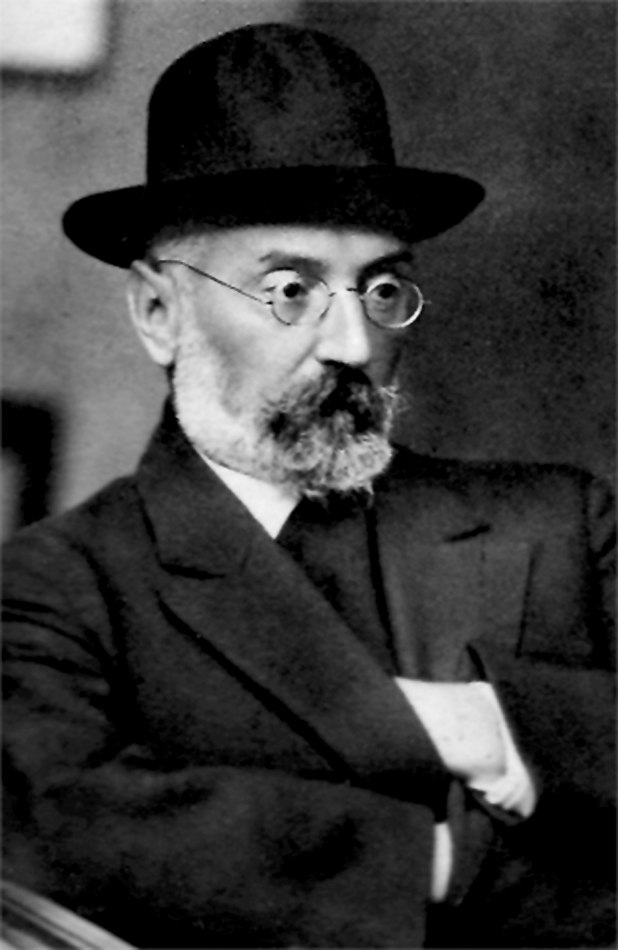
The 20th-century Spanish philosopher Miguel de Unamuno didn’t recommend banishing the negative emotions or “keeping on the sunny side of life.”
http://www.sigueme.es/docs/autores/foto-452-a-1325752765.jpg
Unamuno believed that a life worth living consists in communing with others, and that this happens most genuinely through negativity. In “My Religion,” Unamuno wrote: “Whenever I have felt a pain I have shouted and I have done it publicly” in order to “start the grieving chords of others’ hearts playing.” For Unamuno, authentic love is found in suffering with others, and negativity is necessary for compassion and understanding. If we try to deny, hide or eradicate the negative from our lives, we will be ill-equipped to deal with people who are suffering.
Where did I hear this before? Ah, yes, mitleid-freude. 

Alessandri's husband tells their crying toddler in the back seat that crying won't get them there any sooner, but she says:
My son is not crying in the car to get home faster; he is crying because he is trapped. When I get trapped in crummy situations I too cry, whine, complain. I get it out. I vent. I do these things because they are useful, but not the kind of useful that people usually have in mind. Usefulness doesn’t exclusively mean undoing what we don’t like about our situation; it can also mean dealing with our situation creatively. I use negativity both to change myself — to release disappointment, anger and frustration — and more important, to connect with others.
That's how New Yorkers bond, she continues, by kvetching.
Two strangers complaining on a subway platform can end up cracking a smile or laughing, and though it would hardly be considered the beginning of a lifelong friendship, it is still neighborly. Just because the topic of conversation is negative rather than positive doesn’t mean we are unhappy, and oftentimes the opposite is the case. A funny complaint from the person next to me can quickly lighten my mood, and hers. But the possibility of someone’s being a happy complainer gets lost when we equate dissatisfaction with unhappiness. . . 
http://ep01.epimg.net/diario/imagenes/2006/04/15/babelia/1145056635_850215_0000000000_sumario_normal.jpg
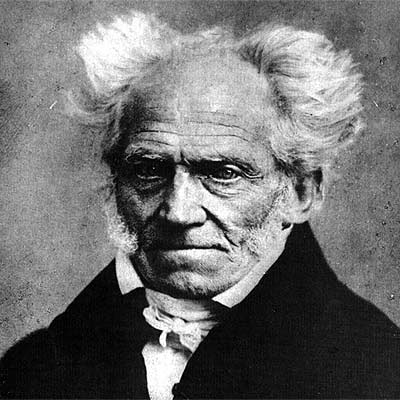
From the outside, the image of dissatisfied and complaining New Yorkers might seem to exemplify Schopenhauer’s portrait of humans as prisoners “paying the penalty of existence” . . . But Schopenhauer’s portrait of us as broken beings sentenced to life together leads him to ethics instead of individualism. Instead of twisting free from our fellow inmates, Schopenhauer suggests that we stay put and serve our sentence collectively. . . That we are all condemned to the same Sisyphean fate ought to make us compassionate instead of competitive, work together instead of in isolation, and rely on one another instead of just ourselves.
We spent hours together complaining, she and I. Instead of my having to downplay the frustration and exhaustion of dating, like I have to do with everyone else, we were able to give shrill voice to the annoyances, commiserate, and comfort each other. Then we were both quite happy. 

Tuesday, February 24, 2015

Friend-ship, Not Friend-ing

The word "friend" seems to have lost its meaning. The title's potency has diminished over the centuries, and getting verbed by Facebook was the final nail on the coffin. When I looked it up in the dictionary, the definition was rather dispassionate. 
http://marlarmiller.com/wp-content/uploads/2013/12/calvinhobbes_friends.jpg
Is it just me, or should "friendship" evoke a great attachment, a sincere mutuality of love and caring? A friend is not merely someone with whom to go shopping and a movie. A friend is not the poor sucker you call up and kvetch to after an unpleasant annoyance, then don't contact when something good happens or when the other could use an empathetic ear. A friend is not someone who has a place in another's life only when it's convenient.
https://blogger.googleusercontent.com/img/b/R29vZ2xl/AVvXsEjY2ugL8IZpTmvYne0tHJLnpQNLvAIqN1A0r0uScq2JJzzfuR_IcimMwkBUBHWh3GWndm61QpGblYvIZ2L0QI6x29HA5sN8D5aIGphxwOzT6oaSScuezcJRkRz7TEnLpHSw7Fd602r4Dcw/s1600/Fake-Friend.jpg
Friendship is not a one-sided state of being. It shouldn't serve only half. It should bring out the best in both parties, not the worst. It should mean fierce loyalty and deep compassion.

David Brooks' "Startling Adult Friendships" lists the benefits of friendships (better decisions, freedom to be oneself, improved character). I tried to think of those examples in real life, not just in terms of my own relationships, but of others. I couldn't really come up with any couple that I have observed in its natural habitat that truly represented selfless, transcendent friendship. 
In the first place, friendship helps people make better judgments. So much of deep friendship is thinking through problems together: what job to take; whom to marry.
You know how many times I read in frum forums: "I met this great girl/guy. I'm so happy. My friend, though, says I'm making a mistake, but doesn't give me any reasons why." 

Are those "friends" really looking out for their swooning pal, or are they simply jealous and fear being alone after their chum prances off into the sunset? 

Brooks' solution—if he was magically granted millions, mind you—would be to built a friendship retreat, mixing up a diverse group of individuals and allowing them to get to know each other. 

While friendship does need time and joint activities to form, just because twenty people are thrown together doesn't necessarily guarantee a relationship. "See you soon, keep in touch" is uttered often, but rarely the promise is practiced. Friendships cannot be forced. There is an element of bashert, there, too.