Showing posts with label Rabbis. Show all posts

Wednesday, November 14, 2018

Dating Like a Peacock, Revisited

Han, a fellow animal lover, was showing me a video of a male clownfish attempting to woo the larger female. The way he goes about it is by shivering

"Look at these poor guys knocking themselves out," I said. "Why is it so different in the animal world than in the human? Here, women kill themselves in makeup and heels to get a man. Everything about the animal world is the other way around. The males are pretty, the males do the pursuing." I even wrote about it a number of years back.
https://s-i.huffpost.com/gadgets/slideshows/336899/slide_336899_3412756_free.jpg
But then, a dvar Torah by Rabbi Noson Weisz explained the disparity to me: It's because of the chet. 

When Adam and Chava were created, Chava called the shots in terms of interacting with the outside world. That's why the Nachash approached her, as opposed to Adam; she was the one in charge. 

But after she messed up, she lost her leadership role. Additionally, the ensuing curse physically diminished her, causing her to rely on male protection for survival.

In the wild, females rarely need protection from males. If the males stick around to raise the offspring, it's an equal-ish role (he may do more). 

However, in these days leading up to Mashiach, the curses are lessening. Men can sit in a climate controlled office to earn their bread, rather than by the "sweat of his brow." The Industrial Revolution created a means for a woman to support herself if needed, rather than by entering in potentially unfulfilling yet financially beneficial marriages. While childbirth is still unpleasant, women are much less likely to die from it anymore. 

In these days, where the original equality is within sight, perhaps women can stop trying so hard. You want us, fellas? 

Let's get you some peacock feathers to try on.  

Monday, July 16, 2018

How to Stay Sane While Dating: XIV

I finally finished The Mindy Project. *SPOILERS*

Mindy was strong-armed into giving the wedding toast by Tamra and Morgan's wedding. 
https://pmcvariety.files.wordpress.com/2017/11/the-mindy-project-finale.jpg?w=1000&h=563&crop=1 
Mindy: I never thought Morgan and Tamra would work as a couple. Tamra is so beautiful and cool, and frankly far too talented to work in our practice for very long. 

Tamra: It's true! I've gotten several offers to leave!

Mindy: And Morgan is, shall we say, a bit of a fixer-upper.

Morgan (sniffling): That's the nicest thing anyone has said about me. 

Mindy: But what I didn't realize is how much people can change. And how much we can help each other change. Tamra stopped thinking she was better than everyone. And Morgan, you've really matured, too. I mean this is the man who finally moved out of his grandmother's house. 

Morgan: Oh my God! I forgot to invite Grandmother! 

Mindy: And maybe they weren't right for each other then, but somehow they are now. That's the funny thing about people changing. It happens so slowly, you know? You don't realize how much a person's changed until you look at them and they're not the person you thought they were.  

Fun fact: Han was actually mentioned to me for the (first) time when I was 21. But by the powers that be, a date did not come to fruition until I was 30. 

It never even occurred to me to think, "If only . . ." Because I wasn't who I am now. The person that I was at 21 was still unformed in many ways, still had much to learn, still was not where she should have been to appreciate the relationship she has now. 

Chances are, Han was the same way.  

I try to recall how young I was when I started to feel the angst of singlehood. 23? 24? When I look back, I laugh at my youthful stupidity. 

I hear from time to time about a young lass who "just wants to get married." Because her friends are, because she feels on the outside, because she wants to move on. 

But there are other ways of moving on. Like by changing. 

A comment was left on my last "Sane" post by an Anonymous: "I'm a totally different person than I was 15, 10, or even just 5 years ago. I've changed so much. I worry a lot about my future of course, but I recognize that my life circumstances have shaped me in a way nothing else would have."

Some of us achieve change by pursuing knowledge, self-awareness, and -improvement. Some of us have change thrust upon them by life circumstances. Yet some of us refuse to to change. Which is a shame.  

There is much conversation about those Gemeras regarding marriage. There is the "40 days before conception" one, and there is the "harder than splitting the Yam Suf" one. I've heard quite a few shiurim on the topic, and here's one interpretation: 

Everyone is born with a predetermined zivug. However, there is also the option of getting a different zivug based on the madreiga one is currently on. So if one brings oneself higher than one's mazal, one can achieve a more appropriate bashert. 

Which would you rather have? 

Opt for change we can believe in.

Monday, June 25, 2018

How to Stay Sane While Dating: XII (a recap of I)

I'd like to circle back to that tricky word, "hishtadlus." 

In my original post on the topic, I applied the same premise of hishtadlus as seen in terms of parnassah. However, I had an insight recently that shows that comparison to be faulty. 

A few weeks ago, Rabbi Noson Weisz had a dvar Torah for Parshas Shlach, in which hishtadlus is discussed. The source for the concept of hishtadlus comes from Adam's curse following his sin: "Accursed is the ground because of you; through suffering shall you eat of it all the days of your life ... By the sweat of your brow shall you eat bread until you return to the ground from which you were taken." (Genesis 3:17-19)

Rabbi Weisz elucidates: 
Man's bread comes from God in any case and does not grow out of his application of effort. It was man's sin that brought the curse of effort down on his head. While no one can escape this curse entirely as long as our present world endures, it is obvious that it would be the act of an idiot to voluntarily subject oneself to a curse more than is absolutely mandatory.
It says b'feresh in the Torah that mankind has to make an effort in order to eat. But it doesn't say where effort is required anywhere else.  

How did Adam find Chava? Endless Starbucks dates? Prowling through singles events? Scrolling online?

Adam desired a helpmeet. Once he did, Hashem provided him with one. 
https://strangenotions.com/wp-content/uploads/Adam-and-Eve.jpg
I came across this story: 
An older bachur once came to the Tosher Rebbe, zy'a, exasperated over his plight, beseeching him for a bracha that he find his bashert. The Rebbe warmly responded, "Hashem wants you to be a chassan just as much as you do." The bachur then asked, "So, Rebbe, what am I to do now?" The Rebbe answered firmly, "NOTHING!" 
What I found surprising was how the family guru had a nearly identical story with Rav Moshe.  

There is a matter of debate between the Rambam (and another one, I have to run it by Ta) about what is involved in order to marry. I think it's according to the Rambam that you have to want to, and that who you marry is decreed by Hashem (bechira has nothing to do with it). 

DO YOU KNOW WHAT THIS MEANS???

There doesn't seem to be any hishtadlus required in order to marry. Girls certainly don't have it, especially considering they never were cursed with hishtadlus in the first place (we just get the guaranteed pain and suffering of childbirth. No biggie). 

I think the one thing that really hit home for me when I met and married Han was how futile all those years of obsessing with "what to do" were. Yes, I wanted to marry, I was chalishing to marry, but the Eibishter was gently saying, "Not yet, mammelah, not yet."  

Obviously, holing up in your basement and becoming a smelly hermit won't exactly encourage a mate. But most of us belong to a community where people know us, and they tend to try to set us up. 

We just have to stay sane as they eat up our kishkes, though. 

Wednesday, May 30, 2018

The Invisibility Cloak

"Is your engagement on OnlySimchas?" she had asked at my l'chaim. 

"No," I responded, "and I don't want it on there." 

She raised a disbelieving eyebrow. "You don't want your engagement on the jumbotron in Times Square?" 

"Nope." 

I've never been comfortable in the spotlight. Not even amongst my family. It may go back to a childhood Pesach seder, when I butchered the Yiddish Ma Nishtana and had the whole table, including my Babi, rolling. 

Han, bless his heart, actually listened to me when I said, "I don't do scenes," and gave me the simple, perfect, understated proposal I could have wanted (much to others' disappointment). 

While this may be chalked up to unavoidable genetics, I actually have biblical proof. In Melachim 2 Perek 4, we learn of the story of Elisha and who the meforshim say is the widow of Ovadiah. Her husband had died with debts, and creditors were threatening to take her sons in lieu of payment. 

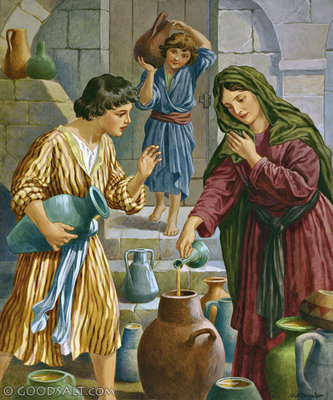
Elisha asks her what she has in the house, and she says only a small jar of oil. He instructs her to borrow as many empty containers as she can. When she has done so, he says: "Close the door." Then, the miracle occurs, with no witnesses but herself, as the small jar filled the multitude of vessels, enough to sell, repay the debts, and keep her children. 
http://bibleencyclopedia.com/gs400px/stdas0460.jpg
I was once at a shiur when the speaker repeated, "Close the door." Bracha doesn't feel a need for a large studio audience. It has nothing to prove. It's nurtured in quiet, hidden places. 

This is what I thought of when I read, "Are You Really in Love if It's Not on Instagram?" by Krista Burton. 
If you have to keep reminding everyone of how happy you are, something’s not right. Happy people don’t need to announce over and over how happy they are. Happy people just … are. Your friends? They know when you’re in a healthy and loving relationship just by seeing you and knowing you. You don’t need to declare it every time you go online. These constant #relationshipgoals posts doth protest too much.
I have to second that opinion. Why must you announce how happy you are? Who are you trying to convince? Yourself? 

And if you are genuinely happy, then is it the most tactful thing to telegraph your joy to those who aren't? Who may, in turn, become envious? Who will wonder why you are in a blissful relationship while they aren't? 

Because I was on the other side for a long, long time. Every engagement I heard of had two reactions: a small amount of happiness for the couple, and a larger wallop of "Why not me? What am I doing wrong? Am I picky like the harpies say?" 

Everyone gets hysterical about ayin hara. What is it, exactly? The idea is that when one is too much in other people's mouths, it may draw a critical eye upon one. I even heard from Rabbi Glatstein (quoting a source that I cannot recall) that that is why a chosson and kallah go to the cemetery prior to their wedding. 

Solution? Don't put yourself in the mouths in the first place.  

Tuesday, February 13, 2018

How to Stay Sane While Dating, I

I blame "hishtadlus" for this. 

Doing one's hishtadlus becomes an endless, unverified list of "musts," from makeovers to unfounded "segulos." If one hasn't gotten what one wants, that means more hishtadlus is required, from single events to throwing money at kabbalists. But I heard from Esti Rand, quoting Rav Dessler (I think), that hishtadlus is simply: I do my part, Hashem does His. If the desired outcome doesn't occur, that doesn't mean "do more hishtadlus." It means Hashem doesn't want you to have it . . . yet

Han entered my life when the last thing on my mind was dating. I repeat, he was sent—I cannot claim I "found" him, because I wasn't looking. It then became quite, quite clear to me that I was not the engineer of my (married) fate. My actions, beyond the acceptable minimum, were not necessary. 

When one realizes they are not in control, it is both terrifying and freeing. I am not in control! (Panic.) I'm not in control! (Yeeeeees!)

Emunah/bitachon: Emunah is the recognition of God; bitachon is actually trusting Him. I find the latter to be, at times, difficult, especially with my tendency to worry. 

Now, how to go about it? Well, shiurim help. When I'm wound up, a meaty shiur usually unspools me nicely. I recommend Rabbi Ephraim Stauber on this specific topic, especially since he cites Brené Brown. Rabbi Efrem Goldberg is also great.

When one begins tackling their relationship with Hashem, there are all sorts of pleasant side effects: happiness, calmness, relaxation. Because here's the thing: You want to get married? You make some basic effort at dating? You don't have to do anything else. But you have to have faith.

Monday, September 12, 2016

Moonstruck

"Look at that moon!" I pointed out to Eewok. Dangling low in the sky was a large, bright, cream-colored orb, its grinning face distinct. Gorgeous
 https://storage.googleapis.com/imgfave/image_cache/1382285583371226.jpg
It made me think of a romantic tale (I had heard it go slightly differently), and thought to entertain the 10-year-old.

"There was a story about a rabbi called the Bach," I began. "His best talmid was called the Taz. Once they were learning, and they couldn't remember a source. The Bach's daughter knew it, though. The Bach said, 'Ah, she shines like the moon.' Then the Taz said—" 

"The moon doesn't shine," Eewok interrupted. "It reflects." 

"Yes, baby, I know, but—" 

"It doesn't have its own light, so it doesn't shine." 

"Yes, booba, I'm aware of that—"

"Because the moon isn't like the sun—" 

"YES! Sweetness, I was trying to tell you a nice story, but never mind."   

"No, no, I want to hear." 
Well, the second telling didn't come out so magical. 

Was I such a know-it-all at her age?

Tuesday, September 6, 2016

Inchy Squinchy

Parshas Mase'e opens by listing the 42 stations where Be'ne Yisrael encamped during their 40 years of journeying from Egypt to the Land of Israel. . . The obvious question arises: Why would the Torah find it necessary to list these stations? 

When Be'ne Yisrael left Egypt, they were far from the spiritual stature they would need to achieve before they could enter the Land of Israel. . . The 40 years of travel from Egypt to Israel served to prepare the nation spiritually for their entry into the Land. The 42 stations represent the 42 stages of spiritual growth. The events that transpired at each location served as a learning experience upon which the the nation would build in the subsequent station, such that they were constantly improving and developing. Stage by stage, Be'ne Yisrael grew and elevated themselves . . . 

The Torah thus recorded these locations to impress upon us the importance of gradual, incremental growth. A person cannot leap to the highest levels of piety overnight; spiritual growth entails a long, gradual process of small, incremental steps. 

Every so often, I am approached by someone who has recently decided to become observant, and now expresses an interest in studying Kabala. I tell him that before studying Kabala, one must first master the entire Tanach, Talmud and Shulhan Aruch—which is itself a lifelong project. One cannot skip to the top step; he must ascend one step at a time. More often than not, those who try jumping to the highest levels of spirituality will succeed in maintaining these levels for only a brief period, after which they experience a "systems crash" and fall lower than where they had begun. 

Rabbi Dr. Abraham J. Twerski, the renowned Rabbi and addiction psychiatrist, has a sign in his office that reads, "The elevator to recovery is out of order; please use the stairs." The same applies to religious observance: we must take the stairs, not the elevator. The Torah does not demand what we live perfect religious lives, but only that we continuously grow, one step at a time, that at every stage we can look back at our conduct a year earlier and see how we have progressed. 

—Rabbi Eli Mansour 

Wednesday, June 29, 2016

"The Chatzos Lady"

Rabbi Frand, We Are All In This Together:

I once spoke about Shabbos in Highland Park, NJ, and I read an essay, not realizing that the writer of that essay, a woman by the name of Mrs. Azriella Jaffe, was in the audience. 

She wrote how she makes a point of being ready for Shabbos every single week before chatzos (midday) on Friday. When I started speaking about this to women, their general reaction is to either laugh or look at me like I'm insane. But after I spoke in Highland Park, Mrs. Jaffe wrote to me to explain how this came about. 

She wrote that on Friday, her daughter remarked, "Oy, tonight is Shabbos. I wish it wasn't Shabbos." 

Do you know why she made that comment? Because Friday meant chores. Friday meant chaos. Friday meant a tense mother. 

So Mrs. Jaffe accepted upon herself that by chatzos Friday, everything would be ready. EVERYTHING!

This meant, in her words, "The food is prepared, the table is set, the candleabra is ready, and when my kids comes off the bus from school, instead of coming home to Shabbos chores and to a tense mother trying to cook and clean and make the deadline, they come home to a happy mother, a clean house, the smells of Shabbos in the air, and a free afternoon to relax.

"When my husband comes home from a long day at work, he comes home to serenity, not chaos.  
https://s-media-cache-ak0.pinimg.com/736x/f2/4a/35/f24a359a19c6b38f43eeefb3448d9fb2.jpg
"Friday Night Candle Lighting" by Robert Tanenbaum
"But to do chatzos right," she adds, "you can't start at midnight on Thursday night. You need to prepare for Shabbos every day of the week. My children now think that it's normal to make a new batch of challos on Motza'ei Shabbos. Or to plan a Shabbos menu on Sunday. They're accustomed to asking me if the chicken cooking in the oven 7 a.m. on Friday is for Shabbos." 

Listen to the icing on the cake: 

"Shabbos is on our minds all week long. When Friday comes around, our house is one of beauty and serenity, and anticipation of Shabbos, rather than that former feeling of, 'Oh no, when is candle lighting?'" 

Mrs. Jaffe started a support group with three women, but she now has women all over the world—in England, Eretz Yisrael, and Australia—in her support group. 

Once again, this is not an all-or-none deal. Whether a woman wants to be ready at chatzos, or maybe just an hour early, or even just to be ready on time rather than late, it's worth planning ahead. 

A woman from New York wrote that she set a goal of being ready five minutes before the zman, accepting upon herself to be ready 23 minutes before the shekiah rather than the standard 18 minutes. 

This already sends the message to Hashem: Shabbos is something I want, something I look forward to. 

Thursday, May 26, 2016

Self-Righteous Isn't Righteous

If you focus your awareness only upon your own rightness, then you invite forces of opposition to overwhelm you. This is a common error. Even I, your teacher, have made it.Children of Dune, Frank Herbert 

The opposite of faith is not doubt, it's certainty.—Annie Lamott

Never confuse righteousness with self-righteousness. They sound similar, but they are opposites. The righteous see the good in people, the self-righteous only the bad. The righteous make you feel bigger, the self-righteous make you feel small. The righteous praise; the self-righteous criticize. The righteous are generous, the self-righteous, grudging and judgmental. The righteous are humble, the self-righteous are proud. The righteous understand doubt, the self-righteous only certainty. 

Once you know the difference, keep far from the self-righteous, who come in all forms, right and left, religious and secular. Win the respect of people you respect, and ignore the rest.
—Former Chief Rabbi Lord Jonathan Sacks

http://quotes.lifehack.org/media/quotes/quote-Charles-Spurgeon-the-greatest-enemy-to-human-souls-is-125129.png
In "Bookends: Are There Any Unforgivable Sins in Literature?" Rivka Galchen tackles self-righteousness.
For me, the unforgivable sin in literature is the same as that in life: the assumption of certainty and the moral high ground. That words like “righteous” and “pious” are often used to suggest the contrary of their original meaning is ­telling. . . 
But sometimes it’s difficult not to be certain. On more days than I’d like to admit, I find myself walking down the street in an all-too-certain righteous rage about other people’s righteousness; I’ll read an essay or story with horrified suspense as it delivers some sermon on a mount, but then I myself indulge in assured despising — that’s a sin, too. I admire a pope who says, “Who am I to judge?” and a book that reads as if thinking is something ongoing, not something that is ever absolutely done.
Although Jewish, she was exposed to two types of preachers. One called her a "heathen," even though she knew the New Testament better than he did; the other, a beloved supplier of pizza. 
Pizza Preacher said some Christian thinkers had argued that there couldn’t really be unforgivable sins, because that would mean that a person could do something that limited God’s will — limited God’s ability to forgive. That seemed wrong, right? Surely that couldn’t be the case.
I have a number of wince-inducing memories of my forays into self-righteousness, from my five-year-old youth to my 20-year-old stupidity to my really-should-know-better current age. When I try to remember the sensation that took hold of me at those times was my absolute conviction in what I saying or thinking.
http://media-cache-ec0.pinimg.com/736x/69/54/9b/69549bd67d82c35fefd7f328767e1320.jpg
Having resolute assurance is . . . well, nice. There's none of my default, debilitating dithering over my actions. I'm not second-guessing my words for once, debating if I had spoken too hastily with excess emphasis. Being adamant has the emotional equivalent of warm fuzziness. 

But we are not here to be sure of ourselves. We aren't supposed to be, until the day we die. Pirkei Avos says so.   

Sigh. Bye-bye, warm fuzziness.  

Tuesday, March 15, 2016

The Story Isn't Finished

There is a concept I heard from Rabbi David Fohrman that I often have to reiterate to myself. Because we have heard the stories from the Tanach over and over again, we forget that the people in the stories, when they were in it, did not know the ending. 

We are all characters in our own stories. We can get frustrated at times because we forget that we are still in middle of the tale. 
http://www.neh.gov/files/news/press_releases/openbooks.jpg
I'm still in middle of my story. The day after I had this epiphany, and was thinking how to write it up, Lily Brooks-Dalton beat me to the punch.
Instead of parking my Bonneville around the corner, where I wouldn’t have to see it every time I went for a walk, I parked in front of my building — where I will see it every day and feel sad.
It will remind me of how good it felt to share myself with another person, to feel like I finally knew where home was, and then how it felt to cut that safe haven away and be adrift once more. It will remind me that when I started riding, I wanted to grow into myself and I did; I sought a shape and I found it. . .
This isn’t the part of the story when the woman overcomes her challenges and is rewarded with new love. It’s not the part when the rain washes away her fear or rinses off her grief.
This is the part when the clouds part so briefly she might have imagined it, when the promise of light is made and then brutally withheld, when restoration begins to seem possible but is not yet realized.
This isn’t the happy part of the story, but that’s O.K. This story isn’t finished.
Sarah was sad because she thought she wouldn't ever have a child. Rivka davened fervently for one as well. Leah wept, thinking she would get stuck with Eisav as her husband. Rochel had handed over her man to her sister, and on top of that was barren as well. We know how it ended, now. They didn't, then.

Did my grandparents know the end of the story while they were in the camps?

We get impatient.  We think there is a rulebook of how things "should be." In Meghan Daum's review:
In “The Prime of Life,” Steven Mintz, a professor of history at the University of Texas and the author of two previous volumes tracing the roots of American life passages, offers some comforting news. Going back centuries in this country, “adults” never particularly had their acts together. In the 17th-century colonies, Mintz tells us, age was an “imprecise category,” and life decisions were dictated more by circumstance than by any sense of a culturally imposed timeline. Men were often not able to marry until their fathers had died and passed down an inheritance. . .
In what might come as a surprise to religious conservatives and other proponents of early marriage, Mintz reports that apart from the period following World War II, most Americans did not wed until their mid- or even late 20s or early 30s. Citing one couple, Theodore Dwight Weld and Angelina Grimké, whose courtship in the late 1830s was marked by neurotic self-disclosures and a rather tortured dissection of the whole institution of marriage, Mintz shows that foot dragging and overanalysis are hardly the province of today’s affluent, educated classes. “Only after Theodore and Angelina were convinced that they were emotionally ready for ‘the most important step of Life,’ did they finally marry,” Mintz recounts. Theodore, incidentally, was 39 at the time.
“The essential point,” Mintz writes, “is that the decade stretching from the late teens to the late 20s has long been a period of uncertainty, hesitation and ­indecision.”
It was no different in Europe, I assure you.

B'H, we are living longer than ever before. Yet, oddly, our community believes we should be marrying younger than we did before. If we aren't, there's a "crisis."

The crisis is all in our minds. For the story isn't finished.      

Tuesday, January 5, 2016

I Don't Mean to Be Grim

From my miserable historical-fiction reading, I am exceedingly grateful to be living in this century. This is how stories used to go, by the way: 

Once upon a time, everybody died. 

And I mean everybody. No one was spared. From the moment babies drew breath, they were ticking time bombs. To quote Epictetus, "As you kiss your son good night, whisper to yourself, 'He may be dead in the morning.'" (Got that one from Resilience.) 

Meaning, the idea that infants are matter-of-factly thriving well into adulthood is a gift we should be merrily celebrating. 

Let it be known that I do not wish to be flippant regarding death. Yet we seem to have an unhealthy approach to the matter when those who have lived long, full, spectacular lives are still clung to frantically by their loved ones, their inevitable ends gruesomely extended. 
 http://img.medscape.com/thumbnail_library/dt_150803_chemotherapy_elderly_senior_800x600.jpg
I once heard from a woman the beautiful tale of her father's passing. He refused to go to the hospital or a home; she cared for him under her own roof. He died holding her hand, smiling. 

Deborah Lutz's article says it all: "See Death as a Triumph, Not a Failure." 

The Victorians looked at death differently than we do now. 
The Victorians recognized that death’s presence was woven into the texture of life, giving that life one of its essential meanings.Religion, of course, played a role in this attitude. Evangelical revivals early in the 19th century reinvigorated the tradition of the good death, in which God called believers to him. 
There is even a Talmudic example, perhaps, of "death's presence giving life meaning":
At the wedding feast of Mar the son of Ravina, the sages present turned to Rav Hamnuna Zuti and requested: "Let master sing for us." Most probably to the surprise of those present, who expected a cheery song or jovial ditty, Rav Hamnuna Zuti complied with a mournfully lament: "Woe to us that we are destined to die! Woe to us that we are destined to die!" 
As for "the good death," consider Beth's demise in Little Women. A triumph indeed. 
By the beginning of the 20th century, however, these views of the dead body began to change. Doctors and scientists acquired a deeper understanding of bacteria and disease; death became medicalized. God hadn’t called the individual to him; rather, a malady had overtaken the body. Rather than dying at home, the sick were carted off to hospitals.
In addition, fewer people believed in the afterlife. No longer a triumph, death became a failure — of the physician’s skill, of the patient’s will. It was to be avoided at all costs. The mass death of the Great War, which left so many bodies missing, exploded or rotting on the ground, further undermined the view of the corpse as a meaningful stage of life. Cremation grew in popularity as a way to “cleanse” with fire the last shameful disintegration.
What we have lost is not only a savoring of ephemerality, but also an appreciation of the way that time marks the body. We try too hard to keep the terminally ill alive because we can’t admit to finality. . .
. . . the philosopher Walter Benjamin’s lament in the 1930s about death still rings true. By avoiding the sight of the dying, he felt, one misses the moment when the meaning of a life is completed and illuminated in its ending. The denial of death then leads to the demise of the art of storytelling. He called his contemporaries “dry dwellers of eternity” because they “live in rooms that have never been touched by death.”
We are not immune, us now liberated Jews. We think now the same way—stay alive, no matter the cost. Even though Rebbe's maidservant was praised for ending his suffering.     

Thursday, May 7, 2015

Are You There, God? It's Me, Spock

I have an embarrassing backlog of articles I plan on linking, and with Shavuos in our sights, I've still got stuff from Chanukkah-time. 

Disclaimer said, here's David Brooks "The Subtle Sensations of Faith." He quotes rabbis throughout. 

My family (well, at least Ta, Ma, Luke, and myself) consider ourselves "Rambam" in mindset: Rationalist Judaic. Brooks quotes: 
In his famous fourth footnote in “Halakhic Man,” Rabbi Joseph Soloveitchik writes, “The individual who frees himself from the rational principle and who casts off the yoke of objective thought will in the end turn destructive and lay waste the entire created order. Therefore, it is preferable that religion should ally itself with the forces of clear, logical cognition, as uniquely exemplified in the scientific method, even though at times the two might clash with one another.”
He says it much better than I ever could. To be religious does not mean delving in mysticism alone. Luke was describing to me the lengths a certain tree frog exerts itself to ensure the continuity of its offspring (he's watching this series). Nothing otherworldly about it, and it gave me the ghostly shivers.

Brooks concludes: 
All this discerning and talking leads to the main business of faith: living attentively every day. The faithful are trying to live in ways their creator loves. They are trying to turn moments of spontaneous consciousness into an ethos of strict conscience. They are using effervescent sensations of holiness to inspire concrete habits, moral practices and practical ways of living well. . .
Insecure believers sometimes cling to a rigid and simplistic faith. But confident believers are willing to face their dry spells, doubts, and evolution. Faith as practiced by such people is change. It is restless, growing. It’s not right and wrong that changes, but their spiritual state and their daily practice. As the longings grow richer, life does, too. As Wiman notes, “To be truly alive is to feel one’s ultimate existence within one’s daily existence.”
My perception of Hashem and His workings, and how I relate to Him, has morphed over the years. As I learn, seek, and question, I feel my consciousness transcending, while maintaining my "rationalist" standpoint. To find God does not mean disavowing reason. If anything, without the brains that He gave us, we would be lost. 

Thursday, January 22, 2015

Commitment

Besides for the, urgle, "shidduch crisis," there is another issue that occupies our too-unoccupied thoughts: the rising divorce rate. There are a number of theories bandied about as to the cause (I believe there must be more than one issue); one of them is that in today's world, with so much available and of shoddy workmanship, it is considered "simpler" to discard than to renew.
 http://www.lifehacker.co.in/photo/21282527.cms

A while back I had listened to Rabbi Y.Y. Rubenstein's shiur, "Making the Right Choice or Making the Choice Right," and I recalled it while reading Debby Greene's Modern Love piece, "'We Pledge Allegiance . . . '"

Both the author and her husband had unhappy, unstable childhoods due to their parents' divorces. Therefore, when they wed, the first thing they both decided was "no divorce," simply just to spare their children their own experiences. 

That was the one constant in their lives, no matter how bumpy the ride, no matter how tempting the move. But it even came to a point where they no longer viewed the pledge in such absolute terms, and that was helpful, too.
Approaching my 50s, I know the “no divorce” pledge Josh and I made all those years ago is just one of those rules people make up to give themselves the illusion of control. Though I believe loosening our grip on our pledge saved our marriage, I think the pledge saved it, too. Our pledge gave us a strong foundation before we were ready to go it on our own, and by the time we realized we had outgrown the pledge, it had taken root and grounded us as we found the space to deepen our relationship.
The child in me still wishes there was a secret formula to make a marriage last: perhaps a dose of bringing each other coffee in the morning along with a smidgen of holding hands at the movies and a dollop of passionate nights.
But my more-mature self realizes that after 23 years of marriage, the key for our relationship to grow and thrive is finding a soft place to land between the rules we make and the reality we live.
There is a scene in 1776, when John Adams is in complete despair. It is the day before the vote whether to declare independence, and the entire South has marched out in fury over the clause regarding the abolishment of slavery. Delaware could only be won if a dying delegate is fetched, Pennsylvania looks lost, and the vote must be unanimous. Adams and Franklin have just traded sharp words. 

He summons the image and wisdom of his wife, Abigail, for guidance. 

Abby: Have you forgotten what you used to say to me? I haven't. "Commitment, Abby, commitment. There are only two creatures of value on the face of this earth: those with a commitment, and those who require the commitment of others." Do you remember, John?

With that, Adams hurdles himself back into the fray, and emerges triumphant.
https://blogger.googleusercontent.com/img/b/R29vZ2xl/AVvXsEg294pO-AgULbeDkpS52BRU5HuVyNFMqNHEOT_iqWnwIwqF6llSlUS-OqoF3RpoR6gLp4AdqnouZ9CK6aDWm4-yyl4y81M4wuznKh-CncOuKvgrRbQ-9rdbDRrUP5NlwHjparAZK63M3gFu/s1600/1776WD.jpg
Do we commit today? Or do we merely seek the neverending upgrade?

Tuesday, September 2, 2014

The Company You Keep

In trying to comprehend my daily davening, I have become fond of the English translation available in my Artscroll. Following brachos, there are is a "Yihee Ratzon," originally recited by Rabbi Yehudah HaNassi, as "prayer for protection in day-to-day dealings with one's fellow men." One of the requests are for distance from an "evil friend."

I once attended a sheva brachos where Rabbi Yaakov Reisman spole. In the first mishna in Rosh Hashana, it lists the four "New Years"; the "New Year" for the trees is listed. 

Now, he asks, what is it about trees that they merit their own celebration? C'mon, it's a tree. 
http://w1.chabad.org/media/images/180/ctTg1806067.jpg
Via chabad.org
Because the tree New Year is mentioned at the same time as the other New Years, it gets a party on that merit alone. Therefore, he concluded, it is the company you keep.

I thought of this when reading "Friends Can Be Dangerous" by Laurence Steinberg. According to new studies, just the presence of other peers can make teenagers behave recklessly. Not, as was previously believed, the presence of the "bad friend"; just having other fellow teenagers around bring out the worst in teenagers. 

This sort of behavior continues even unto college age students; when alone, they make the responsible choice with long-term benefits. When other college students are there, they have an adolescent's knee-jerk, all-about-now reaction.

Humans outgrow this proclivity with adulthood, thank goodness. But if simply having other people around can bring out the stupid in a teenager, what damage does an actively bad friend do to an adult?

I don't think we always honest about the state of our friendships. In teenage-hood, I made a friendship or two that, well, did not make me feel too good. I somehow managed to casually fade them out; it was almost as if I sensed the . . . corruption, if you will, on a physical level. 

I think we are also often fooled by outside appearances. The "bad friend" is, obviously, someone who looks different, sounds different, dresses different. But the "bad friend" is usually who looks the same, sounds the same, dresses the same. But in the end, his off-handedness about religion and feinkeit leave a mark. 
Be aware. If you come home from hanging out with a pal and feel a burning need to take a shower . . .  

Thursday, July 3, 2014

Mitleid

I've been trying to quantify the difference between sympathy and empathy. People like it when others feel the latter, but not the former. 

When I got the news that the boys were dead, I felt like I was kicked in the gut. I crawled home, shivering in the summer heat, huddled inward, my face haggard. I blinked blankly at anyone who was able to smile, only able to summon a cheerful "thank you" to the pharmicist by sheer will alone.

My thoughts were, simply, thus: OhGodOhGodOhGodOhGod . . .

These families are now sitting shiva, and possibly hundreds, if not thousands, will be coming to be menachem aveilim.

Menachem aveil, today, tends to defeat the original purpose. For the visitor, since it can be supremely awkward, they often succumb to that primitive fight-or-flight response, blurting out the most inappropriate of comments. Also, bare acquaintances somehow feel obligated to come, placing even more pressure on the mourner to be a gracious host, rather than being free to grieve. 
http://www.jewishmag.com/150mag/shiva_ettiquete/title.gif
Via jewishmag.com

David Brooks' "The Art of Presence," and Rabbi Eliyahu Finks' "Fixing Shiva" are two articles that really are must-reads prior to entering a house of grief. 

First a Brooks' highlight (read both pieces in their entireties, please): 
I’d say that what these experiences call for is a sort of passive activism. We have a tendency, especially in an achievement-oriented culture, to want to solve problems and repair brokenness — to propose, plan, fix, interpret, explain and solve. But what seems to be needed here is the art of presence — to perform tasks without trying to control or alter the elemental situation. Allow nature to take its course. Grant the sufferers the dignity of their own process. Let them define meaning. Sit simply through moments of pain and uncomfortable darkness. Be practical, mundane, simple and direct.
The whole point of the shiva week is to provide a structured, safe time for mourners to lament. Ergo, it is not the time of platitudes: "They are in a better place," and the like. The mourners are sad. Let them be sad. Don't demand that they must make peace with the situation right now just because the visitor feels uncomfortable.

Only the mourners can say platitudes like that. The visitors can't. 

The Rabbi Fink highlight, for me, is the story of Rabbi Yosef Tendler on a shiva call. The point of the story is that Rabbi Tendler remained silent the whole time. He hugged his student, he listened to the mourners, and he quietly departed.

Rabbi Fink echoes Brooks identically, in that our society has "Bob the Builder" Syndrome: "Can we fix it?" "Yes we can!" 
http://birthandbabynetwork.files.wordpress.com/2011/07/bob_the_builder1.jpg
Death can't be fixed! At best, death can be, eventually, calmly accepted. Our job, when sitting down with mourners, is to help them to do that; not to succumb to our own fears, but rather to open our hearts and plumb the depths for shared experiences. Raw, visceral emotion can be scary. But don't be afraid, for the aveil's sake.

Lehavdil, there was an episode of Will & Grace ("Bed, Bath, and Beyond") where Grace, expecting a marriage proposal, is actually dumped instead. She takes to her bed, where Will tries every which way to get her out and into the sunshine. She refuses his efforts, crawling back into her room. He enlists Karen and Jack, who feel that same desperate need to make Grace move on. 

After they attempt to physically manhandle her out from the apartment to rejoin humanity, she fights back: 

I'm not like any of you. I just handle things differently, so, please, just let me go back to bed and deal with things the only way that I know how.

She climbs back into bed, at which point they all trail in, acknowledging that since they never truly mourned the disappointments in their lives, the way Grace is, they had never truly moved on. Mourning has a purpose, and a time, as Shlomo HaMelech said.

The next morning, Grace awakens, smiling, and rejoins humanity, on her own speed. 

Don't make going menachem aveil about you. Go only if you think the mourner will appreciate your presence. Don't talk until they do, and only respond, if necessary, with the most carefully selected of words. Feel their pain, no matter how frightening it may be. 

I want to remember, the next time I am menachem aveil, that feeling of being kicked in the gut and that same litany of OhGodOhGodOhGodOhGod . . .