Showing posts with label Shidduch Lit. Show all posts

Monday, October 31, 2022

Shidduch Lit: Italian for Beginners

I've become impossible to please when it comes to romantic fluff. 

The basic structure of such a novel is to involve a very easily avoidable misunderstanding. Like, seriously, a five-year-old could have navigated this successfully. And Italian for Beginners is no different. 

Additionally, it has that annoying trope of "busy American who doesn't know how to live visits an exotic locale, imbibes the wisdom of the natives (who are all waiters, and yet live in lovely apartments), and discovers the meaning of life." 

However, the book had enough relatability that I will plug it here. 

Not to give a spoiler here, so if you don't want one then do not read on, but our heroine is a single woman in her mid-30s who has become the despair of her religious family (Catholic, not Jewish, but the emphasis on marriage and kids is near identical). She is humiliated at her younger sister's wedding despite her attempts to retain her dignity. 

She also has a lot of childhood issues with abandonment that should really have been addressed earlier with a therapist, and a lot of information was unnecessarily withheld from her on that subject, but at some point she realizes that she cannot be in a relationship if she doesn't know herself. 

Now, this point is a pet peeve of mine. How can people select life partners if they don't really know themselves? A lot of what we do involves following a societal script, without much questioning. Bad4 was the first to dryly proclaim that she would get a man without blow-drying her hair every morning, and many of us choose to slightly rock the boat in multitude of harmless ways. 

For instance, there had been some mumblings during my single time for my love of colorful makeup (which, I attest, was still classy and tasteful). Han loves the painted version of me (which I rarely apply nowadays, being a dishrag of a mommy) and even recently commented that so many girls aren't into strong makeup—why is that?

Because Han and I chose to express ourselves as we did (he's a rather snazzy dresser), that was one aspect that showed how our personalities could align. We didn't suppress our identities for the sake of appearances; our appearances reflected who we were.

I see other frum girls harmlessly stepping out of line and I love it. I love how they follow their passions, and also marry happily (I'm assuming happily) as they are.  

Monday, November 1, 2021

Shidduch Lit: Playing With Matches

I belong to a few online groups to help with book recommendations. What to read after exhausting favorite authors, that sort of thing. One suggestion looked cute: Playing With Matches by Suri Rosen. Despite the orthodox content, it was actually available on my library network!

But I was wary. OK, why wary? I'll be honest, I've read few books by frum authors that didn't somehow disappoint. Clunky, not flowy, you get the drift. 

I made a request for a stack of books from my local library, and chucked that one in too. Why not give it a try? 

The first book from my haul, by a best-seller name with rave reviews, was unreadable. The prose was stilted and saccharine. I had to put it down after 15 pages. I rarely put books down. 

I then picked up Playing With Matches, and the contrast was amazing. Rosen's words flow pleasantly, even humorously! The plot can be a little farfetched at times, but it doesn't matter. Every time I had to stop reading I was itching to continue. It was a sheer delight. 

Playing with Matches by Suri Rosen

Rosen, very smartly, doesn't overplay the orthodox card. The characters are frum, but very little is overtly said in terms of observance. Shabbos is matter-of-factly mentioned in passing. As for the dating system, again, no apologies, this is how we do it people, moving on. 

It's simply a story, and the characters happen to be religious. It's more about bein adam l'chaveiro then bein adam l'Makom, and the importance of owning our actions, which is a good message.

Monday, March 22, 2021

Prince Boring is King

I wasn't so jazzed about Bridgerton. I'm rather surprised at myself, considering my teenage diet of regency romances, but I found it frustrating. Just one aspect: the women claim to want love, but simultaneously, the higher title, the better. Ladies, you have to pick a lane. 

I have no intention of spending a post picking apart Bridgerton—I'm not that much of a killjoy—but I came across this article about how the Prince would have been the better choice for Daphne, title aside.  

But despite their chemistry, I found myself secretly, silently rooting for Daphne to say yes to her other suitor: unmysterious, dully predictable Prince Friedrich of Prussia. Go with the nice guy! I pleaded. Make it work! In the language of romance—settle. Settle! Settle for happiness, and not just the idea of it.

The idea of a love match—a Darcy and Elizabeth ending rather than, say, a Charlotte and Mr. Collins compromise—is a central theme in the show, and one I very much agree with. But while most marriage plots end with a marriage, Bridgerton is interested in what happens after the knot has been tied. And that is where things can get complicated.

OK, I have to admit, I don't understand this concept of "settling" for the nice guy. I wanted a nice guy. I searched for the nice guy. Thank God, I found the nice guy. Bad boys? Cool dudes? No thank you. I've never had any interest in them. I'm guessing that they're initially exciting, but they get old reeeeeaaaaaal quick.

Rooting for the stable guy doesn’t mean marrying some dud over your true love. It’s not like I think Buttercup should’ve taken a second look at Humperdinck and said, “Wow, this guy seems to have better prospects than a pirate—better stick with him.” But while Daphne and Simon proved me wrong, for a while there he was giving off some serious Willoughby from Sense and Sensibility vibes. And fans of the novel know, it’s Col. Brandon, Marianne Dashwood’s older, kinder, overlooked suitor, who turns out to be her real soul mate after the dashing Willoughby throws her over. It’s the difference between the intensity of romantic love and the sustaining love that carries you forward when you are in the foxhole together, facing loss and sorrow and hardship and boredom and birth.

I've seen a few gals I know, capable, steady women, who married guys who have the whole brooding Marlon Brando thing going for them, and I wonder—is he going to be supportive when you have a bad day at the office? Or will he shrug and head out for a smoke?

Eons ago (well, it feels like eons) I read a book called Kristen Lavransdatter and wrote a post about it. It pretty much backs Nordberg's point. It seems to be a favorite angle with Austen too: beware of the charming, handsome smoothie. Colonel Brandon is one of my favorite characters (while I'm a fan of Alan Rickman, he was already 49 in the 1995 version, so that was not good casting. David Morrissey in the 2008 adaptation suited me perfectly); he proves himself to be the reliable, caring, considerate suitor that Marianne eventually appreciates (or marries on the rebound. I don't think he cared). 

Wednesday, February 17, 2021

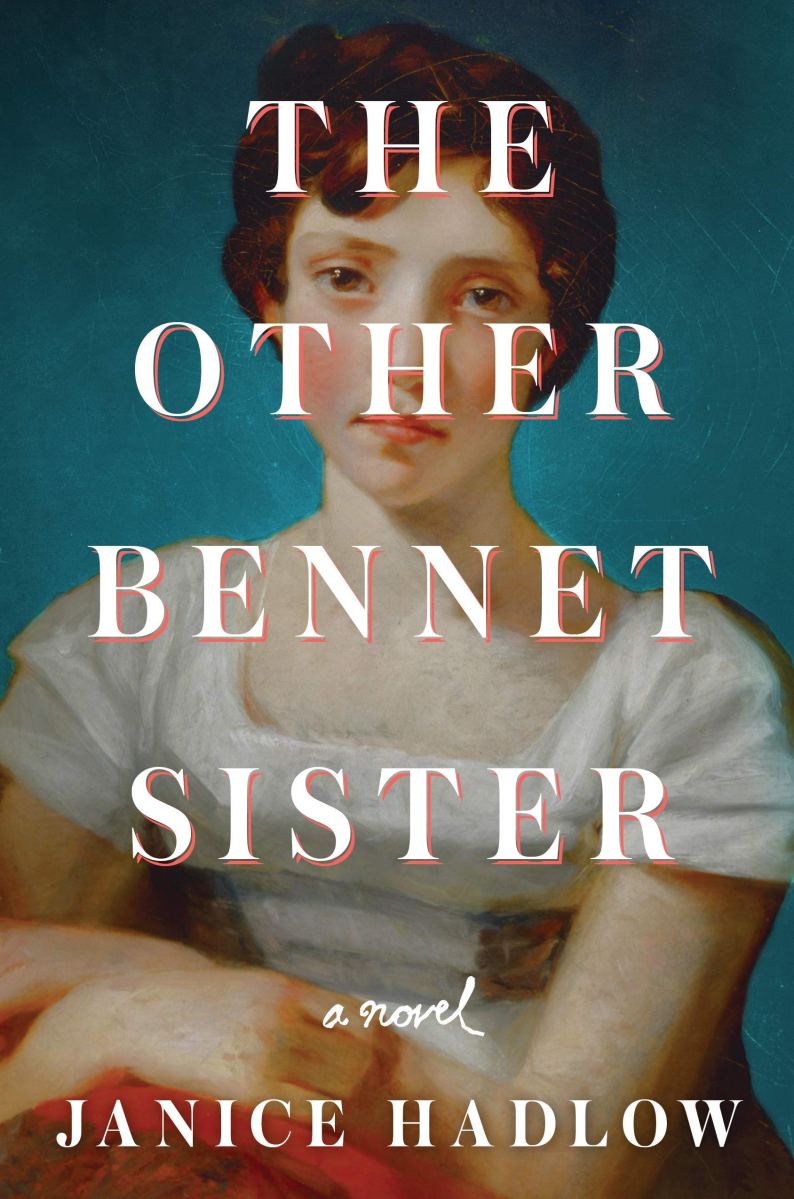
Shidduch Lit: "The Other Bennet Sister"

This past Shabbos, I began "The Other Bennet Sister" by Janice Hadlow, and while I am only fractionally in, I am already charmed. 

See the source image

I have read a number of homages to Austen, and so far, Hadlow's is the most satisfying. She captures the language and sensibilities beautifully. The story initially runs parallel to "Pride & Prejudice," through Mary's eyes, intertwining, at times, Austen's dialogue with Hadlow's, and they seamlessly flow together.

Mary is "The Other Bennet Sister," and she is captured in a heart-breaking light. Sandwiched between four beautiful sisters, Mary, the only plain one, finds herself scorned by her mother and ignored by her father, who only cares for Elizabeth. She becomes serious and pious as an attempt to overcome this "shortcoming," feeling rather lonely. 

In terms of Shidduch Lit, her interactions with Charlotte Lucas definitely qualify. "[Mrs. Bennet did not] hesitate to dwell, with all the sympathy at her command, upon the disappointment [Lady Lucas] must feel at Charlotte's still remaining unmarried at the age of twenty-six, especially as there seemed so little chance of her changing her situation."

Charlotte and Mary have a number of interactions, and it is with Mary that Charlotte reveals her impatience and frustration. While Bingley leads her out for the first dance at the Meryton Assembly, he makes his preference to Jane clear by the dances following. 

"I know very well what I must say next," continued Charlotte. "I must smile and nod and look unconcerned at my dismissal, whilst laughing and teasing Jane about her new conquest. And that is what I will do. I'm used to it. but I tell you what it is, Mary—I'm not sure if I can do it for much longer. . . I am nearly twenty-seven years old. And not once has anyone looked at me with the admiration Mr. Bingley is now directing at Jane. Not once have I been the one around whom other women gather, congratulating, and exclaiming. No—it is always my lot to cheer the triumphs of my friends. . . Lord knows, I don't expect much. But I should like to have something of my own before it is too late. Some mark of affection, some sign I have been wanted and preferred." 

"You have parents who love you," ventured Mary, "and brothers and sisters to care for." 

"Yes," replied Charlotte, "and I know that should be enough, but with every day that goes past, I find that it isn't, quite." 

Charlotte later says: "When I was about your age, I imagined marriage was a reward for good behavior and patience. I thought if I was good and obliging and did as I was told, it was inevitable that I should end up as someone's wife. If it didn't happen this year, then surely it would in the next. But I waited and waited and smiled and smiled, and yet here I am—a single woman still." 

She then describes the sorry state of old maids, who have no means of support, and who are looked down upon and condescended to by society. She has decided to threaten herself by embracing spinsterhood the following year, and is now putting all her focus in securing a marriage partner. 

" . . . I'm prepared to do anything I can—within the bounds of propriety, of course—to find a respectable man to be my husband. If such a one were to cross my path tomorrow, I should not answer for his chances of escaping me." 

Charlotte, plain like Mary, sees in her a woman of similar situation, and feels she can be honest with her in a way she cannot be with Lizzie. Lizzie is young and beautiful, and can talk of love marriages. But Charlotte will not, cannot, wait for love. She wants a home of her own. She wants status. She wants to be married. 

She tells Mary: "Don't waste time as I have done waiting for something to happen. Fortune really does favor the brave, you know. Don't believe you can find happiness celebrating the good fortune of others. An eternity spent smiling and cooing over the good luck of your friends makes the heart sick in the end. And above all, don't long for what you cannot have, but learn to recognize what is possible, and when it presents itself, seize upon it with both hands. It seems to be the only route to happiness for those of us born with neither beauty, riches, nor charm."

OK, my hands are cramping with how much I've quoted, but these passages really spoke to me. For a long long time I had to go to vort after vort of "baby" cousins, smile and be gracious and wish Mazel Tov while I wondered what the heck I was doing already that rendered these kiddies married while I remained the unmarried freak. 

Anywho, like I said, I'm not that far in. I'll let you know if I liked the ending.

Monday, February 1, 2021

Shidduch Myths: "All the Good Ones are Taken"

Sarah Eckel's book devotes each chapter to a "reason" why someone is single (too available, etc.) and destroys the faulty logic behind it. While some I have addressed in the past, others occurred to me while reading it that I thought would be fun to tackle. 

"All the good ones are taken." 

Whilst in my single days, I attended an afruf one Shabbos (the outing was memorable as we had to trek to another shul while dragging along a toddler nephew since we were babysitting) and I saw there a recently married neighbor along with her husband. 

His appearance was not only rather handsome, he exuded an aura of what I interpreted to be a pleasant personality. While wishing this acquaintance Gut Shabbos, I whispered to Ma (sotto voce, in retrospect), "She got such a cute one!" 

At the time, while happy for my contemporary's "success" in "snagging" a "cute guy," there was also the accompanying understanding that my options had dwindled further. There is a limit, after all, to good-looking, personable gentlemen. So, despite my Hungarian heritage (being appreciative of a chiseled jaw), I did not demand that feature in a future spouse. I "had to" focus strictly on qualities like kindness, intelligence, and tolerance for my sneaker collection. 

After meeting Han, however, I was surprised that he was "still available"; how could it be that some savvy huntress hadn't downed him with a tranquilizer dart and dragged him back to her lair? How was it possible that this package of fabulosity hadn't been "snatched up"?

Because, if people were like limited edition Adidas with gold laces, then yes, we could apply the premise of supply and demand. But people aren't commodities. They are complex individuals with inner worlds who interact with others in different ways. 

Additionally, there is the incorrect belief that if someone is married, then they must be "good." Well, no. A lot of jerks and mean girls are married. It's not like every young couple you meet has a shared glowing halo of goodness. 

What does "good" mean, anyway? For some, it's simply impeccable appearance; an appealing combination of facial features paired with a low enough MBI swathed in a rockin' wardrobe (that goes for men and women). For some, it's someone who visits his grandmother every Sunday then volunteers at the soup kitchen. For some, it's an admirable career choice (hello, Jewish doctor!) 

For others, "good" simply means "good for them." 

So while a number of men (ok, many, many men) ran screaming for the hills after they met me (why? Gosh, the list goes on: too tall, knows too much, too fond of lipstick, etc.), Han and I are good for each other.

To quote Amy March, "You don't need scores of suitors. You need only one, if he's the right one."

Monday, August 24, 2020

Shidduch Lit: It's Not You

 OK, I know I have been saying that the persecution of singles takes place all over, in all cultures, countries, and societies, but I don't think that it really hit home until I read Sara Eckel's It's Not You: 27 (Wrong) Reasons You're Single

I mean, I thought it took place on some level, but not to the extreme as it is in the frum world. From what I've been gleaning from this book, which was recommended by an anonymous follower, the perception of something inherently wrong with singles is a view shared by, well, the entire human race. 

As I read, I was surprised how practically every sensation I experienced as a single was accurately described. Her chapter on being picky was practically my post on the same topic, word-for-word. 

That lead me to another epiphany: I'm expecting too much from our community. 

If the entire human race finds singlehood terrifying to look at, how is it possible for the frum demographic to calm the hell down? Eckel is describing a lifestyle where people aren't particularly religious yet they expect everyone to pair up; our faith demands that men get married and make a go at populating the earth. 

I can't expect the frummies to become mellow with the whole concept of "older singles." The campaign slogan, instead, should be kindness. Or tact, at the very least. 

Tragedy exists in a multitude of forms. People are born with disabilities. People die young by illness or accident. People yearn to be parents, but remain childless. Those subject to those circumstances must struggle with hurtful comments as well. 

The problem isn't the wrong perception of singlehood. It's the typical reaction that in our discomfort and need to control, we often say things in a desperate attempt to believe that we can prevent such circumstances, that if we do the "right thing" then we shall be thusly spared. 

So, single person, you must be too picky. You must be commitment phobic. You must not be trying hard enough.

Now we can all sleep at night. 

To get back on topic, Eckel's book is an excellent read for those who have been battered by well-meaning yet ego-devastating comments. I would have highlighted and posted 85% of it and reposted it, when it's much more gratifying to simply read it. She doesn't simply make a statement like "that's ridiculous"; she backs it up with other papers, other thinkers (even Brene!), other points, logically disproving the myth at hand.

Thursday, June 20, 2019

Shidduch Lit VII

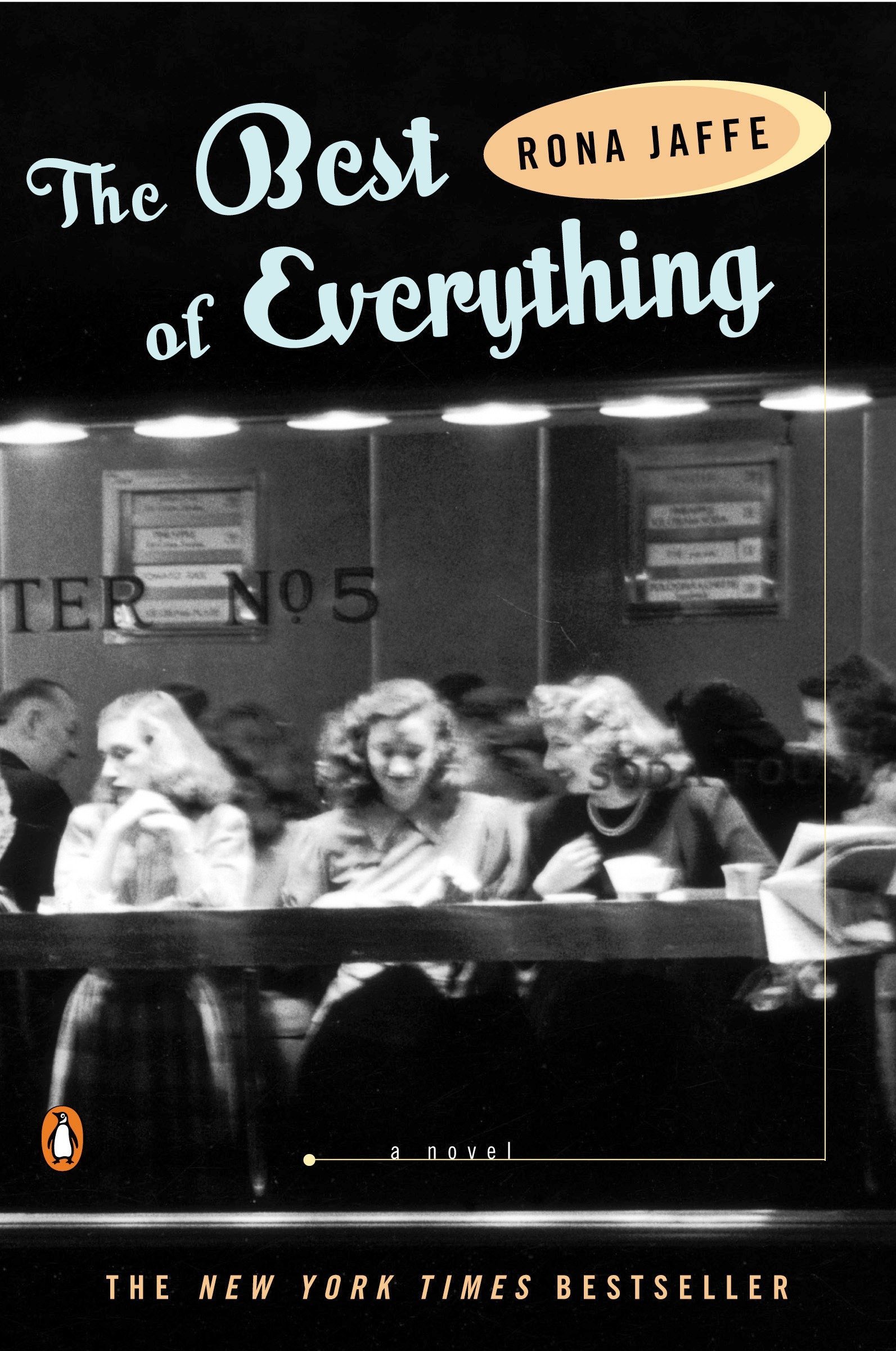
Rona Jaffe's The Best of Everything:
https://images-na.ssl-images-amazon.com/images/I/91qLvxXrbcL.jpg
This book takes place in the 1950s, as young women flock to Manhattan for secretarial positions. There is a scene where a group of single women attend the wedding of a co-worker. Our heroine is Caroline; the co-worker is Mary Agnes.
 
"You'll find somebody," Mary Agnes said. "Don't you worry." 

"I'm not worried, Mother," Caroline said. 

"That's a good attitude," said Mary Agnes, licking the salt off her fingers. "I admire you for it. Most girls our age are scared to death if there's nobody on the horizon, and that's silly. Because if you look at the girls five years older than we are, why, I don't know one who isn't married." 

"I do." 

"Are they terribly ugly?"

"Quite the contrary. I've met some at parties who are very pretty and smart, too, with good jobs." 

Mary Agnes' eyes widened as if she were about to expound some great and mysterious bit of philosophy. "Well, she said, perhaps there's something psychologically wrong with them." 

Caroline clamped her lips together to keep from laughing and jiggled her empty glass so Mary Agnes could see it. "I've got to get a refill," she gasped, and fled to the desk that was serving as a bar. The whole conversation had been so ludicrous, really, with Mary Agnes smug now that she had landed her man and she herself the adventurous but rather pathetic figure of the attractive unattached girl. It made her want to laugh when she thought of Mary Agnes' comments, and yet, unaccountably, they hurt a little too. Because as always she could see and hear everything on two levels, the one that told her how silly it was and the one that allowed her to become affected and upset. She was only twenty-two, she had been out of college only two years, and she knew she was going to get married someday . . .Caroline knew she had lied to Mary Agnes because one always lied to such people if one intended to survive. But she couldn't lie to herself. She was worried about getting married. She knew it was ridiculous, but she was worried. She wondered whether every girl felt the same way she did, or whether it was a personal foolishness. 


Sound familiar? It did to me. Plenty of my posts dealt with this same dual feelings that the people who made ridiculous comments were ridiculous, of course I'll meet my one-and-only someday—but what if I don't?

Then this passage, as Caroline contemplates her dating life: 

She was realizing already as she came to the end of her second year in New York that thoughtfulness like this was hard to find. There were men . . . all good looks and charm . . . There were dozens of utterly mismatched blind dates that she had been inflicted with in the past two years, a sentence of hard labor starting with the words (usually uttered by some nice older woman who hardly knew her or the boy) "I know a nice young man for you to meet." These amateur matchmakers seemed to think the mere fact that Caroline wore a skirt and the man wore pants was enough to make them want to hurl themselves into each other's arms. And there was the majority, the so-so dates, the young men who didn't particularly care about her or she about them, but who continued to call her once in a while for dinner or drinks because they too were marking time. 

There is nothing knew under the sun. Nor is our situation specific to us frummies. We are simply in a time warp when it comes to our romantic experiences. 

Monday, November 19, 2018

Shidduch Lit VI

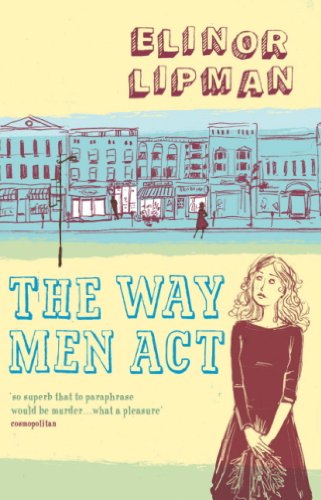
  • The Way Men Act by Elinor Lipman
https://images-na.ssl-images-amazon.com/images/I/51lVGddblyL.jpg
Lipman's prose is swift and snappy; she does not condescend to her audience, a trait I find appealing. 

Our narrator, Melinda, is 30, and feels her singleness keenly. She has returned to her roots, a picturesque college town, after a failed foray into the greater world, working as a florist for her cousin's shop.

What makes this book Shidduch Lit for me is Melinda's dating perspective. She is determined to pair up, and undergoes disappointment followed by disappointment. Here is one scene following a botched date with someone she shouldn't have gone out with in the first place: 
"You're hurt," said [he]. 
"I'm used to it," I said.  
Ouch. 

But she navigates the minefield with self-confidence. She may get knocked down, but she gets back up again, without self-pity or wound-licking. 

This book, obviously, does not have the old-world poshy-woshy rules of courtship, so it has the UA (Un-Aidel) rating established by Bad4.  
  • Bridget Jones's Diary by Helen Fielding 
My sister brought by her copy of Bridget Jones' Baby, and I sheepishly confessed I hadn't read the first two books. She was scandalized. 
https://images.gr-assets.com/books/1292060045l/227443.jpg
I slunk to the library and applied myself to the 1996 original novel. Wow. Really long time ago. I remember when I read snatches of it from my sister's newlywed nightstand. But I had never consumed it in its entirety. 

Bridget is in her thirties; single; obsesses about her cigarette, calorie, and alcohol consumption; wonders what is wrong with her that she's alone; and can't stomach the company of the "Smug Marrieds." 

Cigarettes and alcohol aside (my vice is sugar), I found this book to be an excellent candidate for Shidduch Lit: Un-Aidel Edition (like seriously, totally, epically Un-Aidel) so my audience has been warned. 

I was quite surprised how familiar everything was, in terms of a single's thought process. 

It is supposedly a vague knockoff of Pride & Prejudice, except Elizabeth was chock-full of self-confidence; she was only self-conscious when her family behaved badly socially. 

I will confess to having seen the movie, more than once, simply because it was often on, but as always, find the book more satisfying. The movie insisted on a misunderstanding that I found quite frustrating. So I'm quite pleased with the book.  

Wednesday, November 7, 2018

From Bad4's Shidduch Lit

I never properly read The Outside World by Tova Mirvis. I managed a few rushed pages here and there years ago when I came across it one Shabbos in my brother's house, enough to get the gist but not a proper read. 

So I decided to take it out. While she does presumably depict the frum world, I found her take a little . . . confusing. 

Our (presumed) protagonist, Tzippy, is 22 and dating. She is suffocating under the pressure, and while she emits sweetness when she is outdoors, her mother Shayna is ducking from her indoor fury. 

What I found contradictory was that Tzippy wants to get married, but then after what seems to be a promising date decides she wants to go to Israel (she didn't go to seminary, and wants to experience it three years late). 

There's no conversation about self-improvement or even God, really, in the book. A "good Bais Yaakov girl" would occupy her time, presumably, with shiurim, but there is no conversation about um, kibbud eim? 

Like, none.  

What is also disturbing is how most of the characters—of various levels of observance—have fantasies of fleeing. Running, flying, freeing themselves of the bonds of frumkeit. There are very few examples of fulfilled Jews, more those who focus on the restrictions, as opposed to the positives. 

There is repeated imagery of little girls fantasizing about weddings. It just makes our community seem so . . . small and generic. (I personally didn't fantasize about my wedding as a kid. I was pining for a horse.) 

I agree with the premise that a 22-year-old girl should not be panicking about marriage. But let's not throw away the baby with the bathwater. 

Mirvis, in recent years, has officially left the fold (she even wrote a memoir about it). The Outside World does not reflect much spiritual satisfaction that can be found in a religius lifestyle, and I'm assuming that is a reflection of her personal perspective, to which she is, I suppose, entitled. Yet it would be nice if there was a book available in public libraries that found our lifestyle actually pleasant.

Monday, August 6, 2018

It Was Almost Shidduch Lit

A few years ago, HarperCollins launched "The Austen Project," recruiting excellent authors to retell Jane's novels in a contemporary setting. I read only one so far, Joanna Trollope's attempt at Sense and Sensibility.  
https://austenblog.files.wordpress.com/2013/11/sands_trollope_cover.jpg
I have a fondness for Trollope's work. Even when I do not relate to her plots, her prose is arresting enough to keep me glued. 

But it seems that Austen must remain in Regency times. 

There are witty lines, sharp observations. She even casually sprinkles the names from other Austen novels throughout—Musgrove, Elliot, even the name Austen. 

Yet the modern world cracks heads with the old world too many times. The idea of "heirs" or "heiresses" sounds absolutely archaic, along with Mrs. Ferrars' obsession that Edward marry a specific girl that he has not socialized with simply due to her father's money.  It's not like a near stranger can propose nowadays and not expect pepper spray.

In addition, Edward's loyalty to Lucy Steele sounds rather weak. Maybe a century ago a man could not shame a woman by backing out of an official engagement, but today all it requires is a sit-down where he sadly informs her that he doesn't love her and she deserves better. There you go.

Additionally, Marianne's unchanged age—18—makes everything uncomfortable. Brandon's interest in her borders on perverted as well as incomprehensible, as Marianne is vilely rude to him. The idea that Willoughby would want to marry is laughable; why would a contemporary boy in his 20s marry a teenager after a few weeks' acquaintance? 

Elinor spends more time with Brandon, and they seem to hit it off so well you wonder why he spends his time mooning after a nasty Marianne. They do seem more ideally suited, but for the purposes of repurposing they cannot end up together. 

The reason why women today love Austen is because she describes a world that no longer exists—a world where women could not support themselves, a world with strict courtship rules, a world where husbands and wives addressed each other as "Mr." and "Mrs."

But in a time when any woman can go to uni and become an earner, does any woman need to hang around for the attentions of an "heir"? Gold-diggers go after hot-shot lawyers, rather. 

I don't think I'll be reading the other reboots. I prefer my Austen in the past. 

Wednesday, March 8, 2017

Sorta Shidduch Lit

Anything by Austen is automatic Shidduch Lit, because it describes a time when courtship and marriage consisted of rules and regulations ("dating" was strictly for marriage, etc.). Yet I have read two books that tackle the other aspect of coupledom—the thought processes, the motivations, why we choose. 

The first is a recommendation from TooYoungToTeach, The Guernsey Literary and Potato Peel Pie Society by Annie Barrows and Mary Ann Shaffer. I know it's quite a mouthful, and I'm sure I'm mispronouncing "Guernsey."
http://images.gr-assets.com/books/1351979318l/2728527.jpg
It is a collection of "letters" (this is a novel) between various individuals (as well as our delightful heroine, Juliet) in post-World War II Britain, as the nationals were brushing off the dust of catastrophe and plowing forward into the future. It's historical enough that "dating" still had some restrictions, so we can work with that. 

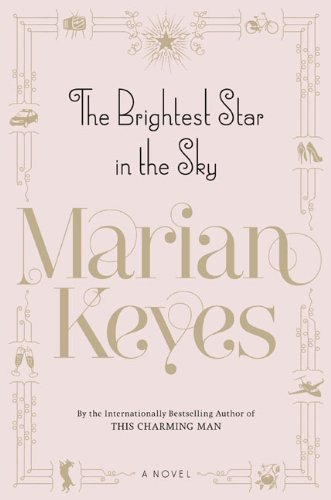
The second is a recommendation from an anonymous commenter on my post swooning over Liane Moriarty: The Brightest Star in the Sky by Marian Keyes. It takes place in contemporary Dublin, and there are certainly no rules and regulations to be seen. Cough, cough, this book is definitely UA ("Un-Aidel"). 
https://pictures.abebooks.com/isbn/9780670021406-us-300.jpg
A few, not just one, couples are featured in this book, and their specific personalities and quirks are described in but a few words. Their needs as individuals, and how that would play out in a relationship . . . mesmerizing. 

There was also a message embedded in there that is my (newish) mantra: You can't make others change. They have to get there on their own. You can only change yourself. (Another reminder to the optimistic souls who think they can heal broken, angry men with their love.)     

I was offended to see that goodreads parks Keyes' work under chick-lit. How insulting and derogatory. 

What is very important to note is that both books are quite funny while still relaying seriousness. Humor and wit are my catnip. 

Wednesday, July 13, 2016

Shidduch Lit V

1) While my childhood was filled with musicals, the works of Fred Astaire escaped my education. (For all his fanciful footwork, he does not pass the Hungarian looks test, you see. Plus by the 1950s, he no longer qualified as age-appropriate for his usual leading ladies. He's 56 in the below video, when the character should have been in his early 30s.) 

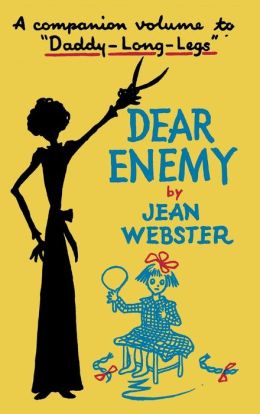
It was only recently I saw the delightful Daddy Long-Legs (with my beloved, Leslie Caron), and always eager to read the source material, took out the book it was based on, by Jean Webster. 
The book itself is quite pleasant, but it was the attached spin-off, Dear Enemy, that qualifies as Shidduch Lit. While I was reading it, my nighttime slumber was severely compromised. Odd, since no book had ever discomfited me in such a fashion. 
http://www.e-reading.club/illustrations/1039/1039621-_0.jpg
The book itself has but a few passages regarding courtship and marriage, yet all truisms in this day and age, even though it was written a century ago. They are mentioned almost casually, and in passing. 

It is quite necessary to read D.L.L. first, or else one will not understand the whole basis of the sequel. They are not difficult reads; I would recommend them both.

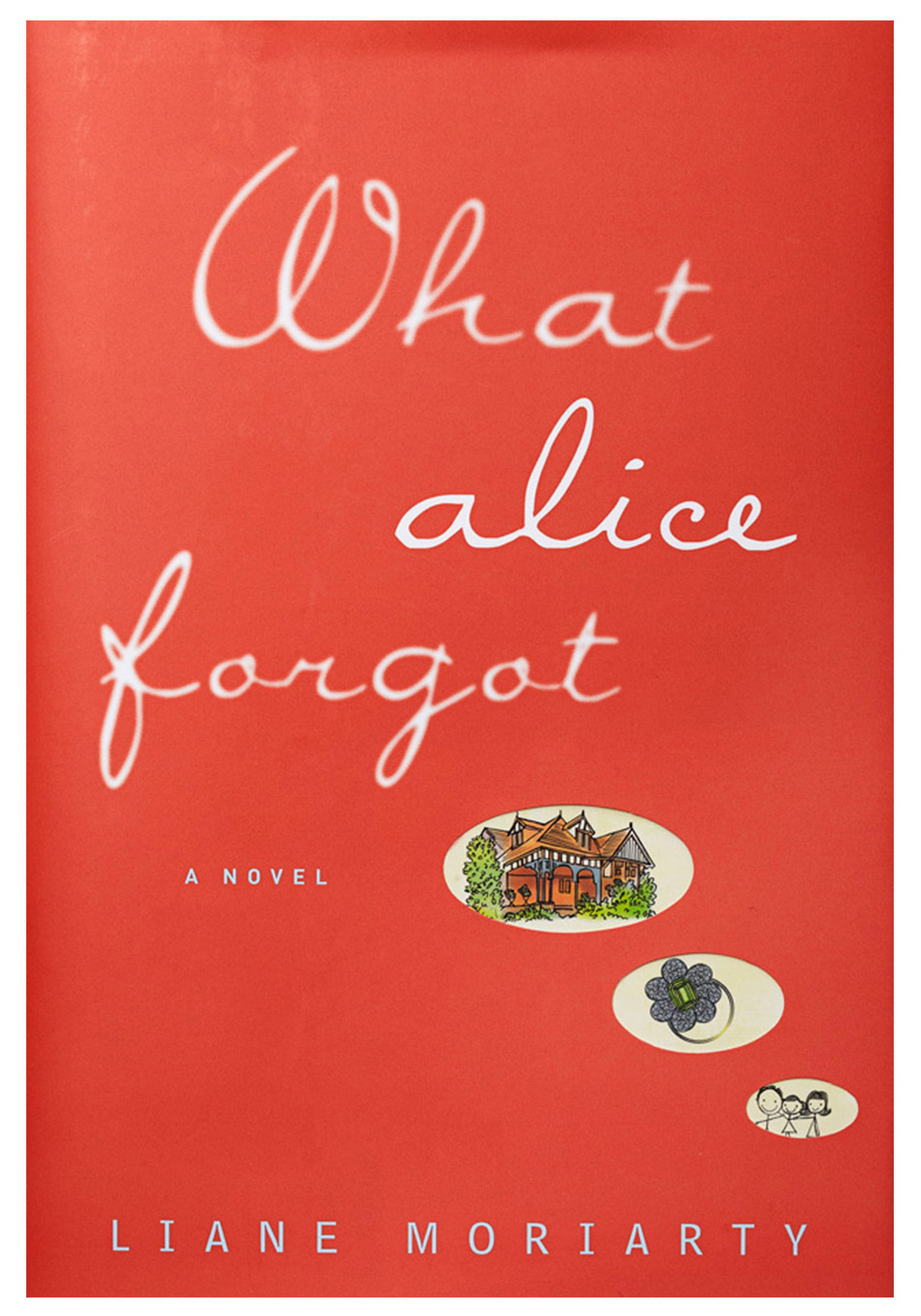
2) I bring before you another TooYoungToTeach recommendation, What Alice Forgot by Liane Moriarty. I took it out once, and in typical fashion had taken out too many reads at one time. I was surprised, however, that I was unable to renew. The book came out in 2009—why should it still be in such popular demand? 
http://static.oprah.com/images/o2/201506/201506-summer-reading-12-949x1356.jpg
Well, that became clear quite quickly. 

I do not know the official Bad4 parameters for "Shidduch Lit," as this may be merely "Marriage Lit"; not the tale of the courtship itself, but the state of relationship following the wedding. 

It reminds the reader of the importance of being able to see people not as "good" or "bad." It reminds us that being wholehearted will sometimes knock us down, but it is worth it. It reminds us of . . . well, that's a spoiler, and I don't want to spoil anything. TYTT was very considerate of that.