"Why did it take you so long to get married?" she asked.
I'm being accused of being picky after marriage.
"Because my man is only for me," I retorted.
It’s not good manners for women to tell other women how to dress; that’s the job of male fashion photographers. Women who criticize other women for dressing hot are seen as criticizing women themselves — a sad conflation if you think about it, rooted in the idea that who we are is how we look. It’s impossible to have once been a teenage girl and not, at some very deep level, feel that.
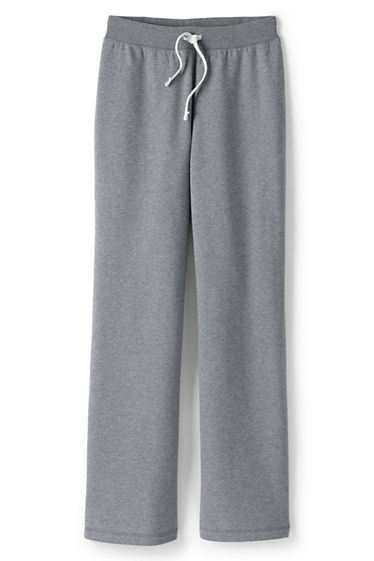
But yoga pants make it worse. Seriously, you can’t go into a room of 15 fellow women contorting themselves into ridiculous positions at 7 in the morning without first donning skintight pants? What is it about yoga in particular that seems to require this? Are practitioners really worried that a normal-width pant leg is going to throttle them mid-lotus pose?
We aren’t wearing these workout clothes because they’re cooler or more comfortable. (You think the selling point of Lululemon’s Reveal Tight Precision pants is really the way their moth-eaten design provides a “much-needed dose of airflow”?) We’re wearing them because they’re sexy.
This is the opposite of escapist reading. Knausgaard plunges you into the material world, not just with his choice of subjects — apples, adders, tin cans, faces — but in the telling. He narrates and philosophizes as he empties the dishwasher, boils macaroni, combs lice from a child’s hair. A whole entry is sparked when a daughter loses a tooth and gives it to him — it’s not her first, and thus has no drama for her anymore. Knausgaard is left holding it and wondering why we stop marveling at loose teeth, why we stop marveling at the world. This becomes the central preoccupation of the book: to restore our sense of awe, to render the world again strange and full of magic, from loose teeth to rubber boots to hardened pieces of chewing gum (“which with their grey color, hemispherical shape and many little indentations resemble shrunken brains”).
In one scene, Knausgaard’s daughter throws up on him on the subway: “The stench filled my nostrils, and vomit was dripping slowly off my jacket, but it was neither disgusting nor uncomfortable, on the contrary I found it refreshing. The reason was simple: I loved her, and the force of that love allows nothing to stand in its way, neither the ugly, nor the unpleasant, nor the disgusting, nor the horrific.”
I recently complained to my wife about how our kids’ sleep schedule (or lack thereof) was stealing the time I needed to be truly ready for this moment. I immediately felt guilty. It occurred to me that I had to think of these frazzled pretravel days — and all of our days — differently.
After all, what’s the point of saying, “Here I am,” when you’re not present at home? What’s the point of seeing the Kaaba if you can’t appreciate the miracle that is two manic munchkins running around after midnight?
. . . part of me believes I still have a chance to do it right — starting before I leave. That means watching another “Paw Patrol” episode with patience instead of resentment, and bringing renewed energy to being the kind of dad who will return to kids who have actually missed him.
The mundane does not interfere with the sacred. The mundane is the sacred.. . . I hope to return to my family in Virginia, see a bag of soiled, affordable diapers in the trash near the doorstep, hear the voices of babies who are gearing up for another all-nighter, and smile, grateful to be home.

The pressure to look a certain way on social media can do much more than distort our image of the musicians other people actually listen to. . . None of this behavior is all that new, although the form it takes is. Friends have always showed off to friends. People have always struggled to remind themselves that other people don’t have it as easy as they claim.
Think of the aphorism quoted by members of Alcoholics Anonymous: “Don’t compare your insides to other people’s outsides.” Of course, this advice is difficult to follow. We never see other people’s insides.
And so it went, and I kept at the beautiful box I was crafting for myself. A shoe box covered in stickers and fake jewels. The kind you would make for a pet parakeet you have to bury. I would dream about Joe at night, and in the morning I would post something silvery and eye catching. It was always just tinfoil, though, not truth. And I prayed no one would notice. . .
A girl who follows me, with whom I’ve spoken only a handful of times, told me it was so “on brand.”
My brand, specifically: funny, carefree, unromantic, a realist.
I’m like the chief executive of my own company, so I’m familiar with my branding, but its success doesn’t thrill me the way it used to. Instead of feeling validated by her comment, I felt deflated. I barely know this girl, and yet she knows me, knows my “brand,” and I am overwhelmed by the desire to tell her that I am fake, that I am heartbroken.
 |
| Liz Lemon's Wedding on 30 Rock. Two weirdos in love. |
“Every death can now be understood as suicide,” she writes. “We persist in subjecting anyone who dies at a seemingly untimely age to a kind of bio-moral autopsy: Did she smoke? Drink excessively? Eat too much fat and not enough fiber? Can she, in other words, be blamed for her own death?”

