Friday, September 30, 2016

"The Eve of Rosh Hashanah" by Yehuda Amichai

The eve of Rosh Hashanah. At the house that’s being built,
a man makes a vow: not to do anything wrong in it,
only to love.
Sins that were green last spring
dried out over the summer. Now they're whispering.

So I washed my body and I clipped my fingernails,
the last good deed a man can do for himself
while he's still alive. 

What is man? In the daytime he untangles into words
what night turns into a heavy coil.  
What do we do to one another—
a son to his father, a father to his son?

And between them and death there's nothing
but a wall of words
like a battery of agitated lawyers. 

And whoever uses people as handles or as rungs of a ladder
will soon find himself hugging a stick of wood
and holding a severed hand and wiping his tears 
with a potsherd. 

Discovered via this article by Rosie Schaap. 

Thursday, September 29, 2016

Battle of the Bulge: When and How

Every once in a while, Luke decides to overhaul his diet. It is very tiresome. 

". . . and then instead of getting the [insert deep-fried high-carb junky food item], I get the [insert nourishing protein and non-fatty prepared vegetables]!" 

"No, REALLY?" I reply, head on table. That's it, then: I'm not preaching to him anymore, especially since he's going to take the credit for it anyway. 
 http://farm1.static.flickr.com/29/45845626_9e2d9dca5e.jpg
But you won't get off so easy. Read on. 

1) I'm an early riser, early to bed-er; my appetite usually awakens with the day, and shuts up by 7 pm. However, if I am thrown off my schedule, usually do to a joyous occasion that involves late-night partying . . . well, if I eat late at night then I am not hungry in the morning, and then I crave food later than I typically would. I then have to reprogram myself to the original setting. 

"You are when you eat," this article by Emily Laber-Warren echoes. Logic—and biology tends to be logical—would dictate that we only require calories when we need fuel. Ergo, consuming food, then going to that wonderful energy-conserving activity, sleep, doesn't make much sense. 

The article contains research that shows allowing the boch to "rest" (technically fast) for 12 hours nightly gives it a boost for the next day. The Rambam advocated such a rest as well, that digestion cannot be always in motion; the organs need a break. Waaaay before hitting the sack.

The list at the end of the article does take night owls into consideration; as long as 12 hours of no food is in play, the benefits are there. 
http://67.media.tumblr.com/tumblr_m8os9aGjTr1qzx1e0o1_500.jpg
2) I'm a J, so I'm always planning ahead. Planning my meals bring me great joy. 

Luke, however, is a P. He usually does not plan his meals. "Maybe I won't be in the mood of _____," is an oft-uttered statement of his, and yet we both know that hunger never saw bad food. Especially in the office. 

While I tote to work prepared lunches, he moseys out to take-out places. Ergo the head on the table. Fast food is not good food, that we all know. If the waist is a consideration, into the kitchen you get. 

“If a decision is going to be implemented immediately, we just care about the immediate consequences, and we discount the long-term costs and benefits,” Dr. VanEpps said. “In the case of food, we care about what’s happening right now – like how tasty it is – but discount the long-term costs of an unhealthy meal.”
On the other hand, when you order a meal in advance, “you’re more evenly weighing the short-term and the long-term costs and benefits,” he said. “You still care about the taste but you’re more able to exert self control.”
When one is hungry, one doesn't care. It's strictly short-term: Get me un-hungry. But when planning (in general), both the long and the short is taken into account. I love planning.
http://lakelandcamel.scene7.com/is/image/LakelandCamel/19646_1?$300$
I have one for milchig and fleishig.

Wednesday, September 28, 2016

Ani Kinor

It was a regular weekday morning. I scurried along with the rest of the commuters, off to another day at the office, a day like any other day. 

I was mildly anxious about something, but then, mildly anxious is my default state. Like I said, a day like any other day. 

I passed the spot where the musicians usually play, flutey pan-pipes and bland muzak and crooned Motown. But today was my favorite, a serene, dignified violinist with a Mona Lisa smile. She always gathers a crowd. 

I knew the tune that throbbed from her fingers, caressing my ears: "Yerushalayim Shel Zahav." My chest expanded as the familiar notes uplifted my soul, and I sang, grinning, under my breath: "Ha-lo le-khol shirayikh, Ani kinor."


I had been so blissful it didn't occur to me to drop some money into her jar until I was at work. Shoot. 

But the next thought that occurred to me was Yosef. The teenage Yosef, freshly abducted, on his way to the unknown and frightening future, but through his terror breaks through the scent of sweet spices. I am with you, is the message. 


As He is with me. And whoever else who was able to hear the words, for the upcoming yuntif: 

"A ram's horn calls out on the Temple Mount in the Old City . . ."
   

Tuesday, September 27, 2016

Got the Thinks

"I feel like" vs. "I think that." Molly Worthen wants to bring the latter back ("Stop Saying 'I Feel Like'"). 

A couple of weeks ago, the parsha dealt with the Egla Erufa, a seemingly odd ritual when a dead body was discovered. Part of the ritual is when the elders and kohanim of a city would both argue for the right of responsibility for the man's death. 

Obviously, neither the elders nor kohanim were guilty for his murder. Yet, all these individuals insisted on taking the rap for it. 

This past Shabbos I was explaining to Eewok (who, like any soul, is fast with the "Not my fault") that Yehuda was worthy of melucha because he took responsibility of mechiras Yosef, the safety of Binyomin, and the incident with Tamar. 
http://toirahruv.com/wp-content/uploads/2013/11/Judah-and-Tamar.jpg
"I feel like" is another way we abdicate responsibility. 

When we say "I feel like," there is nothing to argue. One cannot argue with a feeling, after all. "Well, that's just what I feel. I dunno why." 
Natasha Pangarkar, a senior at Williams College, hears “I feel like” “in the classroom on a daily basis,” she said. “When you use the phrase ‘I feel like,’ it gives you an out. You’re not stating a fact so much as giving an opinion,” she told me. “It’s an effort to make our ideas more palatable to the other person.”
I understand the need to "make our ideas more palatable to the other person"; I'm a non-confrontationalist. But when it comes to opinion, I'm usually not frightened to voice it. It's what I think, after all, based on personal experience, information, and my own hopefully logical conclusions.  
Yet here is the paradox: “I feel like” masquerades as a humble conversational offering, an invitation to share your feelings, too — but the phrase is an absolutist trump card. It halts argument in its tracks.
When people cite feelings or personal experience, “you can’t really refute them with logic, because that would imply they didn’t have that experience, or their experience is less valid,” Ms. Chai told me.
“It’s a way of deflecting, avoiding full engagement with another person or group,” Elisabeth Lasch-Quinn, a historian at Syracuse University, said, “because it puts a shield up immediately. You cannot disagree.”
Providing the other person isn't refuting my argument with meaningless "Well, that's stupid" retorts, I should be fine. 

It's "I think, therefore I am," not "I feel, therefore I am." Heck, animals feel (yes, some are capable of logic, but we are not discussing elephants right now).  

Is it so terrifying to take responsibility for an opinion? It's not even bearing the onus for a random corpse. 

Plus, having opinions makes one interesting. Be interesting. 

http://www.relatably.com/m/img/interesting-man-memes/best-memes-most-interesting-man.jpg

Monday, September 26, 2016

Three Women in a Car

I was holding court from the back seat.

After a lovely outing, the conversation on the drive home strayed to the nitty-gritty. 

It began with the driver's claim that this world nowadays is so "terrible." As a history buff, I . . . lost it. 

"What do mean, 'this world is terrible'? You know what life used to be like? Babies rarely survived infancy! Do you understand that, once, parents wouldn't show affection to their children because chances were that child wouldn't make it to adulthood? They would shield themselves from possible loss! Never mind the statistics of women dying in childbirth! Don't you dare say this world is terrible!" 

Ma, in the passenger seat, who has actually lived in the old country, began to scream as well. "We are going to throw this wonderful life back in the Eibishter's Face, that what He has given us, this comfort, this safety, and say it's no good? Where's the hakoras hatov?" 

The driver was silent a moment. "But people are so unhappy. They have such problems." 

"It is impossible to have joy without gratitude!" I bellowed, in full Brené mode

Another moment of quiet. "Well, good for you that you are that way, but not everyone is born like that." 

Then I roared some more. "You think that one has to be born with it? We are Jews! We have bechira! You make a choice to be grateful!" 

She had slowed to 2 m.p.h. to drag out this conversation whilst listening carefully, igniting the murderous wrath of more than one fellow motorist. Though I did fear a mobster taking a swing at the car with the ubiquitous baseball bat, Ma and I managed to stay on target, the pitbull's teeth sunk in the metaphorical mailman's leg.

I've been hearing it a lot lately; this world is so hard, this world is no good, it used to be easier. 

Sure. In some ways, yes. There were less existential crises when surviving the winter was the main goal. 

There will always be a trade-off. We don't go hungry. We have washing machines. We have freedom of religion. That's grand. But we should have no difficulties, at all, either? 

To live in true paradise, we have to bring Moshiach first. 

Thursday, September 22, 2016

Thursday Brooks

We have three articles by David Brooks:
http://media.salon.com/2015/05/david_brooks2.jpg
1) "Three Views of Marriage." There are three predominant lenses nowadays for how marriage should be viewed:

    a) psychological. Searching for someone who scores high in pleasant character traits, and not choosing to overlook problematic middos. Not focusing on factors that are unimportant or short-lived issues. This viewpoint believes no one really changes.

    b) romantic. Love. Looooooove. If a couple initially has it, then they will be inseparable come the hard stuff. Love will keep us together, love is all you need, cue any song from anytime.

    c) moral. Marriage ain't just about this man and this woman, but about something even bigger than them. (This is where we come in.) A good marriage here is for the improvement of oneself, not the significant other. None of us are perfect, and with a "helpmeet," one can (hopefully) become one's best self.  

This last perspective has the faith that we can become better people by wanting to put the other first. I do think that requires the trait of "willing to improve," which will loop us around back to factor (a). 

Brooks is the fan of the last one, obviously. 

2) "The Power of Altruism." Are humans selfish or selfless? Pessimists prefer the former, optimists the latter. Fascinatingly, if one expects people to behave selfishly, then they will: The Economic vs. Moral lens. 
Samuel Bowles provides a slew of examples in his book “The Moral Economy.” For example, six day care centers in Haifa, Israel, imposed a fine on parents who were late in picking up their kids at the end of the day. The share of parents who arrived late doubled. Before the fine, picking up their kids on time was an act of being considerate to the teachers. But after the fine, showing up to pick up their kids became an economic transaction. They felt less compunction to be kind.
Once money is on the table, courtesy goes out the window. "I thought I was being nice. But if you are going to make it about money, well, then, fine." I like helping out my siblings with babysitting (usually) because I like being helpful. Yet when one insulted me by proffering some cash, I frostily responded, "That's not my hourly rate." 

3) "Making Modern Toughness." Doesn't everyone seem more fragile nowadays? Instead of raising hardy children to deal with blazing sun and furious winds and pounding rains, kids are being fussed over and shielded in hothouses from all elements. 

Yet hardiness often resulted in toting "20-ton shields" (Brené term), where soft, fuzzy emotions were walled off. 
Perhaps it’s time to rethink toughness or at least detach it from hardness. Being emotionally resilient is not some defensive posture. It’s not having some armor surrounding you so that nothing can hurt you.
The people we admire for being resilient are not hard; they are ardent. They have a fervent commitment to some cause, some ideal or some relationship. That higher yearning enables them to withstand setbacks, pain and betrayal. . . 
People are much stronger than they think they are when in pursuit of their telos, their purpose for living. As Nietzsche put it, “He who has a why to live for can bear almost any how.”
On a connective note, lend an ear to this shiur by Esther Wein

When we find a cause, then slights and setbacks loose their sting; we can be strong and sensitive.   

Wednesday, September 21, 2016

'Cause I'm Happy

I was driving home along sleepy beach streets, where cars can tootle along without obnoxious honking. I had frolicked in the surf, one of my favorite activities, when the sun low and meek, as opposed to strong and obnoxious. 

Now, darkness had fallen; the streetlamps cast a dreamy glow. The fishy, salty smell of the sea gently blew in the open car windows. Poking randomly at the media center while keeping my eyes on the road, I prodded awake the classical music station. The opening clarinet of "Rhapsody in Blue" blared. 


So apropos. 

I raised the volume, figuring fellow drivers couldn't find delicate piano work offensive. 

A day well seized, I thought. 

And there it was: Peace. Contentment. Wholeness. 

Joy. 

These moments have a logic of their own. They cannot be predicted, nor willed into being. They are sporadic, formula-less, and precious.

They do not last, of course. But providing one is open to them, the memories can be collected, like shells on the shore.

Tuesday, September 20, 2016

What a Nice Comedian

I like to think of myself as a funny person. I revel in humor. I strive to crack a rib laughing. My favorite character in Law & Order is Detective Lenny Briscoe (Jerry Orbach), who always had a quip when leaving the crime scene. Yeah, I know there's a body, but one can still be tasteful.

But I don't like meanness. Mocking someone is not humor. Because I believe humor = poking fun at oneself, those lacking a funnybone think I'm being serious and scootch nervously away. Amy Schumer understands: Either you got it or you don't.

A new crop of comedians are foregoing the kvetching and snarkiness ("Try Some Sweet-Tempered Stand-Up"). 
Comedy clubs have long been packed with head-shakers airing grievances and heatedly picking apart nonsense. But Ms. Long is part of a new breed of young performers more likely to begin a joke with affection than annoyance and to end with ridiculousness, not ridicule. This sunnier stand-up is in part a function of the times, when social media keeps count of likes and favorites, and late-night television is a chummy safe space for celebrities. But the hopefulness is also a refreshing artistic change of pace, a backlash against generations of smug finger-pointing and knowing raised eyebrows.

I recently enjoyed a badchan's performance and—yup—he was making choizik of himself non-stop. The beauty of such a method is that if one sporadically points fun at others, it is okay, because he has already raked himself over the coals.


Mr. Gondelman is pushing back on the caricature of the millennial generation as coddled narcissists — besides defending participation trophies, he also stands up for selfies — while lampooning those who suggest that the problem with the way we raise kids is an abundance of sensitivity and generosity. He’s killing, with kindness.
Mocking oneself also means that one is more likely to heard without resistance later on if deeper subjects are raised. Very crafty indeed.

Monday, September 19, 2016

Meeeeeeeeh

I've fallen hard for the goats. 
http://www.relatably.com/m/img/screaming-goat-memes/GoatMeme4.jpg
They really do.
There has always been chatter about how goat milk is easier on the human system than cow milk. Some with lactose-intolerance are able to tolerate it well. While I, blessed be the Lord, do not suffer from a lack of lactase enzyme and a lover of all things dairy, have become enamored of kecske products.

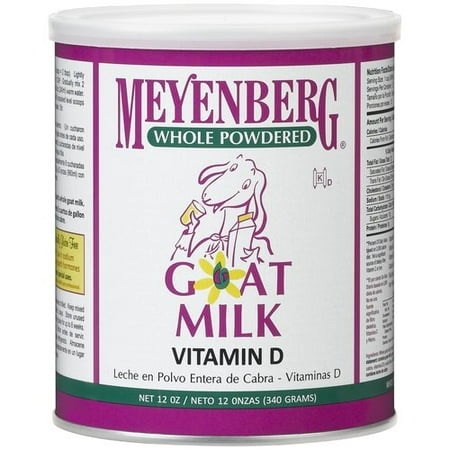
Meyenberg has an army of goat products, some available in Trader Joe's stores, like regular milk and butter (I'm still hunting down the latter). Yet for convenient use, whether it be for office, traveling, or simply home, there is Powdered Whole Milk (there is also Non Fat, but fat is back and I'm not going skim again. Lost twenty years of my life because of Ta's insistence on it being "healthier" when I was a kid). 
https://i5.walmartimages.com/asr/28479400-abf2-47c2-bce5-cfb5b14641c1_1.5cfd7d20fec066f6078baa37e06bb8da.jpeg?odnHeight=450&odnWidth=450&odnBg=FFFFFF
Parents with babies who can't tolerate standard baby formula use this to make a homemade alternative. While not nursing a sensitive bochie, I use it in hot cocoa. For those who like their hot beverages hot, it won't lower the temp like cold milk does. 

Another delightful eiz related offering is Tera's Goat Whey. I don't get enough protein (I'm a carb lover) and I usually stir a scoopful or two of this into my daily lunch soup, basking in milchig yumminess. It doesn't have any added junk like some other protein powders. (There is also a sweetened vanilla version which seems pretty good, but I haven't tried it.)    
http://www.gnc.com/graphics/product_images/pGNC1-24078355dt.jpg