Monday, November 30, 2020

The Chanukah Story

Do you really know the story of Chanukah? 

I certainly don't. It was told in school in a few sentences, not much in depth. I carried away so much misinformation that I made a fool of myself on a college paper by referring to "the Greek Empire." My professor left a notation in red ink that there was no Greek empire. 

Huh? 

Then I learned that the Jews were not dominated by Greek-Greeks, but by the Hellenized Seleucid Empire. Ooooooh. 

That's why, if you don't want to look stupid, like I did, I recommend listening to Dean Henry Abramson on the Chanukah story. Very educational.


Monday, November 16, 2020

Will You Still Need Me, Will You Still Feed Me

I was reading this interview with Chris Rock, and paused towards the end in thought: 

Who do you hang with these days? Who’s your peer group?

I hang with Dave [Chappelle]. I hang with my kids. I hang with Nelson George. There’s not a lot of hanging in the Covid world. The better question is, who do you FaceTime with?

So who do you FaceTime with?

The other day I realized I’ve never met an elderly person that was cared for by their friends. Every elderly person I know that’s got any trouble is cared for by a spouse or a child. Sometimes they have like five kids but only one helps. Where are your friends? Your friends are probably not going to be there when it really counts. [Laughs.] When my dad was dying in the hospital, where were his friends? My grandmother, where were her friends? Don’t get me wrong, you get sick in your 20s, your friends will come to the hospital. It’s an adventure. [Laughs.] You get sick in your 60s, they farm it out. “You go Wednesday and I’ll go Sunday.”

Enjoy them while you have them. But if you think your friends are your long-term solution to loneliness, you’re an idiot.

On one side of my family, there are a group of cousins who are fiercely devoted to each other. No one else in the world matters except for their siblings and their families. They doted on their mother in her final days, never leaving her alone, even when she was in the nursing home for a year. 

These cousins are no longer youngsters. During this horrific year, a number of them have passed. One has sat shiva three times this year. 

They are of the age when friends (if they had them) would no longer be showing up to assist. For them, from the beginning, it was only family; at the end, there is only family. 

"Your flesh and blood," Ma would chastise when us kids would fight. "How can you hurt your own flesh and blood?" 

Friendships are nice, as Rock says. They have their place. But when I see others cast off their family because of "friends," that these friends are now their everything, I wonder how tight that bond is, how long it can last. 

Rock is 55, old enough to contemplate his mortality and wonder what is truly important in life. Obviously if a family member is toxic it is best to keep one's distance, but one cannot deny the connection family has, whereas friendships rarely last into the caregiving stage. 

Han and I joke to Ben that he should please not shove us into a cut-rate nursing home when the time comes. Because it'll be his problem when we are old and creaky (but with excellent skin, because of the creams we use now), and no one else, no matter how "close," will want to take it on. 

Wednesday, November 4, 2020

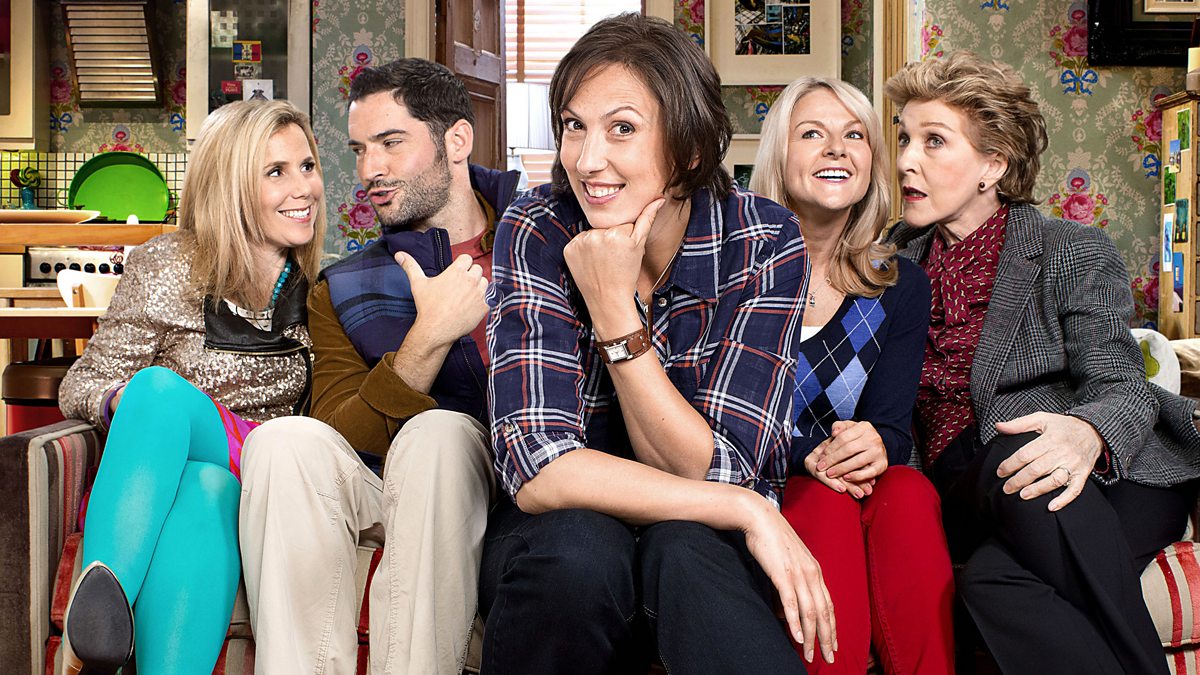
My Dear Miranda

https://ichef.bbci.co.uk/images/ic/1200x675/p07s9d0m.jpg

Is anyone here familiar with Miranda? Oh, you must watch it. It's on Hulu, and I'm finally giving it the time it so richly deserves. 

Miranda Hart, for those who need assistance, also played Chummy on Call the Midwife (she was excellent!) 

Miranda's character on her comedy is a goofy 35-year-old who tends to walk into things, the despair of her poshy-washy mother who just wants her married. In one episode, she gets a voicemail about a funeral but the message doesn't say who died. She shows up, and is relieved to see her mother is there.

Miranda: Mum? Thank goodness, I've been trying to get hold of you. Why didn't you call? 

Mum: I didn't want you here. I was going to tell everyone you're in prison—less embarrassing than having to admit you're still single. 

This is a common enough scene in Miranda, so, yes, goyim also get single-shamed. 

The joy of Miranda is that she is always completely and unapologetically herself, and even though she may drool at a passing gorgeous man, she can't even pretend to be something she isn't. If she does, her goofiness simply intensifies. 

Her private school friends cruelly call her "Queen Kong," but recent friends get her zaniness and roll with it. 

Maybe because I'm a fellow Amazon, but I find her relatable, even though her antics are definitely out of my comfort zone. 

As more time passes, I wonder why worth is so often applied to marital status. Han was telling me of a shidduch he had made when he was single, and how shadchanus was grudgingly provided quite a long time past the wedding. He felt as though if he had been married, he would have been taken more seriously. 

Maybe that's why my shidduch idea had been blown off (even though they did marry later, with a different official shadchan). 

Miranda's mother finds her ridiculous, but it seems her major concern is her singlehood. 

Sounds familiar. 

Monday, November 2, 2020

Culturally Yours, Mine, & Ours

As we know, we are not the only peoples on earth who utilize shadchanim. South Asians—Indians and Pakistanis, for instance—also dig them. 

Considering how my experiences with shadchanim were less than ideal (they tended to set me up with people who were not remotely on point, then demanded to know why I was saying no), I wondered if their matchmakers are better. Then I thought of the reality show "Indian Matchmaking," where it looked like the same six people were on rotation, so I guess not. 

From reading this article, there is little differentiation in the Indian world to being set up by a matchmaker or a family friend—a blind date is a blind date, like by us. The lovely woman who set me up with Han is a friend of my relative and a machanteneste somewhere on his side.

The interviewees in the article make a point to clarify that while the term "love marriage" is applied to couples who met on their own, it's still the same love story for those who were introduced through a matchmaker. It's not necessarily any less romantic as it would be if they met cute. Like by us, too.

In the same issue of Sunday Styles, there is a Modern Love story by Pakistani woman who grew up in the US. After seeing Bend It Like Beckham, she believed it would be possible for her to end up with a white man, and preferred not to date men of the same ethnicity. 

She moved to Pakistan for work, where it wasn't exactly easy to meet white men; when she became friendly with a fellow Pakistani, she didn't initially see him at all in a romantic light. 

I couldn’t put my finger on what finally attracted me to him. For starters, the brown culture signaling of my imagined biracial relationship wasn’t necessary because we were both brown. Gradually I realized that meant I didn’t have to do my exhausting, race-conscious performance either, the self-deprecating jokes I would mutter about terrorism (or whatever stereotype came to me in the moment), the reflexive ironic shield I felt I needed as the one Pakistani in the crowd. He understood without me having to say anything.

When I was dating, I was hoping for someone who came from a somewhat similar background. When I would go out with guys who were more American in upbringing, I would carefully edit my language lest a Yiddish word or phrase would slip out. If one did, they would look at me in annoyance. 

With Han, I don't have to do that. Especially since he understands Yiddish better than I do, and appreciates my fondness for quoting grandparents (he does the same).

After months of dating, I saw how much space that performance had taken up in my previous relationships: Without it, I was vulnerable and prone. With the weight of constant posturing suddenly lifted, I felt an intimacy I could never achieve with the not-brown guys. Ali and I are married now, and it’s the most comfortable I have ever felt with another human being.

What’s funny is that, in writing this story, I realize I have penned the exact type of propaganda immigrant mothers peddle to keep their daughters in the culture. Before Ali, my mother was fond of telling me stories of some distant friend or relative who married a white man and then divorced, only to find happiness once they remarried a Desi.

This isn’t that, but it’s not not that either. I’m not attracted to my husband because he’s brown, but I also know we wouldn’t have the relationship we have if he weren’t. That’s not to say we’re so similar; if anything, the fact that he grew up in Pakistan while I spent my youth in the Midwest separates us more than most of my past relationships. But what we share in common — an unspoken understanding of a culture that shapes the way we are, whether we like it or not — constitutes a bond much stronger than the rest of it.

You can't hide where you come from, no matter how much you may try. There's a difference being who you are and going into a relationship where your differences are accepted and even celebrated; it's another to subsume oneself in the futile attempt to "fit in." 

I've been teased and even mocked for my stubborn adherence to my heritage, especially since I don't even speak Yiddish or Hungarian fluently. But I'm proud of it, and identify with it, and I hoped to be with someone who wouldn't expect me to suppress it. I did end up with someone who is equally proud of his own background—and we enjoy the fact that our grandparents even knew each other.

Thursday, October 29, 2020

They Got Me

Once upon a time, I would rant on this blog about the horrors of the smartphone. How it decreases meaningful connection. How the blue light messes up our sleep. How the constantly looking down at it gives you neck lines (Strivectin!).  

For years I held out, clutching my purple flip phone, refuses to succumb to the iPhone's wiles. 

Then, a few years ago, I became one of the enthralled masses. 

I still have a lame amount of apps, along with the two requisite social media ones. I'm not sure why I downloaded Instagram, and I regret it. Now I know why my sister has deleted it—more than once. 

On Facebook, there are a multitude of groups that have been rather informative. Originally, Facebook was the place to post pictures of one's perfect life, but those who want to be "influencers" have migrated to Instagram. So Facebook is relatively safe now, if one wants to ask about a good recipe for oatmeal applesauce muffins or sourdough technique or what's the best long wearing mascara. 

But Instagram? Oh boy. It could make nearly anyone (I think the narcissists should be okay) spiral into self-hating flagellation. How can she work full time yet manage to put together such a stunning tablescape? How could she have had a baby last month and be so skinny? Or, how could she be so skinny yet bake that sugar-laden, butter-saturated cake with heavy cream frosting? (Yes, I admit I have body image issues). 

It's a place where women can be rebbetzins yet pose with unsmiling Vogue faces as they drape on couches in stunning attire. It's a place where people humblebrag, who claim to be overworked and up all night with kids but still find the time to take fabulous shots in fabulous clothing in their fabulous homes with their fabulous kids and their fabulous husbands. 

I know, logically, that people are on it trying to promote their brands and businesses, and that few people will buy their products if it has been pitched unglamorously. And not all accounts are alike; many show real people, with real lives, the highs, lows, and everything in between. 

But then I wonder about these people on the other side, who display a life of perfection, but we all know that lives aren't perfect. They yell at their kids. They have arguments with their husbands. Outfits don't fit after a three-day yuntif. 

My friend was feeling inadequate after scrolling through everyone's amazingness, and I reassured her with some cattiness, claiming that yes, while their table might be magnificently set with chargers and dishes and cloth napkins and artfully arranged flowers and candles, who knows what the price of it was? Did she spend a few sleepless nights? Did one of her children nudge a candlestick out of place, causing her to freak? Did she focus all her attentions to get the ideal shot to the point that the yuntif meals consisted of cereal and milk, as no one had time to cook? 

OK, yes, granted, there is probably the Mary Poppins of Mommies out there who managed to get everything done complete with a full Face and whoever she may be, I salute you. But I wonder if there is a way to be more "real" on Instagram while promoting brands and businesses. 

Like, "this outfit is so comfortable and versatile, plus machine washable! Perfect for when your little one barfs all over you." Or "I did put a lot of effort and time into decorating the sukkah—that chandelier didn't get there on its own, you know!—but it gives my family such joy that they're willing to cook and I'm willing to let my house stay a flying mess." Or "If you seriously think I look this attractive while drinking a smoothie, you are not taking advantage of the myriad of filters that are available." 

Or, I could do the simpler option, and delete Instagram. 

Adios.

Monday, October 19, 2020

I Know We'll Meet Again

I haven't put on lipstick since March. 

I don't know who I am anymore.  

I would put on lipstick if I could. But with a mask, it would end up all over my face. Same with foundation/cc+ cream. 

And in fun other news, I'm getting some seeeeerious maskne. The kind that has Luke pointing and going "Ha ha!" and has Han tenderly dabbing my face with Mario Badescu Drying Lotion (which he found reduced in Nordstrom Rack, score!) Oddly enough, this breakout started when I began to actually wash my masks with regularity. Sigh. 

What does one do when a good chunk of their identity and image is tied to "War Paint"? OK, I still do my eyes, but I'm usually behind sunglasses, so the effect is sort of lost. (I never figured out the difference between "effect" and "affect." I should look into that.) 

Ben loved my makeup, once upon a time. He'd coo happily to see my Face. Will he know who I am, when this is over? It reminds me of the time Ma had the flu and didn't go out for a month. When she finally was able to go out again, her Face threw me off. 

But I think Corona has made all of us reconsider our identities in certain ways. I always thought I'd be fine with a life of hermitude, but now that I'm here it's getting rather old. 

I do believe I'll be reunited with my lipstick hoard again. When I'll buff my punim with long-wearing foundation. When—mmmm—I can get my eyebrows threaded.

And if Mashiach is there too, nuch besser. 

Thursday, September 17, 2020

Honey Peeves

I've become a cantankerous broad (my age is showing). With all this talk of "apple and honey," I've become a tad pedantic. 

Because, when we speak of "dvash" in the biblical sense, it is technically date honey, not bee honey. So if we were going for authenticity, everyone would be reaching for a jar of silan. 

And what's the mishagaas about the apple? There's nothing significant about the apple itself. Everyone's making apple cakes and whatnot. But the apple doesn't represent anything! Maybe because one can't really going around dipping any other fruit into honey without it getting uber-messy?

I'm a little sore on this topic because I've never liked honey. Never. I just don't like the flavor. And if you say you don't like honey the first week of first grade then everyone looks at you like you've gone to the Dark Side. 

Because Rosh HaShana is all about the honey! 

Well, we're all grown-ups now, right? We know that if someone doesn't eat honey on Rosh HaShana she will not be doomed to a horrific year. Especially since it's about the sweetness, dating back to times when sweetness tended to be expensive. Honey was the available sweetener before cane sugar became a thing. 

I really like maple syrup and agave. I just don't like honey. Plus, now that I'm old and crabby, it also disagrees with my stomach. 

Han actually told me last week that he doesn't like honey either. I don't think I've ever been more in love. 

I'm not throwing out the baby with the bathwater. I'm still going to slice up an apple, but dip it into the sweetness of my preference. I've got the round challahs made. There'll be carrots and squash in some form, why not? There'll be a new fruit, probably the boring yet non-scary one Ma would get, the apple pear.

But no honey cake. There will be cake, but it won't have any honey in there. No fish head (Han hates fish, and I'm still carrying childhood trauma from seeing the fish head tucked next to the gefilte fish in the same container). 

Minhagim and simanim are important. But not if they make yuntif stressful. The ikkur is the yuntif, not the symbolistic trappings.

Everyone else knows how to shower others with New Year blessings, and I lamely reply, "Right back at ya." But to all, a git gebensht yur. 

Monday, August 31, 2020

Let's Talk About Flour

I, like the rest of the corona hermits, have taken to baking. When my sister stops by, she asks, "So what treats are in the freezer?" 

They haven't all been successes. The peanut butter cake that I made for Han (I hate peanut butter) is still untouched and taking up valuable space. The sourdough had a flop or three. Plus my "Battle of the Bulge" is a freakin' Waterloo, even with all my healthy swaps. Eh, it's COVID. We're all fat. 

For my cake and cookie needs, I usually use whole wheat pastry flour. The kintz with "pastry flour" is that it contains a lower protein content than regular whole wheat, meaning the cakes and cookies have the "right" texture. Or some such. 

But with the run on flour, I can't find whole wheat pastry flour anywhere. So I needed an alternative. My local store carries Shibolim whole spelt flour, so for the purposes of science I'd figure I'd give it a go. 

Whole Spelt Flour | kosher konnection

Whilst it sat nestled in the pantry, an article popped up in my Facebook feed about the glories of spelt. It claimed that while spelt contains gluten, the gluten strands are very fragile (unlike in wheat, where they are tough and sturdy). Because the gluten in essence falls apart in the stomach, spelt-based goodies are easier to digest than wheat. 

Well, I was out of pastry flour, so let's give it a go. 

1) The Bundtcake

This recipe was supposedly developed by my aunt, but it's near identical to another official recipe, so it looks like took false credit. In any case, the whole spelt tasted the same, but it's darker in color than the white whole wheat flour. 

 2) Lemon Cookies 

Han was quite clear. "Your best batch EVER," he proclaimed. When I asked for details, he said, "The crispiness. There's a dense crispiness." I'm not sure what he means by that, but he's always about texture. 

Personal Observations: Well, I'm not sure if I'm being delusional here, but it does feel easier on my stomach. My digestion, I must confess, has gone all geriatric on me (I can't eat a whole bunch of stuff anymore) so I'm rather in tune when it gets crabby. 

Conclusions: I think I'll stick with it. Some kids may get scared that the Bundtcake is a different color, but I won't tolerate racism in the kitchen.

Wednesday, August 26, 2020

Once is Enough

When I was dating, I never had what could be considered a previous "relationship" before Han. Most of my dates were one-and-dones; on rare occasion, a second date. Only once did I go as far as a third. 

It was on the aforementioned third date (there was a post I already dedicated to that event) that I was informed that this dating pattern wasn't acceptable. As I recall, he said, "What's wrong with you?" 

I felt as though he had socked me in the stomach. I staggered about for the next hour, wondering if there was something wrong with me, only to delightfully realize my date was a jerk. 

Han says the same thing; the majority of his dates were one, maybe two, meetings. 

This issue is addressed in Eckel's chapter entitled, "You Need Practice"; the theory is that one cannot be ready for the REAL relationship if they haven't had a serious one beforehand. 

So, you know how not everyone is the same? So some people can go out with someone, think they are nice enough, start a relationship with them, dangle along for an indeterminate amount of time, conclude they aren't really "feeling it," part ways, and start again.

For me, that would not do. On a first date, I would usually be able to zero in that our values didn't mesh, and then say, "He's not for me." (Or, if I did say, "I'd go out again," then he'd say no.) Here is where the gut plays a role; I would know, I would just know, that this guy isn't meant to be my husband. There is something in his behavior that shows that he's not very considerate, or that he's sweet but his conversation is not on your wavelength.

Frankly, I found dating emotionally draining enough that "practicing" with countless guys would have left me a babbling wreck. I only wanted to start with the REAL relationship. When it's the right person for you, then you don't need the "practice." You just . . . work, and not in the "marriage is work" sort of work. You mesh, relatively painlessly, although he can't stand it when you wear your old socks with holes in the heels (I like my holey socks!)

Monday, August 24, 2020

Shidduch Lit: It's Not You

 OK, I know I have been saying that the persecution of singles takes place all over, in all cultures, countries, and societies, but I don't think that it really hit home until I read Sara Eckel's It's Not You: 27 (Wrong) Reasons You're Single

I mean, I thought it took place on some level, but not to the extreme as it is in the frum world. From what I've been gleaning from this book, which was recommended by an anonymous follower, the perception of something inherently wrong with singles is a view shared by, well, the entire human race. 

As I read, I was surprised how practically every sensation I experienced as a single was accurately described. Her chapter on being picky was practically my post on the same topic, word-for-word. 

That lead me to another epiphany: I'm expecting too much from our community. 

If the entire human race finds singlehood terrifying to look at, how is it possible for the frum demographic to calm the hell down? Eckel is describing a lifestyle where people aren't particularly religious yet they expect everyone to pair up; our faith demands that men get married and make a go at populating the earth. 

I can't expect the frummies to become mellow with the whole concept of "older singles." The campaign slogan, instead, should be kindness. Or tact, at the very least. 

Tragedy exists in a multitude of forms. People are born with disabilities. People die young by illness or accident. People yearn to be parents, but remain childless. Those subject to those circumstances must struggle with hurtful comments as well. 

The problem isn't the wrong perception of singlehood. It's the typical reaction that in our discomfort and need to control, we often say things in a desperate attempt to believe that we can prevent such circumstances, that if we do the "right thing" then we shall be thusly spared. 

So, single person, you must be too picky. You must be commitment phobic. You must not be trying hard enough.

Now we can all sleep at night. 

To get back on topic, Eckel's book is an excellent read for those who have been battered by well-meaning yet ego-devastating comments. I would have highlighted and posted 85% of it and reposted it, when it's much more gratifying to simply read it. She doesn't simply make a statement like "that's ridiculous"; she backs it up with other papers, other thinkers (even Brene!), other points, logically disproving the myth at hand.