Wednesday, September 14, 2016

Query Unresponsive

"So what are you looking for?" 

"________, ________, and ________." 

"Well, that's ridiculous. Those factors don't matter at all in a marriage. Take me and my husband—" 

Why do they ask the question if they are not interested in the answer?  Why didn't you start the conversation by telling me what I want? It would have saved so much time.

Couples connect for the quirkiest of reasons. I often can't comprehend the attraction, but hey, I'm not one to quibble with what succeeded with others. That's cool. That's how they married. That's for them.

But hello? Over here. Hey. How ya doin'. Nice weather, no? Here's the thing: 

I'm. Not. YOU.  

Your priorities in a life partner are, no offense, not mine. That does not make me ridiculous. 

If the next half hour will contain remonstrances of my unreasonableness along with name suggestions of guys who don't remotely fit my rather vague criteria, I really could be doing something else right now that involves pajamas.   

Tuesday, September 13, 2016

Hibernation Rocks

"Are you sick?" Thing 1 asked me the other day. 

"No. Why do you ask?" 

"Because you're in pajamas." 

"What is the point of Sundays if I am not free to spend it in pajamas?" 

"Oh." 
 
Not only am I an introvert, I'm an early bird. I am—for the most part—content to potter about the house, and I manage to tick off most of my "to-dos" by 8:30 am. 

Molly Young opines ("Is Staying in the New Going Out?") how binge-watching and ordering in are now the usual "plans" for city dwellers. It's the ultimate way of staying safe—modest, guaranteed contentment, the middle path—as opposed to the extremes that "going out" harbor —
The upside is huge: You could have a life-altering adventure, meet your soul mate, find your new best friend. The potential downside is equally monumental. You could run into an ex, lose your wallet, suffer a grope, be rejected. The scope of experience at a party or a bar is, as the hedge funders might put it, high beta. We do it for the possibility of encountering the spectacular. This rarely happens. 
There are opportunity costs associated with chronic staying in, too. A year’s worth of weekends spent at home is a bit like never moving out of your parents’ house: At some point you have to leave the nest. Leaving the nest, even just to get outside, is how we grow, challenge ourselves and discover things that have not been tailored to our relevant interests by an algorithm. 
But I think of it along these lines: With the invention of Netflix and non-interactive means of ordering food, introverts have stumbled upon socially-acceptable heaven. Out of the closet we come—one-third to one-half of the population—forgoing the stress that outings usually exacerbate. It's not that technology has hypnotized the socially outgoing into abandoning their preferences, but rather it has provided the means for the introverts to morph into official homebodies.  
http://mediaresources.idiva.com/media/content/2015/Aug/introvert-doodle15.jpg
The extroverts, I guarantee you, are not being wooed by online streaming and cereal. They're still leaving the house and doing . . . stuff. Very possibly "living" more than my kind do, but that is a chance we are willing to take. 
So yes, we know what we’re losing when we hibernate. For proof, observe that nesting remains indefensible as an excuse; if someone invites you out, you can’t refuse by telling them that you’ve got “plans to stay in,” because a plan to stay in still counts as no plan at all. We burrow with a slight wince, in a blanket of mild contrition. But, oh, what a cozy blanket. 
No contrition here. 

Monday, September 12, 2016

Moonstruck

"Look at that moon!" I pointed out to Eewok. Dangling low in the sky was a large, bright, cream-colored orb, its grinning face distinct. Gorgeous
 https://storage.googleapis.com/imgfave/image_cache/1382285583371226.jpg
It made me think of a romantic tale (I had heard it go slightly differently), and thought to entertain the 10-year-old.

"There was a story about a rabbi called the Bach," I began. "His best talmid was called the Taz. Once they were learning, and they couldn't remember a source. The Bach's daughter knew it, though. The Bach said, 'Ah, she shines like the moon.' Then the Taz said—" 

"The moon doesn't shine," Eewok interrupted. "It reflects." 

"Yes, baby, I know, but—" 

"It doesn't have its own light, so it doesn't shine." 

"Yes, booba, I'm aware of that—"

"Because the moon isn't like the sun—" 

"YES! Sweetness, I was trying to tell you a nice story, but never mind."   

"No, no, I want to hear." 
Well, the second telling didn't come out so magical. 

Was I such a know-it-all at her age?

Friday, September 9, 2016

TGIF

How to Pick Your Life Partner: One and Two

Thursday, September 8, 2016

With the Help of God

"B'ezrat/Im yertzeh Hashem."

It was not until I read "Inshallah is Good for Everyone" by Wajahat Ali that I realized how gratuitously and often inappropriately we chuck about that phrase. 

Inshallah is the Arabic version of “fuggedaboudit.” It’s similar to how the British use the word “brilliant” to both praise and passive-aggressively deride everything and everyone. It transports both the speaker and the listener to a fantastical place where promises, dreams and realistic goals are replaced by delusional hope and earnest yearning.

If you are a parent, you can employ inshallah to either defer or subtly crush the desires of young children.

Boy: “Father, will we go to Toys ‘R’ Us later today?”

Father: “Yes. Inshallah.”

Translation: “There is no way we’re going to Toys ‘R’ Us. I’m exhausted. Play with the neighbor’s toys. Here, play with this staple remover. That’s fun, isn’t it?”

If you are a commitment-phobe or habitually late to events, inshallah immediately provides you with an ambiguous grace period.

Wedding Planner: “We only have the hall from 7 to 10 p.m. We’ll incur extra charges if we go past 10. Please tell me you’ll be on time.”

Wedding Attendee: “But of course! Inshallah, we’ll be there.”

Translation: “Oh, you sad, sad, silly little man. I hope you have saved a lot of money or have access to an inheritance. I’ll leave my house at 9:45 p.m.”

Inshallah is also an extremely useful tool in the modern quest for love.

Man: “So, you think we can go on a date later this week?”

Woman: “Yeah, let me think about it, inshallah.”

Translation: “No. Never. There is no way we are ever going on a date. Even if there was a zombie apocalypse and you were the last man on earth, I would not consider this an option and would rather the human species perish as a result of my decision.”

I drop about 80 inshallahs a day, give or take. I’ll get to the gym, inshallah. Yes, I’ll clean up around the house, inshallah.

C'mon. Doesn't this all sound so familiar? 

As long as we don't blame Him for us not taking care of anything.  

Wednesday, September 7, 2016

Introduction to Composting

I bear a certain—well, I'm not sure how to phrase it. Quirk? Condition? Compulsion?

Throwing away food makes me sick

If I wanted a cop-out, I would blame it on genetics. I inherited my Babi's love of animals, adoration of cream, hopefully her wit, and her inability to discard edibles.  

While such a predilection could presumably be virtuous, there are heinous downsides. Like swallowing down impossible-to-store leftovers despite fullness lest it be cast in the garbage. It's worse on major occasions, like family dinners or heavily-guested Shabbosim; invariably there is one salad or—heaven save me—a POTATO side dish that will not survive the night.

I am cognitively aware of the illogicality; I aspire to Spock, after all. Yet every time, I flinch as though pinched whenever good food goes into the trash. (Ma sometimes manages to hurriedly chuck it while I'm not looking.) Yet it's certainly no better when I eat when stuffed for the sake of a starch. 

In my searches, I had come across the whimsical concept of composting—collecting kitchen scraps and other waste for the purposes of sparing landfills, and in return gaining garden nourishment. What my house discards in daily banana peels alone could power an alternate-fuel RV.   

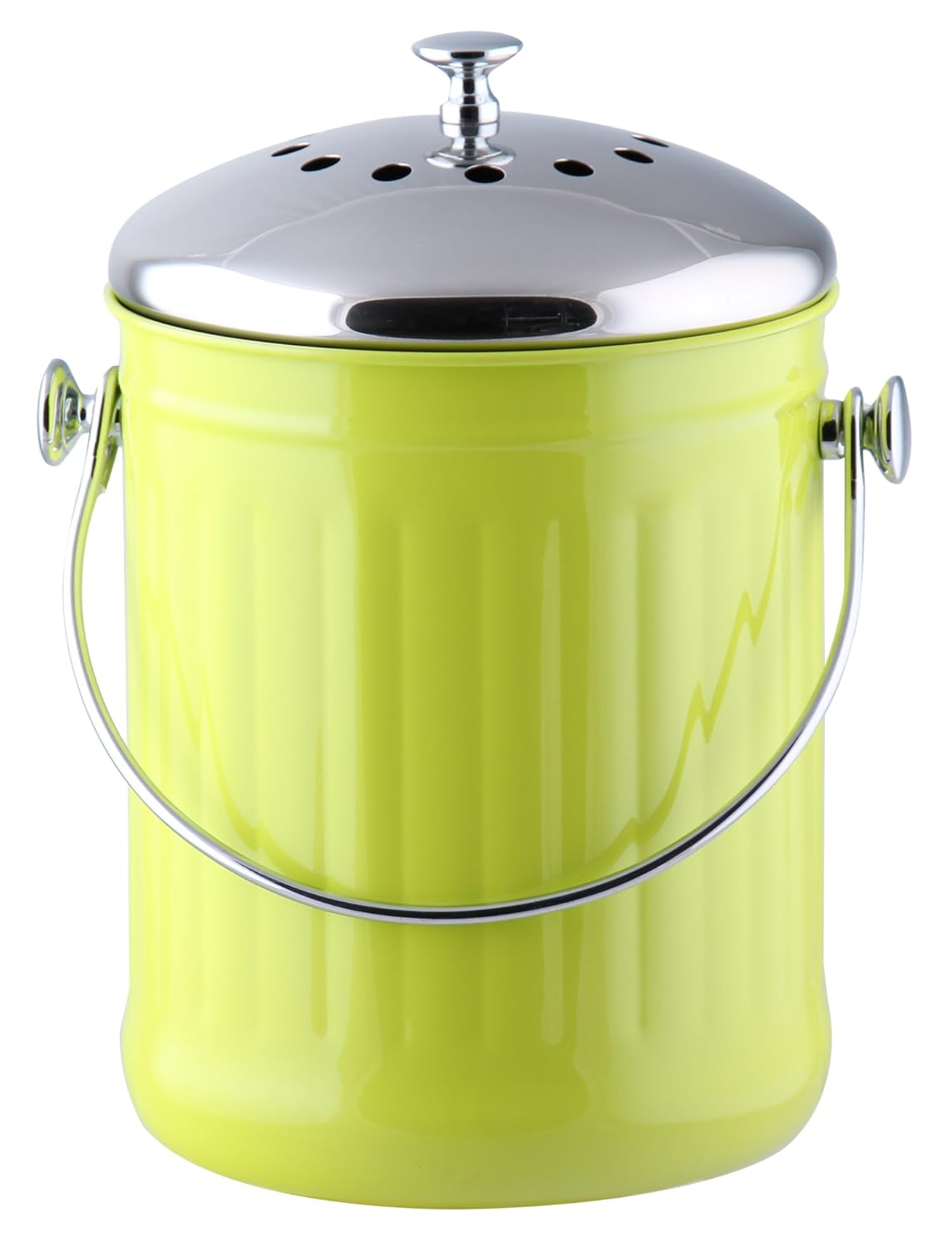
I began cheerfully hoarding kitchen scraps, purchasing a merry green compost collection pail for the purpose. It soon became clear that one would quickly overflow on heavy output days, like erev Shabbos; I bought a second for spillover. 
So what can be composted? Well, a lot of things. Not just vegetable peels, apple cores, and watermelon rinds, but egg shells, used paper products like towels and tissues (provided that questionable chemicals haven't been applied), tea bags, coffee grounds, dead flowers, and junk mail, for starters. Some say not to compost meat, dairy, or heavily fatty scraps, lest messy critters like raccoons be attracted, but trace amounts are fine. 

The test was a visit to my sister for Shabbos, an outing that typically ends in my "noble" consumption of residue. This time I toted along my new pail. Child-abandoned challah? I carefully wrapped it in a napkin and put it in. Cooled cholent? In it went. Limp cabbage salad? Heartlessly scraped in. 

I even—I even—I even managed to—oh, how it pained me—to ram in a slice of kokosh cake.

I happily hauled home a brimming pail, my belly spared a diabolical end. 

In our next session, we'll explore what to do with all that schoira.    

Tuesday, September 6, 2016

Inchy Squinchy

Parshas Mase'e opens by listing the 42 stations where Be'ne Yisrael encamped during their 40 years of journeying from Egypt to the Land of Israel. . . The obvious question arises: Why would the Torah find it necessary to list these stations? 

When Be'ne Yisrael left Egypt, they were far from the spiritual stature they would need to achieve before they could enter the Land of Israel. . . The 40 years of travel from Egypt to Israel served to prepare the nation spiritually for their entry into the Land. The 42 stations represent the 42 stages of spiritual growth. The events that transpired at each location served as a learning experience upon which the the nation would build in the subsequent station, such that they were constantly improving and developing. Stage by stage, Be'ne Yisrael grew and elevated themselves . . . 

The Torah thus recorded these locations to impress upon us the importance of gradual, incremental growth. A person cannot leap to the highest levels of piety overnight; spiritual growth entails a long, gradual process of small, incremental steps. 

Every so often, I am approached by someone who has recently decided to become observant, and now expresses an interest in studying Kabala. I tell him that before studying Kabala, one must first master the entire Tanach, Talmud and Shulhan Aruch—which is itself a lifelong project. One cannot skip to the top step; he must ascend one step at a time. More often than not, those who try jumping to the highest levels of spirituality will succeed in maintaining these levels for only a brief period, after which they experience a "systems crash" and fall lower than where they had begun. 

Rabbi Dr. Abraham J. Twerski, the renowned Rabbi and addiction psychiatrist, has a sign in his office that reads, "The elevator to recovery is out of order; please use the stairs." The same applies to religious observance: we must take the stairs, not the elevator. The Torah does not demand what we live perfect religious lives, but only that we continuously grow, one step at a time, that at every stage we can look back at our conduct a year earlier and see how we have progressed. 

—Rabbi Eli Mansour 

Monday, September 5, 2016

The Repurchased! IV

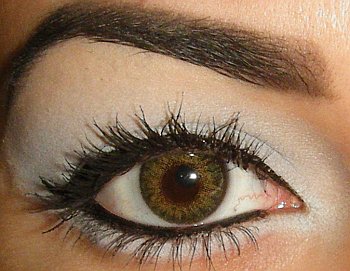
1. To highlight the brow bone, I rely on L'Oreal Infallible Endless Pearl. Of course it's matte. 
http://phyrra.net/wp-content/uploads/2012/01/cabaret_eye.png
2. For the lid, I like to use a lighter shade of gray as opposed to the darker one that goes in the crease. L.A. Minerals Dove Gray is bright and cheerful and opens up my eyes. I also use it alone for all-over cover when not going so evening-y dramatic. 
https://images-na.ssl-images-amazon.com/images/I/41nghhzXQuL.jpg
3. After a long day, the above eye makeup should be thoroughly removed. I have tried so many (so so many) eye makeup removers, and keep running back to Philosophy Just Release Me. I'm so ashamed, every time, for ever questioning our attachment.
http://18165-presscdn-0-1.pagely.netdna-cdn.com/wp-content/uploads/2014/06/Philosophy_Just_Release_Me_Makeup_Remover__5.jpg
Via makeupandbeauty.com. Before . . .
http://18165-presscdn-0-1.pagely.netdna-cdn.com/wp-content/uploads/2014/06/Philosophy_Just_Release_Me_Makeup_Remover__6.jpg
. . . and after. Shazam.
4. For those new to anti-aging creams, I recommend OzNaturals Retinol Moisturizer. It contains a less-potent retinol derivative, but it still does lovely work. For the newbie, this will guide you gently over the threshold. 
http://theskincarereviews.com/wp-content/uploads/2015/05/OZ-naturals-retinol-moisturizercropped.jpg
5. For the hardened cream fiends, I am getting along swimmingly with SkinMedica Retinol Complex 0.5 (there is one in 1.0, but even I'm not ready for it yet). 
SkinMedica Retinol Complex 0.5 (1oz): Image 31
It is so potent that I have to mix it with—

6. —Cetaphil before applying. Yum yum.
 http://images.ulta.com/is/image/Ulta/5022059
I firmly recommend this step. Loved ones have accidentally "burned" their skin by applying straight retinol that their skin had yet to adjust to. 

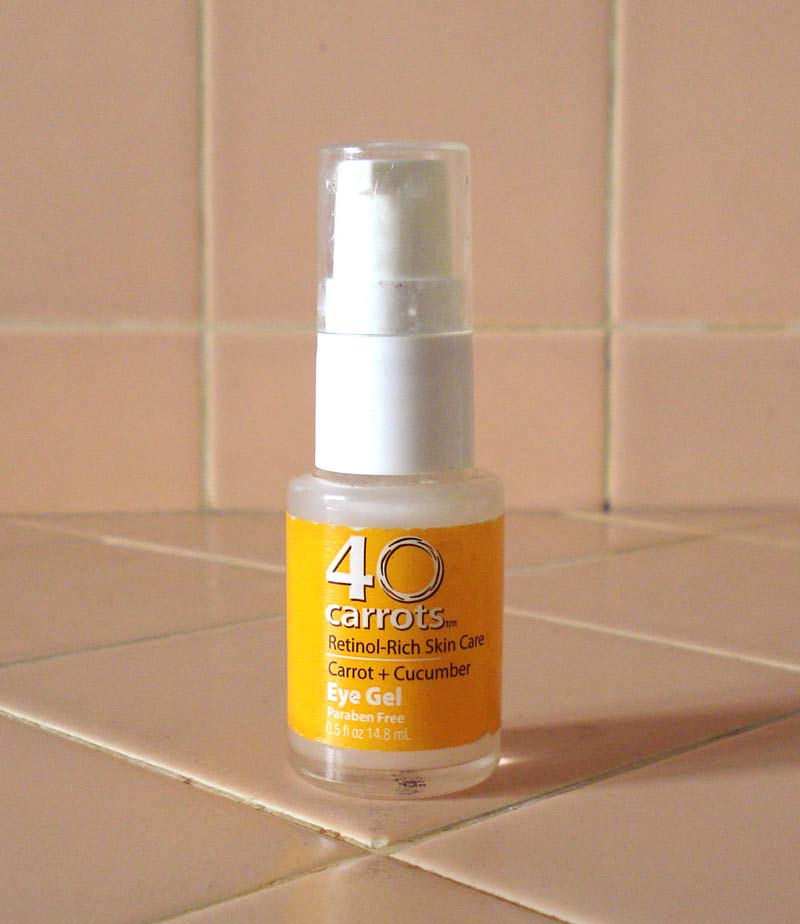
7. I'm surprised at the unhappy reviews, but I like 40 Carrots Eye Gel. I've used many an eye serum and I'm pleased with this one. I feel as though it is doing its firming job. 
https://caulfieldscounter.files.wordpress.com/2011/03/40-carrots-eye-gel-caulfields-counter.jpg

Friday, September 2, 2016

Thursday, September 1, 2016

Mawwiage


I really, really, couldn't resist. 

There's a reason fairy tales always end in marriage. It's because no one wants to see what comes after. It's too grim.

So begins Belinda Luscombe's TIME article, "How to Stay Married" (June 13, 2016). 

Rule #1:  

One constant is to avoid contempt at all costs. By contempt, therapists mean more than making derogatory remarks about a partner's desirability or earning power. It's also communicated by constant interruption, dismissal of their concerns or withdrawal from conversation. 

Contempt, says therapists, sets off a lethal chain reaction. It kills vulnerability, among other things. Vulnerability is a prerequisite for intimacy. Without intimacy, commitment is a grind. Without commitment, the whole enterprise goes pear-shaped. 

Alas, contempt's favorite condition for breeding is familiarity. And you can't have family without familiarity. 

Gary Chapman, the article continues, says that can be prevented by knowing exactly what makes your partner's heart go pitter-patter, and by apologizing and forgiving properly. 

Disagreements are inevitable and healthy, so learning to fight fair is essential; resentment is one of contempt's chief co-conspirators. 

Rule #2: 
 
Obvious idea that actually works No. 2 is to find shared interests, which can help offset the changes that relationships go through. 

Rule #3:  

Another helpful adjustment is to drop the idea of finding a soul mate. "We have this mythological idea that we will find a soul mate and have these euphoric feelings forever," says Chapman. In fact, soul mates tend to be crafted, not found. . . 

And how to you make a soul mate? Practice, practice, practice. Karl Pillemer observed that long-married couples he interviewed always acted as if divorce was not an option. 

Tips: 

a) Therapists urge couples not to let the kids keep them from going out. "It does not have to be huge swaths of time but bits or chunks," says Scott Stanley. "Even something as simple as taking a walk after dinner." This is not the time to work out differences. "When they should be in fun and friendship mode, [some people] switch into problem and conflict mode. Don't mix modes." 

b) One of the more controversial ideas therapists are now suggesting is that men need to do more of the "emotional labor" in a relationship—the work that goes into sustaining love, which usually falls to women. . . recent scholarship has reinforced the value of old-school habits too—having family dinner and saying thank you actually make a difference. 

https://s-media-cache-ak0.pinimg.com/564x/49/be/1a/49be1a30e2e70bf2381b4f5436532098.jpg 

Now, this one is for the single ladies: 

c) The one piece of advice every expert and nonexpert gives for staying married is perhaps the least useful one for those who are already several years in: choose well. The cascade of hormones that rains down on humans when they first fall in love, while completely necessary and wonderful, can sometimes blind individuals to their poor choices. 

In this past week's Unhitched, when asked why they married, Barbara says: 

All their friends were getting married.

“I remember thinking it wasn’t quite right but could not articulate why,” she said. “He really liked me, and I lacked self-esteem and thought I might not find anybody else.”

Ouch. 

Would they have done anything differently?

She: “. . . I was angry at myself for having married a romantic idea . . .”

He: “I would have been much more receptive and accepting of Barbara’s priorities and planning. In short, I would have been a better partner.”

Looking back, what advice would they offer?

She: “Don’t cave on your beliefs to keep the peace, and don’t overlook trouble. Don’t fall in love with an idea of how you want your spouse to be. Fall in love with and accept the actual person as they really, truly are. . . ”

He: “Be aware of your unfulfilled expectations, your own thwarted intentions and be responsible for your own emotions.”

It seems the article pans out in real life.