Monday, January 13, 2014

Old Soul

I was invited to this wedding not because I really knew the kallah, but more for neighborly feeling. There was more than one of the same number table, and I, of course, end up at the one where groups of two sit down and studiously ignore me.

Now I understand why everyone loves their smartphone. 

I looked about the room, carefully tearing apart the challah while praying for the waiters to show up already with the first course as shrieks of feminine laughter ostracize me further. 

I have never had an easy way with my contemporaries. Conversation rarely flows, and I end up getting looks that mean, "It's talking, but I don't know what it's saying."

I gaze longingly at the table of the previous generation, women in their 50s and 60s. Now there's my niche. They get me.

Out of boredom I decide to go to the bathroom and check my lipstick, which I know doesn't need retouching. On the way back I see one girl I know, who is also focusing closely on the fish. Despite her packed and chatting table, she is as isolated as I am.  

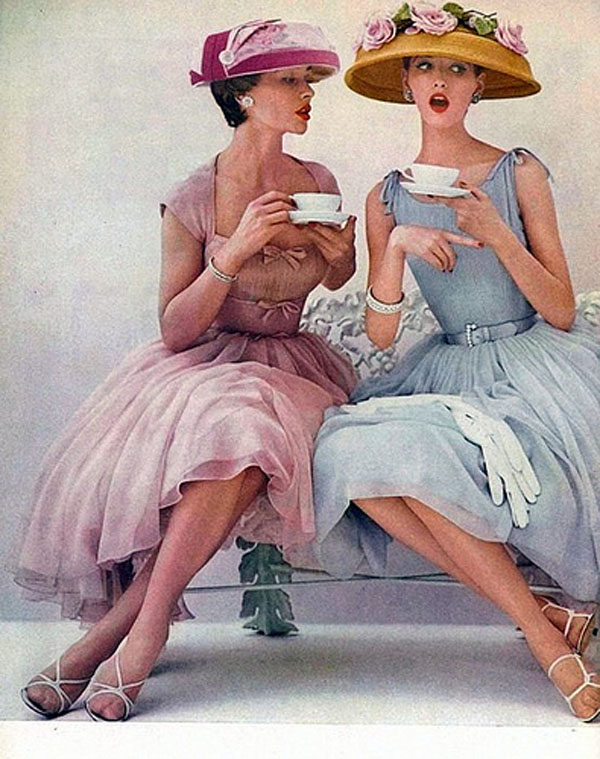
Thankful, I pulled up a chair and we begin to wax poetic about the styles in last month's Bazaar and the absurdities of wedding shtick. We continue to feverishly converse until the dancing begins. 
https://blogger.googleusercontent.com/img/b/R29vZ2xl/AVvXsEij-feS5yA6YUvEmKS2mXUXK6uoRRmNZps2gf1ZODmBx24gwLD8wt1qnslkGDR0xnsWYkY9B9MLBW-1GVfcWmR3RPOuxyvNkOq_tNUJLNf09vAm8hS8yDuJWdmmYNikLcMRnRaEin6czKw/s1600/Ladies-1950s-advert.jpg  
At my former table, two of the girls by my own table may be sitting together, firmly elbow to elbow, but their attention is focused strictly on their iPhones, not on their companions

As it turned out, I still don't need to get a Droid yet. I talked with a human being tonight.

Friday, January 10, 2014

The Perfect Balance

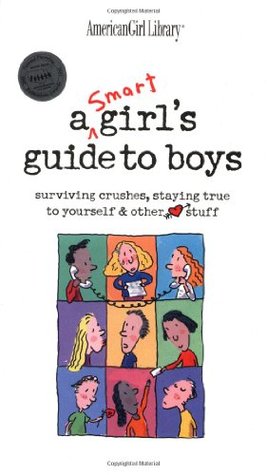
"Don't act so smart on a date," he says. Thank heaven he is not my father, but a curmudgeonly octogenarian. 

It seems I am stuck somewhere in the middle. Possessing, apparently, some intellect, I have been admonished from time to time not to display it. However, while there enough brainless females getting wed, the numbers are not disproportionately more than the:  

Doctors, lawyers, teachers, graphic artists, therapists, psychologists, etc, who are firmly on the way to their established careers. To excel in their fields, they must have book smarts, and yet they, too, happily meet the One. 

But I have not opted for a career. I have a job, yes, but not a career. It would seem that while my gray matter can be off-putting, my choice of employment can be as well. 
http://d202m5krfqbpi5.cloudfront.net/books/1386924775l/127722.jpg
For those gents who want me to rake it in to remove the burden of support, yet want me to have no brains: Think a minute.

Thursday, January 9, 2014

What is Love?

Let me not to the marriage of true minds
     Admit impediments. Love is not love
Which alters when it alteration finds,
     Or bends with the remover to remove:
O no! it is an ever-fixed mark
     That looks on tempests and is never shaken;
It is the star to every wandering bark,
     Whose worth's unknown, although his height be taken.
Love's not Time's fool, though rosy lips and cheeks
     Within his bending sickle's compass come:
Love alters not with his brief hours and weeks,
     But bears it out even to the edge of doom.
If this be error and upon me proved,
     I never writ, nor no man ever loved.
—Sonnet 116, William Shakespeare 


How can it be that love can morph into something twisted and hateful? That it can erase any ability to feel or express it again? 

I know this is not much of a raayeh, but I have seen numerous Law & Orders ("ripped from the headlines") where terrible crimes are committed in the name of failed love. Love, somehow, became hate, murderous, spiteful hate. A hate where even the love for one's children is swept aside for that fury. 

My theory is that it is not possible that actual love could become hate; if hate can result, it was not love to begin with. How can a couple who conversed, committed, had children, become consumed with anger and vengeance? 

"Love is not love that alters when its alteration finds." It cannot be that actual love could become hate. 

"I don't love you anymore" makes no sense, but it the go-to phrase to break up relationships. It's not that love has died, it never lived. One can cohabit with a potted plant for twenty years and feel some sentimentality; but none for another human being

Love is respect. Love is discipline. Love is kindness. If that is not present in a relationship, then there is no love. 

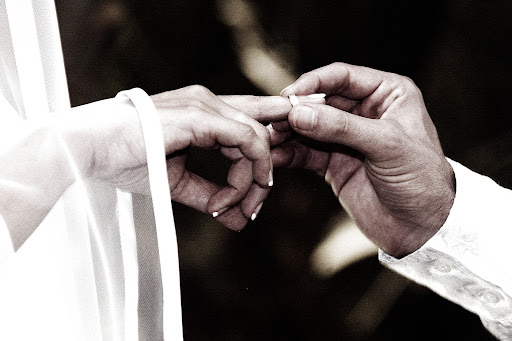
Biblical love is usually mentioned after the nuptials take place, nor is it a given in every marriage; if it was standard, then they wouldn't bother to make a point of mentioning that the husband loved his wife (ehav). The Torah itself makes no mention of marriage except that if a man hates his wife, he can divorce her. 

Rabbi Yisroel Reisman said on this: Why is marriage not mentioned? Because the journey is more important.
http://lh4.ggpht.com/-uyUNJylw5kQ/SwK8vgQHX1I/AAAAAAAAAHE/4XffSxnmU7w/IMG_53361.jpg
Via Lior Bar Picasa Web Album
In an article written in response to violent sex crimes taking place in India ("The Good Men of India," by Lavanya Sankaran), I was informed as to Indian terms of endearment: 
There is a telling phrase that best captures the Indian man in a relationship — whether as lover, parent or friend: not “I love you” but “Main hoon na.” It translates to “I’m here for you” but is better explained as a hug of commitment — “Never fear, I’m here.” These are men for whom commitment is a joy, a duty and a deep moral anchor.
Indian men are strongly tied to the family unit, probably more so than American men. Love is making another's life easier for her. Love is sharing the burden: 
In most countries, a woman clambering aboard a plane with a fretful infant and turning a crowded row of six into a de facto row of seven is usually met with hostility. Here, every other row seemed larded with these women and their babies. But those stuffy Indian businessmen — men of middle management, dodging bottles and diaper bags and carelessly flung toys — they didn’t grumble. Instead, up and down the plane, I saw them helping. Holding babies so that mothers could eat. Burping infants and entertaining toddlers. Not because they knew these women, but because being concerned and engaged was their normal mode of social behavior. So, I will say this — Indian men can also be among the kindest in the world.  
An "ever fixed mark," doesn't just happen. Love doesn't arise from the spoken word; it becomes firm through the mundane and the messy actions. Main hoon na.  
Wednesday, January 8, 2014

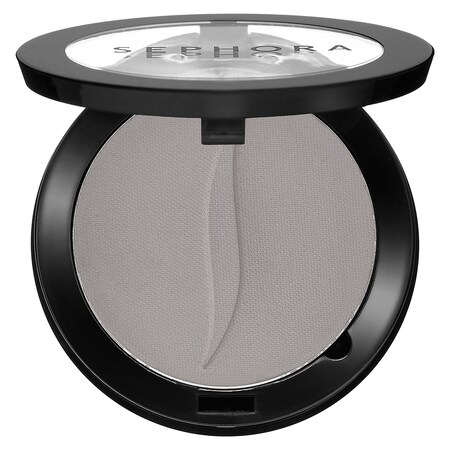
The Sephora Mattes

I love the mattes; I am quite vocal about it. Drugstore brands have sparkle in everything, though, except for one short time when Revlon had a matte collection. Even pricier brands will claim to be matte, and yet there is a veneer of sheen.

Sephora has their own collection of makeup, and while I was initially wary of cosmetics made up for the store brand, I have so far been a happy with a number of their products. 

To spread the word of the divinity that is matte, I present the colors of Sephora, albeit only the shades that I think are flattering:

Sephora Collection Colorful Eyeshadow 

(Purples, pinks, reds, and maroons did not make the cut):

N° 20, Sailor Kiss: Dark Blue
N° 50, Cashmere Coat: Mastic (taupe, I guess?) 
N° 52, 5th Avenue: Dark Gray (I only own grays!)
N° 54, Black Lace: Black (I use this to set my eyeliner or to smudge the line)
N° 59, Berlin Underground: Gray (a perfect lid color while the darker 5th Avenue goes in the crease) 
http://www.sephora.com/productimages/sku/s1424969-main-Lhero.jpg
N° 64, Let It Snow: White (by applying a white base to lids before color, any shadow then applied on top really pops, and the eye area is brightened) 
N° 65, Lazy Afternoon: White Beige (highlight hue for the very fair-skinned) 
N° 73, Secret Boudoir: Pale Beige (hilighlight hue for light-skinned)
N° 75, Sandcastle: Warm Beige (highlight for darker skin tones, or lid color for brown eyeshadow)
N° 85, Coffee Break: Milk Chocolate 
N° 88, Morning Mocha: Dark Chocolate

Sephora Collection Colorful Blush:

Sunbaked 05: Toasted Rose (looks like orange-pink to me)
Rose Petal 08: Medium Pink  (lightest of the bunch, most universal)
http://ecx.images-amazon.com/images/I/51NKxgp03rL._SY300_.jpg
Healthy Rose 09: Warm Rose  (darker version of 05)
Romantic Rose 10: Cool Rosey Pink (nice pink for darker skin tones)
Rose Pop 18: Fresh Pink (leaning towards fuchsia) 

Sephora Collection Bronzer

3 Los Cabos: Universal Tan


5 Bora Bora: Sienna (only slightly darker than Los Cabos)             

Tuesday, January 7, 2014

Needs of Many vs. Needs of Few

Quite some time ago, a community's renowned "mikvah lady" was being honored for her many years of service. When she approached the dais to receive her accolade, her daughter muttered bitterly, "It should be me getting that award."

The honoree, of course, was a mother, and had a household to run. While her chessed efforts left many grateful and admiring, her eldest daughter was left holding the bag, raising children that were not her responsibility.

My sister-in-law once observed, when she considered whether she should make dinner for another household when the mother just had a baby: "So my kids should have pizza while another family gets a home-cooked meal? Does that really make sense?" 

These were the situations I thought of when I read "A Feminist's Daughter Finds Love in the Kitchen" by Jane Benton, a story which I found heart-breaking. 

Benton's mother originally was a fixture in the kitchen, a typical housewife, until she was bitten by the feminist bug. She abandoned all caregiving considerations as she threw herself into her new identity, a feminist force to be reckoned with, and thrived. 
http://www.stepbystep.com/wp-content/uploads/2013/02/How-to-Feed-a-Hungry-Child.jpg
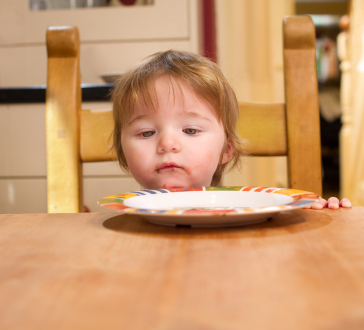
While her children starved, were left alone in an empty house. They didn't know how to cook, and could not feed themselves. Whenever Benton sought her mother's company, she was waved off.
But back then, on many afternoons, I would return to my bedroom, sit on my pink shag rug and cry. It seemed I mattered to no one anymore. My heart shrank into a knob of hurt and yearning.
Twenty-three years later, I accepted a medal of honor for my mother from the Veteran Feminists of America. She was in Bosnia, where she had been leading mask-making workshops with war-scarred women and children. Could I really share with this audience of feminist dignitaries the ambivalence I felt about my mother’s activism?
Despite a childhood of neglect, Benton was generous enough to recognize what her mother did for others. But while societies were saved, the ones who were her immediate responsibility were abandoned. 
I am a feminist, too, and I know there were and are innumerable good reasons for outrage and action. Yet children do not stop needing what they need, even when their parents are fighting for justice. And if you do not attend to them or find a loving substitute, they will suffer and may hold it against you. Even if you have never felt stronger and more truly yourself. Even if you love them. 
Because of my history, I know how much the mundane care of children matters. That is why I stop work when the school day ends and greet my daughter with a hug. I may be tired, stressed out or grumpy; I may bemoan the confinement, the repetition, the career limits. But I do it anyway. I pull away from paid pursuits and open myself to the opportunity to delight in my daughter.   
So she is where she had always wished her mother to be: In the kitchen. 
When I hand her a snack and look into her face, seeking the stories of her day, I intend for her to feel how much she matters. She matters more to me right then than anything I could be doing without her. And we will not have these afternoons forever. 
When we have children, our lives cease to be our own. We are now responsible for others, a bittersweet duty. I currently experience this on a smaller level, when kinfauna tumble in the door; I diligently and tediously slice grapes into halves for the three-year-old, and he gazes into my face with puppy-dog devotion.  http://www.wahmresourcesite.com/wp-content/uploads/2012/11/mom-girl-cooking.jpg
As always, it is the little things that truly count. While Spock proclaimed, "Logic clearly dictates that the needs of the many outweigh the needs of the few," that is not the go-to of Jewish law. All of our blood is equally valued, and no one is more precious than another.     

Monday, January 6, 2014

Yes, It's Me, It's Really Me

When my sister made a kiddush one Shabbos, she introduced me to her friend's mother who proceeded to gush, leaving me quite buoyant. 

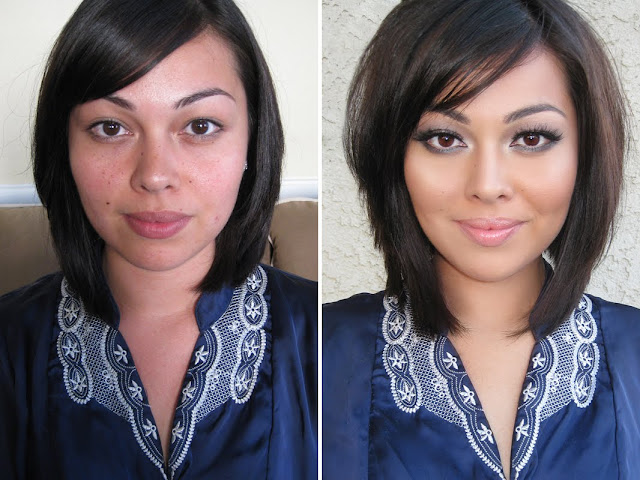
The next day, Sunday, I was still by my sister's house. Freshly showered, my hair hung limp and wet; my face scrubbed of any paint; my build obscured beneath flannel pajamas and a cuddly terry robe. 

The doorbell rang, and of course no one else was there, so I gingerly answered it. It was the friend's mother, dropping off a gift. My number one fan! 

I cheerfully opened the door, to be greeted by a hesitant smile. 

"And you are . . . ?" 

"We met yesterday! I was the sister?" 

Her face seemed to say, "No. Way." But then she brightened. "Oh! You're another sister!" she said cheerfully with this enlightening conclusion.

"Noooo . . . We met yesterday? With my hair was freshly blown? I had makeup on? I was wearing a designer suit? I had squeezed into shoes that cut off circulation?"
https://blogger.googleusercontent.com/img/b/R29vZ2xl/AVvXsEhP-rT2vIpIXSfawjK0axlVwD1wNQNBw1N1_V8DCEZpljyqRYPCX5EB1B9YJjtTAG4xvh0ZhUfTfaiic0z5kLHP9XcCwSuRBvFmPvwHfFb12px4HKffNri5Ax8ANk2q-tNPgSRH1PcCEBRD/s1600/nadia.bmp
Via astridgonzalezmakeup.blogspot.com
She still looked perplexed.

I can't look that bad without all my commentary!        

Friday, January 3, 2014

Waste Not

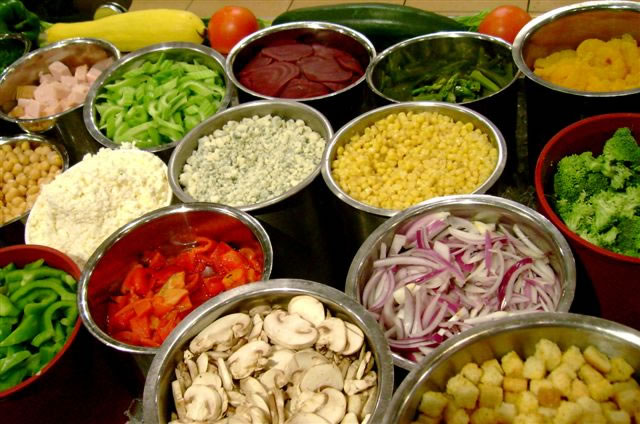
After a family simcha, there was quite a bit of leftovers. A dismantled salad bar yielded bins of mushrooms, grape tomatoes, multicolored peppers, cucumbers, and red onions. 
http://livelight.org/wp-content/uploads/2013/08/salad-bar.jpg
I cannot handle nor tolerate waste, to the point that even Ma tells me to relax and throw something away already. But she and I both obsessed what to do with the rapidly disintegrating vegetation—once thoroughly washed for human consumption, the countdown begins. 

The mushrooms were easily salvaged, quickly becoming a mushroom-barley soup, tucked away in the freezer for the next yontif. I tried to take as many tomatoes with me to work for lunch, but they were getting aged before I could eat them. 

With a quick google, I decided to experiment. 

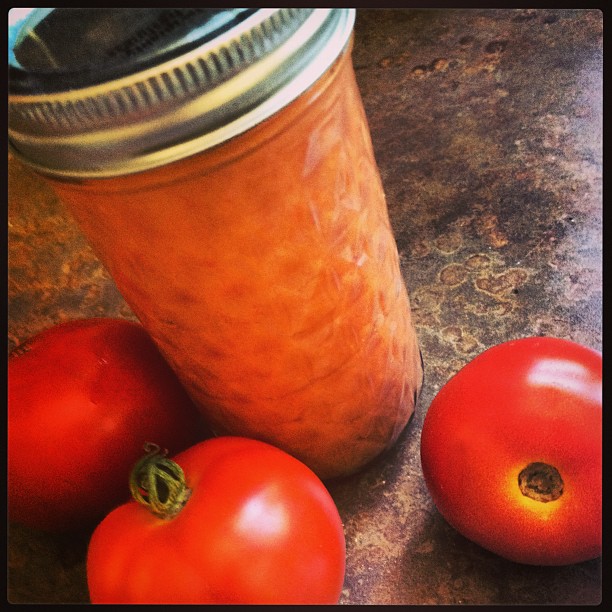
Whipping out an underused blender, I pulverized the tomatoes and peppers, along with some onions, garlic, celery, cucumbers, and leftover Israeli salad that was starting to look a little waterlogged. 
http://twigandfeather.com/wp-content/uploads/2013/09/1236412_401413196648766_417826393_n.jpg
Via twigandfeather.com
The results were very pretty, looking exactly like any other tomato soup. I added a can of tomato sauce, two cans of tomato paste, sugar, salt, and pepper. I froze some as useful future bases, then cooked up the remainder for a bit, adding rice the way I would to any other tomato soup.

I bravely marched into the office with my Tupperware, daring it to upset my stomach.

First slurp . . . 

I'm still alive! 

It tasted pretty much like any tomato soup, although in retrospect I should have strained out that sediment. My father had it for two nights in a row and loved it. (If only he knew . . .)

Babi would be so proud of me. The spirit of European thrift lives on! 

Thursday, January 2, 2014

Knowing Better ≠ Doing Better

The Big Bang Theory, "The Rhinitis Revelation":

Sheldon, the big brains of the outfit, has his mother coming for a visit. Sheldon expects her to fuss over him as she did when he was a child; cook for him, sing to him, watch him eviscerate other physicists. But she came to California to see the sights, and his friends take her about. Sheldon, moping, goes instead to his girlfriend Amy's apartment. She asks if he is in a bad mood because his mother isn't mothering him.

Amy: Sheldon, we’re all animals. And granted, there are aspects of you that are extraordinary, but when it comes to emotions and relationships, you’re just like everybody else.
Sheldon: Are you trying to suggest that my emotional problems are no different than those of a stupid person?
Amy: Actually, some research indicates that by not over-thinking, the less intelligent handle emotions better. 

Offended that he could possibly be like the rest of humanity, Sheldon leaves, and waits for the bus. Another man joins him on the bench. 

\

Sheldon: Look at the two of us. Me, a highly regarded physicist. The kind of mind that comes along once, maybe twice in a generation. You, the common man, tired from your labours as a stockbroker, or vacuum cleaner salesman, or bootblack. But deep down inside, apparently we’re just two peas in a pod. A regular pea, and the kind of pea that comes along once, maybe twice in a generation. Rain. Another great equalizer. Falling on the head of the brilliant and the unremarkable alike. (The stranger puts up an umbrella) Smarty-pants.
 
Danielle Ofri, MD, confesses doctors' weaknesses in "Doctor's Bad Habits." Doctors try, often fruitlessly, to get their patients to do better. Yet, Ofri realized, doctors are regularly apprised of new studies that disprove established practice, but they don't necessarily change their methods. 
The problem is, most of us are just like our patients — we often ignore good advice when it conflicts with what we’ve always done.
The example she gives is the concept of the annual physical; apparently, the cons outnumber the pros. But she admits she tells her patients to come every year.
Humans are creatures of habit. Our default is to continue on the path we’ve always trod. If we doctors can recognize that impulse in ourselves, it will give us a dose of empathy for our patients, who are struggling with the same challenges when it comes to changing behavior. 
Doctors, with all their knowledge, are just as human and susceptible as their patients of knowing better, but not doing better. We may all vary when it comes to brains department, but that gives us no leave to be smug. "E.Q. vs. I.Q." Ta often says. One doesn't have to be brilliant to do better, or to be understanding of others.     

Wednesday, January 1, 2014

Watch Out for Flying Pasta

"Oh, not him? How about . . ." 

She tosses another name at me, and a cursory glance at his info is a no. 

"Thanks, but—" 

"Here's him." 

"Yes, however—" 

"Him?" 

"Can I—"

"We'll put him aside. This one sounds nice." 

"He may be, yet—"

"Never mind, look at him."

Names are appearing and disappearing under my nose, back and forth. 

You know how a shidduch system is supposed to work? When someone had an idea—and she didn't have to be Yenta of Anatevka, you know—she approached the relevant parties and sold her thought. She had put some rumination into it, comparing backgrounds and such, and worked a bit in the sales aspect to set up one specific person with another specific person. 

Flinging guys at me like chucking spaghetti at the wall, hoping one will stick? 
http://mrtplus.files.wordpress.com/2011/07/spaghettiwall.jpg
One thing I have learned is that there is a difference between quality and quantity. After compiling a list of off-base potentials, she waves me off. 

And never calls back.   

Tuesday, December 31, 2013

Battle of the Bulge: One Portion is Enough

My life seems to be the same exact cycle. 

I'm careful the whole week, weighing myself, watching what I eat, and find scale nervana on Friday morning. 

Then there's Shabbos. More importantly, Shabbos meals. 

If it's just me and the folks, the damage isn't too bad; I have my weekly cake visit following a larger than weekday lunch. But if there are guests, or if I am invited out, oh dear. 

And then it begins again. 

Frank Bruni makes it simple in "Hard Truths About Our Soft Bodies." In a nutshell, the reason for American obesity is that we go über-portion. The middle path has been outsourced for limitlessness. 

The Italians cuddle up with pasta, but they aren't overweight, despite the fact that we all "know" that noodles are a perfect storm of pound-packing carbs. With this land of bounty, we have lost the talent to cease and desist when nearly full, as opposed to unbuckling belts to make room for more. 

It concerns me since we Jews have super-sized Shabbos to such unnecessary lengths. We troll the supermarket aisles to buy all those items that we think we "need" to have. We take a number and patiently wait by the ready-made foods counter. Just an hour after a lunch of all-you-can-eat proportions children expect "Shabbos Party."

Here's a tip: Let's see what happens if we cook for a Shabbos geared towards satisfaction, not leftovers. If the family asks for thirds but the pot is empty, that's okay. No one is hungry.