Sunday, August 10, 2014


Friday, August 8, 2014
Stay Sober, My Friends
This is not happening.
Nope, it is.
Nope, it is.
Me, along with a squirming panel of fellow eligible females, watched in bafflement and disgust as half of the men on the other side of the table labored at drinking themselves under it.
I didn't even want to be there, but when a neighbor calls up to invite you to one of those Shabbos lunch singles things you can't say no, or else be referred to as "that picky girl." Then, of course, that unarguable reasoning, the bane of my existence: "You never know."
Well, I certainly didn't expect this.
I thought this was a solitary incident, to be swiftly brushed under the rug; an error on the hosts' part that they actually offered Johnny Walker along with the chulent. But more and more bachelors aren't even bothering to shield their indiscreet alcohol habits from a less-than-impressed public.
A "shadchan" mentioned to me that at her last singles' event, she was asked by more than one guy why they don't serve booze.
Dude, guess.
Another single female, entrapped in a similar Shabbos singles' event (to which I was thankfully not invited) stormed home and proclaimed, "They were all drunk!"
I know those "The World's Most Interesting Man" ads are rather beguiling, my bachelors, but you chaps do realize that that's not how most women perceive bloodshot eyes and shaky hands, right?
We associate it more with . . .

We associate it more with . . .
Um, yeah.
Thursday, August 7, 2014
Author: Bernard Cornwell
I was in the library, gleefully picking up a stack of requested books, when a fellow reader, a man in his 60s in a basketball jersey and shorts, caught sight of one of my items.
"You're reading a Cornwellian series?"
"Hm? Oh, yes." At the bottom of my pile was Sharpe's Waterloo, the 22nd book in the Sharpe series by Bernard Cornwell. "I also really liked his Arthurian saga."

"My God," he breathed. "The perfect woman."
The Sharpe series is about a fictional British soldier and his experiences in historical battles. Despite the vivid descriptions of splashing blood, spilling guts, and the vagaries of early 19th century weaponry, I'm gripped.
 |
| Richard Sharpe, played by Sean Bean (sans his sardonic scar) |
I really dug the Arthurian saga (which is officially referred to as The Warlord Chronicles), but I wasn't that crazy about the Grail Quest novels (although there is a stand-alone sequel, 1356, that I'm willing to try). Now visiting the wiki-page, I'm delighted to discover two more series I have yet to read, the Saxon Stories and the Starbuck Chronicles.
On! On!

On! On!
 |
| Via mocpages.com, Sharpe's Eagle |
Wednesday, August 6, 2014
"For the Scoffer There are No Answers"
Michael S. Roth's article, "Young Minds in Critical Condition," made me recall my college years.
 |
| Via roguemedic.com |
A professor like Roth really is a rarity. Most hound their students to analyze, which in turn usually means overcomplicate. In literary classes, I heard two completely differing perspectives on Kipling's "The White Man's Burden"; it was impossible that both were right.
In campus cultures where being smart means being a critical unmasker, students may become too good at showing how things can’t possibly make sense. They may close themselves off from their potential to find or create meaning and direction from the books, music and experiments they encounter in the classroom.
Once outside the university, these students may try to score points by displaying the critical prowess for which they were rewarded in school, but those points often come at their own expense. As debunkers, they contribute to a cultural climate that has little tolerance for finding or making meaning — a culture whose intellectuals and cultural commentators get “liked” by showing that somebody else just can’t be believed. But this cynicism is no achievement.
The dates that have to shred every comment to triumphantly reveal what I "actually" think: Dude, I told you what I believe. I'm not going to defend my point all night. I have work in the morning.
Of course critical reflection is fundamental to teaching and scholarship, but fetishizing disbelief as a sign of intelligence has contributed to depleting our cultural resources. Creative work, in whatever field, depends upon commitment, the energy of participation and the ability to become absorbed in works of literature, art and science. That type of absorption is becoming an endangered species of cultural life, as our nonstop, increasingly fractured technological existence wears down our receptive capacities.
As a Bais Yaakov student, I can appreciate a good analyzation of the texts. But at some point, if one doesn't stop delving, one forgets the message—one fails to see the forest for the trees.
 |
| Via tiferesbaisyaakov.com |
Sometimes, a couch is not a reflection of the main character's need for psychological evaluation. Sometimes a couch is just . . . a couch.
I have a niece, the Wise One, who really enjoys a good yentitz. You could never really tell, though.
At the Shabbos table, her face is a blank. Her eyes appear sleepy, the gaze vague, as she slowly, carelessly dissects her gefilte fish and shnitzel. Because she doesn't seem to be paying attention, the adults go at it. After all, she's not listening, right?
But as my little actress cackles, "I know sooooo much."
She is a sponge, indiscriminately soaking up material; whether it is useful, intelligent, or plain stupid—well, we'll figure that out later. In the meantime, she absorbs any sort of knowledge, without judgment or critique.
That is a great quality.
Tuesday, August 5, 2014
Tisha B'Av
Tisha B'Av is a toughie.
Sure, speakers try. They sometimes succeed. When Rabbi J.J. Schacter mournfully chants the kinnos, and describes the horrors at the hands of the Romans, the Crusaders, the Nazis, I am, at times, able to shudder in remembered agony; perhaps a tear or two will ooze from my eye.

But as a grandchild of survivors, a single solitary day of sadness is an oxymoron. That sort of pain follows me around on a daily basis, a constant shadow.
A photo sits on the piano—Babi's family pre-Holocaust, posing carefully for the photographer. Her father, her mother, a younger brother, and a baby sister, tinted in sepia hues, would soon be ash; Babi survived, as did two sisters and a brother.
Babi used to say I had the little Channelah's hair. How she loved to brush it. How she loved her.
I have more heartbreaking stories where that came from, any of which can make my throat tighten in grief, any day of the year.
Pain has a way of decreasing over time, and even more so over generations. I try to tell the next crop the stories of their past, to be grateful and to put their own tribulations into perspective. Yet it is hard to connect to an age of auto-da-fés, blood libels, massacres, pogroms, gas chambers. It is so distant all too quickly, all too unrelatable.
I was explaining the concept of Tisha B'Av to a non-Jewish client.
"It is mourning, yes, but also an acknowledgement that we are culpable in our own pain. We were the ones that brought ourselves to this."

We need to recall the pain in order to end it. To realize that no matter how annoying that other Jew is to us, he is still us. That vitriol against "those" types of Jews is as absurd a dialogue as haranguing one's toe for getting stubbed. We are but one organism, one body, one.
We speak about the Holocaust in revered, hushed tones. We don't discount the victim who lived the same lifestyle that we scorn on his descendants. The recent war in Israel shredded any divides as we all, as a nation, stood up and roared "Am Yisroel Chai!" We are supposed to feel for the ones living, no matter their choices, not be content to deify them in death.
I am trying. I don't need reminders for the hardship; they have been burned into my synapses. I need reminders for tolerance, acceptance, and understanding.
Monday, August 4, 2014
Do I Know You?
Talking with strangers makes me nervous. Perhaps it stems from that childhood directive never to talk to them, or maybe because I suck at small talk, but anywho, while I can smile politely and passably converse, I want this interaction to end, now.

But, for the rest of humanity, chatting with strangers creates positive experiences ("Hello, Stranger," by Emily W. Dunn and Michael Norton). The added discovered element, however, I found troubling:
The great thing about strangers is that we tend to put on our happy face when we meet them, reserving our crankier side for the people we know and love. When one of us, Liz, was in graduate school, she noticed that her boyfriend, Benjamin, felt free to act grumpy around her. But if he was forced to interact with a stranger or acquaintance, he would perk right up. Then his own pleasant behavior would often erase his bad mood.
One of the perks of being a behavioral scientist is that when your partner does something annoying, you can bring dozens of couples into the laboratory and get to the bottom of it. When Liz tested her hypothesis in a lab experiment, she discovered that most people showed the “Benjamin Effect”: They acted more cheerful around someone they had just met than around their own romantic partner, leaving them happier than they expected.
Are you kidding me? The opinion of strangers matters more than being considerate to one's life partner?
I found this realization to be disheartening. Do we really misuse the ones we supposedly care for, because we feel free to be our miserable selves? A stranger has an interaction with one for bare minutes; loved ones, a lifetime. To whom do we owe our pleasant faces?
Continuing:
To investigate the validity of this assumption, our student Gillian M. Sandstrom asked people to keep a running tally of their social interactions . . . She found that introverts and extroverts alike felt happier on days when they had more social interactions.
Oh. So much for my introvert excuse.
Simply acknowledging strangers on the street may alleviate their existential angst; and being acknowledged by others might do the same for us. (One caveat: Another set of studies has shown that people are motivated to flee from strangers who stare at them intently.)
The benefits of connecting with others also turn out to be contagious. Dr. Epley and Ms. Schroeder found that when one person took the initiative to speak to another in a waiting room, both people reported having a more positive experience. Far from annoying people by violating their personal bubbles, reaching out to strangers may improve their day, too.
Rather than fall back on our erroneous belief in the pleasures of solitude, we could reach out to other people. At least, when we walk down the street, we can refuse to accept a world where people look at one another as though through air. When we talk to strangers, we stand to gain much more than the “me time” we might lose.
While it has not been a simple thing for me, I try to smile and acknowledge passerby as much as possible (although some are determined to avoid eye contact).
I would not recommend this on the streets of Manhattan, however.

Well, maybe times have changed.
Sunday, August 3, 2014
"What Suffering Does"
David Brooks is one of my favorite writers. I give you, "What Suffering Does."
Friday, August 1, 2014
One Way Or Another
I had barely seen my 10-year-old niece that weekend. With so many families sharing one roof, she had happily disappeared amongst her cousins, and I was not one to meddle with such peaceful interludes.
However, at the Shabbos meal, she took a seat next to me, and casually draped her arm across my shoulder. I looked down at her alabaster hand, curving lovingly about my upper arm. I turned back to peer into her freckled face, and she smiled tenderly at me, halo aglow with lovingness.
"You've seen the Toys 'R' Us catalog, haven't you?"
Her response was a charming flutter of eyelashes.
"How much?"
"Two hundred dollars," she crooned.
"No."
Her nose wrinkled in annoyance, but she was determined, snuggling adorably into my side.
Well, I might as well enjoy it while it lasts.
Well, I might as well enjoy it while it lasts.
Thursday, July 31, 2014
Embrace the Fat!
I have no childhood memories of whole milk. The reign of skim had been already established by the time I was five.
"What is this?" a Eureopean houseguest sniffed in disgust at the skim milk offered with his coffee. Ma started hoarding an emergency small bottle of lowfat in the freezer.
There has been a gradual shift in power. First, there was an experimental dabble with 1% milk, which was quite luscious.
Then, the discovery that would change everything.
In the last few years, I have been having week-long stomach bug attacks with alarming regularity, to such an extent that the perks of weight maintenance was overrode by my fear of dangerous inflammation. I searched frantically and came across this article, which claims that certain lipids that are present in whole dairy but absent from lowfat protect the guts from invaders.
Welcome home, whole milk. Welcome home.

Skim? Skim who? The king is dead; long live the king.
According to Mark Oppenheimer ("Let Them Drink Chocolate"), bureaucracy still makes that repetitive mistake: Healthy food must be bland. School districts took away chocolate milk and replaced it with skim, then was "surprised" when the kids pour it down the drain.
The answer, surely, is that the milk study wasn’t just about milk. It was about virtue. To the anti-chocolate mind-set, whole milk is still too decadent. It’s creamy, fatty, enjoyable. Even if it’s healthier than chocolate milk, it’s still too sinful.
Growing bodies require the fats and nutrients present in whole milk! Me, I have to drink it carefully, and with discretion, but that doesn't mean it doesn't have benefits.

Even then, whole fat is emerging as being practically dietetic, that due to the satiety value, perhaps, consumers keep off the pounds better than with lowfat.
Only recently has the lifelong work of Dr. Fred Kummerow (who is nearly 100 years old) been vindicated ("A Lifelong Fight Against Trans Fats"). When the world rapturously embraced margarine as a "health food," he alone railed against it.
Only recently has the lifelong work of Dr. Fred Kummerow (who is nearly 100 years old) been vindicated ("A Lifelong Fight Against Trans Fats"). When the world rapturously embraced margarine as a "health food," he alone railed against it.
This leads him to a controversial conclusion: that the saturated fat in butter, cheese and meats does not contribute to the clogging of arteries — and in fact is beneficial in moderate amounts in the context of a healthy diet (lots of fruits, vegetables, whole grains and other fresh, unprocessed foods).
His own diet attests to that. Along with fruits, vegetables and whole grains, he eats red meat several times a week and drinks whole milk daily.
He cannot remember the last time he ate anything deep-fried. He has never used margarine, and instead scrambles eggs in butter every morning. He calls eggs one of nature’s most perfect foods, something he has been preaching since the 1970s, when the consumption of cholesterol-laden eggs was thought to be a one-way ticket to heart disease.
“Eggs have all of the nine amino acids you need to build cells, plus important vitamins and minerals,” he said. “It’s crazy to just eat egg whites. Not a good practice at all.”
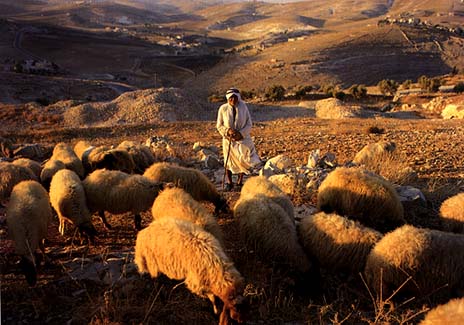
Well, after all, our forefathers were shepherds (oh, the goat milk!), and lived to ripe-old ages.
Wednesday, July 30, 2014
See Spot Run
"EEEEEEEE!" my nieces squealed in delight as they splashed in.
I watched as the three, Eewok (7), (cousin to) Thing 1 (6), and Thing 2 (4.5), shrieked happily in the shallow surf.
I watched as the three, Eewok (7), (cousin to) Thing 1 (6), and Thing 2 (4.5), shrieked happily in the shallow surf.
 |
| Via encore-editions.com, Adam Emory Albright "Children at the Beach" |
I dipped a tentative toe into the frothing tide, but found it too chilly for my taste. I wriggled my feet into the damp sand, examining a multitude of tiny clams that washed ashore. They swiftly burrowed downward, disappearing from sight.
I espied a dog heading towards us, off his leash, his owner strolling leisurely behind him. He was a rather adorable terrier, the kind usually featured in pet food commercials, white with one black ear and a black splotch on his back.
As I expected, Eewok ran towards the animal while the Things flung themselves behind the security of my skirts. Due to the vagaries of genetics, I actually inherited Babi's animal-lovingness, so I attempted to (unsuccessfully) soothe them while Eewok frolicked.
She ran back to me and reported, "His name is Spot," before tearing after him again.
At this point, other children on the beach were also attempting to play with Spot. But their efforts seemed rather one-sided. He kept dodging their adoring hands, scorning their coochy-coos, only grudgingly coming to a stop when a water bottle was offered.
Thing 2, who was glued to my leg, suddenly piped, in the wondrous tone of dawning comprehension, "The dog is scared of people!"
"Yes," I breathed.
"Yes!" I repeated, "Yes, exactly!" I ecstatically hugged her.
What I was excited over was that despite the fact that even though she was frozen in terror, she still possessed the presence of mind to observe the situation and make a conclusion from it. Affectatious Thing 1 couldn't do that, melodramatically burying her face in my robe. I had found it necessary to lecture her on never being so scared of a bug or an animal that one could be driven to do something silly (meaning, dangerous, but I didn't want to be that frightening).
But I didn't have to tell that to the pint-sized Thing 2. She was watching from a cautious distance and a safe place, and was able to make a call. The right one, yet.
Not even a year ago she was a whiny kvetch. It's so nice when they start to grow up.
Subscribe to:
Posts (Atom)