One of the reasons why I think the so-called "singles crisis" is hooey is because marriage, itself, has changed.
What was marriage once? Well, most women were unable to support themselves, and required a man to establish her own home, have children, and most importantly, eat. A man needed a woman to keep that home upright, bear his children, and most importantly, make dinner.
A typical couple did not have Starbucks dates. They did not spend myriads of hours discussing their hopes and dreams. Moonlit walks on the beach were not likely.
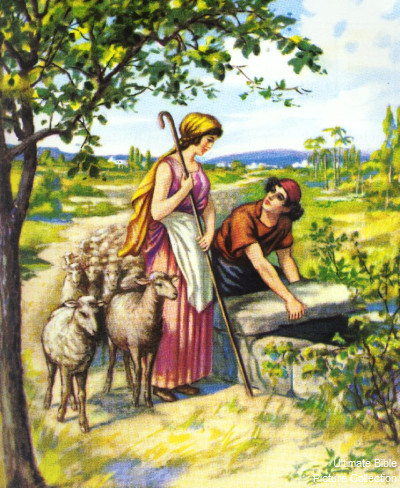 |
| For Yaakov and Rochel: Not exactly a shared Coke. |
Men and women had concrete expectations in marriage. Now, a man no longer needs a woman, and a woman no longer needs a man to live non-starving lives. There's restaurants, social connections, and dry cleaners.
Marriage today is more about spiritual and emotional fulfillment, which, I must say, sounds pretty great. People no longer have to get up before dawn to thresh, milk, or slaughter something, which is kinda awesome. We have quality time available to learn, delve, strive.
Stephanie Coontz discusses the modern state of marriage in "The Disestablishment of Marriage." While society may opine that the institution of marriage has fallen to the wayside, she brings data showing otherwise.
The once rigid state of marriage has evolved.
Until recently, women who married later than average had higher rates of
divorce. Today, with every year a woman delays marriage, up to her
early 30s, her chance of divorce decreases, and it does not rise again
thereafter. If an American woman wanted a lasting marriage in the 1950s,
she was well advised to choose a man who believed firmly in traditional
values and male breadwinning. Unconventional men — think beatniks —
were a bad risk. Today, however, traditionally minded men are actually
more likely to divorce — or to be divorced — than their counterparts
with more egalitarian ideas about gender roles.
It's so nice to have research on one's side. While I know that for the frum world, divorce is appearing in every age group and affiliation, but in terms of the "singles crisis," the longer one stays single means her chances of divorce dwindle.
I thought of this article when I read of Kelly Williams Brown, 28, who wrote a book on how to become an adult. A 28-year-old, one would think, is already an adult, no? But consider: our generation is maturing at a slower rate than previous ones. In Isaac Bashevis Singer stories, a teenager would be an old married lady. As our life spans lengthen, milestones are reached later than before.
I'm all about individuality, not statistics. But if we opt for that whole bashert thing, we might as well see the pros as well as the cons for the frummies marrying later.
I thought I was a big girl when I started dating at 19. Then, when I was 23, I was all, "Phew, baruch Hashem I didn't get married then!" When I was 26, I thought I knew all there was to know in order to get married, until one bad date, in hindsight, made me aware of what I am truly looking for. At 28, can I get smug now?
I still got some more growing up to do.
All these changes make it an exciting time to research marriage — and a
challenging time to enter it. But it’s not that we’re doing a worse job
at marriage than our ancestors did. It’s that we demand different things
from marriage than in the past. And marriage demands different things
from us.