Monday, November 30, 2015

Better . . . Together

The Mindy Project, "While I Was Sleeping":

Mindy is currently pregnant by her boyfriend, first office colleague then boo Danny. Mindy has always fantasized about marriage, but Danny himself, after a failed go at it, does not wish to marry again. 

After a sobbing scene where Mindy tries to explain to him how important marriage is to her, Danny disappears. Unknown to Mindy, who fantasizes the worst (another woman), Danny has flown to India to explain the situation to her parents, whom he has never yet met. 
http://www.tvequals.com/wp-content/uploads/2015/09/NUP_170483_0858.jpg
Mindy says to herself before going to sleep, "I wish I fell in love with somebody else." She awakens (obviously, while dreaming) in a magnificent apartment with an unknown man, Matt (Joseph Gordon-Levitt, the most likable actor ever), who claims to be her husband. 
http://i.onionstatic.com/avclub/5555/35/16x9/960.jpg
She arrives at work, where Danny treats her with snarling contempt. It turns out that she herself is pretty gross; she's having an affair. Confessing this to Matt, he looks at her oddly. "Yeah, we have an open marriage." 

She realizes that Danny made her a better person by his prudish sensibilities tampering her extreme mindlessness. While she, in turn, mellowed his crabbiness with her sunny, cheerful disposition. 

She runs after him (of course, in the rain), wailing, "We make each other better!" 

When her eyes open (for real), she knows that Danny is the man for her, even if he doesn't want to put a ring on it (but then, of course, after meeting her adorably close parents who were wed by arranged marriage, he changed his mind about the institution and flourishes a rock).

This is on par to an article I read about the current state if marriage: As the wedded state evolved from business arrangement to love pairing to the modern psychological marriages, "How We End Up Marrying the Wrong People" explains what a true connection is. 

Friday, November 27, 2015

Thursday, November 26, 2015

It's Not About the Money

Steve Jobs was not known for his cuddliness. However, Nick Bilton discovered an important lesson upon hearing a story when Jobs was being a jerk to a waitress ("What Steve Jobs Taught Me About Being a Son and Father"). 
No matter what you do for a living, should you do the best work possible?
It's not about vocation, Bilton realized. He spent plenty of time in non-vocational work—waiter, hair washer, costumed cartoon animal. 
And yet it wasn’t until my mother found out that she had terminal cancer in mid-March and was given a prognosis of only two weeks to live that I learned even if a job is just a job, you can still have a profound impact on someone else’s life. You just may not know it.
His mother's appetite dwindled, then disappeared; the end was nigh. But suddenly she asked for her favorite, shrimp. Bilton bolted to the nearest Thai restaurant to fetch his mother's dying request. 
While I stood waiting for my mother’s shrimp, I watched all these people toiling away and I thought about what Mr. Jobs had said about the waitress from a few years earlier. Though his rudeness may have been uncalled-for, there was something to be said for the idea that we should do our best at whatever job we take on.
This should be the case, not because someone else expects it. Rather, as I want to teach my son, we should do it because our jobs, no matter how seemingly small, can have a profound effect on someone else’s life; we just don’t often get to see how we’re touching them.
Certainly, the men and women who worked at that little Thai restaurant in northern England didn’t know that when they went into work that evening, they would have the privilege of cooking someone’s last meal.
Shortly thereafter, Barry Schwartz's "Rethinking Work" presented this concept under more scientific parameters, complete with cited studies.
Though the custodians’ official job duties never even mentioned other human beings, many of them viewed their work as including doing whatever they could to comfort patients and their families and to assist the professional staff members with patient care. They would joke with patients, calm them down so that nurses could insert IVs, even dance for them. They would help family members of patients find their way around the hospital.
The custodians received no financial compensation for this “extra” work. But this aspect of the job, they said, was what got them out of bed every morning. “I enjoy entertaining the patients,” said one. “That’s what I enjoy the most.”
Finding meaning in what may be considered menial work is what makes life great. 
These are just ... examples from a literature of cases demonstrating that when given the chance to make their work meaningful and engaging, employees jump at it, even if it means that they have to work harder.
Humans are not motivated by money alone. We are more likely to help if not offered financial compensation. Schwartz was arguing for a change in workplace policies that would make meaning part of the job, but Bilton shows how one can find the meaning, even if it isn't obvious.

http://www.austingunter.com/wp-content/uploads/2011/11/Steve-Jobs-Damn-Good-At-It.jpg   

Wednesday, November 25, 2015

Shidduch Lit IV

1) I fell in love with Herman Wouk after laughing and crying over Inside, Outside more than once. When Jewish Spectacles wrote a post on This is My God, I felt compelled to comment. She mentioned, in response, her recommendation of Marjorie Morningstar to her romantically inclined students as a cautionary tale. 

Sounds like Shidduch Lit to me! 

Marjorie Morningstar does not plumb the depths of pathos or scale the heights of humor, as Inside, Outside did. After all, Wouk is writing through the perspective of a female teenager, then young woman; Inside, Outside was an semi-autobiographical novel.

Yet I thought he did the job well. Many females felt so, too; Marjorie Morningstar was the bestseller of its time, and does pretty well still (I got my own copy after finishing it). 

The book opens with Marjorie, a bright and beautiful 17, greeting the sunny morning after a standard evening of parties and fending off the advances of enraptured boy-men. The plot advances forward from this relatively childish viewpoint as Marjorie learns from her experiences and relationships as to what makes a man worthy. 
I don't want to give away the plot, or the many underlying messages, but I can say that love isn't about crushes and fantasies. That's where exposure is so vital—reading, seeing, traveling—exposure allows us to glance beyond our own petty little thoughts and then, from a place of complete knowledge, execute educated decisions. 

2) In my last Shidduch Lit post, an anonymous commentator nominated Pulitzer Prize-winning Alice Adams by Boothe Tarkington. 
http://cineplex.media.baselineresearch.com/images/77959/77959_full.jpg
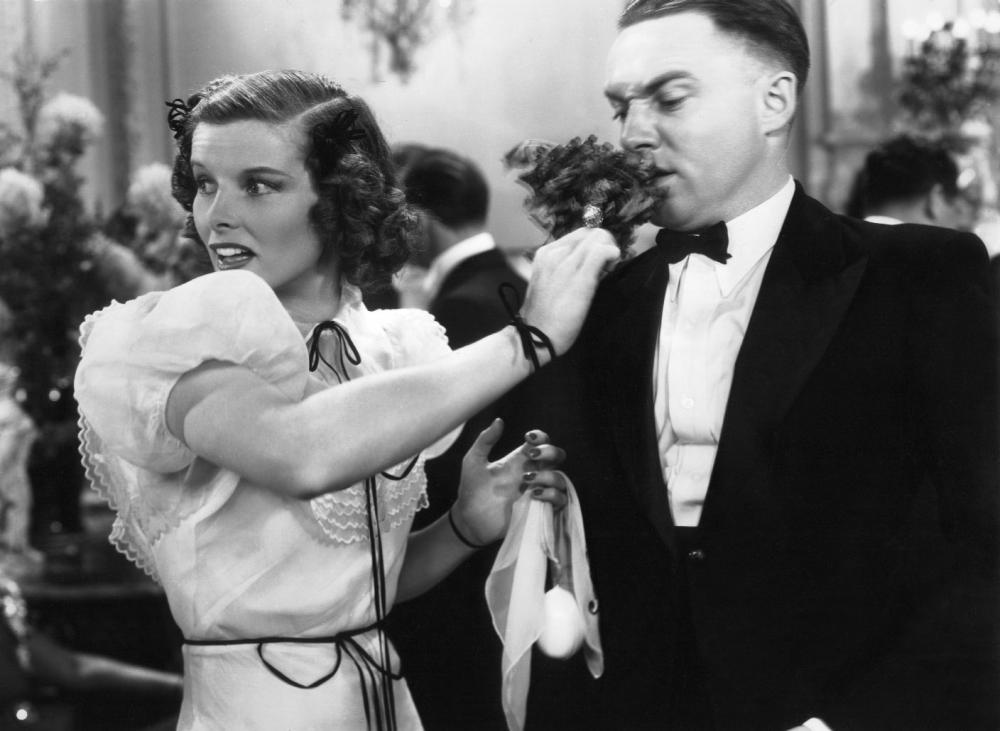
Katherine Hepburn as Alice
Wow, Alice qualifies for a Brené Brown intervention, stat. I thought insecurity was a new-ish invention, but Alice screams with it. She is so ashamed, seething with self-doubt, and, sadly, that makes her all too relatable.

That shame leads to her lie when no falsehood is needed, to the point she does not know herself. How many of us suffer from that same lack of self-faith that we suppress who we are in the name of acceptance? 

Even when that acceptance is not even forthcoming? 

Tuesday, November 24, 2015

Battle of the Bulge: Go Team Health!

Trans-fats are EVIL. They are also pretty crafty; if you eat kosher and have dessert after a fleishigs meal, trans-fat mimicking dairy is probably lurking in there. 
https://www.kosherfamily.com/content/images/thumbs/0016311_richs-non-dairy-topping-rich-whip.jpeg
It was fun while it lasted.
I'm currently on a quest to for a non-trans-fat option to non-dairy whip, and since I loathe coconut, it's taking longer than I thought (I tried it, it still tastes like coconut to me).

But, as Mark Bittman preaches in "Trust Me, Butter is Better," the real stuff is the only way to go:
And as everyone should know by now, a well-made pie, a beautifully frosted cake and perfectly crisped fried food are treats, occasional indulgences. Let’s make them as well as we can, rather than take short cuts using phony ingredients that don’t taste good and are unhealthy. 
Misunderstanding what food qualifies as healthy is still a problem. Most kiddie-marketed yogurts are bursting with the same sugar content as soda, for example. Juice, once considered to be a growing-child requirement, is slowly getting shunned. 
 http://s3.amazonaws.com/sugarstacks/yoplait.jpg
With all this new information demonizing most processed foods, taking the right mellow angle with children is a delicate balance, as Jane Brody reports in "Another Approach to Raising Healthy Eaters." I made the mistake of bellowing, "Just TASTE it!" to my nephew this past week. Nope, didn't fly. 
http://www.slate.com/content/dam/slate/articles/double_x/the_kids/2012/12/121218_KIDS_PickyEaters_border.jpg.CROP.original-original.jpg
For an example of Healthy Diet Fail: Peter Funt's "Kale, With Fudge on Top." 
Full disclosure: I’ve never been a fan of plain yogurt, even drowned in maple syrup. Yet science tells us this B12-rich food works wonders, such as reducing moodiness. So I’d like to give a shout out to the Yoplait company for thoroughly de-yogurtizing yogurt.

Monday, November 23, 2015

"So Happy For You!"

The Big Bang Theory, "The Bon Voyage Reaction"

Stephen Hawking is sending an expedition to the North Sea to test his theories; one of the experimental physicists dropped out, giving Leonard the opportunity. 

From the beginning, Sheldon has been attempting to talk Leonard out of it; in typical Sheldon fashion, he predicts doom, citing the possible hazards of boat travel, even going so far has to hint how the four-month separation might affect Penny's affection for Leonard. 

Sheldon continues to sulk; Leonard believes it is because Sheldon is terrible with change, and worries about him. But it's Penny who calls him on it: 

Sheldon: You know, I have to say, Penny, I don’t understand why you of all people are encouraging Leonard to do this. 

Penny: Honey, this is a big deal for Leonard, okay? He gets to work with Stephen Hawking. Who, by the way, will not be on the boat. I checked it out. 

Sheldon: It’s not that big of an opportunity. And even if Hawking’s theories are correct, all they prove is where the universe came from, why everything exists and what its ultimate end will be. I mean, me? I’m interested in the big questions. 

Penny: Oh, my God, Sheldon the genius is jealous of Leonard. 

Sheldon: I’m not jealous. I’m just very unhappy that good things are happening for him and not happening for me. 

Penny: Look, sweetie, this is a natural thing to feel, okay? But just because good things are happening to Leonard doesn’t take anything away from you. You know what? Let me tell you a little story. Once there was a girl who worked at the Cheesecake Factory, and she wasn’t very good at her job. 

Sheldon: It was you. 

Penny: It wasn’t me. But she was also an actress, and we were both up for the same part in a toothpaste commercial. She got it. Look, I was so jealous. But instead of ripping out her fake blonde hair… 

Sheldon: You ripped out your own fake blonde hair. 

Penny: I looked her in the eye, smiled and said, I’m happy for you. Because that’s what friends do. 

Sheldon: They lie so they don’t look petty. 

Penny: Yeah. 

Sheldon: How?

Penny: Like this. (Fake smiling) I am so happy for you.
http://i.onionstatic.com/avclub/4297/86/16x9/960.jpg
Sheldon: Wow. No wonder you didn’t get that toothpaste commercial.

Later, at Leonard's going away party: 

Sheldon: Um, can I have your attention, everyone? (Clinks glass) That’s, uh, B-flat, for those who don’t have perfect pitch. I would like to propose a toast to my best friend, Dr. Leonard Hofstadter. He has been presented with a wonderful opportunity, and I couldn’t be happier for him. 

Leonard: Thank you, Sheldon. That must’ve been very hard for you to say.

Sheldon: Well, I mean it. I’m really happy for you. And that’s how you get a toothpaste commercial. Cheers. 

For a better boost on being happy for others, I recommend this Chevi Garfinkel shiur (the link won't work unless you are a girl already in possession of a torahanytime account confirming that fact. Yeah, I know). 

Thursday, November 19, 2015

Stocking Status

I couldn't believe it when I saw "The Politics of Pantyhose" by Troy Patterson while browsing the magazine section. No way! It's not just a frummie thing?

According to Patterson, seamed stockings, on the one hand, can be considered "sultry," while on the other, a requirement for attending church. Huh. Maybe stockings aren't established religious wear. 

 https://s-media-cache-ak0.pinimg.com/736x/b3/83/c3/b383c33e99c737f4e531d70e62977dd5.jpg

Historically, hose was a dude thing
women were, after all, smothered beneath miles of petticoat. 

https://upload.wikimedia.org/wikipedia/commons/f/f2/Fran%C3%A7ois_Clouet_004.jpg

But then: 
Women’s hose were generally a knee-high affair at the start of the 20th century, but when hemlines rose, so did their significance. Adding luster and masking supposed flaws, they had the innate glamour of the sumptuously inessential. And because they appeared in an age when people disregarded fashion dictates at the risk of their social lives, they satisfied a prevailing idea of decorum — but not necessarily modesty. In the mind, as in the department store, stockings are adjacent to the intimate. 
Really? So stockings do not automatically equal "modesty," rather "decorum"? It is the latter term I use to translate "tznius," not the former. And now I've painted myself into a corner. 
As a rule, the more male-­dominated a work environment, the more likely it is expected that women in the ranks will make a gesture toward covering their skirt-­bared legs with fabric as thin as a gesture itself. A friend who is employed by a big bank with a conservative culture (and who declines to identify herself because she would like to remain so) tells us its women are made to understand that they should wear nude hose or black hose or maybe, maybe, opaque black tights in all but the sultriest heat.
But the current First Lady quit stockings eons ago. Then again, I find her casual disregard for refined conventions to be off-putting. I don't seem to be helping myself out here.
The chic woman now inhabits a world in which the exposure of naked shins to the winds of February is quite the opposite of a ghastly mishap. . . 
The bold bareness asserts the enjoyment of an increasingly common luxury — freedom from codes of thought that are, in their way, as constraining as any corset.
Those people who find hosiery a pain are free to renounce it, while those who enjoy or endure it can indulge a multiplicity of pleasures . . . 
Women’s hose have evolved into something new and dissolved into nothing all at once, just as measured feet of poetry evolved into free verse.
So what it boils down to: Wear what you like. Don whats thou wishes. For the decorum of the world has spoken: It's all good.
http://www.tabletmag.com/wp-content/files_mf/tights620.jpg
Via tabletmag
Phew. 

Wednesday, November 18, 2015

Plumberry and Dollface

OPI Conquistadorable Color is now tough to find, so I moved on to Essie Plumberry, described thusly on the brand website: "Be berry lovely in this luscious creamy berry red lacquer with hints of plush pink." Yeah, that sounds about right. Despite the multitude of other options beneath my sink, I've been opting for Plumberry week after week now.

Since my photography skills are quite lacking, here's a more expert shot: 
https://blogger.googleusercontent.com/img/b/R29vZ2xl/AVvXsEjjYyxCmaM3qCjnLnKZx59fnXa_2LLCSosZjn-zoajGTYPBj-Tr1w8k9win3Ca8-ziYjccs7UkqF0ELdFS9jlx_z5YbHY8MO4MdlQDSrwOKGNbquR6axixsq4epKSYR48MQP0LEfVGNuw/s1600/IMAG1952.jpg
Polish or Perish
As Illamasqua is no longer available in the States and my Tremble Blush is running low, I purchased Tarte Amazonian Clay 12-Hour Blush in Dollface ("light pink"). The color looks a little unassuming in the pan, but a delight on the cheeks. 

Of course it's matte. 
https://s-media-cache-ak0.pinimg.com/736x/e3/80/ee/e380ee40ac9a021480ad7b3711df74f5.jpg

Tuesday, November 17, 2015

Nice Can Be Interesting

The only reason why I liked Anna Karenina (after TooYoungToTeach got me to read it) was not because of Anna (BOO!), but Levin. 
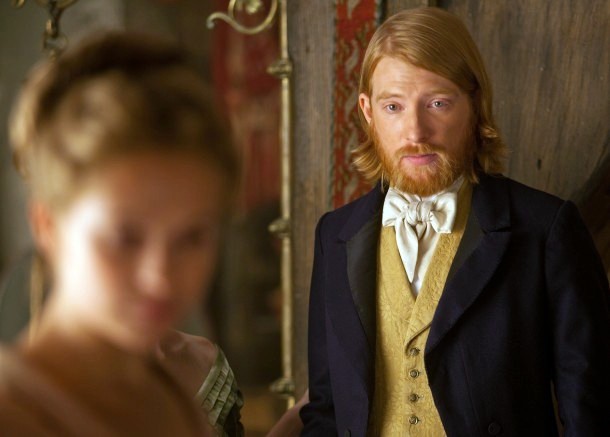
http://www.aceshowbiz.com/images/still/anna-karenina-picture09.jpg
Levin's a nice guy. He's trying to work things out. He makes some mistakes. He attempts to rectify them. He's a pleasant fellow muddling through life to find his purpose, like most of us are. 

I can't stand unpleasant characters. The vindictive, mean, and downright cruel do not interest me. One of the reasons why I can't tolerate Downton Abbey is Thomas, the spiteful, conniving once-footman (I don't know what his title is now).
 http://www.unrealitytv.co.uk/wp-content/uploads/2015/09/downton-abbey-rob-james-collier-thoams-barrow-2.jpg
But many do not share my preferences. Even Bookends questions, "Can a virtuous character be interesting?" According to Thomas Mallon:
. . . when it comes to literary characters, reader taste has generally followed the old saying: “Heaven for comfort; hell for company.” No one has ever preferred Amelia to Becky in “Vanity Fair,” or Melanie to Scarlett in “Gone With the Wind.” 
Really? I can't stand Scarlett, and would wholeheartedly favor Melanie if not for her passionate racism. 
http://images.popmatters.com/news_art/e/enzerick-fandom-gonewithwind-splsh.png
Alice Gregory gets me: 
But as anyone who has earnestly attempted it will admit, being good is to feel far more at odds with the world than being bad does. It is the cumulation of calculated social compromises, purposeful acts of communion, and meticulous emotional arithmetic. Commonplace wickedness, meanwhile, is seldom the result of anything more devious than inattention to the feelings and realities of other people. Living virtuously is hard. It takes generative intellectual work that is far more interesting than the defensiveness of “being bad.” I would rather consider the challenges that go into a consciously lived life than the inevitably hurtful products of a cruel one.
A truly radical 21st-century novelist wouldn’t ask us to see ourselves in made-up villains, and then, hopefully, revise our opinions of the real ones in our own lives. Rather, they would ask us to see the arduous and often acrobatic effort that goes into living a life of common decency. They would coerce us into believing that virtue is interesting and fun to think about and far more dazzling to encounter than malevolence.
In her 1947 book “Gravity and Grace,” Simone Weil wrote: “Imaginary evil is romantic and varied; real evil is gloomy, monotonous, barren, boring. Imaginary good is boring; real good is always new, marvelous, intoxicating.
It's "unfashionable," Gregory writes, but "It’s time that goodness be shown in all its relentless torment and sacrifice."

Amen, sister!