"Singles today are too picky," she huffed. "Us survivors, after the war, we met maybe one, two times, we got engaged, and it worked. All these categories, all these lists, no good, no good."
I couldn't articulate my argument against the post-Holocaust marriage model until I read "Should You Fear the Pizzly Bear?" by Moises Velasquez-Manoff. The article is about endangered species (of the same general animal group) interbreeding in order to survive.
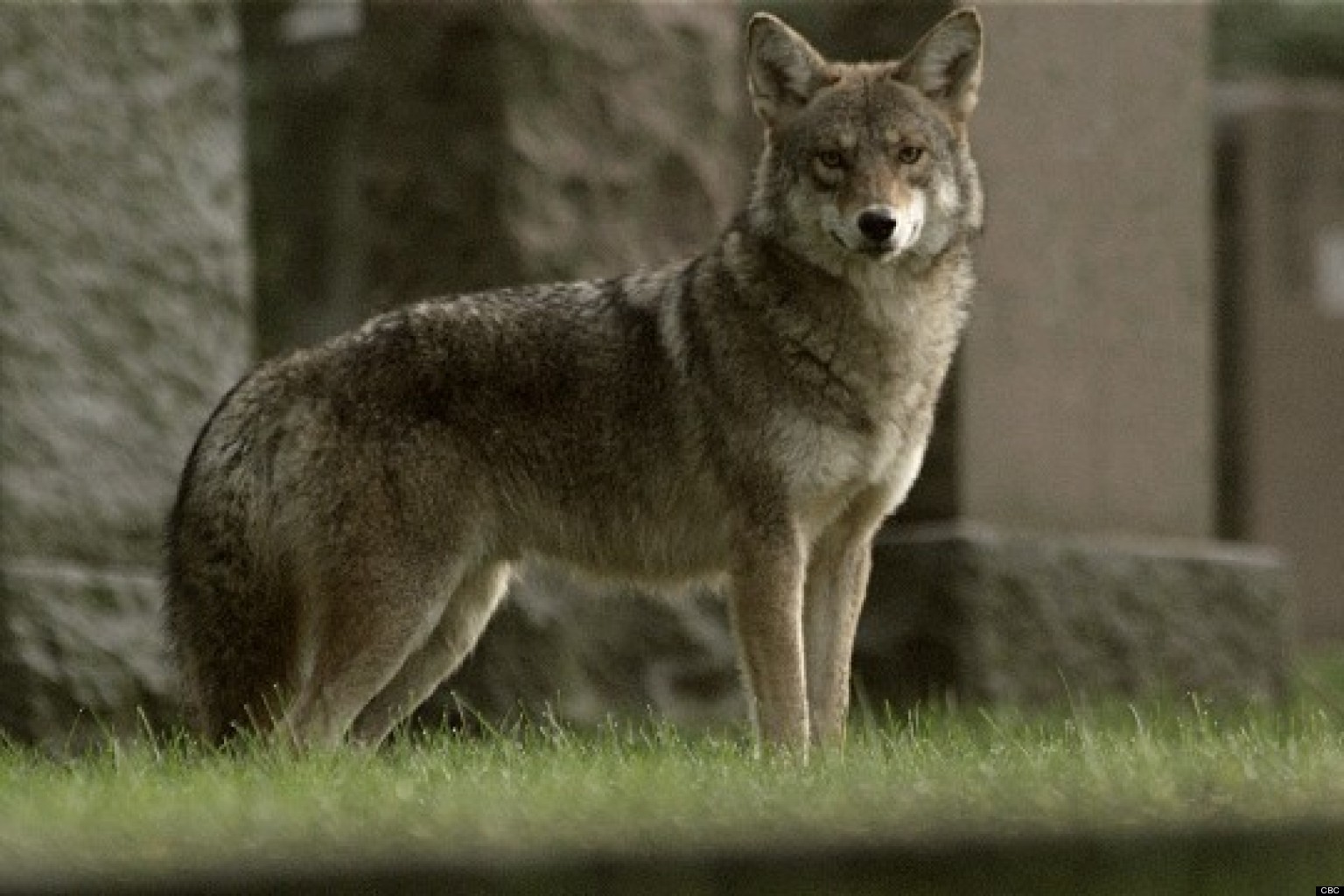 |
| Coywolf, a coyote-wolf mix |
It may sound insulting to compare the marriages of the Shoa generation to that of, well, animals, but there are similar factors.
Example: If there had been no war, my Zeidy would have still been married to his mother-selected bride from the same background and financial position. Same with his second wife, my Babi, who had wed her uncle's choice as her first husband, also from the same background and financial position. People weren't less picky back then. They married according to their own practical system, which seemed to work.
The war changed that.
In the mid-20th century, the influential evolutionary
biologist Ernst Mayr argued that species arise only when individuals
become isolated somehow from others of their kind. Since then, the
prevailing wisdom among evolutionary biologists has been that
interbreeding — the creation of hybrid offspring — is a potentially
lineage-ending mistake. . . because the parent species have usually evolved to exploit different
habitats, intermediate hybrids ought to be ill suited to the environs of
both parents.
If the living conditions are stable, then like tends to marry like. Two vastly different mindsets, such as the contemporary modern to current yeshivish, aren't likely to result in a happy home. Shidduchim today generally succeed when both individuals possess parallel backgrounds and mindsets. It is typically considered that unions of divergent upbringings will have more issues to compromise on.
However:
The Grants, who tell these stories in their new book, “40 Years of
Evolution,” saw hybridization help species adjust to new conditions.
"New conditions," in the natural world, simply translates as "DOOM!" An ecosystem relies on the stable and predictable; any change, small or large, throws creatures into a state of terror. Such as, say, near annihilation by genocide?
Anxiety, it seemed, could break down the barrier between sister species that live alongside one another . . . Scientists
have observed versions of this phenomenon — called flexible mate choice
— in other animals. The Central American tungara frog, which selects
mates based on croaks, is more likely to choose one from a different
species when it also hears the cries of a predator frog. . . When times are tough, it’s better to mate with someone — even the wrong one — than with no one at all.
Here's a scenario: A teenager is wandering around a D.P. camp. Everything, everything that she knew had been ripped away. She has, perhaps, one friend, maybe two, to rely on, but no family. Or if she does have family, they may be elsewhere, trying to rebuild new lives in new places.
Sounds like anxiety, if not abject terror, to me. What she, and every other person she is surrounded by, craves is the reliability and safety of a family unit. That motivation supersedes all. The nice boy she meets is also driven by that same focus.
 |
| Wedding in Bergen-Belsen DP Camp, 1948 |
Background (gone), finances (none), and personality (traumatized) is not even on the table. Survival is.
By
no means should we regard hybrids as an ecological panacea. The
flexibility they can provide depends on the continued existence of at
least two parental species, after all — hardly a given for many
creatures. But the growing evidence of productive hybridization does
seem to call for a reconsideration of how we think about species.
The post-Holocaust marriage model is not viable today purely because we are not post-Holocaust. The children from these "mixed marriages," hybrids themselves, are now classifying themselves again—chassidish, yeshivish, modern—some selecting labels willy-nilly, with none of these titles in their own lineage (Litvaks and Polish chassidim were mostly decimated during the war. Many who identify with yeshivishness and chassidus today are newcomers).
Today life is not only stable, it is blessed, both in the levels of general lifestyle, as well as government-mandated religious freedom. Background, finances, and personality are back on the table, as they should be, and as it was before the war.